Those tiny orange pearls on sushi do more than make the plate look pretty. Tobiko adds crunch, salt, and a clean ocean taste, yet a lot of people still don’t know what it is. Some confuse it with caviar. Others think it’s the same as masago. If you want a clear answer to what is tobiko and what tobiko sushi actually means, here’s the simple version.
What is tobiko?
Tobiko is the roe, or eggs, of flying fish. In Japanese cuisine, chefs use it as a garnish, topping, or filling for sushi because it adds color, texture, and a salty little pop.
If you’ve seen bright orange fish eggs on a California roll, spicy tuna roll, or a small sushi piece wrapped in seaweed, there’s a good chance you were looking at tobiko.
Tobiko is naturally orange to reddish-orange. The eggs are tiny, but they’re still larger and crunchier than masago, which is another fish roe often used in sushi bars. That size difference matters more than you’d think. It changes the whole mouthfeel.
Quick fact: Tobiko is flying fish roe, it’s usually cured or seasoned, and people love it as much for its texture as for its flavor.
What does tobiko taste like?
Tobiko tastes salty, slightly sweet, and mildly smoky or briny. It has a clean seafood flavor, but it usually doesn’t hit you with a strong “fishy” taste.
The texture is a big part of the appeal. Tobiko doesn’t melt like sauce, and it doesn’t feel soft like mashed filling. It gives you a tiny crunch and pop. Think of it like sea-salty sprinkles with attitude.
That’s why even a small spoonful can change a bite of sushi. Plain rice and fish feel softer. Add tobiko, and suddenly there’s contrast.
Why do chefs use tobiko so often?
Chefs use tobiko because it does three jobs at once.
It adds color. It adds texture. It adds flavor.
That’s rare in such a small ingredient.
A roll with crab, avocado, and cucumber can taste nice on its own. Put tobiko on top, and the same roll feels more lively. You notice the crunch first, then the salty finish.
Did you know? Tobiko often shows up in modern sushi rolls outside Japan because it looks striking on the plate and makes simple rolls feel more special.
What is tobiko sushi?
Tobiko sushi is any sushi that includes tobiko as a main topping, garnish, or filling. It isn’t just one fixed dish. It’s more like a category.
Sometimes tobiko sits on top of a sushi roll. Sometimes chefs pack it inside the roll. Other times, tobiko is the star of the piece.
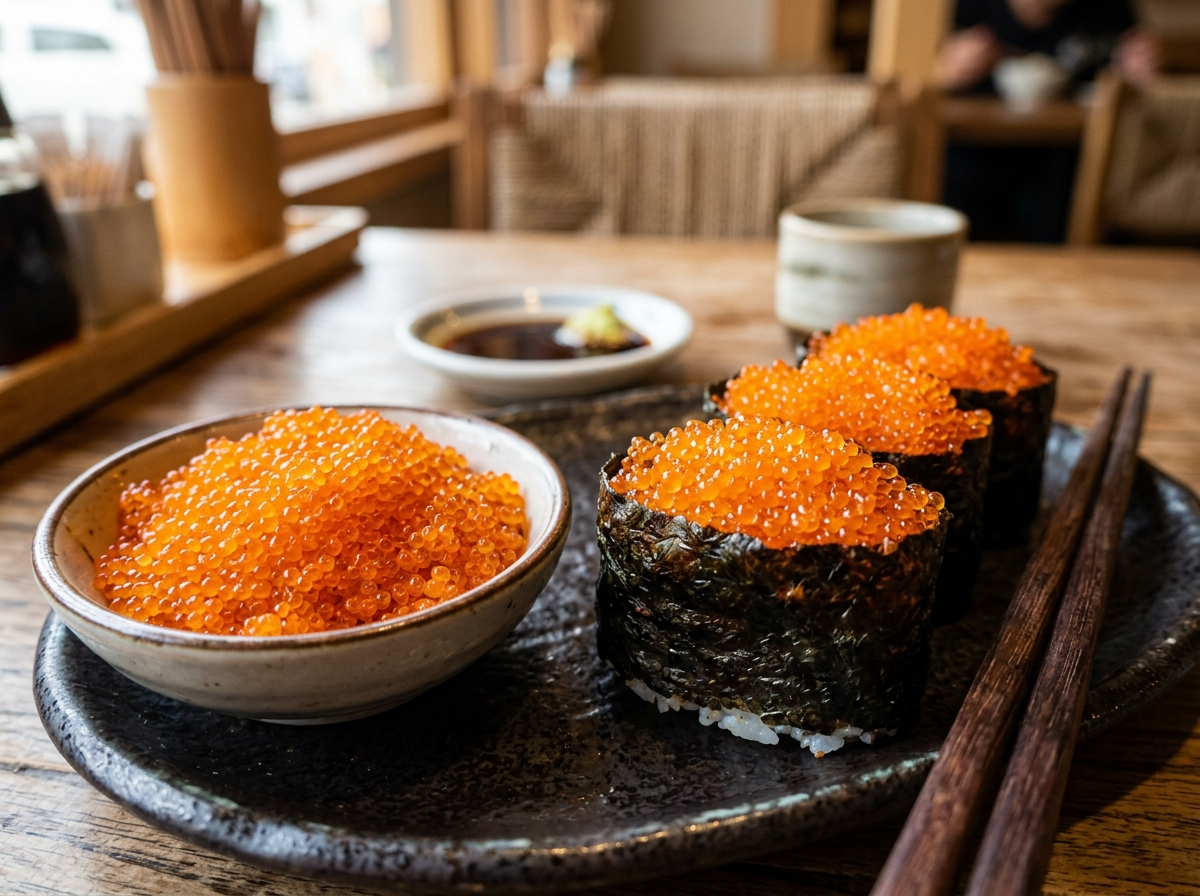
The version many people picture first is gunkan-maki, often called “battleship sushi.” That’s a small oval of sushi rice wrapped with a strip of nori, then filled on top with tobiko. If you want to taste tobiko clearly, this is one of the best ways.
Common ways tobiko shows up in sushi
You’ll often see tobiko in sushi bars in a few familiar forms.
One is tobiko gunkan, where the roe sits in a little seaweed cup over rice. That gives you the cleanest tobiko flavor.
Another is on top of rolls like California rolls, dragon rolls, or spicy tuna rolls. In that setup, tobiko works more like a finishing touch. You still taste the other ingredients, but tobiko sharpens the bite.
Some chefs also mix tobiko into sauces or mayo-based fillings. You won’t always see it, but you’ll feel the crunch.
What should you expect when you order tobiko sushi?
Expect texture first.
If you order tobiko sushi and hope for a heavy fish flavor, you may be surprised. Tobiko usually plays a lighter role. It wakes up the sushi instead of dominating it.
If you’re brand new to fish roe, don’t start with the biggest, saltiest option on the menu. A roll topped with tobiko is often easier than eating a full tobiko gunkan. You get the flavor in smaller hits.
Pro tip: If you want your first tobiko sushi order to feel safe and familiar, try a California roll or spicy tuna roll with tobiko on top. It gives you the crunch without making the roe the only thing you taste.
Why is tobiko different colors?
A lot of people see black, green, red, or yellow tobiko and assume it must be fake. Not always.
Natural tobiko is usually orange. Other colors often come from added flavorings or color ingredients.
Black tobiko commonly gets its color from squid ink.
Green tobiko may be flavored with wasabi or seaweed.
Red tobiko can include chili or beet-based coloring.
Yellow or golden tobiko may use yuzu or other citrus flavoring.
So the color often tells you something about the taste.
Do the colors change the flavor?
Yes, often they do.
Black tobiko tends to taste a little deeper and more savory. Green tobiko can have a mild wasabi kick. Red tobiko may lean spicy. Yellow tobiko can taste brighter and a bit citrusy.
That said, not every restaurant uses the same recipe. One sushi bar’s green tobiko may taste pretty bold. Another’s may just look green and taste mostly salty.
If you’re curious, just ask. Sushi chefs hear this question all the time.
Common misconception: Bright tobiko doesn’t always mean artificial coloring. Many versions get their look and flavor from real ingredients like squid ink, yuzu, or wasabi.
Tobiko vs masago, ikura, and caviar
This is where a lot of confusion starts.
People often use words like tobiko, masago, roe, and caviar as if they all mean the same thing. They don’t.
Roe is the broad word. It means fish eggs.
Tobiko is flying fish roe.
Masago is capelin roe.
Ikura is salmon roe.
Caviar, in the strict sense, comes from sturgeon.
So yes, tobiko is fish roe. No, it’s not the same as every other roe.
Tobiko vs masago
Tobiko and masago get mixed up all the time because both are small fish eggs used in sushi.
Still, there are some easy differences.
- Tobiko is usually larger, brighter, and crunchier.
- Masago is smaller, softer, and often cheaper.
- Tobiko tends to feel cleaner and more textured.
- Masago can taste milder and a bit less crisp.
If you care about that pop and crunch, tobiko usually stands out more.
Tobiko vs ikura
Ikura is salmon roe, and it feels completely different.
Ikura eggs are much larger, softer, and juicier. They burst in your mouth. Tobiko is tiny and crisp.
Flavor-wise, ikura tastes richer and more buttery. Tobiko tastes lighter and sharper.
If tobiko is like crunchy sea beads, ikura is more like little ocean-filled balloons.
Is tobiko the same as caviar?
Not in the strict food-world sense.
True caviar comes from sturgeon. Tobiko comes from flying fish, so calling it caviar isn’t technically correct.
You may still see restaurants or stores use the word loosely because people recognize it. Marketing language can get messy like that.
If you want the simple rule, use this one: all tobiko is roe, but tobiko isn’t true caviar.
Is tobiko raw, safe, and healthy?
This is one of the biggest reasons people search for tobiko in the first place. They want to know if it’s raw, whether it’s safe, and if it’s okay to order at a sushi restaurant.
Is tobiko raw or cooked?
Tobiko is usually cured or seasoned, not fully cooked in the way grilled fish is cooked.
So if you’re asking, “Is tobiko raw?” the most honest answer is: it’s often served in a raw-style form, but it’s usually processed with salt or seasoning and kept very cold.
Some packaged tobiko may also be pasteurized, depending on the brand and supplier. Restaurants don’t all handle it the same way.
If raw seafood labels confuse you in general, this guide on whether smoked salmon is cooked or raw clears up another common seafood question.
Is tobiko safe to eat?
For most healthy adults, tobiko from a reputable restaurant or trusted seafood market is generally fine to eat in small amounts.
The bigger concerns are usually these:
Food handling: Seafood needs cold storage and clean prep.
Allergies: Tobiko is fish roe, so fish allergies matter.
Sodium: Cured roe can be salty.
Pregnancy or weakened immunity: Extra caution makes sense.
General food safety advice from groups like the FDA still applies: buy seafood from trusted sellers, keep it cold, and don’t treat a sushi bar with poor hygiene as “probably fine.”
People ask similar questions about many kinds of raw or lightly processed seafood. If you want a broader safety perspective, this article on can you eat raw lobster is a useful comparison.
Warning: If you’re pregnant, immunocompromised, elderly, or serving tobiko to young children, ask your doctor and check how the product was handled. Food safety advice can vary by country and by your health situation.
Is tobiko healthy?
Tobiko can fit into a balanced diet, but it’s best to see it as a small accent food, not a health product.
A spoonful of tobiko usually won’t add many calories. It can provide a little protein and some nutrients found in seafood, including omega-3 fats and vitamin B12 in small amounts.
The catch? Portion size and salt.
Because tobiko is cured, it can be high in sodium for such a tiny serving. That means it’s easy to overdo if you eat a lot of sushi rolls loaded with sauces, soy sauce, and roe all in one meal.
So yes, tobiko can be part of a healthy meal. Just don’t treat it like a free pass because it’s small.
How to order and use tobiko like you know what you’re doing
A lot of people don’t avoid tobiko because they dislike it. They avoid it because they don’t know what they’re ordering. Fair enough.
Once you know what to ask for, tobiko gets a lot less mysterious.
How to order tobiko sushi at a restaurant
If you want tobiko to be noticeable, order tobiko gunkan. That’s the cleanest, most direct version.
If you want a softer introduction, ask for a roll with tobiko on top. California rolls, shrimp rolls, and spicy tuna rolls work well for beginners because the roe adds texture without taking over the whole bite.
You can also ask a simple question that helps a lot:
“Is that tobiko or masago?”
Some lower-cost rolls use masago because it’s cheaper and milder. That’s not a bad thing. It just tastes different.
How can you use tobiko at home?
You don’t need to be a sushi chef in Tokyo to use tobiko.
A small container goes a long way. You can spoon it over sushi rice, hand rolls, cucumber bites, rice bowls, or even a simple cracker with cream cheese if you want something easy. Still, tobiko feels most at home with Japanese-style flavors like rice, nori, mayo, avocado, and seafood.
If you’re building a Japanese-inspired dinner and want something less adventurous on the side, dishes like pork katsu curry make a comforting pairing. A simple teriyaki chicken bowl can also balance a lighter tobiko appetizer.
How should you store tobiko?
Keep tobiko very cold. Most store-bought tubs come frozen or refrigerated for a reason.
Once you open it, use a clean spoon every time. Don’t leave it sitting out on the counter while you prep the rest of dinner. Seafood goes downhill fast when you get casual with temperature.
Package instructions matter here because brands vary. Some need refrigeration after thawing. Some have a short use-by window once opened.
If you’re planning a home sushi night with other seafood too, these tips on how long thawed salmon lasts in the fridge are worth keeping handy.
Pro tip: Buy a small amount first. Tobiko has a strong personality, and a little usually does the job.
Common misconceptions about tobiko
A few myths keep popping up around tobiko, especially online.
“Tobiko and masago are the same thing”
They’re close cousins on the sushi menu, but they aren’t the same. Tobiko is flying fish roe. Masago is capelin roe. The size, color, price, and crunch are different.
“Tobiko is just caviar with a Japanese name”
Nope. Tobiko is roe, but true caviar comes from sturgeon. Calling all fish eggs caviar is a shortcut, not an exact label.
“Tobiko is only there for decoration”
That bright color grabs your eye, sure. Still, tobiko isn’t just for looks. It changes texture in a way that sauces and herbs can’t. One spoonful can make a soft roll feel much more interesting.
“All tobiko tastes very fishy”
Not really. Tobiko usually tastes briny and lightly sweet with a mild sea flavor. If you’ve avoided it because you expect a strong fish punch, you may actually find it pretty approachable.
4. FAQ Section
FAQ
What is tobiko made from?
Tobiko is made from flying fish roe, which means the eggs of flying fish. In sushi, the roe is usually cured, seasoned, and kept chilled or frozen before serving. It’s known for its bright color and crunchy texture, which is why chefs use it on rolls, gunkan-maki, and rice dishes.
What does tobiko taste like on sushi?
Tobiko tastes salty, slightly sweet, and briny, with a mild seafood flavor. It usually isn’t overpowering. What most people notice first is the texture. It gives sushi a crisp little pop that makes soft ingredients like rice, avocado, and crab feel more balanced.
Is tobiko sushi raw?
Tobiko sushi often includes tobiko in a raw-style or cured form, not fully cooked like baked or grilled fish. Many tobiko products are salted, seasoned, and handled under cold storage. Whether it’s pasteurized depends on the product and the restaurant, so ask if you need a specific answer for health or dietary reasons.
What’s the difference between tobiko and masago?
Tobiko is flying fish roe, while masago is capelin roe. Tobiko is usually larger, brighter, and crunchier. Masago is smaller, softer, and often less expensive. They can look similar at first glance, but the texture gives them away pretty quickly once you taste them.
Can you eat tobiko while pregnant?
Many doctors suggest being careful with raw or lightly processed seafood during pregnancy. Since tobiko is often cured rather than fully cooked, it’s smart to ask your doctor and check how the restaurant or brand handles it. If you’re pregnant, immunocompromised, or avoiding high-sodium foods, don’t guess—get a clear answer first.
Is tobiko the same as caviar?
No. Tobiko is fish roe, but true caviar comes from sturgeon. Some restaurants use “caviar” loosely in menu descriptions because it sounds familiar to customers, but tobiko and caviar are not the same ingredient.
5. Conclusion
Tobiko may look like a tiny garnish, but it does a lot of work. It’s flying fish roe, it adds a crisp pop to sushi, and it brings a salty, slightly sweet bite that makes simple rolls feel more complete. If you’ve been unsure about tobiko sushi, you now know what it is, how it tastes, how it differs from masago and caviar, and what to ask before you order it.
So next time you spot tobiko on a sushi menu, don’t just skip past it. Try it once in a roll, then try tobiko gunkan if you want the real texture hit. You might find that the smallest ingredient on the plate is the one you remember most.