Most people who ruin fish don’t ruin it because they picked the wrong recipe. They ruin it because they pulled it out 90 seconds too late — or two minutes too early. Fish is unforgiving that way. A perfectly golden fillet can go from “wow” to “why is this rubber?” in less time than it takes to check your phone. So if you’re standing in your kitchen right now, tongs in hand, wondering how long does it take to fry fish — you’re asking exactly the right question.
The short answer? The sweet spot is three to five minutes per side for average-sized fillets, with larger pieces calling for a bit more patience. But that “short answer” only scratches the surface. Thickness, the type of fish, your frying method, oil temperature, and whether the fillet is fresh or frozen — all of these change the number on your timer.
Let’s break it all down so you never have to guess again.
Why Frying Time Isn’t One-Size-Fits-All
Here’s something a lot of guides skip right over: frying time is mostly about thickness, not weight. The thickness at the thickest point of your fillet correlates more strongly with cooking time than weight. A six-ounce fillet that’s half an inch thick will cook much faster than a six-ounce fillet that’s an inch and a half thick — even though they weigh the same.
The type of fish, its thickness, and the temperature of the oil are crucial in determining the perfect frying time. Different types of fish have varying levels of moisture and density, which affect how quickly they cook. Delicate fish like sole or flounder require shorter frying times, while thicker fish like cod or salmon need longer times.
Your coating matters too. A thick beer batter adds an extra layer that needs its own time to turn golden and crispy. A light flour dredge? That crisps up much faster. So think of frying time as a range — and use visual cues and internal temperature as your final judge.
Quick Fact: You should let the fish fry in the oil until it reaches at least 145°F internally. Only then is it cooked and safe to eat. The USDA recommends this for all fish and seafood.
How Long to Deep Fry Fish
Deep frying is the fastest method for cooking fish. That hot oil surrounds your fillet on all sides, so there’s no need to flip anything — the heat does the work from every direction.
For thin pieces of fish (less than 1 inch thick), expect 2–3 minutes per side. Medium pieces (1–2 inches thick) need about 3–4 minutes per side. For half-inch-thick filets, fry for four to six minutes total; fillets approaching an inch thick can take eight to ten minutes.
The golden rule for deep frying temperature? The best temperature to fry fish is a range between 350° and 375°F, so the fish can fully cook through before the exterior becomes too dark.
What happens if your oil gets hotter than that? If the temperature is above 380°F, it will scorch the fish. If it’s below 360°F, the batter may absorb too much oil, creating a greasy mouthfeel. That’s why a thermometer isn’t optional — it’s your best friend at the fryer.
How Do You Know It’s Done?
You don’t have to cut into your fish to check. There are a few trustworthy signs:
Fish floats to the surface when it’s done cooking. That’s a classic deep-frying indicator. Wait for the batter to turn golden brown. When the outer skin looks hard and turns golden, it’s time to pull it out of the oil.
Your eyes and ears can tell you when it’s done. When the bubbles subside and the sizzling stops, the food is done.
And if you want zero guesswork, an instant-read thermometer that reads 145°F at the thickest part is your definitive answer.
⚠️ Safety Tip: Always use long-handled tongs, keep a lid nearby, and never leave a deep fryer unattended. Keep baking soda (not water) within reach to smother oil fires.
How Long to Pan Fry Fish
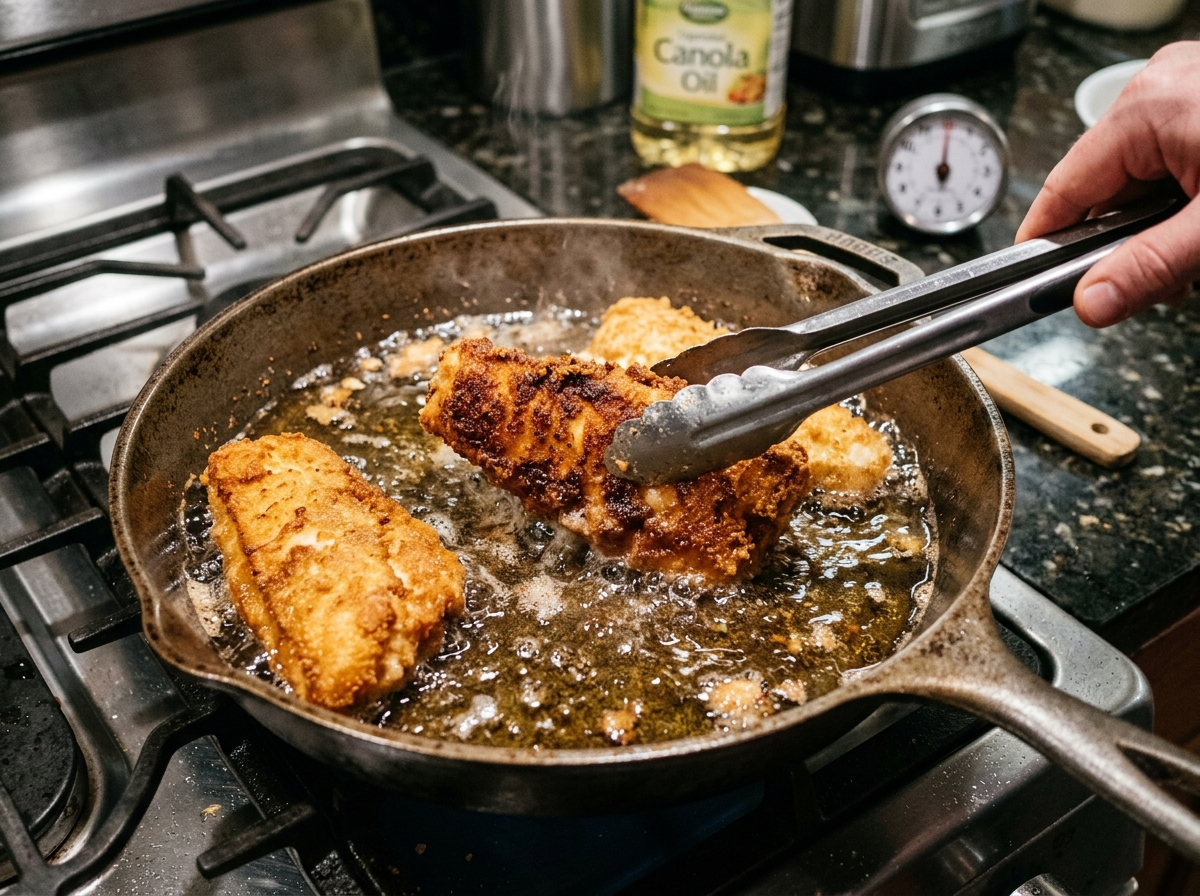
Pan-frying is probably the most popular home method. You don’t need a gallon of oil — just enough to cover the bottom of your skillet — and you get that beautiful seared crust that makes fish truly special.
The sweet spot for pan-frying is three to five minutes per side for average-sized fillets. A thicker fillet or a whole fish will naturally require additional time to ensure the inner layers are cooked through.
Pan-frying fish involves careful orchestration of heat, oil, and time. During the first few minutes of cooking, as the fish makes contact with the hot pan, the outer layers react to the high heat, forming a delicate crust. This initial sear locks in the juices, preventing the fish from drying out and avoiding too much oil absorption.
Here’s one tip people miss all the time: don’t flip more than once. The biggest mistake to avoid when pan-frying fish is moving the fillets in the pan too much. To keep it from falling apart, leave the fish undisturbed and only touch it to flip.
Choosing the Right Oil for Pan Frying
For pan-frying, you want an oil with a neutral flavor and a high smoke point. Flavor, flavor transfer, and the smoke point are the three qualities to consider when choosing oil. The flavor of the oil should be neutral so that the fish isn’t overpowered.
Refined canola oil has a neutral flavor and a high smoke point of 400°F. Peanut oil has a smoke point of 450°F. Both are solid options. Avocado oil is another excellent choice. Olive oil works for a light sauté, but olive oil’s smoking point is too low for deep-frying fish.
If you’re curious about pairing your crispy pan-fried fish with something special, a tangy ssam sauce works surprisingly well on the side.
How Long to Air Fry Fish
Air fryers have changed the game for people who want crispy fish without a pot of hot oil sitting on their stove. The results aren’t identical to deep frying, but they’re close — and you use a fraction of the oil.
Fish and seafood cook faster in the air fryer than any other protein category — most fillets are done in 6–12 minutes and can dry out quickly if overcooked by even a minute or two.
For fresh, thawed fillets: Set your air fryer to 360°F–375°F and cook for about 8 to 12 minutes. Thicker fillets may take a little longer, while thinner cuts cook more quickly.
For thicker fillets, use 360°F and cook for 10–12 minutes — this gentler heat helps cook the fish evenly without drying it out. For thinner fillets, set the temperature to 375°F and cook for 8–10 minutes.
What about frozen fish straight from the freezer? A guideline for cooking frozen fish in an air fryer is approximately 10 to 15 minutes. Set the air fryer to 390°F for 10 minutes, flipping halfway through if you prefer.
Pro Tip: For food safety, white fish should reach an internal temperature of 145°F (63°C). The flesh should be opaque and flake easily with a fork.
Frying Times by Fish Type
Not all fish are created equal in the frying pan. Some cook lightning-fast. Others need patience. Here’s a practical breakdown of popular varieties and what to expect:
Cod — The classic fish-and-chips choice. Alaskan cod is famous for its light taste and solid yet flaky feel. It’s perfect for fish and chips. When fried, it keeps its shape and gets a crunchy shell but stays tender inside. Expect 3–4 minutes per side when pan frying, or 5–7 minutes total in a deep fryer for standard-thickness fillets. If you want to know the exact internal temperature for cooked cod, that’s a helpful reference.
Tilapia — Thin and delicate, tilapia fries very fast. Thin fish like tilapia cooks faster than thick catfish. Two to three minutes per side in a pan is usually plenty. Handle it gently — this one breaks apart easily. You can also check the done temperature for tilapia to be extra precise.
Catfish — Thicker and denser, catfish needs a bit more time. Catfish has a stronger taste that’s mellowed by a cornmeal breading. Pan fry for about 4–5 minutes per side, or deep fry for 6–8 minutes total.
Flounder/Sole — Very flaky or thin fish, such as sole or flounder, can fall apart in the pan unless handled carefully. These cook in about 2 minutes per side. Be gentle. Be quick.
Halibut — A thick, meaty fish that can take 4–5 minutes per side in a pan. It holds together well and develops a beautiful crust. Check the halibut internal temp to nail it perfectly.
Salmon — While most experts say that swordfish, tuna, and salmon are better choices for searing, broiling, or grilling, you absolutely can pan-fry salmon. Fattier fish like salmon and trout develop a delicious crust without drying out. Around 3–4 minutes per side on medium-high heat does the trick. And if you want to know how to tell when salmon is done, we’ve got a full guide on that.
What About Frying Frozen Fish?
Life gets busy. Sometimes you’re working with fillets straight from the freezer. That’s totally fine — but the rules shift a bit.
When deep-frying frozen fish, the cooking time will be longer than for fresh fish because the fish needs to thaw and cook simultaneously. As a general rule, add 1–2 minutes to the cooking time for frozen fish.
The most important step before frying frozen fish — whether you thaw it or not — is removing excess moisture. Pat the fish dry with paper towels to remove excess moisture before dredging it in a light coating. Water and hot oil are not friends. That splattering you hear? That’s moisture hitting 375°F oil and vaporizing instantly. Dry fish = safer frying + better crust.
If you do thaw your fillets first, the best way is in the fridge overnight. If you’ve got thawed salmon sitting in the fridge and you’re not sure how long it stays good, check our storage guide.
The Oil Temperature Sweet Spot (And Why It Matters So Much)
You’ve probably noticed a recurring number in this article: 350°F to 375°F. That’s not a coincidence.
Frying fish successfully is largely about temperature. Fish is delicate and can turn tough and leathery when exposed to high heat. Fish should be coated in batter before deep frying. The batter seals in moisture and protects the fish from the high temperature of the oil.
Smaller, thinner pieces should be cooked around 375°F, thicker pieces around 350°F. When you add food to the fryer, the oil temperature will drop. Work in small batches.
Here’s how temperature problems show up on your plate:
Too hot (above 380°F): The outside burns before the inside cooks. You get dark, bitter breading and a raw center. Not a fun bite.
Too cold (below 340°F): The fish sits in lukewarm oil, soaks it up like a sponge, and comes out greasy and soggy. Overcrowding the basket, using oil below 350°F, or skipping internal temperature checks are the top causes of uneven cooking, oil absorption, and foodborne risk.
Just right (350–375°F): The batter or coating crisps up fast, creating a barrier that keeps the oil out and the moisture in. The fish steams inside its own little shell, coming out flaky and tender.
Did You Know? 82% of positive feedback from home cooks cited using a thermometer as the turning point — not the brand or fryer model. A $12 kitchen thermometer will do more for your fried fish than a $200 fryer upgrade.
Best Fish for Frying (And Which Ones to Skip)
Not every fish belongs in a fryer. The qualities of the best fish for frying are that they have a neutral flavor and they are lean.
The best choices include:
If cod isn’t your style, try farm-raised tilapia or catfish. Both are available at most markets and are very affordable. Depending on where you live, you’ll find panfish like walleye, perch, whitefish, bluegill, and crappie in your grocery store — all great for frying.
What should you avoid? Stay away from dense, oily types of fish that aren’t compatible with frying, such as tuna and salmon. (Though as we mentioned earlier, pan-searing salmon is a different story.) Oily fish like mackerel or sardines might overpower other flavors when fried. They don’t get as crispy.
If you’re looking to explore beyond just frying, something like pork katsu curry uses a very similar breading-and-frying technique — and it’s a great way to practice your skills.
5 Mistakes That Ruin Fried Fish Every Time
Even when you know the timing, small errors can wreck the texture. Here are the ones that trip people up most often:
1. Skipping the pat-dry step. Wet fish means splattering oil and soggy coating. Always dry your fillets with paper towels — both sides — before seasoning and coating.
2. Overcrowding the pan or fryer. When you add food to the fryer, the oil temperature will drop. Work in small batches to make this temperature swing as small as possible. Three fillets jammed together will steam, not fry.
3. Flipping too early (or too often). Let the crust form. If the fish sticks when you try to flip, it’s not ready. Give it another 30 seconds. A properly seared fillet will release naturally from the pan.
4. Not preheating the oil. Dropping fish into cold or lukewarm oil is a guaranteed path to grease-soaked disappointment. Always let your oil hit the target temperature before the fish goes in.
5. Pulling it out too soon. Once the seafood is cooked through, it will stop emitting steam, and oil will seep back into the food, making it greasy. But taking it out too early means a raw center. Use a thermometer. Trust the 145°F target.
What to Do After Frying
Your fish is golden, sizzling, and perfect. Don’t blow it at the finish line.
Use tongs or a spider strainer to remove each fillet and drain on paper towels for one minute. Then, transfer to a wire rack set over a baking sheet and keep in a warm oven until all batches are finished.
Why a wire rack instead of just paper towels? Paper towels soak up oil, yes — but the fish sits in that collected oil on the bottom side, and the steam trapped underneath makes the crust soft. A wire rack lets air circulate on all sides, keeping every inch of that crust crispy.
Season your seafood with salt as soon as it comes out of the fryer. Table salt will adhere much better than kosher salt.
Pair your fried fish with something that cuts through the richness. Lemon wedges, tartar sauce, a vinegar-based slaw — something acidic keeps the whole plate in balance. If you want to go the Asian route, fried fish alongside a teriyaki chicken bowl makes for a surprisingly great spread.
FAQ
How long does it take to fry fish in a pan?
The sweet spot is three to five minutes per side for average-sized fillets. Thinner fish like tilapia or flounder may only need 2 minutes per side, while thicker cuts like cod or halibut could need the full 5 minutes or slightly more. Always look for a golden brown crust and check that the flesh flakes easily with a fork.
What temperature should oil be for frying fish?
Your fish frying oil temperature should range between 350 and 375°F. Smaller, thinner pieces should be cooked around 375°F, thicker pieces around 350°F. Use a kitchen thermometer — visual guessing isn’t reliable.
Can you deep fry frozen fish without thawing?
Yes, you can deep-fry frozen fish, but the timing changes. As a general rule, add 1–2 minutes to the cooking time for frozen fish. The most important thing is to pat the surface dry and lower it carefully into the oil to prevent dangerous splattering.
How do you tell when fried fish is done?
There are three reliable indicators. When fish is done frying, the filets will actually float up to the surface (in a deep fryer). If you’re using a pan or air fryer, you can tell that your fish filets are fully fried if they’re golden brown and flake rather easily. And for absolute certainty, the fish needs to reach a safe internal temperature of 140 to 145°F.
How long does it take to air fry fish?
For thawed white fish, set your air fryer to 360°F–375°F and cook for about 8 to 12 minutes. For frozen fish, the time extends to approximately 10 to 15 minutes. Flip once halfway through for the most even results.
Your Next Fry Will Be Your Best One
Here’s what it all comes down to: get a thermometer, respect the oil temperature, and let the thickness of your fish — not a random guess — dictate your timing. Three to five minutes per side for pan frying, four to eight minutes total for deep frying, and eight to twelve minutes in an air fryer will cover 90% of the fillets you’ll ever cook.
The best fried fish isn’t about fancy equipment or rare ingredients. It’s about paying attention for those few critical minutes while your fillet is in the heat. Get that right, and you’ll be the one everyone asks to bring the fish to the cookout.
Now go heat that oil. You’ve got this.