In the spring of 2018, Thailand stopped what it was doing every Wednesday and Thursday night. Offices emptied early, group chats filled with archaic Thai slang, and millions of people tuned in to Bupphesanniwat (บุพเพสันนิวาส) — “Love Destiny” — a time-travel romance set in the Ayutthaya Kingdom during the reign of King Narai (1656–1688). It became Google’s most-searched term in Thailand that year, sent tourists flocking to Ayutthaya in period costume, and, remarkably for Thai television, made food one of its stars.
Thailand’s Heroines Finally Started Eating
To understand why that mattered, you have to know how Thai dramas used to treat food. For decades, the virtuous female lead — the nang ek — was practically allergic to appetite. On dinner dates she ordered nothing but a glass of orange juice, the drink that came to symbolize class and ladylike restraint. It happened so often that orange juice earned a nickname: nam nang ek, “the female lead’s beverage of choice.” The only characters shown enjoying a meal were comic sidekicks, usually drawn as nerdy and overweight. Cooking fared no better: a rich girl attempting to fry an egg would shriek at the splattering oil, burn it, and look adorable doing so — proof she came from money and had never needed to learn.
Then came the foodie era of the 2000s, and Thai viewers watched South Korea’s Dae Jang Geum (“Jewel in the Palace”) treat cooking as high art — a smash hit in Thailand that left many wondering why their own food-obsessed country had never put its cuisine on screen with the same reverence. Love Destiny, which premiered on Channel 3 on February 21, 2018, was the first drama to come close. Its heroine, Ketsurang — a modern-day archaeologist whose soul lands in the body of a 17th-century noblewoman named Karaket — genuinely loves to eat, and the show lets her.
The Dishes That Crossed Four Centuries
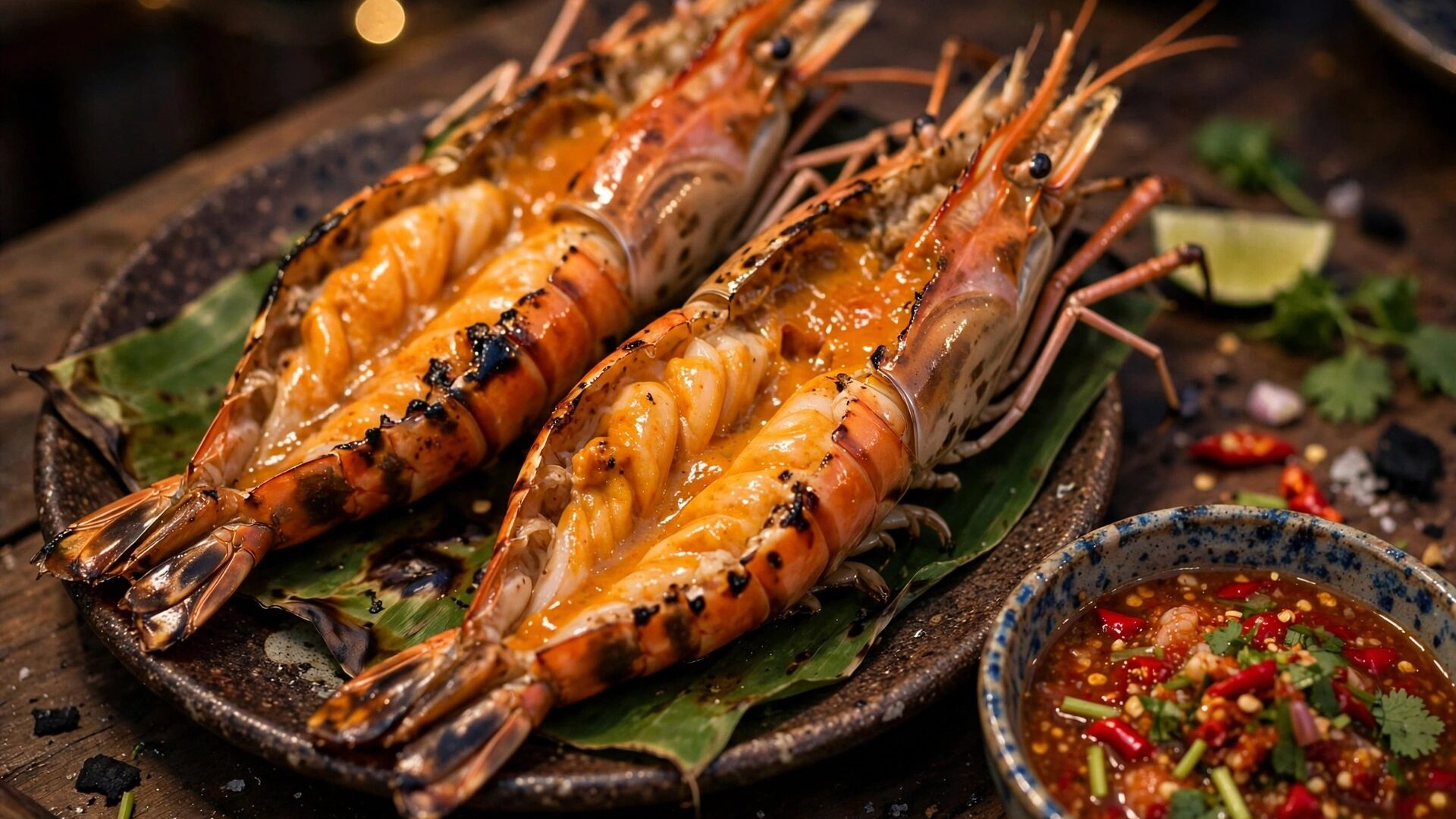
Ketsurang’s running gag is introducing her ancient household to dishes that won’t exist for another few hundred years. In one memorable episode, she grills Ayutthaya’s famous river prawns — split open and glistening, the way they’re still cooked along the Chao Phraya today — and serves them with a fiery lime-and-chili seafood dipping sauce, winning over her hostile future mother-in-law one prawn at a time.
In another, a craving for green mango sends her improvising mamuang nam pla wan (มะม่วงน้ำปลาหวาน): crisp green mango slices with a salty-sweet caramel-like dip. And in the show’s most beloved food scene, the tables turn — the mother-in-law teaches her to make mu sarong (หมูโสร่ง), seasoned pork rolled into bite-sized balls and wrapped in whisper-thin wheat noodles until each one looks like a tiny skein of yarn, then deep-fried to a shattering crisp.
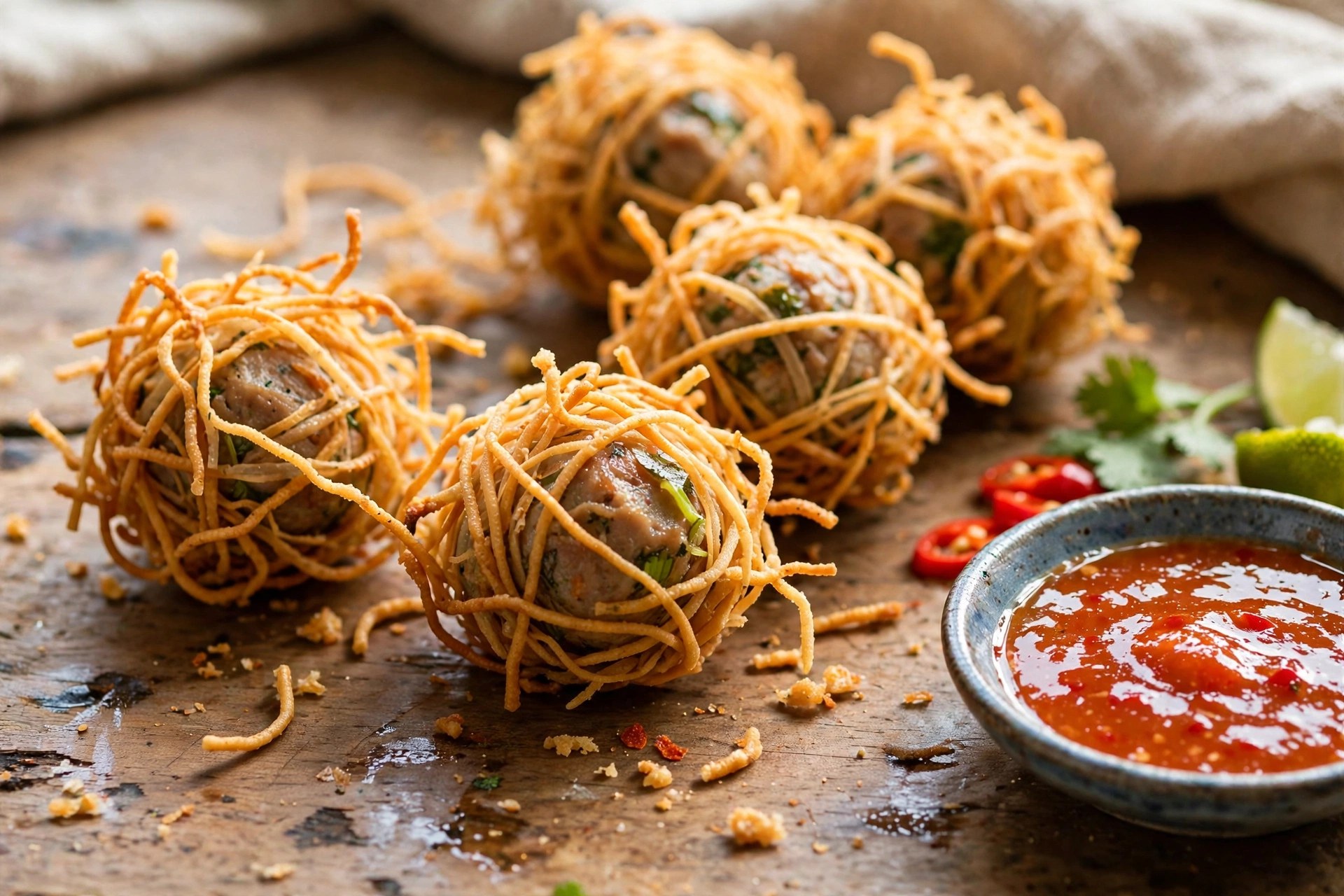
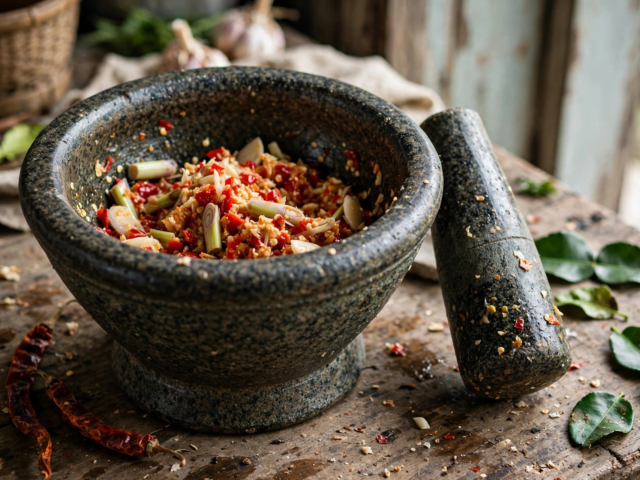
Around these dishes, the show quietly gets the small things right. Characters eat with their hands, and servants set out bowls of lime-scented water for washing fingers before and after the meal. The curry pastes and dips are pounded in a mortar and pestle — pounded, not muddled, exactly as a Thai cook would do it. When Ketsurang tastes something delicious, she blurts out “saep!” (แซ่บ) — the Isan word for delicious that has since been borrowed by slang-happy Thais everywhere.
What the Show Gets Right About 1600s Siam
Strip away the time-travel fantasy and much of the food world on screen is plausible. The chili heat would not have shocked a 17th-century palate: the Portuguese had introduced chili peppers to Southeast Asia back in the 1500s, and by King Narai’s reign they were thoroughly woven into Siamese cooking. Ayutthaya really was — and still is — famous for its giant freshwater river prawns (Macrobrachium rosenbergii), pulled from the rivers around the old capital. Eating with the hands and rinsing fingers in scented water were standard practice, and the show is honest about food as a marker of rank: Ketsurang gets to taste the good stuff because she has landed in an elite household under the sakdina system, where privilege and the dinner table were never far apart.
The drama also nods to one of the most delicious true stories in Thai food history: Maria Guyomar de Pina, known by her noble title Thao Thong Kip Ma (ท้าวทองกีบม้า). A Siamese woman of mixed Japanese-Portuguese-Bengali ancestry who cooked in King Narai’s palace, she is credited by tradition with introducing a whole family of egg-yolk desserts with Portuguese roots — foi thong (ฝอยทอง, golden threads), thong yip (ทองหยิบ), thong yot (ทองหยอด), and khanom mo kaeng (ขนมหม้อแกง) among them. Whether every attribution is strictly accurate matters less than the larger truth the show captures: Ayutthaya’s golden age was a cosmopolitan one, and its food — like its politics — was shaped by the foreigners who passed through.
Where the Fantasy Outruns History
But this is a romantic comedy, not a documentary, and the food timeline wobbles. That punchy lime-chili seafood sauce Ketsurang whips up? Nam chim seafood as we know it is a modern creation of the street-food era. The sweet-salty nam pla wan dip for green mango is likewise a 20th-century snack, not a 17th-century one. And while mu sarong looks and feels like an old royal-cuisine snack, there is no real evidence it existed in Narai’s Ayutthaya — it’s the kind of dish the show’s food stylists reached for because it feels ancient, all patience and handcraft.
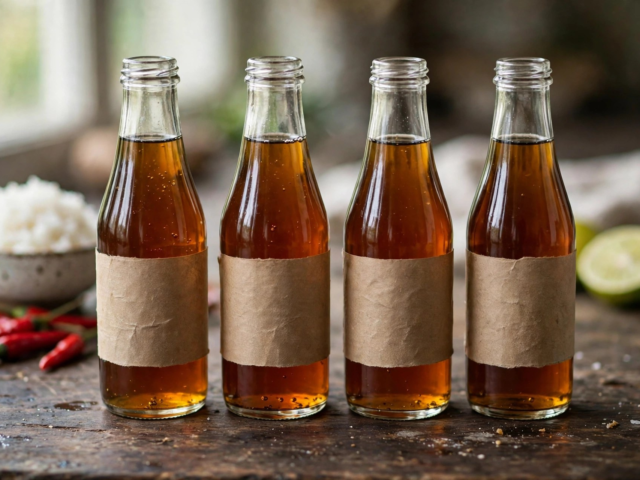
Even the show’s salt-versus-fish-sauce moment deserves a footnote. One popular reading of Thai food insists that a “truly authentic” Thai recipe can only get its saltiness from fish sauce — but fish sauce itself is made with salt, and salt has seasoned Thai food for as long as anyone has been cooking it. Authenticity is a slipperier idea than any single ingredient.
Perhaps the funniest part is how the fantasy leaked back into reality. Thai restaurants reportedly added dishes to their menus solely because the drama had mentioned them, and home cooks across the country tried their hand at Ayutthaya-era cooking after seeing it on screen. The show invented a food history, and then the country started cooking it for real.
The Aftertaste: A Country That Cooked Along
Love Destiny didn’t just top the 2018 search charts; it revived an appetite for Thai history itself, from 17th-century dress to the filming locations around Ayutthaya, where visitors still pose in period costume. The phenomenon kept rolling: a spin-off film arrived in July 2022, and the sequel series Love Destiny 2 began airing in October 2023 — carrying with it a fresh wave of interest in the desserts of Thao Thong Kip Ma, whose modern-day descendants in Ayutthaya still make and sell them.
For a country that takes such pride in its cuisine, it took a time-traveling archaeologist to finally put Thai food at the center of a Thai drama. The history isn’t always exact — but the love for the food, pounded and grilled and eaten by hand, is absolutely real. And somewhere, the ghost of every orange-juice-ordering nang ek is finally getting a proper meal.