That bag of shrimp you bought two days ago — still good, or already risky? You’re not alone in wondering. Spoiled shellfish poisoning is one of the most common causes of food poisoning, and shrimp sits right at the top of that list. The tricky part? Pathogens like Vibrio don’t always produce odors, so “it smells fine” isn’t always a safe bet. This guide breaks down exactly how long shrimp lasts in the fridge — raw, cooked, and thawed — plus how to store it properly and spot the warning signs before it’s too late.
How Long Does Raw Shrimp Last in the Fridge?
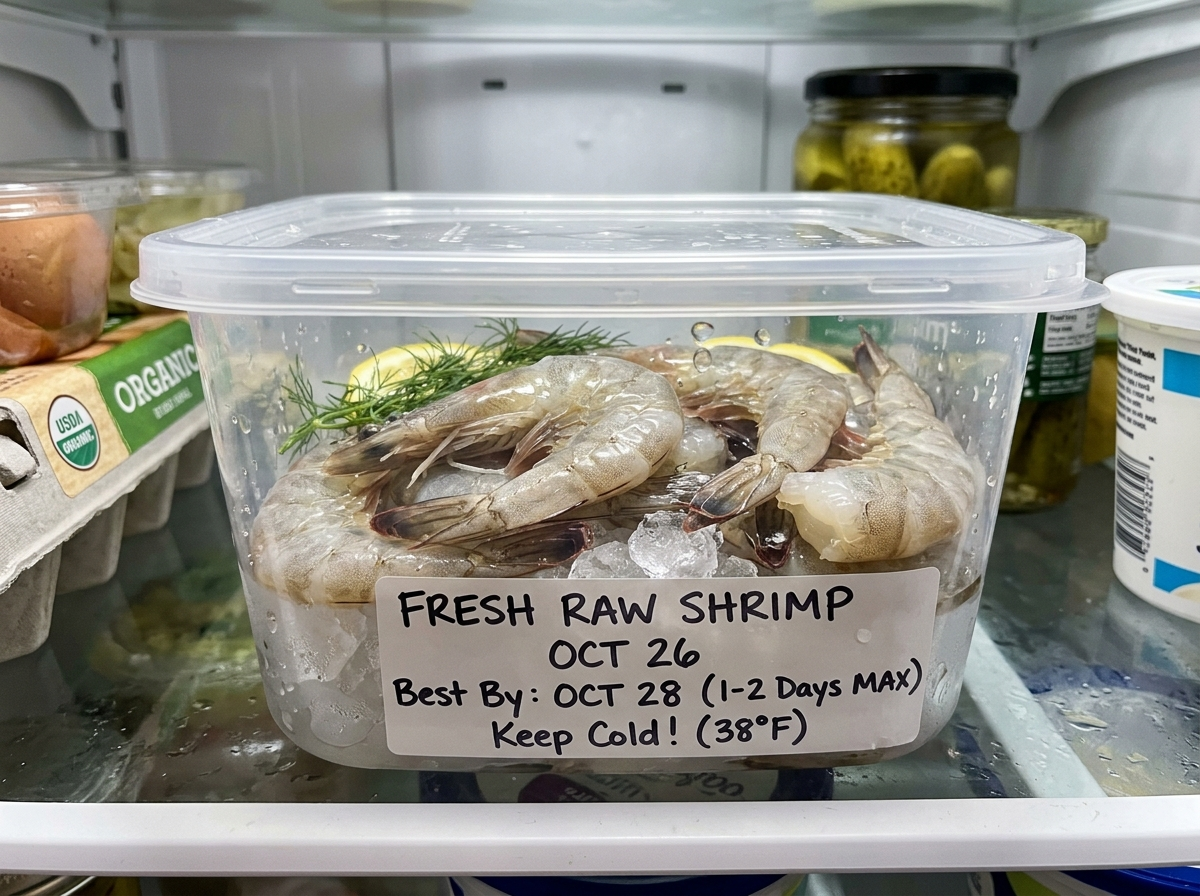
Let’s get straight to the answer. Raw shrimp lasts 1 to 2 days in the refrigerator — one of the shortest windows of any protein. That’s it. Not three days. Not a week. Just one to two days.
According to the FDA and USDA, raw shrimp is highly perishable. When stored properly at or below 40°F (4°C), raw shrimp is generally safe to eat for about 1 to 2 days. After this short window, the risk of bacterial growth increases quickly, even if the shrimp still looks fine.
That last part is worth repeating — even if it looks fine. Bacteria don’t wait for your shrimp to turn green or start stinking. They get to work long before your nose picks up on anything suspicious.
Some shrimp packaging may have a “best-by” or “use-by” date, which indicates the packager’s estimate of when the product will be the best quality. Shrimp may last beyond that date for 2 days, but if you’re unsure, check the texture and smell. If the shrimp is slimy or smells like ammonia, it’s best to toss it.
⚠️ Pro Tip: If you don’t intend to cook the raw shrimp within 1–2 days, freeze it immediately to extend its shelf life. Don’t wait around hoping you’ll get to it “tomorrow.” Tomorrow turns into the day after, and now you’ve got a food safety problem.
How Long Does Cooked Shrimp Last in the Fridge?
Here’s where you get a bit more breathing room. Cooked shrimp lasts for 3 to 4 days in the refrigerator.
That timeline starts the moment the shrimp is done cooking — not when you remember to put it away. Cooked shrimp should be refrigerated within 2 hours of being cooked. According to the USDA, even cooked shrimp should never sit out for more than 2 hours (or 1 hour if above 90°F).
Why does cooked shrimp last longer than raw? Cooking shrimp eliminates most bacteria and denatures the active enzymes, which is why cooked shrimp lasts significantly longer than raw. It can still be recontaminated after cooking, so proper storage is essential.
Think of it this way: cooking gives you a head start in the race against bacteria. But it doesn’t stop the clock forever. After day 4, you’re gambling — and the stakes are your stomach.
If you’ve got leftover cooked shrimp from last night’s dinner, eat it within that 3-to-4-day window and you’ll be fine.
How Long Does Thawed Shrimp Last in the Fridge?
This one catches a lot of people off guard. You thaw shrimp in the fridge overnight, life gets busy, and suddenly two days pass. Is it still safe?
Shrimp can be stored for about one to two days in the fridge before it needs to be cooked, according to the USDA. But don’t try to go past 48 hours.
Here’s the catch, though — the thawing method matters. If shrimp was thawed using cold water or a microwave, cook it immediately — it cannot be safely stored in the fridge. Only shrimp that was thawed slowly in the fridge gets that extra 1-to-2-day grace period.
And before you ask: according to the U.S. Food and Drug Administration, you can safely re-freeze shrimp that you thawed correctly in the fridge or cold water. Their maximum hold time at room temperature throughout this process should be at most two hours. But will the quality be as good? Probably not. Avoid thawing and refreezing — both degrade texture and flavor. Refreezing shrimp affects its texture and increases the risk of freezer burn.
How to Store Shrimp in the Fridge the Right Way
Knowing how long shrimp lasts is only half the equation. How you store it makes all the difference between hitting that 2-day or 4-day window and falling short.
Storing Raw Shrimp
Store raw shrimp in its original packaging on the bottom shelf of the refrigerator. In case any liquid leaks from the shrimp container, storing it away from other foods helps minimize the risk of cross-contamination.
Want to go the extra mile? Remove the shrimp from the package and place them in a colander set inside a larger bowl. Cover the shrimp with ice and a damp paper towel or cloth. This method keeps the shrimp colder than the fridge alone can manage, which is exactly what seafood needs.
The optimal temperature range for refrigerated seafood storage is between 32°F and 40°F. Any temperature deviations might negatively impact the seafood’s freshness. Above 40°F, you encounter the “Temperature Danger Zone,” a range between 40°F and 140°F where bacteria proliferate rapidly.
Storing Cooked Shrimp
Cooked shrimp can last 3 to 4 days if properly stored in the fridge — sealed by being wrapped tightly with plastic wrap, put into a shallow airtight container, or put into heavy-duty freezer bags.
A few things that really matter here:
- Refrigerate quickly. Refrigerate the cooked shrimp within two hours. Keep them in shallow, airtight containers so they won’t support the growth of bacteria.
- Mind the placement. Always store cooked shrimp in a clean, airtight container. Place it on a higher shelf in the refrigerator, away from raw foods, especially raw meats, poultry, or seafood.
- Label everything. Write the date on the container with a piece of tape. It takes five seconds and eliminates the guessing game later.
If you’re someone who does weekly meal prep — maybe you grill shrimp in batches or cook shrimp for salads — this routine will save you from unnecessary waste and potential stomach trouble.
Can You Freeze Shrimp? (Yes, and Here’s How)
If you can’t use your shrimp within the fridge timeline, the freezer is your best friend. You can absolutely freeze your shrimp. In fact, freezing shrimp is the best way to keep it fresh longer.
Raw shrimp stays good in the freezer for 3 to 6 months for best quality. Cooked shrimp can go for 2 to 3 months. After that, the shrimp won’t make you sick, but quality (texture, flavor) declines before safety becomes a concern — frozen shrimp will develop freezer burn and off-flavors over time.
The flash-freeze method works best: place the shrimp in a single layer on a baking sheet and freeze until solid — this ensures the shrimp won’t clump together. Then, transfer them to an airtight, freezer-safe bag.
For freezing, shell-on shrimp does have better protection against freezer burn. So if you’re buying shrimp specifically to freeze for later, leave those shells on.
And here’s something most people don’t think about: unless you live near a coastal area and have access to fresh-off-the-boat shrimp, virtually all shrimp sold at fish counters was previously frozen and thawed by the fishmonger. So that “fresh” shrimp at the counter? The quality of frozen shrimp is generally excellent. For superior flavor and texture, buy shrimp frozen and defrost it just before cooking.
How to Tell if Shrimp Has Gone Bad
Your senses are your first line of defense. Here’s what to look for:
Smell it. This is the most reliable indicator. Fresh raw shrimp should smell clean, faintly briny or oceanic — similar to fresh seawater. If raw shrimp has a sour, ammonia-like smell, its coloring is dull and/or it looks slimy, it’s gone bad and needs to be tossed.
Look at it. Fresh shrimp has a slight translucence and a clean, grayish-pink color. If it’s turning yellow, has dark spots, or looks unusually dull, that’s not a good sign.
Touch it. Fresh shrimp feels firm and slightly moist. If it’s slimy and noticeably off, it was in the fridge too long and is clearly spoiled.
Check cooked shrimp too. If cooked shrimp has gone bad, it will also have a sour, ammonia-like smell and/or slimy texture. In that case, it should be thrown away.
⚠️ Warning: Pathogens like Vibrio don’t always produce odors. The USDA explicitly states cooked shrimp is unsafe after 4 days regardless of smell. Don’t rely on smell alone — count the days too.
What Happens if You Eat Bad Shrimp?
No one plans to eat spoiled shrimp, but it happens — sometimes because the shrimp was buried in the back of the fridge, sometimes because heavy spices masked the taste. Here’s what you might deal with:
Eating spoiled shrimp can cause food poisoning symptoms like stomach cramps, nausea, vomiting, or diarrhea. Symptoms usually develop 4–48 hours after eating contaminated shrimp.
The bacteria you’re most worried about with shrimp include Vibrio parahaemolyticus (found in raw or undercooked shrimp), Norovirus (a leading cause of foodborne illnesses), Salmonella (linked to improperly stored seafood), and Hepatitis A (which can spread through contaminated shellfish).
If you have severe symptoms like trouble breathing, a fast heartbeat, or severe stomach pain, get help right away. Most cases of mild food poisoning clear up on their own with rest and hydration, but don’t hesitate to see a doctor if things feel serious.
📌 Disclaimer: This article is for informational purposes. If you suspect food poisoning, always consult a healthcare professional.
Quick Shrimp Storage Reference
Here’s a clean breakdown so you can bookmark this and check back anytime:
- Raw shrimp in the fridge: 1 to 2 days
- Cooked shrimp in the fridge: 3 to 4 days
- Thawed shrimp in the fridge: 1 to 2 days (if thawed in the fridge)
- Raw shrimp in the freezer: 3 to 6 months
- Cooked shrimp in the freezer: 2 to 3 months
- Shrimp at room temperature: safe for up to 2 hours (1 hour if above 90°F/32°C)
Tips for Reheating Leftover Shrimp
Got cooked shrimp in the fridge and want to enjoy it again without ruining the texture? The biggest mistake people make is blasting it with high heat. Shrimp is already cooked — you just need to warm it through.
It’s best to use a low temperature to avoid the rubbery texture shrimp can get when overcooked. Alternatively, enjoy leftover cooked shrimp cold or at room temperature, depending on how it was prepared.
When reheating cooked shrimp, avoid using a microwave if possible, as it can make the texture rubbery and dry. Instead, gently warm it in a pan, oven, or air fryer to preserve its taste and texture.
Overcooked shrimp has a rubbery texture, so keep your shrimp succulent by allowing it to reach room temperature first, then reheat on a low heat. If reheating in a pan, add a little water to avoid drying out.
If you’re serving it with something like rice, here’s a smart workaround: heat the starch first and then mix in the cold shrimp to remove some of the chill without worrying about blitzing the texture of the shrimp. Works perfectly with a teriyaki chicken bowl situation where you just swap out the protein.
Does Shell-On Shrimp Last Longer?
You might assume shrimp with the shell on has a longer fridge life. The truth? Very minimally. The shell provides a slight barrier but does not meaningfully extend the refrigerator window. Both shell-on and peeled raw shrimp should be cooked within 1–2 days.
Where the shell does help is in the freezer. For freezing, shell-on shrimp does have better protection against freezer burn. So if you’re buying in bulk and know you won’t cook everything right away, keep the shells on before tossing them in the freezer.
Can You Cook Shrimp Straight From Frozen?
Yes — and this is a real lifesaver on busy nights. Frozen shrimp can be cooked directly from frozen — add 1–2 minutes to the cooking time. This works great for sautéing, boiling, or even grilling.
If you’re someone who loves throwing together a quick seafood dinner, keeping a bag of frozen shrimp on hand is one of the smartest moves you can make. You skip the whole thawing-and-timing stress and go straight from freezer to pan. Pair it with something like a quick pho broth or toss it into some potstickers filling, and dinner’s ready before you know it.
Knowing how to tell when shrimp is cooked is especially useful here since you’re starting from a frozen state and don’t want to undershoot or overshoot the cook time. Look for that classic C-shape curl and an opaque, pinkish-white color — that’s your visual cue that it’s done.
FAQ
How long can I keep raw shrimp in the fridge before cooking it?
Raw shrimp lasts about 1 to 2 days in the fridge if stored in an airtight container or its original packaging at 40°F (4°C) or below. If you won’t cook it within that window, freeze it right away. Don’t push it past 48 hours — the risk of bacterial growth isn’t worth it.
Can I eat cooked shrimp after 5 days if it still smells okay?
No. Pathogens like Vibrio don’t always produce odors. The USDA explicitly states cooked shrimp is unsafe after 4 days regardless of smell. Stick to the 3-to-4-day guideline and discard anything beyond that.
What’s the safest way to thaw frozen shrimp?
The best way to thaw frozen shrimp is by transferring them to a colander set over a bowl, covering it with a damp paper towel or dish towel, and placing it in the refrigerator overnight. If you’re short on time, you can quickly thaw frozen shrimp by putting them in a tightly sealed plastic bag and placing the bag in a bowl of cold water. They will thaw in 15 to 20 minutes. Never use warm water or a microwave, as this will make the meat rubbery.
How long can shrimp sit out at a party or buffet?
Cooked shrimp sitting at room temperature is safe for up to 2 hours (1 hour if the room is above 90°F/32°C). After that, the risk of bacterial growth becomes significant. Keep cold shrimp on ice at buffets — this extends the safe window as long as the shrimp stays at 40°F or below.
Is it safe to store shrimp in water in the fridge?
Keeping shrimp in water might cause it to grow germs and lose its texture. Store it tightly wrapped in plastic wrap or in a closed, airtight container instead.
Shrimp is one of the most versatile proteins you can keep in your kitchen — it cooks fast, pairs with almost anything, and works in everything from stir-fries to grilled seafood spreads. But it’s also one of the most perishable. The rules are simple: raw shrimp gets 1 to 2 days in the fridge, cooked shrimp gets 3 to 4, and when in doubt — throw it out. Your future self (and your stomach) will thank you for it.