Most shrimp go from perfect to rubbery in less than a minute. That’s why the best temp to grill shrimp matters so much. If the grill runs too cool, the shrimp dry out before they get any color. If it runs too hot, the outside burns while the inside races past done. For most home cooks, the sweet spot is 400°F to 450°F, and once you know how to use that range, grilled shrimp gets a whole lot easier.
The Quick Answer: Best Temp to Grill Shrimp
If you want the short version, here it is.
The best temp to grill shrimp is 400°F to 450°F, which is medium-high heat. At that range, most large or jumbo shrimp cook in about 4 to 6 minutes total.
That sweet spot works because shrimp are small, lean, and fast-cooking. They need enough heat to get light char and good flavor, but not so much that they turn tough before you can flip them.
Quick answer:
- Best grill temperature: 400°F to 450°F
- Best shrimp size for grilling: large or jumbo
- Average cook time: 2 to 3 minutes per side
- Done signs: pink outside, opaque center, firm texture, loose C-shape
Here’s a simple way to think about it:
| Grill Temp | What Happens | Typical Time for Large Shrimp |
|---|---|---|
| 350°F to 375°F | Gentler cooking, less browning, easier to dry out | 6 to 8 minutes |
| 400°F to 450°F | Best balance of char and juicy texture | 4 to 6 minutes |
| 500°F+ | Very fast sear, easy to overcook or burn | 2 to 4 minutes |
If you only remember one number, make it 425°F. It sits right in the middle of the best range and gives you a little room for error.
Why Medium-High Heat Works Best for Shrimp
Shrimp cook more like a sprint than a roast
Chicken breasts can handle a little extra time. Pork chops give you some breathing room too. Shrimp don’t.
They’re more like toast. A small timing mistake changes everything.
Shrimp have very little fat and very little thickness. That means they cook fast, lose moisture fast, and toughen fast. Medium-high heat helps you cook them quickly enough to keep them juicy while still getting good color on the outside.
Low heat sounds safer, but it often gives you worse shrimp. They sit on the grill longer, slowly lose moisture, and end up dry without much flavor from the grates.
Very high heat sounds exciting, but it can backfire. The outside can scorch before the center finishes, especially if the shrimp are peeled or brushed with a sugary sauce.
Grill temperature and shrimp internal temp are not the same thing
A lot of people mix up two ideas:
- Grill temperature: how hot the grill is
- Internal temperature: how hot the shrimp gets inside
For grilling, the grill temperature is what helps you control texture.
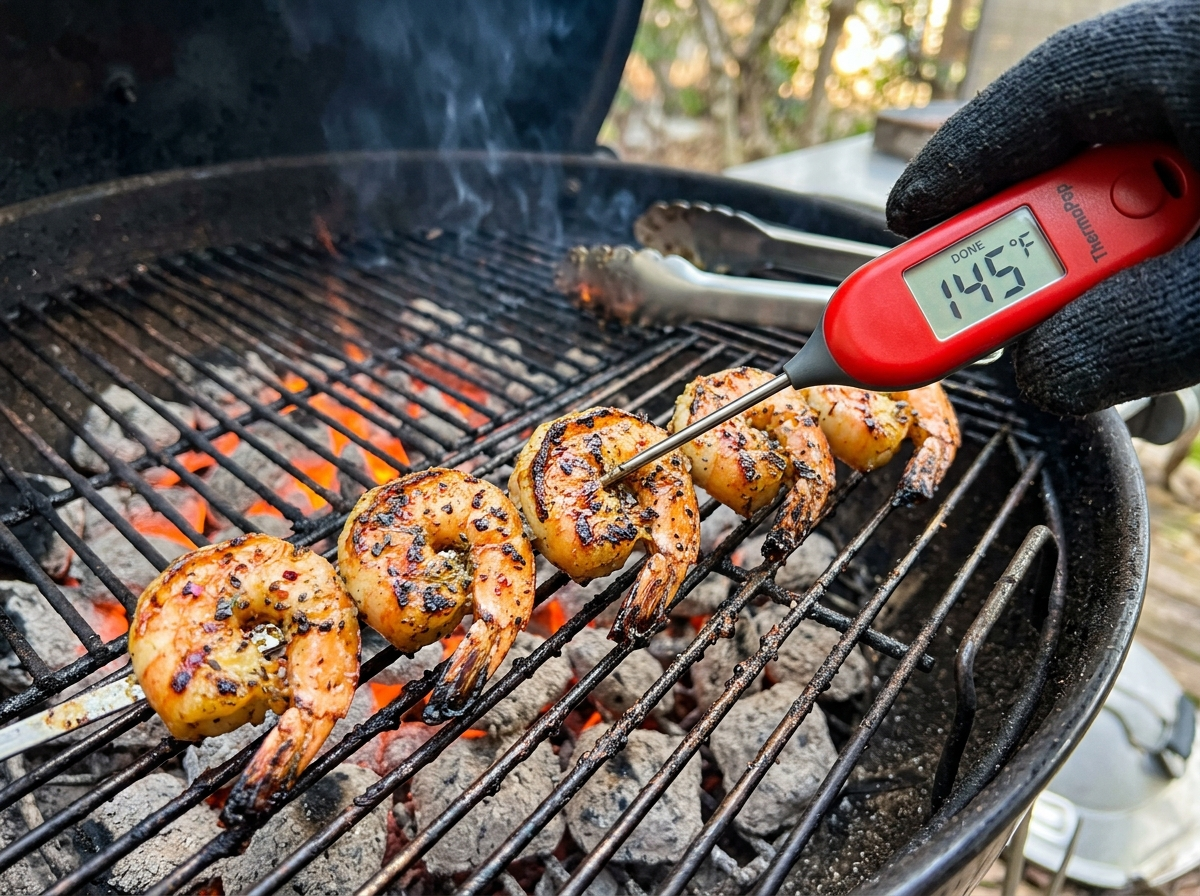
For food safety, the USDA benchmark for seafood is 145°F internal temperature. That’s useful with jumbo shrimp, but in real life, shrimp are often too small for a thermometer to be practical. By the time you insert the probe and check a few pieces, some may already be overcooked.
That’s why home cooks usually rely on visual signs. If you want the full food-safety breakdown, take a look at this guide on shrimp internal temp.
Why 400°F to 450°F beats lower or hotter temperatures
At 400°F to 450°F, shrimp get what they need most:
Fast cooking.
That protects the inside from drying out.
Light char and color.
You get grill marks and a little smoky flavor without burning the seasoning.
More control.
You still need to pay attention, but you won’t feel like every second is a crisis.
Did you know?
The grill lid thermometer doesn’t always match the temperature at the grate. Shrimp sit on the grate, so that surface heat matters more than the number on the lid.
How to Grill Shrimp Perfectly at the Right Temperature
Pick the right shrimp size
Large shrimp are much easier to grill than tiny ones.
If you’ve ever watched a bunch of small shrimp fall through the grates or overcook before you can turn them, you already know why.
For most grills, the best choice is:
- Large shrimp: 31/40 count per pound
- Jumbo shrimp: 21/25 count per pound
- Extra jumbo: 16/20 count per pound
Those numbers mean how many shrimp are in one pound. So 21/25 means you get about 21 to 25 shrimp per pound.
Pro tip:
If you’re new to grilling shrimp, buy jumbo shrimp. They give you a bigger margin before overcooking.
Prep the shrimp so they sear instead of steam
The grill can only do so much if the shrimp are wet.
Pat them dry with paper towels before you season them. That one small step helps the outside brown faster and prevents steaming.
Then toss them with a little oil and your seasoning. You don’t need much. Shrimp already have a clean, slightly sweet flavor.
A simple mix works well:
- olive oil
- salt
- black pepper
- garlic
- paprika
- lemon zest
If you want to marinate, keep it short. About 15 to 30 minutes is plenty.
A long soak doesn’t make shrimp more flavorful. It can just make the texture worse, especially if the marinade has lemon juice, lime juice, or vinegar.
Warning:
Acid-heavy marinades can make the outside of shrimp turn chalky if they sit too long.
Use skewers or a grill basket
You can place large shrimp straight on the grates, but skewers make life easier.
Two flat metal skewers are even better because they stop the shrimp from spinning when you flip them. If you’re using bamboo skewers, soak them in water for about 30 minutes so they don’t burn too quickly.
A grill basket is a good move for smaller shrimp or mixed vegetables.
Set up the grill the right way
For a gas grill, preheat for about 10 to 15 minutes, then aim for 400°F to 450°F.
For a charcoal grill, wait until the coals are hot and mostly ashed over. Spread them for medium-high direct heat, and leave one cooler zone if you want a safety area.
That cooler side helps if the shrimp start browning too fast. It’s a small trick, but it can save dinner.
A simple step-by-step method
Here’s the easiest way to grill shrimp without overthinking it:
- Thaw completely if frozen.
Most shrimp sold in stores were frozen at some point anyway, so don’t stress about that. Just thaw them fully and pat them dry. - Season lightly.
A little oil, salt, and spice goes a long way. - Skewer the shrimp.
It makes flipping faster and cooking more even. - Preheat the grill to 400°F to 450°F.
Clean and oil the grates so the shrimp don’t stick. - Grill over direct heat.
Cook for about 2 to 3 minutes per side for large or jumbo shrimp. - Pull them off early, not late.
The heat already inside the shrimp keeps cooking them for a moment after they leave the grill.
That last point matters a lot. People often wait for shrimp to look “extra done,” then wonder why the texture turns rubbery.
If you want a full walkthrough with more prep details, check this guide on how to grill shrimp perfectly.
Approximate grill time by shrimp size
Here’s a practical cheat sheet for shrimp grilled at 400°F to 450°F:
| Shrimp Size | Time Per Side | Total Time |
|---|---|---|
| Medium | 1.5 to 2 minutes | 3 to 4 minutes |
| Large | 2 minutes | 4 minutes |
| Jumbo | 2 to 3 minutes | 4 to 6 minutes |
| Extra jumbo, shell-on | 3 minutes | 6 minutes |
These are estimates, not rules carved in stone. Your grill, the shrimp size, and whether they’re shell-on or peeled all change the pace a bit.
How to Know When Shrimp Are Done on the Grill
Look for color changes
Raw shrimp look gray and a little translucent.
Cooked shrimp turn:
- pink or orange on the outside
- white and opaque on the inside
If you cut into one and the center still looks glassy or translucent, give it another 30 seconds to 1 minute.
Watch the shape
You’ve probably heard the “C” rule.
That one is useful.
A properly cooked shrimp usually curls into a loose C-shape.
An overcooked shrimp often curls into a tight O-shape.
It’s not a perfect science, but it’s a great quick clue when you’re standing over a hot grill.
Feel the texture
Done shrimp feel firm but still a little springy.
If they feel mushy, they need more time.
If they feel hard and stiff, you’ve gone too far.
Think of the texture like this: you want a shrimp that snaps gently when you bite it, not one that fights back like a rubber band.
Should you use a thermometer?
For very large shrimp, you can.
For small shrimp, it’s usually more trouble than it’s worth.
If you do use one, the general safe target for seafood is 145°F. Still, most home cooks use a mix of time, color, and texture because shrimp are so small and cook so fast.
If you want more visual cues, this article on how to tell when shrimp is cooked makes it easier to judge them without guessing.
Common Mistakes That Make Grilled Shrimp Tough
Starting with wet shrimp
Water on the surface slows browning.
Instead of searing, the shrimp steam. That leaves you with pale shrimp that spend too long on the grill.
A quick pat dry makes a big difference.
Using tiny shrimp over direct heat
Small shrimp can still be tasty, but they’re harder to grill well.
They overcook fast, slip through the grates, and don’t give you much time to react. If small shrimp are all you have, use a grill basket and stay closer to 400°F than 450°F.
Leaving them on “just a little longer”
This is probably the most common mistake.
Shrimp don’t reward caution the way chicken does. Once they turn opaque and firm, they’re basically done. That extra minute you add “just to be safe” is often the minute that ruins them.
Adding sweet sauce too early
Barbecue sauce, honey glazes, teriyaki-style sauces, and sugary marinades can burn fast.
So what should you do instead?
Grill the shrimp most of the way first, then brush on the sauce in the last minute or two. That gives you shine and flavor without blackened sugar.
Marinating too long
Shrimp don’t need an overnight marinade.
If your marinade includes citrus or vinegar, keep it short. Fifteen minutes often does the job. Oil-based spice mixes can go a little longer, but there’s still no real upside to hours and hours.
Not setting up a cooler zone
A full grill doesn’t always cook evenly. Some spots run hotter than others.
Leaving one part of the grill a little cooler gives you a safe landing zone if a few shrimp start cooking faster than the rest.
That small bit of control matters because shrimp move quickly.
Best Grill Temp for Different Shrimp Styles
Not every shrimp recipe should be grilled at the exact same temperature. The best range changes a bit based on size, shell, and sauce.
Peeled shrimp skewers
For peeled shrimp on skewers, 400°F to 425°F is usually the best range.
You get nice color and fast cooking, but the exposed meat won’t burn as easily as it might at 500°F.
This is the classic setup for garlic shrimp, lemon pepper shrimp, or simple Cajun-style shrimp.
Shell-on shrimp
For shell-on shrimp, you can lean a little hotter, around 425°F to 450°F.
The shell acts like a little shield. It helps protect the meat and can add flavor too. Shell-on shrimp also stay juicy a bit longer on the grill.
If you like smoky, slightly charred shrimp with a juicier center, shell-on is a smart choice.
Shrimp in a grill basket
A grill basket works well for smaller shrimp, chopped garlic shrimp, or shrimp mixed with vegetables.
Here, 400°F to 425°F is a safer target. The basket gets hot, so even medium-high heat cooks fast.
Shake or stir once or twice so one side doesn’t get too much color.
Glazed or BBQ shrimp
If your shrimp are brushed with sweet sauce, aim a little lower: 375°F to 425°F.
That lower edge helps protect the sugars in the sauce from burning. Grill the shrimp until almost done, then glaze near the end.
Think of sauce as the finishing touch, not the starting point.
Pre-cooked shrimp
Pre-cooked shrimp are already done. You’re only warming them.
That means the best temp is lower, around 350°F to 375°F, and the time is very short. Usually 30 to 60 seconds per side is enough.
Go any longer and they can turn dry and chewy fast.
Storing Raw and Cooked Shrimp Safely
Before grilling
Keep raw shrimp cold until you’re ready to cook.
If you’re buying ahead, raw shrimp usually keep best for 1 to 2 days in the fridge, depending on freshness and how they were handled. If you need more time, freeze them.
This guide on how long shrimp stays in the fridge can help if you’re meal-prepping or thawing ahead.
After grilling
Leftover grilled shrimp should be cooled and refrigerated within 2 hours. If the weather is very hot and you’re outside, don’t let them sit around too long.
Most cooked shrimp stay good for about 3 to 4 days in the fridge. For a full breakdown, see how long cooked shrimp lasts.
If the shrimp smell sour, feel slimy, or look off, don’t try to save them.
Food safety note:
If you’re cooking for pregnant people, older adults, young kids, or anyone with a weakened immune system, be extra careful with storage and don’t serve undercooked seafood.
4. FAQ Section
FAQ
What is the best temp to grill shrimp?
The best temp to grill shrimp is 400°F to 450°F. That medium-high range cooks shrimp fast enough to keep them juicy while still giving you some char and color. For most large or jumbo shrimp, plan on about 4 to 6 minutes total.
How long do you grill shrimp at 400 degrees?
At 400°F, large shrimp usually need about 2 minutes per side, while jumbo shrimp may need 2 to 3 minutes per side. Watch the shrimp more than the clock. Pull them once they turn pink, opaque, and curl into a loose C-shape.
Do you grill shrimp with the lid open or closed?
For a small batch, many people grill shrimp with the lid open so they can watch closely and flip fast. For a fuller grill or a cooler day, you can close the lid briefly between turns to hold heat. The real key is not walking away.
Can you grill frozen shrimp?
You can, but thawed shrimp grill better. Frozen shrimp release water, which makes them steam instead of sear. If you want better browning and texture, thaw them first, pat them dry, and then grill at 400°F to 450°F.
What internal temperature should grilled shrimp reach?
The general safe seafood target is 145°F internal temperature. In practice, shrimp are small and cook quickly, so many home cooks rely on visual signs instead. For larger shrimp, a thermometer can help if you want a more exact reading.
Is 350 degrees too low for shrimp?
It’s not too low to cook shrimp, but it’s usually not the best temp to grill shrimp. At 350°F, shrimp stay on the grill longer, which raises the risk of drying them out before they get good color. You’ll usually get better results at 400°F to 450°F.
5. Conclusion
If your grilled shrimp keep turning out dry, the problem usually isn’t the seasoning. It’s the heat.
Set your grill to 400°F to 450°F, use large or jumbo shrimp, and cook them fast over direct heat. Pull them the moment they turn opaque and firm. That one change can take you from rubbery shrimp to juicy, lightly charred shrimp in a single cook.
Next time, aim for 425°F and trust the loose C-shape. Once you see how quickly shrimp cook at the right temperature, you’ll stop guessing and start nailing it.