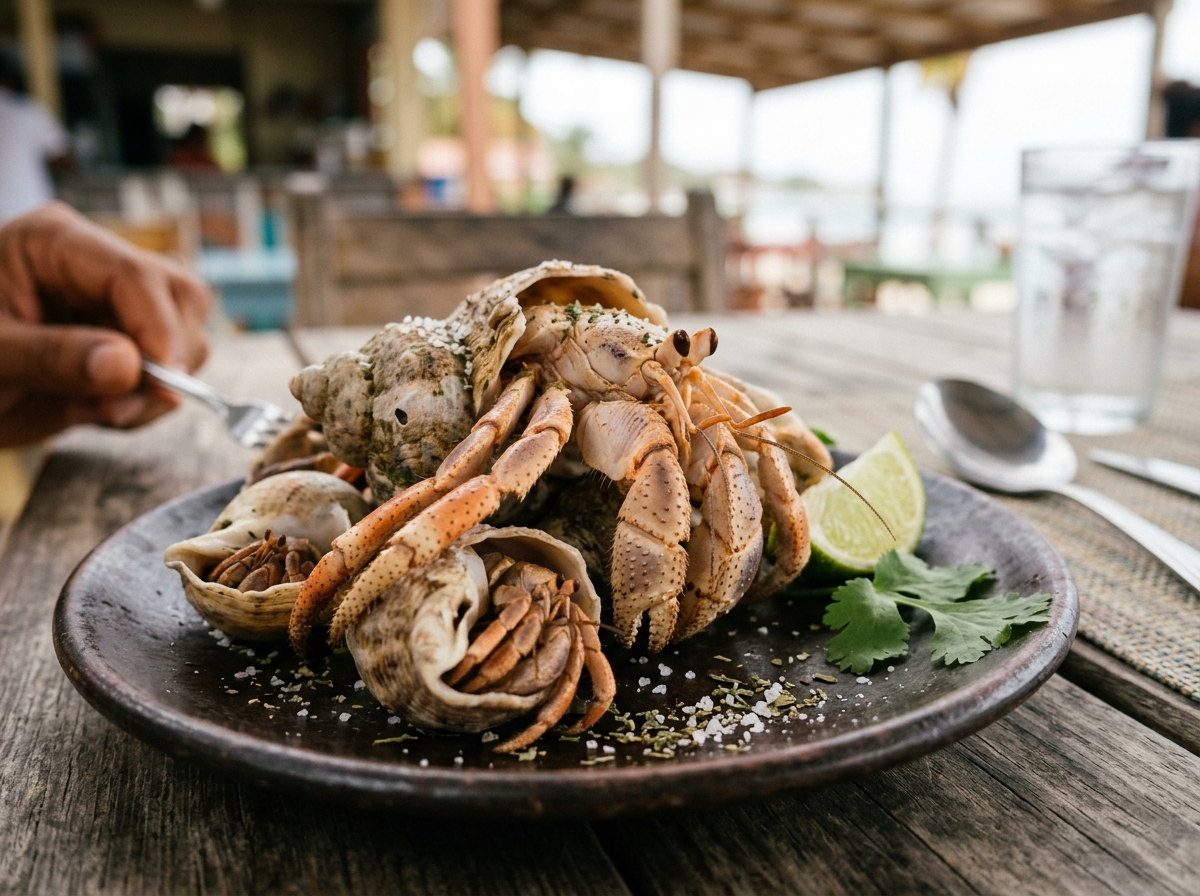
Most people know hermit crabs as quirky little pets that live inside borrowed shells. But if you’ve ever been on a tropical beach and watched wild hermit crabs scurry across the sand, a strange thought might’ve crossed your mind — can you actually eat these things?
It’s not a weird question. People eat regular crabs, lobsters, shrimp, and all sorts of crustaceans every day. Hermit crabs are crustaceans too. So where exactly do they fall on the “edible or not” spectrum?
The short answer is yes, you technically can eat hermit crabs. They aren’t poisonous. They won’t kill you. But — and this is a big “but” — there’s a long list of reasons why eating them isn’t practical, enjoyable, or even advisable in most situations. Let’s break it all down so you know exactly what you’re dealing with.
What Exactly Are Hermit Crabs?
Before we talk about eating them, it helps to understand what hermit crabs really are. Despite their name, hermit crabs aren’t “true crabs.” They belong to the superfamily Paguroidea, and there are over 800 species worldwide. They’re decapod crustaceans, which puts them in the same broad family as lobsters, shrimp, and yes, the crabs you eat at seafood restaurants.
The biggest difference? Hermit crabs don’t grow their own hard shells. Their abdomens are soft and vulnerable, so they salvage empty snail shells and carry them around for protection. As they grow, they find bigger shells. It’s basically like upgrading apartments.
You’ll find two main types people interact with:
Land hermit crabs (like the Caribbean hermit crab, Coenobita clypeatus) are the ones sold in pet stores. They live on tropical coastlines and can survive for decades — some have lived over 40 years in captivity.
Marine hermit crabs live underwater in oceans and tidal pools. These are far more numerous and come in a wide range of sizes, from tiny species smaller than your thumbnail to the massive coconut crab (Birgus latro), which isn’t technically a hermit crab anymore but evolved from them.
This distinction matters because it directly affects the “can you eat them” question.
So, Can You Eat Hermit Crabs Safely?
Yes, hermit crabs are not toxic or poisonous to humans. Their meat is edible. You won’t get poisoned from eating one the way you might from eating, say, a pufferfish prepared incorrectly.
But “edible” and “worth eating” are two very different things.
Think of it this way — tree bark is technically edible too. You could chew it and swallow it. But you wouldn’t order it at a restaurant. Hermit crabs fall somewhere in that awkward middle ground. They’re safe to consume, but the experience rarely lives up to what you’d expect from a crustacean dinner.
The meat itself tastes somewhat like a cross between shrimp and regular crab, though people who’ve tried it often describe the flavor as more “muted” or “bland” compared to blue crab or king crab. There’s also a common complaint about a slightly fishy or iodine-heavy aftertaste, especially with land hermit crabs that have been scavenging on decaying organic matter.
If you’re someone who enjoys exploring different seafood preparations and flavors, you should know that hermit crabs simply don’t deliver the same satisfaction as other crustaceans.
Why Most People Don’t Eat Hermit Crabs
Even though they’re technically edible, hermit crabs have never become a mainstream food source anywhere in the world. There are solid, practical reasons for that.
There’s Almost No Meat
This is the biggest dealbreaker. Most hermit crabs you’ll encounter are tiny — their bodies are maybe the size of a walnut once you remove them from the shell. The edible portion is even smaller. You’d need to crack open dozens of hermit crabs to get enough meat for a single mouthful.
Compare that to a Dungeness crab or even a batch of shrimp, where one serving gives you a satisfying meal. The effort-to-reward ratio with hermit crabs is laughably bad.
The only exception here is the coconut crab, which can weigh up to 9 pounds and has substantial meat in its claws and legs. Coconut crabs are eaten in parts of the Pacific Islands and Southeast Asia, and people who’ve tried them say the meat is rich, sweet, and genuinely delicious. But again, coconut crabs are a special case — they’re the largest land-living arthropod on Earth, and they’ve technically evolved beyond the hermit crab lifestyle (adult coconut crabs don’t use shells).
Scavenger Diet = Questionable Safety
Hermit crabs are nature’s garbage disposal units. They eat almost anything — rotting fruit, dead fish, animal feces, algae, decaying plant matter, and even other dead hermit crabs. Their diet is opportunistic and indiscriminate.
This scavenging behavior creates a real concern: bioaccumulation. Hermit crabs can accumulate toxins, heavy metals, bacteria, and parasites from the things they eat. A hermit crab living near a polluted coastline might carry elevated levels of mercury, lead, or other contaminants in its tissue.
With commercially harvested seafood like shrimp or salmon, there are regulatory systems in place. The FDA and similar agencies monitor contamination levels and set safety guidelines. Nobody is testing wild hermit crabs. You’re essentially eating blind when it comes to what’s actually in the meat.
⚠️ Warning: Land hermit crabs kept as pets should absolutely never be eaten. Pet hermit crabs are often treated with chemicals, exposed to painted shells (which contain toxins), and fed commercial diets that aren’t meant for human consumption. Eating a pet hermit crab is genuinely risky.
Legal and Ethical Concerns
In many places, harvesting hermit crabs — especially land hermit crabs — is either regulated or outright illegal. Several species are protected under local wildlife laws.
In the United States, collecting hermit crabs from beaches in states like Florida can get you fined. In countries like Australia, certain hermit crab species are protected, and taking them carries penalties.
Coconut crabs face particular pressure. Their populations have declined significantly across the Pacific due to overharvesting and habitat loss. The IUCN lists them as Vulnerable, and several island nations have imposed harvesting bans or seasonal restrictions.
Beyond legality, there’s an ethical dimension. Land hermit crabs are social creatures with surprisingly complex behaviors. They form “vacancy chains” where groups of crabs line up by size to exchange shells — a behavior that shows a level of social cooperation you don’t see in many invertebrates. Many people feel that eating an animal with that kind of behavioral complexity, especially one with such minimal food value, just isn’t worth it.
The Coconut Crab Exception: The One You Actually Can Eat
If this whole conversation has a bright spot for the curious eater, it’s the coconut crab.
Birgus latro is a genuine delicacy in parts of Micronesia, Polynesia, and Southeast Asia. These animals can grow leg spans of over 3 feet and have powerful claws that can crack coconuts — hence the name.
The meat is described as sweet, tender, and slightly fatty, with a taste that sits somewhere between lobster and crab. The hepatopancreas (a gland similar to what you’d call “crab butter” or “tomalley” in lobsters) is considered especially prized by locals.
Here’s the catch: Coconut crabs can be dangerous to eat in certain circumstances. If a coconut crab has fed on toxic plants — particularly sea mangoes (Cerbera manghas) — the toxins can accumulate in its body and cause serious illness or even death in humans. There have been documented cases of coconut crab poisoning in the Pacific Islands.
There’s no way to tell by looking at a coconut crab whether it’s been eating toxic plants. This makes eating wild coconut crabs a bit of a gamble unless you’re getting them from a trusted local source.
🔑 Quick Fact: Coconut crabs have been known to live for 60+ years in the wild, making them one of the longest-lived invertebrates on land. Eating one might mean consuming an animal older than your parents.
What About Marine Hermit Crabs?
Marine hermit crabs are slightly more practical as food than their land-dwelling cousins, but the same core problems apply — they’re mostly too small.
Some larger marine species, particularly those found in deep waters, have enough body mass to make eating them theoretically worthwhile. In a few coastal communities in Asia, marine hermit crabs occasionally end up in soups or stir-fries, though they’re rarely the star ingredient. They’re more of a “throw everything from the net into the pot” situation.
If you’ve ever had a seafood hotpot or a rustic coastal stew in Thailand, Vietnam, or the Philippines, there’s a chance some small hermit crabs ended up in the mix alongside shrimp, mussels, and fish. In those contexts, they contribute to the overall broth flavor more than they provide individual portions of meat.
But no fisherman is going out specifically to catch hermit crabs for food. The economics simply don’t make sense when there are so many better options in the ocean.
How Would You Even Prepare a Hermit Crab?
Let’s say you’re on a survival show, stranded on a tropical island, and hermit crabs are your only protein source. Here’s what preparation would look like.
Step 1: Remove the crab from its shell. You’d need to gently pull the hermit crab out of its borrowed shell. The soft abdomen coils around the inside of the shell, so this requires some care. Alternatively, you can cook them shell and all, though extracting the meat afterward is messier.
Step 2: Clean thoroughly. Rinse the crab in clean water. Remove the digestive tract and any visible waste. With such a small animal, this is fiddly work.
Step 3: Cook with heat. Boiling is the most common method. Drop them in boiling salted water for 5-10 minutes. You can also roast them directly over coals — this is how many Pacific Islanders traditionally prepare coconut crabs. The shells turn red when cooked, just like regular crabs and lobsters.
Step 4: Extract and eat. Crack open any hardened parts and pull out the small bits of meat. With standard-sized hermit crabs, you’re looking at a truly tiny yield. With coconut crabs, you’ll get meaningful portions from the claws, legs, and body cavity.
The cooking process isn’t complicated — it’s essentially the same as preparing any shellfish. The problem is just the scale. It’s like trying to make a meal out of popcorn shrimp that are each the size of a raisin.
Survival Situations: When Eating Hermit Crabs Makes Sense
There is one scenario where eating hermit crabs becomes a practical choice — survival.
If you’re stranded on a beach or island with limited food options, hermit crabs can be a legitimate protein source. They’re slow, easy to catch, require no tools or traps, and they’re found on tropical coastlines worldwide.
In a survival context, the rules change. You’re not worried about taste or yield per crab — you’re worried about staying alive. Hermit crabs provide protein, fats, and minerals that can keep your body going when other food sources aren’t available.
Survival instructors generally recommend boiling them if you have the means. Boiling kills most parasites and bacteria. If you don’t have a container for boiling, roasting them directly on hot rocks or coals works too. The key is making sure the meat is fully cooked — eating raw hermit crab significantly increases your risk of parasitic infection.
💡 Pro Tip: In a survival scenario, don’t throw away the shells the hermit crabs were living in. Snail shells can be used as small containers, scoops, or even crude tools.
Hermit Crabs vs. Other Crustaceans You Should Eat Instead
If your interest in eating hermit crabs comes from a genuine love of crustaceans, you’ve got much better options. Here’s how hermit crabs stack up against what you’ll actually find at a seafood market.
Regular crab (blue crab, Dungeness, king crab, snow crab) gives you generous portions of sweet, delicate meat. A single king crab leg can have more meat than a hundred hermit crabs combined.
Lobster offers rich, buttery meat and is one of the most celebrated seafood experiences you can have. If you’ve ever grilled lobster tails with butter and garlic, you know there’s no comparison.
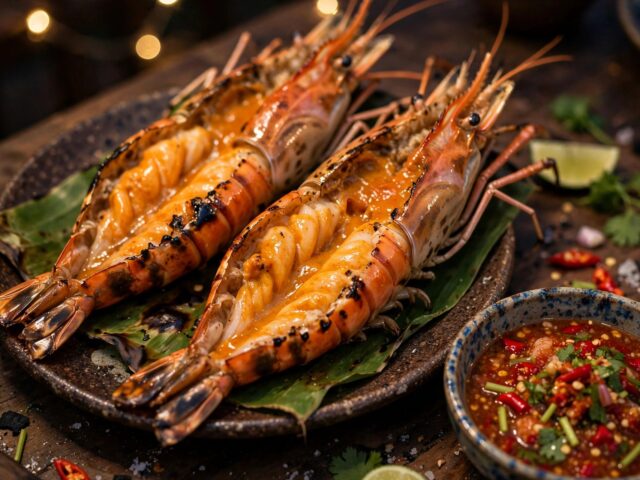
Shrimp is probably the most accessible crustacean on the planet. It’s affordable, widely available, versatile in cooking, and the doneness is easy to gauge even for beginners. A simple shrimp stir-fry gives you more protein and flavor than any hermit crab dish ever could.
The bottom line? Hermit crabs are a curiosity, not a food source. If you want crustacean meat, spend your money and effort on options that actually deliver.
Health Risks You Should Know About
Eating hermit crabs isn’t just impractical — it carries specific health risks that deserve attention.
Parasites are a real concern. Hermit crabs, especially land species, can harbor parasites like rat lungworm (Angiostrongylus cantonensis). This parasite can cause eosinophilic meningitis in humans — a serious condition that inflames the membranes around your brain and spinal cord. Thorough cooking kills rat lungworm, but undercooked or raw hermit crab meat poses a genuine threat.
Bacterial contamination is another issue. Because hermit crabs eat decaying organic matter, their bodies can carry elevated levels of harmful bacteria including Vibrio and Salmonella. Again, proper cooking mitigates this, but it’s still a risk factor you don’t face with commercially sourced, inspected seafood.
Heavy metals and toxins accumulate in hermit crab tissue over time. Crabs living near urban coastlines, industrial areas, or polluted waters can carry concerning levels of mercury, cadmium, and lead. There’s no inspection or testing process for wild-caught hermit crabs, so you have no way to know what’s in the meat.
Allergic reactions are possible too. If you’re allergic to shellfish — specifically crustaceans — hermit crabs will trigger the same allergic response as shrimp, crab, or lobster. The proteins responsible for crustacean allergies (primarily tropomyosin) are present in hermit crabs just like in any other crustacean.
⚠️ Medical Disclaimer: If you experience any allergic symptoms after eating any crustacean — including hives, swelling, difficulty breathing, or gastrointestinal distress — seek medical attention immediately. Shellfish allergies can escalate quickly.
Cultural and Historical Context
While hermit crabs aren’t mainstream food anywhere today, they do have a small place in food history and culture.
In certain Pacific Island communities, particularly in Vanuatu, the Cook Islands, and parts of the Philippines, coconut crabs have been eaten for centuries. They were an important protein source for indigenous populations living on remote islands where other meat sources were scarce.
Some indigenous coastal communities in Southeast Asia have historically included various small crustaceans — including marine hermit crabs — in communal cooking pots and broths. These weren’t served as standalone dishes but rather contributed to the overall nutritional value of soups and stews.
In Japanese cuisine, certain marine hermit crab species have occasionally appeared in regional dishes, though this is extremely niche and not something you’d find in mainstream restaurants.
The cultural thread here is clear: hermit crabs were eaten out of necessity or as a supplementary ingredient, never as a preferred food. As communities gained access to better protein sources, hermit crab consumption declined or disappeared entirely.
If you’re interested in exploring authentic Asian seafood traditions that have stood the test of time, dishes like a proper Vietnamese pho or Japanese teriyaki bowl offer much more rewarding culinary experiences.
What Do Hermit Crabs Actually Taste Like?
For those who are purely curious about the flavor — here’s what people report.
The taste is generally described as mild and slightly sweet, similar to a cross between shrimp and crab but weaker in flavor. The texture of the meat (what little there is) tends to be soft and slightly chewy. It’s not unpleasant, but it’s not memorable either.
Land hermit crabs reportedly have a stronger, sometimes off-putting taste compared to marine species. This likely comes from their diet of decomposing organic material on land. Marine hermit crabs taste cleaner and more “seafood-like,” which makes sense given their ocean diet.
Coconut crabs are the exception, as we discussed. Their meat is frequently compared to lobster in both flavor and texture, with an added richness from the fats stored in their bodies. The taste can vary depending on what the coconut crab has been eating — those that have been feeding primarily on coconuts and fruit reportedly taste sweeter.
Did you know? In some Pacific Island cultures, people would capture coconut crabs and feed them coconuts and other controlled foods for several days before cooking them. This “cleansing” period was believed to improve the flavor and reduce the risk of toxin-related illness. It’s essentially the same principle behind purging crawfish before a boil.
FAQ Section
Is it legal to catch and eat hermit crabs?
It depends on your location. In many U.S. states and several countries, harvesting wild hermit crabs — especially land species — is regulated or prohibited. Florida, for example, has laws protecting hermit crabs from commercial harvesting. Coconut crabs are protected in several Pacific Island nations due to declining populations. Always check local wildlife regulations before catching any hermit crabs.
Can eating hermit crabs make you sick?
Yes, it’s possible. Hermit crabs can carry parasites like rat lungworm, bacteria like Vibrio, and accumulated toxins from their environment. Cooking the meat thoroughly reduces most parasitic and bacterial risks, but contamination from heavy metals or environmental toxins can’t be eliminated through cooking. The risk is higher with land hermit crabs and crabs from polluted areas.
Do hermit crabs taste like regular crab?
Somewhat, but the flavor is much milder and less satisfying. Most people describe the taste as a faint version of crab or shrimp, without the sweetness and richness you’d expect from blue crab, king crab, or lobster. Coconut crabs are the notable exception — their meat is rich, sweet, and often compared to lobster.
Can you eat pet store hermit crabs?
Absolutely not. Pet store hermit crabs may have been exposed to chemicals, painted shells (which contain toxic dyes and sealants), and commercial foods not intended for human consumption. They may also have been treated with preservatives or pesticides during the supply chain. Eating pet hermit crabs is genuinely dangerous.
What’s the best crustacean to eat instead of hermit crabs?
If you love crustacean meat, stick with commercially available options like shrimp, crab, lobster, or crawfish. These are widely available, properly inspected for safety, and offer significantly more meat and better flavor. They’re also supported by established cooking techniques and recipes that help you get the best possible result.
Final Thoughts
So, can you eat hermit crabs? Technically, yes. Should you? Almost certainly not.
The meat isn’t toxic, and it won’t poison you if properly cooked. But the combination of minimal yield, potential health risks, legal restrictions, and bland flavor makes hermit crabs one of the least practical seafood options imaginable. You’d burn more calories catching and preparing them than you’d gain from eating them.
The one genuine exception is the coconut crab, which offers real culinary value — but even that comes with caveats around toxin risk and conservation concerns.
If you’re drawn to the world of crustaceans and seafood, put your energy toward options that actually reward your effort. A perfectly grilled lobster tail or a well-seasoned batch of grilled shrimp will give you everything a hermit crab can’t — great flavor, satisfying portions, and the confidence that what you’re eating is safe.
Leave the hermit crabs on the beach. They’ve got shells to find and a tiny, busy life to live. And you’ve got much better things to cook for dinner.