Most seafood seasonings taste like salt with a little paprika thrown in for color. You’ve used them, you know exactly what I’m talking about — that flat, one-dimensional flavor that does nothing for a beautiful piece of salmon or a plump shrimp skewer.
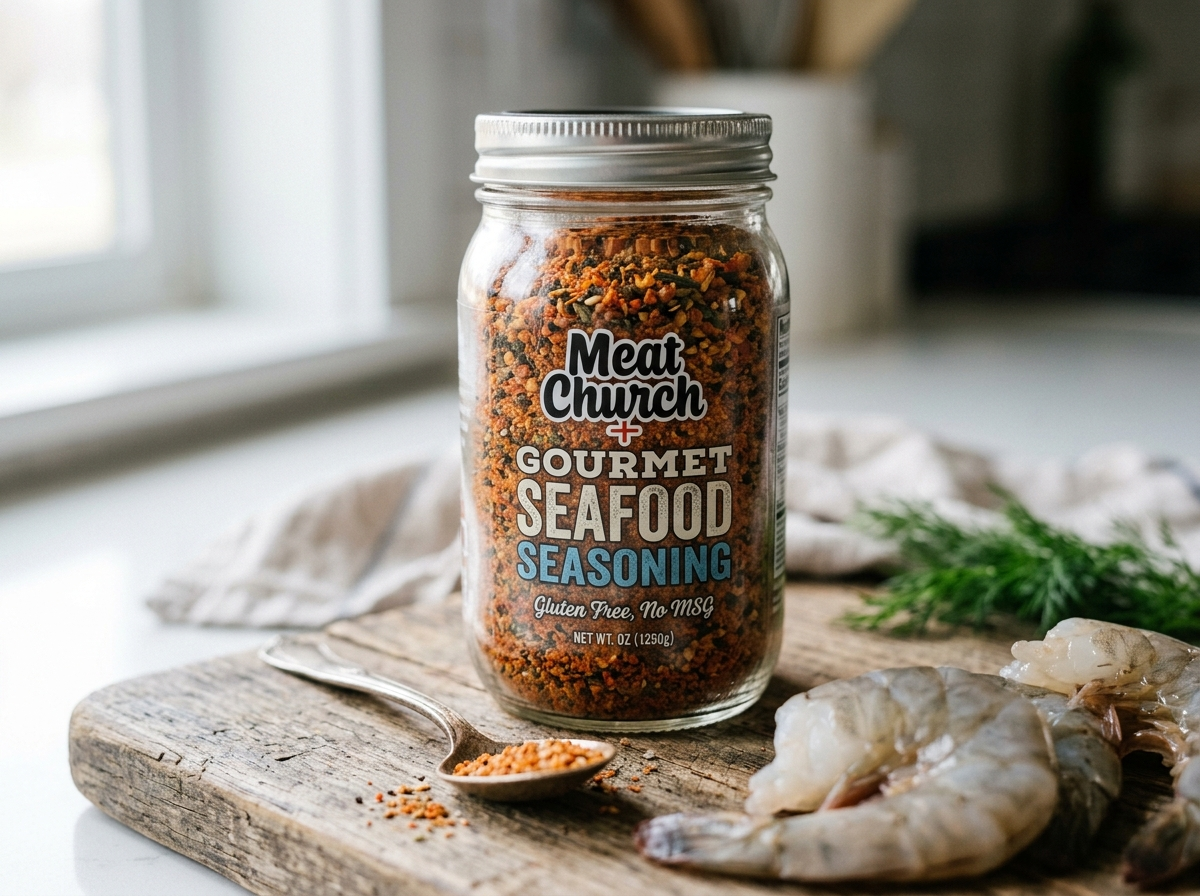
Meat Church Gourmet Seafood Seasoning is built differently, and that’s not marketing talk. Matt Pittman, the guy behind Meat Church BBQ out of Waxahachie, Texas, designed this rub specifically for seafood — not as an afterthought, but as a dedicated product with a clear flavor goal. The result is something that actually complements delicate proteins instead of bulldozing them.
Whether you’re planning to grill shrimp this weekend, bake a fillet of salmon, or smoke some cod low and slow, this guide walks you through everything — what’s in it, how it tastes, where it works best, and a few places where it genuinely falls short.
What Is Meat Church Gourmet Seafood Seasoning?
Meat Church BBQ started as a competition barbecue brand with a cult following, and it earned that reputation the honest way — through consistent performance at high-level cook-offs and a community of passionate backyard cooks who swear by their rubs.
The Gourmet Seafood Seasoning is one of their more specialized products. Where most of Meat Church’s lineup leans into bold, smoky, and sweet flavors suited for pork ribs or brisket, the seafood rub takes a softer, more coastal approach. Think bright, herby, slightly citrus-forward, with a backbone of garlic and a gentle salt balance.
The flavor profile is designed to do one specific thing: enhance seafood without overpowering it. That’s actually harder to achieve than it sounds, because seafood proteins are subtle. Over-season a piece of halibut and you’ve wasted a good piece of fish. Under-season it and you’re eating bland protein. This rub tries to live in that sweet spot.
What’s Inside: The Flavor Profile Breakdown
Meat Church doesn’t publish a full ingredient breakdown publicly, but based on the label and widely available cook reviews, the seasoning contains a blend of:
- Salt (base layer — well-calibrated, not aggressive)
- Garlic and onion powder (savory depth)
- Lemon peel / citric acid (brightness that lifts the fish)
- Dill (the most distinct herb in the mix)
- Black pepper (mild heat)
- Paprika (color and subtle sweetness)
- Parsley and other herbs (background complexity)
The dill and citrus notes are what make this rub immediately recognizable. If you’ve ever made a classic dill butter for salmon or a lemon-herb shrimp, this seasoning captures that same direction but in dry rub form — which means it works beautifully whether you’re grilling over direct heat, baking in the oven, or smoking at low temperatures.
One thing worth noting: the salt level is moderate, not high. That’s a good thing. It means you can apply a generous coat without the finished dish tasting like a salt lick.
Where It Performs Best
Grilled Shrimp
Shrimp is probably where this seasoning shines the brightest. The citrus and herb notes pair perfectly with the natural sweetness of shrimp, and because shrimp cooks fast, the rub doesn’t have time to get muddy or overpowering.
Toss your shrimp in a little olive oil, dust them generously with the seasoning, and get them on a hot grill for about 2 minutes per side. That’s it. If you’ve been wondering about how to grill shrimp perfectly, the short answer is high heat, short time, and a rub that doesn’t fight the protein — which is exactly what this one does.
Pro Tip: Don’t marinate shrimp in this rub for more than 30 minutes. The citric acid can start to “cook” the outer layer (similar to a ceviche effect) and change the texture before they ever hit heat.
Salmon — Baked or Grilled
Salmon is fatty, rich, and assertive in flavor. It can handle a seasoning with more personality than, say, tilapia or cod. Meat Church Seafood Seasoning works really well here because the dill-citrus combination is essentially a classic pairing for salmon anyway — you’re just getting it in a convenient, evenly-blended dry format.
For baked salmon, apply the rub about 15 minutes before cooking so it has time to adhere. If you’re baking at 400°F, you’re looking at roughly 12–15 minutes depending on thickness. A full guide on baking salmon at 400 will give you the exact timing based on fillet size.
For grilling, the rub creates a nice light crust on the outside of the fillet. The key is knowing the best temp to grill salmon — medium-high, around 400–450°F on the grate surface — so the outside chars slightly while the inside stays moist.
Cod and White Fish
White fish is where you need to be a little more careful with seasoning quantities. The flavor is delicate, and too heavy a hand can mask the fish entirely. With Meat Church Seafood Seasoning, a light, even dusting is all you need.
The cooked cod temperature you’re targeting is 145°F internal — once you hit that, you pull it. If you’re not sure when you’re there, checking the cooked cod temperature guide can save you from overcooking it.
Grilled Lobster Tails
This is an underrated application. Lobster tails brushed with melted butter and dusted with this seasoning before going on the grill is genuinely excellent. The herbs amplify the sweetness of the lobster without competing with it. If you haven’t tried how to grill lobster tails with a dry rub approach instead of just butter, this combo is a good place to start.
Where It Doesn’t Work As Well
Honesty matters more than a sales pitch, so let’s talk about where this rub isn’t the right tool.
Raw oysters — Don’t. Oysters on the half shell have a specific briny, mineral quality that you want to taste, not cover. If you want to know more about handling oysters before you start seasoning anything, how to open an oyster is worth reading first.
Very strong-flavored fish — Things like mackerel or bluefish have aggressive natural flavors that this herb-forward seasoning won’t really cut through. You’d need something with more acid or heat for those.
Dishes with competing sauces — If you’re planning to finish your fish in a heavy cream sauce or a spicy Asian glaze, this rub adds an extra layer that can muddy the final flavor rather than enhance it. Let the sauce do the talking in those cases.
How to Apply It: Technique Matters
The rub itself is excellent, but technique determines whether you get great results or mediocre ones.
Pat dry first. Always. Moisture on the surface of fish creates steam instead of a crust. Pat the fillet or shrimp dry with paper towels before applying any seasoning.
Oil, then rub. A thin coat of neutral oil (avocado or canola) helps the seasoning stick and promotes better browning. Brush or toss in oil first, then apply the rub.
Don’t over-apply. Seafood is delicate. You want to see the protein through the seasoning, not the other way around. A light, even coat is the goal — not the dense bark you’d build on a brisket.
Rest time varies by protein. Shrimp: season right before cooking. Salmon fillets: 10–15 minutes. Thicker cuts like halibut steaks: up to 20 minutes. Knowing halibut internal temp targets helps you plan the cook so you’re not guessing when to pull it.
Meat Church Seafood vs. Other Popular Rubs
A lot of people compare this to Kosmos Q’s salmon rub, which has its own loyal following. Both are solid products, but they go in different flavor directions. If you want a detailed breakdown of how Kosmos Q performs on fish, the best Kosmos Q rub for salmon review covers that thoroughly.
The short version: Kosmos leans sweeter and smokier, while Meat Church Seafood leans herby and bright. For grilled shrimp or white fish, Meat Church wins. For smoked salmon with a sweeter crust, Kosmos gives a different but compelling result.
Neither one is universally better — they just serve different flavor goals.
Smoking Seafood with This Rub
Smoking seafood is a different game than grilling. The smoke itself adds flavor, so your seasoning needs to complement it without competing. Meat Church Seafood Seasoning handles this better than most because the herbs and citrus actually pair nicely with mild fruit wood smoke (apple or cherry work best with seafood).
For smoked salmon, apply the rub after your dry brine stage — salt the fish first for a few hours, rinse lightly, pat dry, then apply the seasoning before it goes into the smoker. The pellicle (the tacky surface that forms after drying) helps the rub stick and smoke penetrate evenly.
If you’re storing leftover smoked or cooked salmon, knowing how long cooked salmon lasts in the fridge is genuinely useful — it’s shorter than most people think.
Storage and Shelf Life
Meat Church seasonings come in resealable bags or shaker jars depending on where you buy them. A few things to keep in mind:
Store it away from direct heat and humidity. Your spice cabinet above the stove is actually one of the worst places to keep rubs — the heat and steam from cooking degrade the herbs faster than you’d expect.
Kept in a cool, dry place, this seasoning stays flavorful for about 12–18 months. After that, it doesn’t become unsafe to use, but the herbs lose their punch and the citrus notes fade significantly. Give it a smell test — if it smells like nothing, it’s past its prime.
FAQ
Q: Can I use Meat Church Gourmet Seafood Seasoning on chicken or vegetables?
Yes, and it actually works well in both cases. The herb and citrus profile pairs nicely with grilled chicken thighs, roasted zucchini, or asparagus. It’s designed for seafood, but there’s nothing in the blend that limits it to fish and shellfish only. Just know the flavor comes across differently on higher-fat proteins like chicken — the citrus reads less prominently and the garlic notes become more dominant.
Q: Is Meat Church Seafood Seasoning gluten-free?
Based on current product labeling, it doesn’t contain gluten ingredients, but Meat Church doesn’t certify their products in a dedicated gluten-free facility. If you have celiac disease or a serious gluten sensitivity, check their current packaging or contact them directly before purchasing. Product formulations can change.
Q: How much should I use per pound of seafood?
A good starting point is about 1 teaspoon per pound for delicate white fish, and up to 1.5–2 teaspoons per pound for heartier proteins like salmon or shrimp. From there, adjust to your own taste. If you’re new to this rub, start lighter — you can always add more the next time, but you can’t take it back once it’s on.
Q: Does it work for pan-seared fish?
It does, but with a small caveat. Pan searing at high heat can cause herbs like dill and parsley to darken quickly, especially in a dry pan. Use a little oil in the pan, and don’t go past medium-high heat. The citrus notes in the rub can also brighten up as they hit the hot pan, which is actually a nice effect if you work quickly.
Q: Where can I buy Meat Church Gourmet Seafood Seasoning?
It’s available directly through the Meat Church website, Amazon, and at various BBQ specialty retailers. Walmart carries some Meat Church products in-store in certain regions, particularly in the South and Midwest. Prices typically run around $10–$14 for a standard-size bag or shaker, which is competitive for a quality rub in this category.
The Real Verdict
Meat Church Gourmet Seafood Seasoning earns its place on the shelf. It doesn’t try to do everything — it has a clear, well-executed flavor direction, and it delivers on that promise consistently across shrimp, salmon, white fish, and lobster.
The fact that it’s balanced without being timid is what sets it apart from the generic “seafood blends” that taste like seasoned salt. The dill and citrus notes are assertive enough to make an impact, but they don’t walk over the natural flavor of the protein.
If you’re building your grilling and smoking setup for the season, this rub deserves a spot next to your other go-to seasonings. Start with grilled shrimp if you want the cleanest, most immediate sense of what it does — because that’s where it really shows its personality.
And once you’re comfortable with the rub, experiment. Try it on scallops, on halibut, on smoked trout. Cook with some confidence and let the seasoning do what it was designed to do.