A thawed salmon fillet doesn’t give you much wiggle room. Once it’s fully thawed, you usually have only 1 to 2 days to cook it if it’s sitting in the fridge at a safe temperature.
That’s why this question trips people up. Plans change, takeout happens, and suddenly that salmon you thawed yesterday is still sitting there. So, how long can thawed salmon stay in the fridge without turning into a food safety gamble? Here’s the plain answer, plus the real-life details that actually help when you’re standing in front of the fridge trying to decide.
How long can thawed salmon stay in the fridge?
The short answer is simple: raw thawed salmon can stay in the fridge for 1 to 2 days if you thawed it in the refrigerator and kept it at 40°F (4°C) or below.
That 1 to 2 day window lines up with food safety guidance from sources like USDA and FoodSafety.gov for thawed seafood. Think of freezing like a pause button. It slows time. It doesn’t make old fish young again.
Here’s the quick version:
| Thawing method | Safe fridge time after thawing |
|---|---|
| Thawed in the refrigerator | 1 to 2 days |
| Thawed in cold water | Cook immediately |
| Thawed in the microwave | Cook immediately |
| Thawed on the counter | Not recommended; discard if unsafe time/temperature was reached |
Quick fact: Cold temperatures slow bacterial growth. They don’t stop it.
So if you moved salmon from the freezer to the fridge on Tuesday night and it was fully thawed by Wednesday morning, your safest move is to cook it by Thursday. Could it still look okay on Friday? Maybe. Is that a smart bet? Not really.
If you’re using it tonight, it also helps to know how to know when salmon is done so you don’t overcook it after being careful with storage.
What changes that 1 to 2 day fridge window?
That time limit sounds neat and tidy, but real kitchens aren’t perfect. A few things can make salmon spoil faster, or make your timeline feel shorter than you expected.
Your fridge temperature matters more than most people think
The 1 to 2 day rule assumes your refrigerator is holding food at 40°F or lower. If your fridge runs warm, that clock gets riskier fast.
A lot of home fridges aren’t as cold as people think. The dial says “cold,” but the actual temperature may sit at 42°F or 43°F. That doesn’t sound like a big difference, yet for raw fish, it matters.
For best results, keep salmon in the coldest part of the fridge, usually near the back of the bottom shelf. The fridge door is the worst spot because the temperature jumps every time you open it.
Pro tip: A cheap fridge thermometer can save a lot of guesswork. Aim for around 37°F to 38°F for better food safety and quality.
The salmon’s freshness before freezing still counts
Not all frozen salmon starts from the same place.
If the fish was super fresh when it went into the freezer, it’ll usually hold up better after thawing. If it was already nearing the end of its shelf life, freezing won’t erase that history. It just pauses it.
That’s why two fillets can behave differently. One still smells fresh after a day in the fridge. The other turns soft and fishy much sooner.
A good way to think about it: the freezer pauses the clock, but it doesn’t rewind it.
Thicker cuts thaw differently than thin fillets
A thin salmon fillet may thaw overnight. A big side of salmon can take a full day or more. That changes how people count time.
The safest habit is to start the 1 to 2 day window once the salmon is fully thawed, not the minute you place it in the fridge. Still, if the center is only slightly icy, don’t use that as a reason to stretch things too far. Plan to cook it soon.
Vacuum-sealed salmon needs extra care
This is one detail many articles skip, and it matters.
If your salmon comes in a vacuum-sealed pouch, don’t just leave it sealed and toss it into the fridge to thaw unless the package label clearly says that’s okay. Low-oxygen packaging can create a small but serious botulism risk. The bacteria tied to botulism, called Clostridium botulinum, can grow in those conditions.
A safer move is to remove the salmon from the vacuum package, or at least open the seal, before thawing it in the fridge. Then place it on a plate or in a container.
Did you know? A lot of seafood safety problems don’t come from the fish itself. They come from packaging, temperature, and timing.
How can you tell if thawed salmon has gone bad?
People usually want one magic sign. A smell. A color. A texture. Real life isn’t that neat.
Bad salmon often gives you more than one clue, so look at the full picture: time, temperature, smell, texture, and appearance.
Signs you shouldn’t ignore
If your thawed salmon has any of these signs, it’s best to toss it:
- A sour, rancid, or ammonia-like smell
- A strong “fishy” odor that hits you right away
- Slimy, sticky, or milky film on the surface
- Mushy flesh that falls apart too easily
- Dull color with other spoilage signs, like bad smell or sticky texture
- A swollen package or lots of cloudy liquid in the tray
Fresh salmon should smell mild, clean, and almost neutral. It may smell a little like the ocean. It shouldn’t smell sharp or nasty.
Texture matters too. Raw salmon should feel moist, not gooey. A little slickness is normal. Thick slime is not.
Color can fool you, so don’t use that alone. Sockeye salmon is naturally deep red, while Atlantic salmon is often lighter orange-pink. Some darkening from oxidation can happen in the fridge. That doesn’t automatically mean it’s spoiled.
Why the smell test isn’t enough by itself
A lot of people trust their nose too much.
Can smell help? Yes. Can it do the whole job? No.
Some harmful bacteria don’t create a huge smell early on. That means a fillet can seem “probably fine” even after it has sat too long. On the flip side, a mild fish smell doesn’t always mean the salmon is bad.
That’s why time wins the argument. If the salmon has been fully thawed in the fridge for longer than 2 days, don’t try to negotiate with it.
A simple rule if you’re unsure
If you don’t know exactly when it thawed, or you suspect your fridge wasn’t cold enough, play it safe and throw it out.
That may feel wasteful in the moment. Food poisoning is a lot worse.
Warning: If the salmon sat above 40°F for too long, cooking won’t always fix the problem.
What should you do if you can’t cook it yet?
This is the part most people care about. You thawed it, plans changed, and now you need a practical next step.
If you thawed it in the fridge, you may be able to refreeze it
Yes, you can refreeze thawed salmon if it thawed safely in the refrigerator and stayed cold the whole time.
That said, the quality may drop. Refrozen salmon can turn a bit drier or softer once you cook it. Safety and quality aren’t the same thing. Something can still be safe, but not as tasty.
If you decide to refreeze it, do it sooner rather than later. Wrap it tightly so it doesn’t pick up freezer burn.
If you thawed it in cold water or the microwave, cook it now
This part is more strict.
If you thawed salmon in cold water or in the microwave, you should cook it right away. Don’t put it back in the fridge and save it for tomorrow’s dinner.
Why so strict? Those methods warm parts of the fish faster, which gives bacteria more opportunity to grow.
Once it’s cooked, you’ve bought yourself more time. If that’s your plan, here’s a helpful guide on how long cooked salmon stays in the fridge.
If it sat on the counter, don’t stretch your luck
Counter thawing sounds easy, but it’s one of the worst methods for raw fish.
The outer layer warms up long before the center thaws. That puts the salmon in the danger zone, which food safety agencies define as 40°F to 140°F.
If salmon sat out at room temperature for more than 2 hours, toss it. If the room was hot, around 90°F or above, that safe time drops to 1 hour.
Could you cook it and hope for the best? That’s not a good plan.
Cooking it today is often the smartest rescue move
If your thawed salmon is still within the safe window but you know you won’t use it raw tomorrow, cook it now.
That’s often the easiest save. Bake it, pan-sear it, or grill it, then cool and refrigerate it for later meals.
If you want an easy oven option, this simple guide to baking salmon at 400 makes weeknight cooking pretty painless. If you’re firing up the grill instead, this post on the best temperature to grill salmon can help.
A few real-life examples
Sometimes examples make this much clearer than rules do.
Say you moved frozen salmon to the fridge on Monday night. It was fully thawed by Tuesday afternoon. Your safest window is Tuesday and Wednesday. By Thursday, it’s not worth gambling.
Another example: you thawed salmon overnight for a Saturday dinner, then plans changed. If it’s still within that 1 to 2 day window, either cook it Sunday or refreeze it if it thawed only in the fridge and still feels cold and fresh.
That’s the main decision most people need to make: cook, refreeze, or toss. Don’t leave it in the fridge hoping it buys you extra time.
How to thaw and store salmon the right way
The easiest food safety win is getting the thawing part right from the start. That gives you the best texture and the least stress later.
Refrigerator thawing is the safest method
If you want the longest safe storage after thawing, thaw salmon in the fridge. It takes more time, but it gives you the most control.
A simple way to do it:
- Put the frozen salmon on a plate, tray, or shallow container.
- If it’s vacuum-sealed, remove it from that airtight pouch or open the seal unless the label says otherwise.
- Place it on the bottom shelf of the fridge so any drips don’t touch other food.
- Cook it within 1 to 2 days after it has fully thawed.
Thin fillets may thaw overnight. Larger cuts may need closer to 24 hours.
Store it like a short-deadline food
Once thawed, treat salmon like fresh berries or cut melon. Don’t treat it like a pantry item. The window is short.
Keep it covered, cold, and away from ready-to-eat foods like salad greens or cooked rice. A clean airtight container works well. You can also line the bottom with a paper towel to catch moisture.
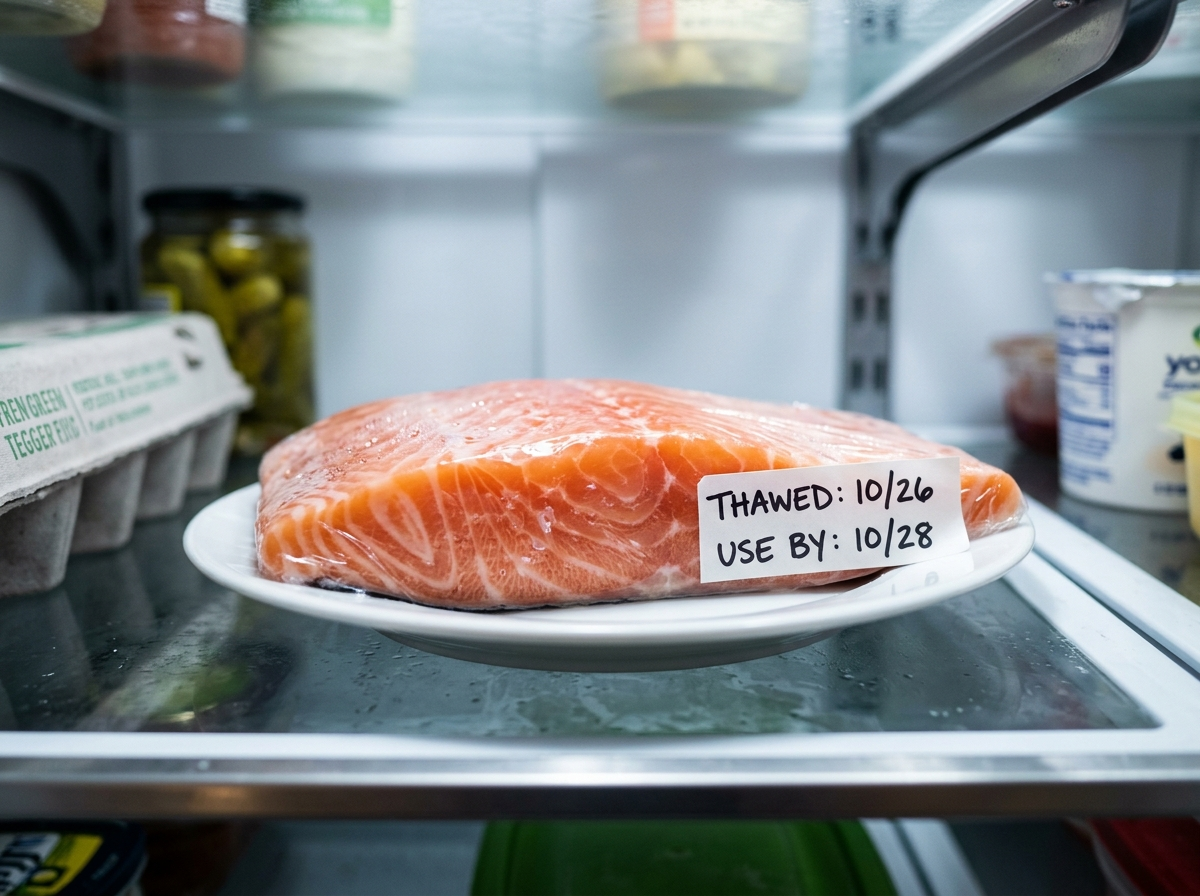
Pro tip: Write the thaw date on a bit of tape and stick it on the container. That one tiny step saves a lot of “Wait… was this from yesterday or the day before?”
Don’t rinse raw salmon
A lot of people still do this, but it doesn’t make the fish safer. It can splash bacteria around your sink and counter.
If the surface seems wet, just pat it dry with paper towels before seasoning or cooking.
Marinate it in the fridge, not on the counter
Want to add flavor? Great. Just keep the salmon in the fridge while it marinates.
Acidic marinades with lemon or vinegar don’t make spoiled fish safe. They only change flavor and texture. That’s an easy point to miss.
Know the official cooking target
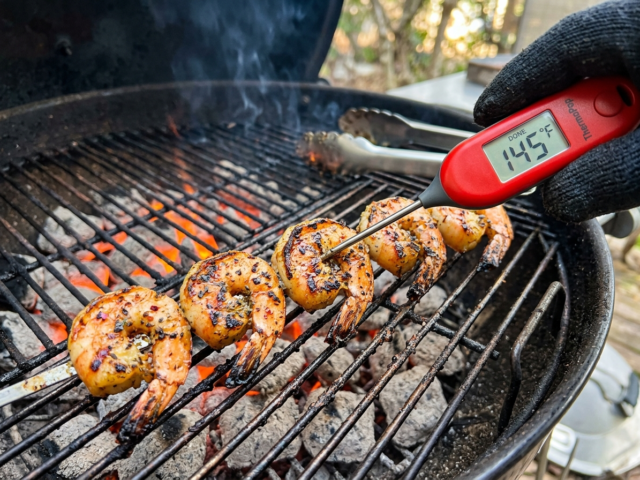
For food safety, USDA recommends cooking fish to 145°F at the thickest part. If you want help checking doneness without drying it out, read how to know when salmon is done.
Common mix-ups that cause trouble
People rarely get sick because they forgot one big rule. It usually happens because of small misunderstandings stacked together.
“Sushi-grade” salmon lasts longer
It doesn’t.
“Sushi-grade” is not a magic freshness shield, and it’s not a formal USDA safety label. It usually points to handling or freezing practices meant for raw serving. It does not mean you can keep thawed salmon in the fridge for extra days.
The same short fridge window still applies.
“If it smells okay, it’s safe”
Not always.
A mild smell is a good sign, but it’s not a guarantee. Time and temperature matter just as much. If you know the salmon has been thawed for too long, don’t let one quick sniff talk you into keeping it.
“Cooking spoiled salmon makes it safe”
Nope.
Heat can kill many bacteria, but it won’t reliably fix fish that was mishandled or held too long. Once seafood crosses the line, cooking it doesn’t magically reset things.
Smoked salmon is a different product
This one causes confusion all the time.
If you’re dealing with smoked salmon rather than raw salmon fillets, the rules can be different because the product may be cured, cold-smoked, or hot-smoked. If you’re not sure which kind you have, check this guide on whether smoked salmon is cooked or raw before you use the same storage rules.
Health note: This article gives general food safety guidance, not personal medical advice. If someone eats questionable seafood and gets symptoms like vomiting, severe stomach pain, rash, or trouble breathing, get medical help right away.
- FAQ Section
FAQ
Can thawed salmon stay in the fridge for 3 days?
Usually, no. If you thawed raw salmon in the refrigerator, the safe window is 1 to 2 days. Day 3 is pushing past the normal food safety guidance, even if the fish still looks okay.
Can I refreeze thawed salmon?
Yes, if it thawed in the fridge and stayed at 40°F or below the whole time. The texture may suffer a bit after refreezing, but it can still be safe. If you thawed it in cold water or the microwave, cook it before freezing again.
How do I know if thawed salmon is bad?
Watch for a sour or ammonia smell, slimy texture, mushy flesh, or a strong fishy odor. A swollen package or cloudy liquid can also be a bad sign. If you’re unsure, toss it.
Can I thaw salmon in cold water and cook it the next day?
No. If you thaw salmon in cold water, you should cook it immediately. Don’t move it to the fridge and hold it for another day.
Does vacuum-sealed salmon last longer after thawing?
Not really. Once thawed, the usual safe window is still 1 to 2 days in the fridge. Vacuum packaging may help before thawing, but it doesn’t give you extra time after the fish is thawed.
- Conclusion
Thawed salmon is one of those foods where the safest answer is also the simplest: cook it within 1 to 2 days after it fully thaws in the fridge. If you used cold water or the microwave, cook it right away. If the timing feels fuzzy, or the fish smells off, don’t try to save it.
The easiest habit to start today? Label your salmon with the thaw date the moment it goes into the fridge. That tiny step takes away the guesswork, helps you waste less food, and makes your next salmon dinner a whole lot less stressful.