Seafood doesn’t give you much extra time. If you’ve got lobster tails in the fridge and you’re wondering whether they’re still safe, the short answer is pretty simple: raw lobster tails usually last 1 to 2 days, and cooked lobster tails last 3 to 4 days. The tricky part is knowing what “1 to 2 days” really means, what changes that clock, and how to spot tails you shouldn’t eat.
The short answer on lobster tails in the fridge
Let’s start with the safe storage rule most home cooks need.
USDA food safety guidance for raw fish and shellfish puts them in the 1 to 2 day range in the refrigerator, as long as your fridge stays at 40°F (4°C) or below. Lobster tails fall into that same shellfish group.
Here’s the quick version:
| Type of lobster tail | Safe fridge time |
|---|---|
| Raw lobster tails | 1 to 2 days |
| Thawed lobster tails | 1 to 2 days |
| Cooked lobster tails | 3 to 4 days |
| Lobster tails thawed in cold water or microwave | Cook immediately |
That sounds easy enough, right? But people usually get stuck on the details.
Maybe you bought frozen lobster tails on Saturday, moved them to the fridge on Sunday, and now it’s Tuesday night. Safe? Usually not anymore. Raw seafood has a short window, even if it still looks decent.
Raw lobster tails: 1 to 2 days
If the tails are raw, think of them as a “cook soon” item, not a “maybe later this week” item.
That 1 to 2 day clock applies whether they were:
- bought fresh from the seafood case
- sold thawed at the store
- thawed overnight in your fridge at home
If you’re trying to stretch raw lobster tails to day 3, you’re already pushing past the safe zone.
Cooked lobster tails: 3 to 4 days
Once cooked, lobster tails last a bit longer. You can keep them in the fridge for 3 to 4 days, just like most cooked seafood leftovers.
That includes:
- grilled lobster tails from dinner
- restaurant leftovers
- cooked lobster meat removed from the shell
Cooked storage time only counts if you chilled the lobster within 2 hours of cooking. If it sat out on the table all evening, the fridge won’t magically reset the clock.
Thawed lobster tails: still just 1 to 2 days
A lot of people assume frozen lobster tails are different after thawing. They aren’t, at least not from a safety point of view.
Once they thaw in the fridge, treat them like fresh raw seafood. You’ve got 1 to 2 days to cook them.
Seafood follows a pretty similar pattern across the board. If you’ve ever looked up thawed salmon in the fridge, you’ve seen almost the same timing.
Quick fact: The safest habit is simple—if you buy lobster tails and know you won’t cook them in the next day or two, keep them frozen.
What changes how long lobster tails last?
The printed date on the package matters, but it’s not the whole story. A lobster tail can spoil early if you store it badly. Another tail can stay perfectly fine through the full safe window if you keep it cold and sealed.
A few things make the biggest difference.
Fridge temperature matters more than most people think
Your fridge can say “cold” and still run warmer than it should.
For seafood, 40°F or below is the key number. Many home cooks aim for 34°F to 38°F in the coldest part of the fridge to stay on the safer side.
If your fridge door gets opened all day, or if the tails sat in the car for an hour after shopping, that shortens your margin.
The fridge door is also a bad spot for lobster tails. That area warms up every time you open it. Put seafood in the coldest main section, usually near the back on a lower shelf.
Did you know? A cheap fridge thermometer can tell you more than the dial inside your fridge ever will.
Fresh, thawed, and cooked tails don’t follow the same clock
Here’s where people get confused.
A frozen lobster tail can sit in your freezer for months. But the second you thaw it, the timer changes fast. Raw thawed tails go right back to the 1 to 2 day rule.
Cooked tails get 3 to 4 days because cooking reduces bacteria at the start. Even then, they don’t last long enough to forget about in the back of the fridge.
Whether you bought Maine lobster tails, warm-water tails, or store-brand frozen tails from the supermarket freezer aisle, the fridge rule stays the same.
Packaging and handling can shorten the safe window
Let’s say you bought two packs of lobster tails.
One pack stayed cold, sealed, and dry on the ride home. The other sat in a warm trunk, leaked in the grocery bag, and got shoved into the fridge door. Both were bought on the same day, but they’re not equally safe.
Watch out for:
- torn packaging
- leaking liquid
- cross-contact with raw meat or poultry
- storing tails unwrapped in the fridge
- leaving them out while you prep other food
Even good seafood goes downhill fast if it warms up.
“Sell-by” and “use-by” dates aren’t a free pass
A package date can help, but it doesn’t override how the lobster was handled.
If raw lobster tails have been in your fridge for 4 days, a later date on the package doesn’t make them safe. On the flip side, if you bought them today but left them out on the counter for hours, the date won’t save them either.
Think of the date as a clue, not a promise.
How to tell if lobster tails have gone bad
This is usually the second big question people ask. The first is “How long?” The next one is “Okay, but mine might still be fine… right?”
Sometimes yes. Sometimes absolutely not.
Good lobster should smell mild, slightly sweet, or lightly briny. It shouldn’t punch you in the face with a sharp, sour, or fishy odor.
Signs your lobster tails are bad
If you notice any of these, don’t cook them:
- Strong sour, ammonia-like, or very fishy smell
- Slimy or sticky surface
- Mushy texture
- Discoloration with dark spots, yellowing, or odd patches
- Cloudy or milky liquid leaking from the package
One sign alone can be enough to toss it. You don’t need three warning signs to prove it’s bad.
What raw lobster tails should look and feel like
Raw lobster meat usually looks translucent and feels firm, not gooey. Depending on the tail, the color may range from whitish to pinkish to slightly grayish. That part can vary.
What you don’t want is meat that looks dull and tired, feels slick, or breaks apart too easily.
Shell-on tails can hide some spoilage, which is why smell and texture matter so much.
What spoiled cooked lobster looks like
Cooked lobster tail should stay firm and smell clean. If leftovers turn sticky, smell sour, or develop a strange color, they’re done.
Dryness alone doesn’t always mean spoilage. Sometimes it just means the lobster sat uncovered and lost moisture. But if that dryness comes with odor or slime, don’t risk it.
Cooked leftovers follow the same pattern you’ll see with other seafood. If you’ve checked how long cooked shrimp lasts, the storage window feels very similar.
Don’t taste it to test it
This is one of the easiest mistakes to avoid.
If you’re unsure whether lobster is safe, don’t take a bite “just to check.” Foodborne illness doesn’t always announce itself with a horrible taste.
And cooking spoiled lobster won’t fix the problem. Heat can kill many germs, but it can’t always undo toxins or heavy spoilage.
Warning: If raw lobster tails stayed out at room temperature for more than 2 hours, toss them. If the room was above 90°F, that limit drops to 1 hour.
How to store lobster tails in the fridge the right way
If you store lobster tails well from the start, you give yourself the best shot at using the full safe window.
That doesn’t mean you get extra days. It just means you’re less likely to spoil them early.
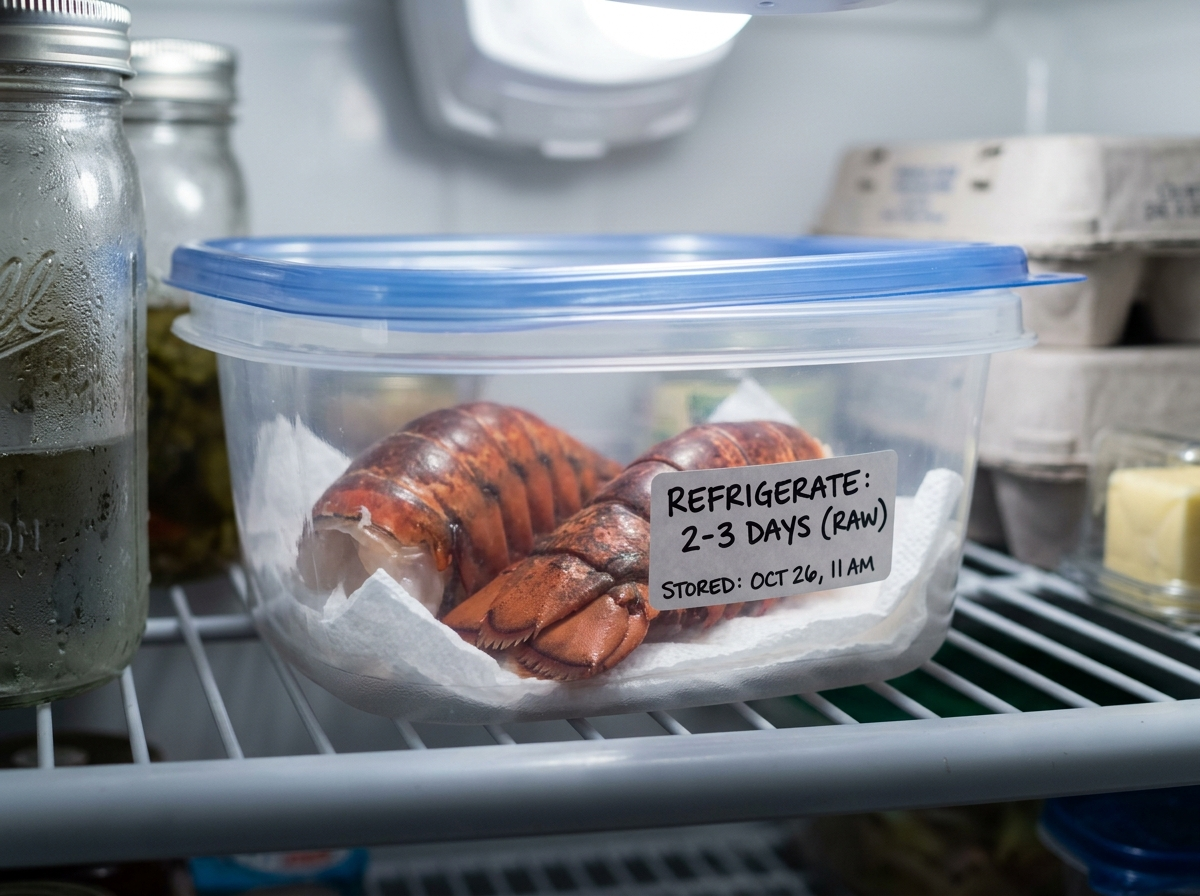
How to store raw lobster tails
Keep it simple:
- Leave them in the original packaging if it’s sealed and not leaking.
- Place the package on a plate or tray to catch drips.
- Store it in the coldest part of the fridge, not the door.
- Cook within 1 to 2 days.
- Freeze them right away if you won’t use them soon.
If you bought raw tails from a seafood counter and they’re loosely wrapped, move them to an airtight bag or container once you get home.
Some people like to store seafood over ice in the fridge. That can help keep it colder, but don’t let the meat sit in meltwater. Keep the tails sealed or set them above the ice so they stay cold and dry.
Pro tip: Write the purchase date on the package the minute you get home. That one small habit saves a lot of guesswork later.
How to store cooked lobster tails
Cooked lobster is easier, but it still needs quick handling.
Let it cool slightly, then refrigerate it within 2 hours. Use a shallow airtight container or wrap it well.
You can store cooked lobster:
- in the shell
- out of the shell as lobster meat
- as part of another dish, like pasta or a seafood bowl
Just remember that mixed dishes may spoil based on the fastest-spoiling ingredient.
If you’re tracking different kinds of shellfish at home, our guide on shrimp in the fridge follows the same kind of food safety thinking.
What about lobster tails bought thawed at the store?
This catches a lot of people off guard.
Plenty of seafood counters sell lobster tails that were previously frozen and then thawed for display. That doesn’t give you freezer-level storage time at home. Once you buy them, treat them like fresh raw seafood and cook within 1 to 2 days.
If you’re not sure whether they were thawed already, ask the store.
Need more time? Freeze them before the clock runs out
If there’s a good chance you won’t cook your lobster tails within the safe fridge window, freezing is the smart move.
This is one of those kitchen choices that saves both money and stress.
Best way to freeze lobster tails
If the tails are already frozen when you buy them, the easiest answer is to keep them frozen until you’re ready.
If they’re fresh or thawed and still within the safe 1 to 2 day window, freeze them as soon as possible.
Wrap them well to protect the meat from air. Air causes freezer burn and weak texture.
A simple setup works well:
- plastic wrap or freezer wrap around each tail
- then a freezer bag or airtight container
- press out extra air
- label with the date
From a strict safety view, food frozen at 0°F (-18°C) stays safe for a long time. For best quality, lobster tails usually taste and feel better if you use them within 3 to 6 months.
Can you refreeze thawed lobster tails?
Yes, if they thawed in the fridge and stayed cold the whole time.
That said, the texture may get a little weaker after refreezing. Lobster is expensive, so most people prefer to cook it once and avoid too many freeze-thaw cycles.
If you thawed the tails in cold water or in the microwave, cook them first before you refreeze anything.
How to thaw lobster tails safely
You’ve got three safe options.
The best one is the fridge. Put the tails on a plate and let them thaw overnight.
If you need them sooner, use cold water. Keep the tails in a sealed bag and submerge them in cold water, changing the water every 30 minutes. Then cook them right away.
Microwave thawing works in a pinch, but only if you’re cooking the lobster immediately after.
Never thaw lobster tails on the counter. That warms the outer layer too fast while the inside stays frozen. Bacteria love that kind of setup.
If you want a side-by-side comparison with other seafood storage timelines, the pattern is similar to cooked salmon in the fridge and other chilled seafood leftovers.
Safe cooking tips if your lobster tails have been in the fridge
Let’s say the tails are still inside the safe window. Great. Now you just need to cook them properly.
Use storage time and cooking temperature together
A safe cook doesn’t start at the stove. It starts with safe storage.
If raw lobster tails have been in your fridge for 5 days, cooking them well doesn’t erase that earlier problem. Time and temperature work together.
For home cooking, aim until the meat is:
- opaque
- firm
- no longer translucent
- around 145°F in the thickest part if you’re using a food thermometer
If you’re already wondering whether undercooked lobster is okay, it’s worth reading this quick guide on can you eat raw lobster before you serve it.
A simple real-life example
Here’s an easy way to think about it.
You buy frozen lobster tails on Friday.
You move them to the fridge to thaw on Sunday night.
That means you should plan to cook them by Tuesday night at the latest, and sooner is even better.
If you cook them Monday and chill the leftovers quickly, you can usually eat those leftovers through Thursday.
That timeline is a lot easier to remember than trying to guess by smell alone.
If you’re cooking them tonight
If your lobster tails are still safe and you just need a good method, this step-by-step guide on how to grill lobster tails can help you turn them into dinner instead of a fridge mystery.
FAQ Section
Can lobster tails stay in the fridge for 3 days?
If they’re raw, 3 days is usually too long. The safe range is 1 to 2 days at 40°F or below. If they’re cooked, 3 days is usually fine as long as you refrigerated them within 2 hours and they still smell and look normal.
How long does cooked lobster tail last in the fridge?
Cooked lobster tail usually lasts 3 to 4 days in the fridge. Store it in an airtight container and keep your fridge at 40°F or below.
Can you refreeze thawed lobster tails?
Yes, if you thawed them in the fridge and kept them cold the whole time. The texture may not be quite as nice after refreezing, but it can still be safe. If you thawed them in cold water or the microwave, cook them first.
What does bad lobster smell like?
Bad lobster usually smells sharp, sour, ammonia-like, or overly fishy. Fresh lobster should smell mild and clean, not harsh.
Can I keep lobster tails in the fridge after opening the package?
Yes, but the clock doesn’t reset. Raw lobster tails still only get 1 to 2 days total in the fridge. Once the package is open, wrap them tightly or move them to an airtight container right away.
Are previously frozen lobster tails from the seafood counter safe in the fridge?
Yes, but only for a short time. If the store already thawed them for display, treat them like fresh raw seafood and cook within 1 to 2 days.
Conclusion
If you only remember one thing, make it this: raw lobster tails get 1 to 2 days in the fridge, and cooked lobster tails get 3 to 4 days. That’s the safe rule most people need. If your tails smell off, feel slimy, or have been sitting longer than that, don’t try to “save” them. Your best next move is simple—check the date, trust the timeline, and if you’re not cooking them soon, freeze them before the window closes.