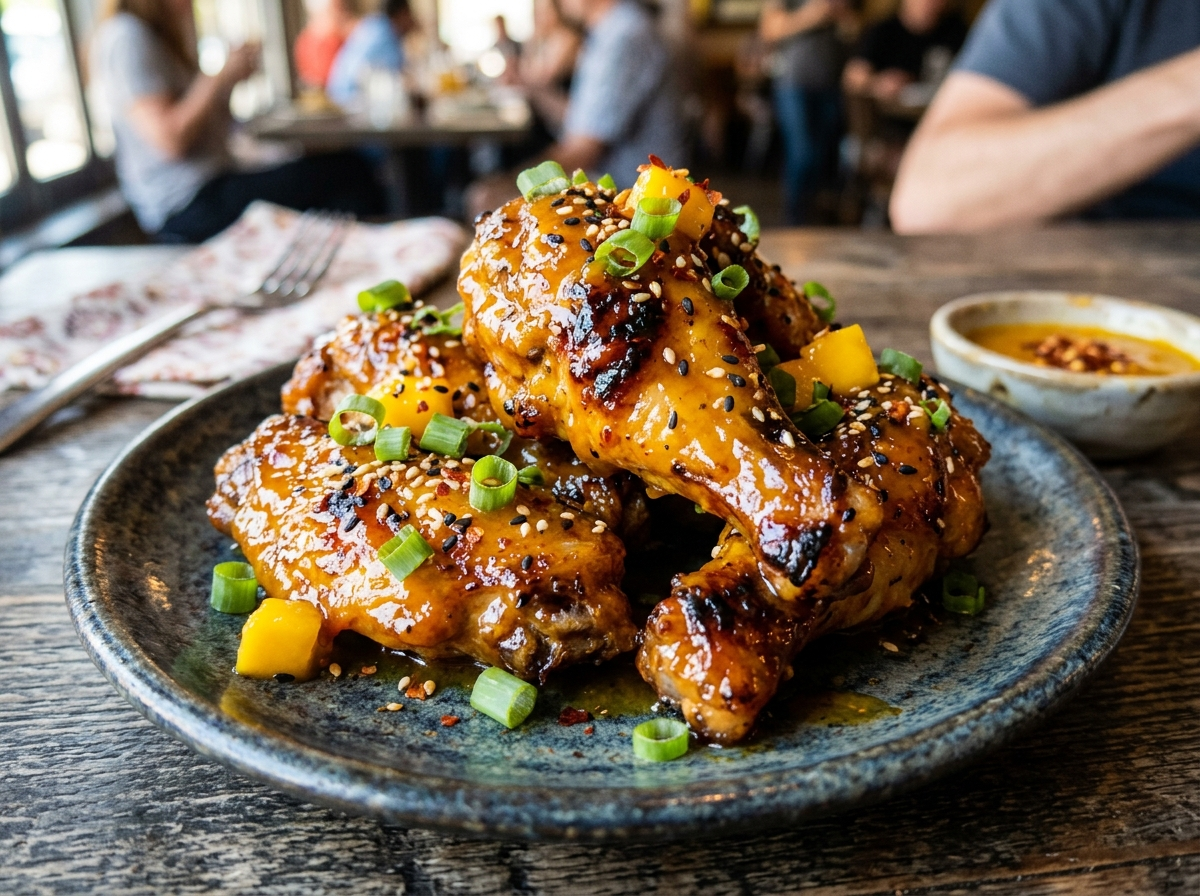
A chicken wing coated in mango glaze shouldn’t work this well — but Dan Phelps proved everyone wrong. His mango sticky wings became one of those recipes that people try once and then can’t stop making. The combination of ripe mango sweetness, sticky caramelized glaze, and a whisper of heat creates something that sits right at the intersection of BBQ culture and Asian-inspired cooking.
If you’ve seen these wings floating around social media or heard pitmasters raving about them, you’re probably here for one reason: you want to make them yourself. And honestly? You should. They’re not complicated, they don’t require a culinary degree, and the ingredient list won’t send you hunting through specialty stores. But there are a few things you need to get right if you want that perfect sticky, glossy, finger-licking finish Dan Phelps is known for.
Let’s break the whole thing down — the recipe, the technique, and all the little details that separate okay mango wings from ones your friends will beg you to make again.
Who Is Dan Phelps and Why Do His Wings Matter?
Dan Phelps isn’t just another guy posting recipes online. He’s a competitive pitmaster and BBQ enthusiast who’s built a serious following by creating bold, flavorful recipes that feel accessible to home cooks. His approach sits in a sweet spot — he borrows from Asian flavor profiles, classic American BBQ techniques, and street food culture without overcomplicating things.
His mango sticky wings blew up because they hit every note people crave: sweet, sticky, a little spicy, and deeply savory underneath it all. They’re the kind of wings you’d expect from a high-end restaurant, but they come together on a backyard grill or even in your oven.
What makes his version stand out from generic mango wing recipes? It’s the layering of flavors. He doesn’t just toss wings in a mango sauce and call it a day. The process involves a dry rub, a proper cook, and then a glaze that builds in stages. That’s what gives them their signature sticky, lacquered look.
If you enjoy bold flavors and you’ve already tried recipes like Asian sticky wings or gochujang chicken, Dan Phelps’ mango sticky wings are a natural next step in your cooking journey.
What Makes Mango Sticky Wings So Addictive?
Before we jump into the recipe, it helps to understand why this flavor combination works so ridiculously well. It’s not just about mango tasting good — there’s actual food science behind the magic.
The Sweet-Heat Balance
Mango brings natural fructose to the table. When you cook it down into a glaze, those sugars caramelize and create depth that plain white sugar or honey can’t match. There’s a slight tartness underneath the sweetness, which keeps the glaze from becoming cloying. Add a hit of chili (whether it’s sriracha, chili flakes, or fresh peppers), and your taste buds get that push-pull between sweet and spicy that makes you reach for wing after wing.
The Sticky Factor
Sticky wings aren’t sticky by accident. The texture comes from reducing your sauce until the sugars become concentrated enough to cling to the meat without sliding off. Mango puree naturally thickens as it cooks down, which means you don’t need to add cornstarch or other thickeners. The result is a clean, glossy coat that looks as good as it tastes.
Umami Underneath
Most great sticky wing recipes — Dan Phelps’ included — have a savory backbone. Soy sauce or tamari, garlic, and sometimes fish sauce work behind the scenes to give the sweetness something to anchor itself to. Without that umami layer, mango wings taste like dessert on a drumette. With it, they taste like a complete dish.
This approach to flavor layering isn’t unique to wings, by the way. You’ll find the same sweet-savory-spicy philosophy in dishes like teriyaki chicken bowls and Korean fire chicken.
Dan Phelps Mango Sticky Wings – Full Recipe Breakdown
Let’s get into the actual recipe. I’ve broken this into clear sections so you can follow along whether you’re grilling, smoking, or using an oven.
Ingredients You’ll Need
For the wings:
- 3 lbs chicken wings (flats and drumettes separated)
- 2 tablespoons olive oil or avocado oil
- Your favorite BBQ rub (Dan Phelps often uses a sweet heat style rub — something with brown sugar, paprika, garlic powder, onion powder, chili powder, salt, and black pepper)
For the mango sticky glaze:
- 1 cup ripe mango puree (about 2 large mangoes, or use frozen mango chunks blended smooth)
- 3 tablespoons soy sauce
- 2 tablespoons honey
- 2 tablespoons rice vinegar
- 1 tablespoon sriracha (adjust to your heat preference)
- 3 cloves garlic, minced
- 1 teaspoon fresh ginger, grated
- 1 tablespoon sesame oil
- Juice of 1 lime
For garnish:
- Toasted sesame seeds
- Sliced green onions
- Fresh cilantro
- Extra lime wedges
Pro Tip: Fresh mangoes give you the best flavor, but don’t stress if they’re out of season. Frozen mango chunks (thawed and blended) work perfectly fine. Just avoid canned mango in heavy syrup — that’ll make your glaze too sweet and one-dimensional.
Step 1: Prep the Wings
Pat your wings completely dry with paper towels. This step matters more than most people think. Moisture on the skin is the enemy of crispiness. If you have time, place the wings uncovered on a wire rack in your fridge for a few hours (or even overnight). That cold, dry air pulls moisture from the skin and sets you up for a much crispier result.
Once they’re dry, toss the wings in oil and season generously with your dry rub. Make sure every wing gets coated evenly. Don’t be shy with the seasoning — you’re building the first layer of flavor here, and the glaze will add the second layer later. If you’re keeping your cooked chicken in the fridge later, properly seasoned wings reheat much better than under-seasoned ones.
Step 2: Cook the Wings
You’ve got three solid options here. Each one works, but they give slightly different results.
Grilling (Dan Phelps’ preferred method): Set up your grill for indirect heat at around 375°F. Place the wings on the indirect side, close the lid, and cook for about 25–30 minutes. Then move them to direct heat for the last 5–8 minutes to crisp the skin. Total cook time is roughly 35–40 minutes. You’re looking for an internal temperature of 190°F — yes, that’s higher than the safe minimum of 165°F, but wings taste better at 190°F because the connective tissue in the joints has fully rendered.
Smoking: If you’ve got a smoker, set it to 275°F. Use a mild fruitwood like cherry or apple — these complement the mango sweetness instead of fighting it. Smoke the wings for about 1.5 to 2 hours. The smoke flavor adds another dimension that grilling alone can’t provide. Finish them on high heat (either on a hot grill or under a broiler) to tighten up the skin.
Oven method: Preheat to 400°F. Place wings on a wire rack over a baking sheet (this allows air circulation for even cooking). Bake for 40–45 minutes, flipping once halfway through. For extra crispiness, broil on high for the last 2–3 minutes per side. Watch them closely during broiling — they go from perfect to burnt faster than you’d expect.
Step 3: Make the Mango Sticky Glaze
While your wings cook, start your glaze. Combine the mango puree, soy sauce, honey, rice vinegar, sriracha, garlic, ginger, and sesame oil in a saucepan over medium heat. Stir it all together and bring it to a gentle simmer.
Here’s where patience pays off. Let the glaze simmer for 12–15 minutes, stirring occasionally. You’ll notice it thickening gradually. The color will deepen from bright orange-yellow to a richer, more golden tone. You want it thick enough to coat the back of a spoon — that’s your signal it’s ready.
Pull it off the heat and stir in the fresh lime juice. Adding lime at the end preserves its brightness. If you cook lime juice too long, it loses its zing and just becomes sour without that fresh pop.
Did you know? The natural pectin in mangoes helps the glaze thicken without any added starch. That’s why mango-based glazes have a cleaner texture compared to glazes thickened with cornstarch, which can turn gummy as they cool.
Step 4: Glaze and Finish
This is where your wings transform from “good” to “people will remember these.” You have two approaches, and the best cooks do both.
The toss method: Once your wings are fully cooked, transfer them to a large bowl. Pour about two-thirds of your glaze over the wings and toss them gently but thoroughly. Every wing should be coated. Then place the glazed wings back on the grill (direct heat) or under the broiler for 2–3 minutes. The heat caramelizes the glaze and creates that gorgeous sticky shell.
The brush-and-layer method: Instead of tossing, brush the glaze onto the wings in two rounds. Apply the first coat, cook for 2 minutes, then apply a second coat. This builds a thicker, more lacquered finish. Save a little extra glaze for drizzling on top right before serving.
Either way, don’t skip the final hit of heat after glazing. That caramelization step is what separates sticky wings from sauced wings. There’s a real difference.
Step 5: Garnish and Serve
Transfer your wings to a serving platter. Hit them with toasted sesame seeds, sliced green onions, fresh cilantro, and a squeeze of lime. These aren’t just decorative — each garnish adds a layer of flavor and texture. The sesame seeds bring nuttiness, green onions add a mild sharpness, cilantro brings freshness, and lime ties everything together with acid.
Serve immediately. Sticky wings are at their absolute best fresh. As they cool, the glaze sets and the skin loses its crispiness. If you’re serving these at a party, time your cook so the wings come out right when people are ready to eat.
Tips for Getting the Perfect Mango Sticky Wings Every Time
Even with a solid recipe, small details make a big difference. Here are the things that separate good mango wings from the ones people can’t stop talking about.
Getting the Skin Right
The biggest complaint people have with glazed wings is soggy skin. The glaze is delicious, but if the skin underneath isn’t crispy first, you end up with a textureless, floppy mess. The fix is simple: get the skin as dry as possible before cooking, cook at high enough heat to render the fat, and don’t glaze too early. Your wings need to be 90% done before any glaze touches them.
If you’re using a smoker at lower temperatures, the skin won’t crisp the same way it does on a grill or in an oven. That’s why finishing smoked wings on high heat — even just 3–4 minutes — makes such a difference.
Choosing the Right Mango
Not all mangoes are created equal for glazes. You want varieties that are high in sugar and have a smooth, less fibrous texture. Ataulfo (also called champagne mangoes) and Kent mangoes work best. They blend into a silky puree and have a concentrated sweetness that doesn’t need much help from added sugar.
Tommy Atkins mangoes — the big red-green ones most grocery stores stock — are fine but they tend to be more fibrous and less sweet. If those are your only option, add an extra tablespoon of honey to compensate.
Don’t Overdo the Heat
Sriracha is the default chili sauce in this recipe, and it’s there for warmth, not firepower. You should taste the mango first and the heat second. A common mistake is going heavy on the chili because you like spicy food. The problem? Too much heat masks the mango flavor, and then you just have hot wings with a vague fruitiness. Start with 1 tablespoon of sriracha, taste the glaze after simmering, and add more if you want it.
If you prefer a different kind of heat, try gochujang instead of sriracha. It adds a fermented depth that pairs beautifully with mango. You can learn more about using it in recipes like gochujang chicken.
What to Serve with Mango Sticky Wings
These wings are bold enough to be the star of the meal, but the right sides make them shine even brighter.
Coconut rice is probably the most natural pairing. The subtle coconut flavor echoes the tropical mango notes without competing. Cook jasmine rice in a mix of coconut milk and water (50/50 ratio), add a pinch of salt, and you’ve got a creamy, fragrant base that soaks up any extra glaze on the plate.
Quick cucumber salad works as a refreshing counterpoint. Slice English cucumbers thin, toss them with rice vinegar, a touch of sugar, sesame oil, and red chili flakes. The cool, crisp crunch cuts through the richness of the wings perfectly.
Coleslaw with a lime dressing is another winner, especially if you’re serving these at a BBQ. Skip the heavy mayo-based slaw and go with a lighter dressing of lime juice, fish sauce, sugar, and a hit of chili.
You could also pair these wings alongside other Asian-inspired dishes for a spread. Something like Korean short ribs or Chinese char siu pork would round out an impressive table.
Common Mistakes People Make with Mango Sticky Wings
Knowing what not to do saves you a lot of frustration. These are the mistakes I see most often.
Glazing too early. If you brush the glaze on while the wings are still raw or halfway cooked, the sugars burn before the chicken finishes cooking. You’ll get bitter, blackened spots instead of beautiful caramelization. Wait until the wings are nearly done.
Using unripe mango. An unripe mango is starchy and sour, not sweet. Your glaze will taste flat and you’ll end up adding too much honey or sugar to compensate. The mango should give slightly when you press it and smell sweet at the stem end.
Skipping the acid. Lime juice (or rice vinegar) isn’t optional. Without acid, the glaze tastes one-note and overly sweet. Acid brightens everything and keeps your palate engaged. Think of it like seasoning — salt makes food taste more like itself, and acid does the same for sweet glazes.
Crowding the pan or grill. Wings need space around them for heat to circulate and skin to crisp. If they’re touching or stacked on top of each other, you get steaming instead of roasting. Give them room.
Can You Make These Wings Ahead of Time?
Sort of. Here’s the best approach if you’re planning for a party or event.
You can make the mango glaze up to 3 days ahead and store it in an airtight container in the fridge. The flavors actually meld and improve with a day or two of rest. Just gently reheat the glaze before using it — if it’s too thick after chilling, add a splash of water to loosen it back up.
The wings themselves are best cooked fresh. But if you absolutely need to prep ahead, you can cook the wings without glaze and hold them. Refrigerate the cooked, unglazed wings, then reheat them on a hot grill or under a broiler until the skin tightens back up. Toss them in warm glaze right before serving. They won’t be quite as perfect as fresh, but they’ll still be really good.
Variations Worth Trying
Once you’ve nailed the classic version, here are a few twists that keep things interesting.
Mango habanero: Replace the sriracha with half a habanero (seeded and minced). Habanero has a natural fruity quality that meshes beautifully with mango. Just be careful — habaneros pack serious heat, so start small.
Mango coconut: Add 2 tablespoons of coconut cream to your glaze. This softens the acidity, adds richness, and pushes the tropical profile even further.
Smoked mango sticky wings: Smoke your wings with cherry wood for about an hour at 250°F, then finish on high heat and glaze normally. The smoke adds a layer of complexity you can’t get any other way. This method works great alongside other smoked favorites like Asian pork burnt ends.
Air fryer version: If you don’t have outdoor cooking space, an air fryer at 380°F for 22–25 minutes (flipping halfway) gives surprisingly crispy wings. Toss in glaze during the last 3 minutes.
FAQ
What temperature should chicken wings reach for safe eating?
The USDA recommends an internal temperature of 165°F for chicken. But for wings specifically, most pitmasters — Dan Phelps included — prefer cooking them to 190°F. At that higher temperature, the connective tissue around the joints renders fully, making the meat more tender and easier to pull off the bone.
Can I use store-bought mango puree instead of fresh mangoes?
Yes, you can. Look for mango puree or pulp with no added sugar (brands like Kesar or Goya sell them). Avoid mango nectar — it’s too watery and diluted for a glaze. If you use sweetened mango puree, reduce or skip the honey in the recipe to keep the sweetness in check.
How do I store leftover mango sticky wings?
Place them in an airtight container in the fridge. They’ll stay good for 3–4 days. Reheat in the oven at 375°F or on the grill — avoid the microwave if possible, because it turns the skin rubbery. A quick stint under the broiler for 2–3 minutes can help re-crisp the skin and re-melt the glaze.
Are Dan Phelps’ mango sticky wings gluten-free?
They can be if you use tamari instead of regular soy sauce (most soy sauce contains wheat). Check your dry rub ingredients too — some store-bought rubs include anti-caking agents that contain gluten. When in doubt, make your own rub from scratch.
What type of wood is best for smoking mango sticky wings?
Fruitwoods like cherry and apple are ideal. They produce a mild, slightly sweet smoke that complements the mango glaze rather than overpowering it. Avoid heavy woods like mesquite or hickory — their strong, assertive smoke can clash with the fruit-forward flavor profile.
Your Next Move
Dan Phelps’ mango sticky wings aren’t just a recipe — they’re a reminder that great food doesn’t have to be complicated. A handful of good ingredients, the right technique, and a little patience are all you need. The mango glaze does most of the heavy lifting, and as long as you nail the basics — dry skin, proper heat, glaze at the right time — you’re going to end up with something special.
Pick up some ripe mangoes this weekend, fire up your grill, and give these a shot. Once you pull that first batch off and see the golden, sticky, glossy finish on those wings, you’ll understand exactly why this recipe took off the way it did. And if your friends ask for the recipe? That’s entirely up to you whether you share it.