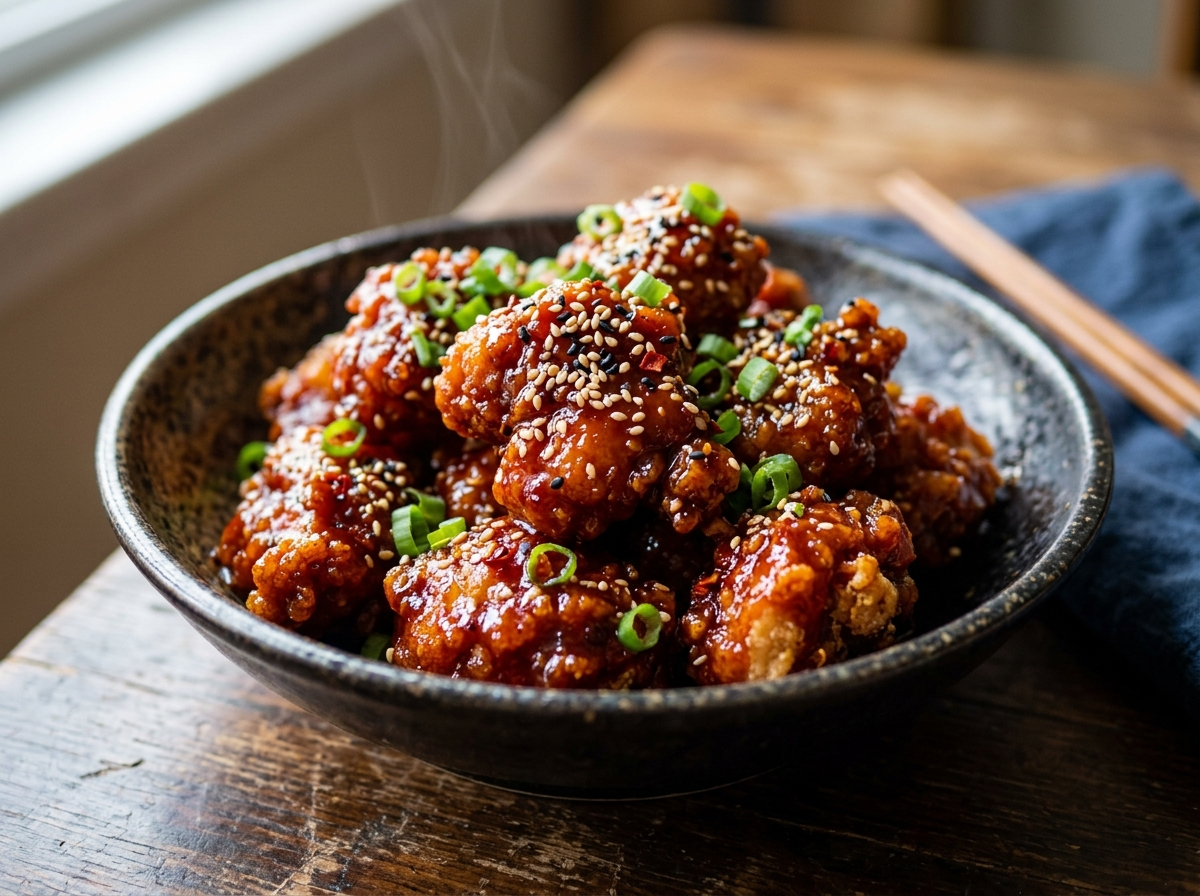
A single red paste sitting in your fridge can turn boring chicken into something you genuinely crave. That paste is gochujang — Korea’s fermented chili paste — and once you’ve tasted chicken coated in it, plain old salt-and-pepper seasoning feels like a downgrade. Gochujang chicken has exploded across restaurant menus and home kitchens over the past few years, and for good reason. It’s sticky, it’s a little smoky, it hits that perfect sweet-spicy-umami balance, and you can pull it together on a weeknight without breaking a sweat.
But here’s the thing — a lot of recipes out there either oversimplify the process or skip the details that actually make this dish sing. They’ll tell you to slap gochujang on chicken and bake it, and sure, that works. It just doesn’t work great. You deserve the version that gets crispy edges, a glaze that clings like it means it, and flavor that goes deeper than surface-level heat.
That’s what we’re building here. Whether you’ve cooked with gochujang a hundred times or you just spotted a red tub at the grocery store and thought “what do I do with this?” — stick around. You’ll walk away knowing exactly how to make gochujang chicken that genuinely impresses.
What Exactly Is Gochujang (And Why Does It Work So Well)?
Before we get into the chicken, let’s talk about the star ingredient for a second. Gochujang (고추장) is a Korean fermented chili paste made from red chili powder (gochugaru), glutinous rice, fermented soybeans, and salt. It’s been a staple in Korean cooking for centuries — we’re talking 16th century origins, after chili peppers arrived in Korea via trade routes.
What makes it different from, say, sriracha or sambal oelek? Fermentation. Gochujang is traditionally fermented in earthenware pots called onggi for months, sometimes years. That fermentation gives it a complex flavor profile you can’t replicate by just mixing chili flakes with sugar. You get heat, sweetness, umami, and a subtle funkiness all in one spoonful.
And that complexity is exactly why it pairs so well with chicken. Chicken is essentially a blank canvas — mild, neutral, and ready to absorb whatever flavor you throw at it. Gochujang doesn’t just sit on the surface. It penetrates, it caramelizes, it creates those sticky, slightly charred edges everyone fights over.
Pro Tip: Not all gochujang is the same. Korean brands like Sunchang and CJ Haechandle are widely available and reliable. Check the label — the best ones list gochugaru (Korean red pepper) and rice as primary ingredients, not corn syrup. You’ll find it in the international aisle of most major grocery stores, or any Asian supermarket will have multiple options.
The Perfect Gochujang Chicken Sauce — Getting the Balance Right
Here’s where most recipes fall short. They’ll say “mix gochujang with soy sauce and honey” and call it a day. That’s a starting point, not a finish line. A truly great gochujang chicken sauce needs layers.
Think of it this way: gochujang brings the heat and fermented depth. But you need something to round it out, something to add brightness, and something to help it caramelize properly.
Here’s the sauce formula that works beautifully every time:
Gochujang (3 tablespoons) — your base. It’s doing the heavy lifting. Soy sauce (2 tablespoons) — adds salt and another layer of umami. Honey or brown sugar (2 tablespoons) — feeds the caramelization and balances the heat. Honey gives a more complex sweetness; brown sugar creates a slightly deeper, molasses-y note. Sesame oil (1 tablespoon) — that toasty, nutty aroma that screams Korean cooking. Rice vinegar (1 tablespoon) — this is the ingredient people skip, and they shouldn’t. It adds brightness and cuts through the richness so the sauce doesn’t feel heavy. Garlic (3–4 cloves, minced) — because garlic and Korean food are inseparable. Ginger (1 teaspoon, freshly grated) — a warm, sharp note that ties everything together.
That’s your core sauce. You can adjust the ratio based on your heat tolerance. Want it milder? Bump up the honey. Want it fiery? Add a teaspoon of gochugaru flakes on top.
Did You Know? Gochujang’s heat level is measured on a scale called GHU (Gochujang Heat Units), similar to how Scoville units measure chili peppers. Most commercial gochujang falls in the “mild to medium” range, typically between 1,000–2,500 GHU. So if you’re worried about it being too spicy, don’t be — it’s more about warmth than burn.
Choosing Your Chicken — Which Cut Works Best?
This might seem like a small detail, but your choice of cut genuinely changes the final result.
Bone-in, skin-on thighs are the gold standard for gochujang chicken. The fat under the skin renders out during cooking, keeps the meat juicy, and the skin gets crispy under the glaze. Most Korean fried chicken restaurants use thighs for exactly this reason. If you want that sticky, finger-licking experience, this is your cut.
Boneless, skinless thighs are the weeknight shortcut, and they’re totally solid. They cook faster, absorb the marinade deeply, and stay tender even if you slightly overcook them (thigh meat is forgiving like that). You lose the crispy skin element, but you gain convenience.
Chicken drumsticks work great if you’re feeding a crowd or want something easy to eat with your hands. Kids love drumsticks, and they hold up well on the grill too.
Chicken breast — I’ll be honest, it’s not my first choice here. Breast meat dries out faster and doesn’t have the fat content to stand up to a bold sauce like gochujang. But if breast is what you’ve got, pound it to even thickness (about ¾ inch), don’t skip the marinating step, and don’t overcook it. Pull it at 165°F internal temperature and you’ll be fine.
Chicken wings? Absolutely. Gochujang wings are practically their own food group. If you’re a fan of Asian-style sticky wings, gochujang is a natural next step. Same sticky, saucy concept — different flavor universe.
How to Make Gochujang Chicken — Step by Step
Let’s walk through the full process. I’m going with bone-in, skin-on thighs here, but you can adapt for whatever cut you chose above.
Step 1: Marinate (Minimum 30 Minutes, Ideally 2+ Hours)
Mix your gochujang sauce in a bowl. Take about 2 pounds of chicken thighs and coat them thoroughly. I mean really get in there — use your hands, massage the paste into every crevice. Drop everything into a zip-lock bag or a covered dish and let it sit in the fridge.
Thirty minutes will give you decent flavor. Two hours gets you noticeably better results. Overnight? That’s the sweet spot. The gochujang has time to really break into the meat, and the enzymes from the garlic and ginger do a mild tenderizing job.
One important note: reserve about 3 tablespoons of sauce before you marinate. You’ll use this as a finishing glaze. Don’t brush raw-chicken marinade onto cooked chicken — food safety 101.
Step 2: Bring to Room Temperature
Pull the chicken out of the fridge about 20–30 minutes before cooking. Room temperature chicken cooks more evenly. If you throw cold chicken into a hot pan or oven, the outside overcooks before the inside catches up.
Step 3: Cook It (You’ve Got Options)
This is where you pick your adventure.
Oven-Baked (Most Popular Method)
Preheat your oven to 425°F. Place the thighs skin-side up on a wire rack set over a baking sheet lined with foil. The wire rack is key — it lets air circulate under the chicken, so the bottom doesn’t get soggy and steamy. Bake for 35–40 minutes. Around the 25-minute mark, brush on that reserved sauce. The sugar in the glaze will start caramelizing and creating those gorgeous dark, sticky edges.
Want extra char? Hit it with the broiler for the last 2–3 minutes. Watch it carefully though — gochujang sauce burns fast because of the sugar content. We’re talking seconds between perfectly caramelized and charcoal.
Pan-Seared Then Finished in Oven
This is my personal favorite method. Heat a cast-iron skillet over medium-high heat with a tablespoon of neutral oil (vegetable, grapeseed, or avocado). Sear the thighs skin-side down for about 4–5 minutes until the skin is deeply golden and crispy. Flip them, then transfer the whole skillet to a 400°F oven for 20–25 minutes. Brush with reserved glaze in the last 5 minutes.
The two-stage approach gives you the best of both worlds — crispy, rendered skin from the sear, and even cooking from the oven.
Grilled
Gochujang chicken on a charcoal or gas grill is something special. The smokiness adds a whole other dimension. Set up two-zone heat: direct heat on one side, indirect on the other. Start the chicken over indirect heat, skin-side up, lid closed, for about 20 minutes. Then move it to direct heat, glaze it, and let it get those grill marks and caramelized bits — about 3–4 minutes per side. Keep a close eye on flare-ups. The sugars in the sauce will drip, and fat from the chicken will render — both can cause flames.
Air Fryer
For boneless thighs, the air fryer is surprisingly effective. Set it to 400°F, cook for about 12–14 minutes, flipping halfway. Brush the glaze on during the last 3 minutes. You get crispy edges and quick cleanup. The tradeoff is batch size — most air fryers can only handle 4–5 thighs at a time.
Step 4: Rest and Garnish
Let the chicken rest for 5 minutes after cooking. This lets the juices redistribute so they don’t run out the moment you cut in.
For garnish, keep it classic: toasted sesame seeds, thinly sliced scallions, and a drizzle of sesame oil. If you want some crunch and freshness to contrast the sticky heat, scatter on some thinly sliced raw shallot rings or a few drops of rice vinegar over the top.
What to Serve With Gochujang Chicken
A dish this bold-flavored needs the right supporting cast. You want things that either cool down the heat, add textural contrast, or soak up all that sauce.
Steamed white rice is the obvious and correct answer. Sticky, fluffy short-grain rice — the kind used in Korean and Japanese cooking — works best because it clings to the sauce. If you’ve been wondering about the best way to store cooked rice in the fridge for meal prep purposes, that link has you covered.
Quick pickled cucumbers (oi-muchim) are the perfect sidekick. Slice cucumbers thin, toss with rice vinegar, a pinch of sugar, sesame oil, and red pepper flakes. Five minutes of sitting and they’re ready. The cold, tangy crunch against the hot, sticky chicken is one of those combinations that just makes sense.
Korean-style bok choy is another natural pairing. The mild, slightly sweet greens don’t compete with the gochujang — they complement it beautifully. If you haven’t tried it, here’s a solid Korean-style bok choy preparation worth checking out.
Kimchi — obviously. You can buy good quality kimchi from most grocery stores now, or if you’re into making Korean sides from scratch, homemade kimchi dumplings (mandu) turn this into a full-blown Korean feast.
Some people serve gochujang chicken in lettuce wraps, ssam style. Butter lettuce leaves, a piece of chicken, a dab of ssam sauce, some rice, and pickled radish. You wrap it up, eat it in one bite, and immediately make another one.
Tips That Actually Make a Difference
I’ve made gochujang chicken more times than I can count, and these are the lessons that took my version from “pretty good” to “people asking for the recipe” territory.
Don’t skip the rice vinegar in the sauce. I mentioned it earlier, but it’s worth repeating. Without acid, the sauce tastes flat and one-dimensional — just sweet and hot. A tablespoon of rice vinegar wakes everything up. Apple cider vinegar works as a backup, but rice vinegar has a milder, cleaner flavor that fits better.
Pat the chicken dry before marinating. This sounds counterintuitive, but removing surface moisture helps the marinade stick directly to the meat instead of sliding off. It also helps with browning and crisping later on.
Use foil on your baking sheet. Gochujang sauce is sticky, sugary, and will bond to your pan like cement if you don’t protect it. Foil makes cleanup a two-second job. Parchment paper works too, but foil handles high broiler heat better.
Don’t overcrowd the pan. Whether you’re baking, pan-searing, or air frying — give each piece of chicken space. Crowding traps steam, and steam is the enemy of crispy, caramelized skin. Leave at least an inch between pieces.
Add a tablespoon of gochujang to your butter. After cooking, melt a tablespoon of butter, stir in a teaspoon of gochujang, and brush it over the chicken right before serving. This finishes the dish with richness and shine. Restaurants use tricks like this to make everything taste better than home cooking.
⚠️ Warning: Gochujang contains fermented soybeans and sometimes wheat. If you’re cooking for someone with soy or gluten allergies, check the label carefully. Some brands are gluten-free, but not all. Sempio makes a gluten-free version that’s widely available.
Variations Worth Trying
Once you’ve nailed the basic recipe, the formula is incredibly flexible.
Gochujang chicken thighs with a miso boost — add a tablespoon of white miso paste to the sauce. It deepens the fermented umami flavor in a way that’s hard to describe but easy to taste. The soybean-on-soybean action creates this savory richness that’s almost meaty.
Spicy gochujang chicken stir-fry (Dakgalbi style) — slice boneless thighs into bite-size pieces, marinate, then stir-fry in a hot wok with sweet potato, cabbage, rice cakes (tteok), and scallions. This is inspired by the Korean dish dak-galbi from Chuncheon, and it’s a one-pan meal that feeds a family.
Gochujang chicken burger — marinate a boneless thigh in gochujang sauce, grill or pan-sear it, and put it in a brioche bun with pickled daikon, shredded cabbage, and a drizzle of kewpie mayo. Several fast-casual chains have started offering gochujang chicken sandwiches — you can make a better version at home.
Slow cooker gochujang chicken — throw bone-in thighs and the sauce into a slow cooker on low for 5–6 hours. The chicken will be fall-apart tender. Shred it and use it for tacos, rice bowls, or lettuce wraps. The sauce thickens into a glaze on its own.
If you enjoy Korean marinades, the same flavor principles apply to Korean short ribs (kalbi) — sweet, savory, and deeply flavored from marination. And if you like the heat level cranked up, Korean fire chicken with cheese (buldak) takes the spice factor to another level entirely.
Storing and Reheating Leftovers
Good news — gochujang chicken reheats surprisingly well, and the flavor actually improves overnight as the sauce continues to penetrate the meat.
Store leftover gochujang chicken in an airtight container in the fridge. It stays good for 3–4 days. For reheating, the oven is your best bet. Spread the pieces on a baking sheet, cover loosely with foil, and warm at 350°F for about 10–12 minutes. The foil prevents the glaze from burning while the inside heats through.
The microwave works in a pinch, but it won’t give you crispy skin. If you’re shredding the chicken for bowls or wraps, microwave is perfectly fine since texture matters less in that context.
You can also freeze the uncooked marinated chicken for up to 3 months. Bag it in a zip-lock, press out the air, freeze it flat. When you’re ready, thaw overnight in the fridge and cook as normal. This is a great meal prep strategy — spend 10 minutes assembling bags on a Sunday, and you’ve got weeknight dinners ready to go.
FAQ
Is gochujang chicken very spicy?
Not usually. Gochujang itself has moderate heat — think warm, not burning. The honey, sugar, and soy sauce in the recipe mellow it further. Most people who “don’t do spicy” handle gochujang chicken just fine. If you’re truly sensitive to heat, reduce the gochujang to 2 tablespoons and increase the honey. You’ll still get the flavor without the fire.
Can I use gochujang paste from a tube instead of the tub?
Yes, and it’s the same product — just different packaging. The tubes are convenient for small amounts, but the tubs (usually 500g) are much better value if you plan to cook Korean food regularly. Once opened, gochujang lasts for over a year in the fridge. The fermentation acts as a natural preservative.
What can I substitute for gochujang if I can’t find it?
There’s no perfect substitute because gochujang’s flavor is unique — that fermented, sweet-spicy profile doesn’t exist in any other single ingredient. In a pinch, mix 1 tablespoon of red miso paste with 1 teaspoon of cayenne pepper, 1 teaspoon of sugar, and a splash of soy sauce. It won’t taste the same, but it gets you in the neighborhood. Honestly though, ordering gochujang online is easy and worth doing.
Can I make gochujang chicken on the grill?
Absolutely. Grilled gochujang chicken is arguably the best version. The smoky char from the grill complements the sweet, spicy glaze perfectly. Use indirect heat for most of the cooking, then finish over direct flames for caramelization. Just watch for flare-ups — the sugar in the sauce can ignite quickly.
Is gochujang chicken gluten-free?
It depends on the brand of gochujang. Traditional recipes use glutinous rice (which is naturally gluten-free despite the confusing name) and fermented soybeans. Some commercial brands add wheat flour or barley. Check the ingredient list, or look for brands specifically labeled gluten-free.
Your Next Move
Gochujang chicken isn’t complicated. It doesn’t require special equipment, advanced skills, or a trip to a specialty store most of the time. What it does require is a willingness to let a single fermented paste do what it was literally designed to do — transform simple ingredients into something you remember.
Start with the basic recipe. Get comfortable with the sauce ratios. Then start playing around — try the miso variation, throw it on the grill, make those lettuce wraps. Once gochujang earns a permanent spot in your fridge (and it will), you’ll find yourself reaching for it the way you reach for soy sauce or hot sauce — instinctively, for everything.
Pick up a tub this week. Your chicken will thank you.