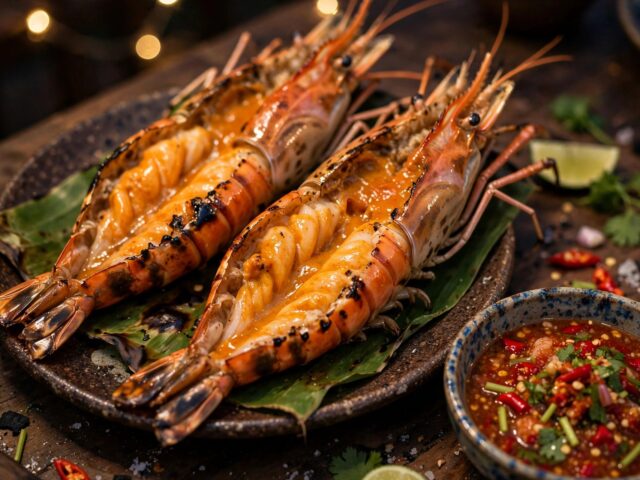
Overcooked shrimp is one of the most common kitchen mistakes — and honestly, one of the saddest. You start with these beautiful, plump pieces of seafood and end up with something that tastes and feels like a pencil eraser. The difference between rubbery and perfectly tender shrimp often comes down to just 10–15 degrees on your thermometer. That’s it. A tiny window that most people miss because they don’t know the right shrimp internal temperature — or they don’t bother checking at all.
Let’s fix that. Whether you’re grilling, sautéing, baking, or boiling, you’re about to learn exactly what temp to pull your shrimp at and, more importantly, how to actually hit that target without stressing over it.
What Is the Safe Internal Temperature for Shrimp?
The USDA recommends cooking shrimp to an internal temperature of 145°F (63°C). At this point, harmful bacteria like Vibrio, Salmonella, and E. coli are destroyed, and the shrimp is safe to eat.
But here’s something most articles won’t tell you — there’s a sweet spot between safe and overcooked, and 145°F sits right in that zone. If you pull your shrimp off the heat at exactly 145°F and account for a small amount of carryover cooking, you’ll get shrimp that’s both safe and juicy. Push it to 150°F or beyond, and the proteins start squeezing out moisture fast. The texture tightens. The flavor dries out.
Pro Tip: If you’re cooking for someone with a compromised immune system — young children, elderly family members, or pregnant individuals — stick firmly to 145°F as a minimum. Don’t go under.
Think of it this way: shrimp is small and thin. It cooks insanely fast compared to a chicken breast or pork chop. So the margin for error is razor-thin too. That 145°F number isn’t just a suggestion; it’s your anchor point.
How to Check Internal Temperature on Something So Small
This is the question nobody seems to answer well, and it’s probably the reason you’re here. Shrimp aren’t like a steak where you can stick a thermometer probe into the center and get a clean reading. They’re curved, small, and thin. So how do you actually temp them?
Here’s what works.
Use an Instant-Read Thermometer
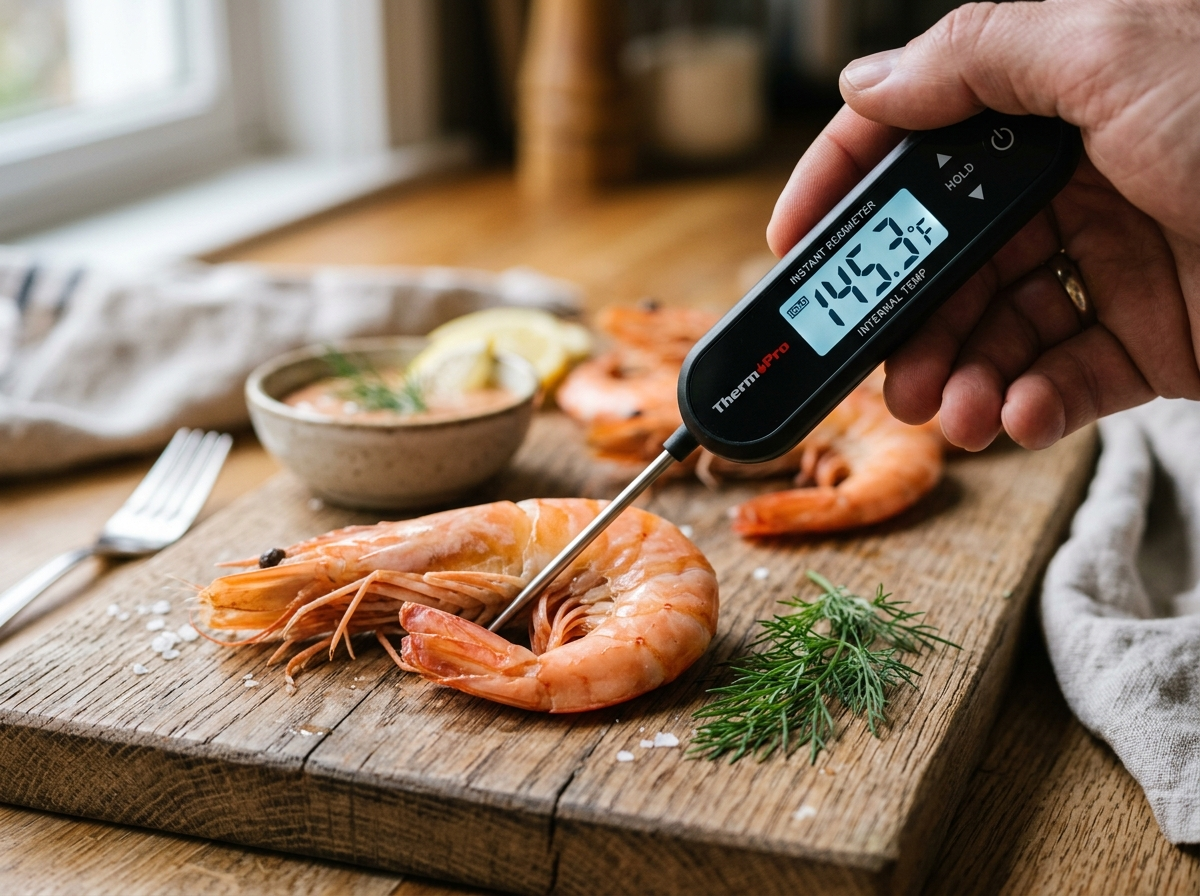
A standard leave-in probe thermometer won’t help much here. You need a fast instant-read thermometer — one that gives you a reading in 2–3 seconds. The ThermoWorks Thermapen is the gold standard, but any reliable instant-read will do the job.
To get an accurate reading, insert the probe into the thickest part of the shrimp — that’s usually the wide end, opposite the tail. Push it in from the side, not the top, so the sensing tip sits right in the center of the meat. On larger shrimp (like jumbo or colossal), this is pretty straightforward. On smaller ones, you might need to stack two or three together and temp through the middle of the pile.
The Multi-Shrimp Trick
If you’re cooking a batch of smaller shrimp — say, 41/50 count or even 31/40 — temping individual pieces gets ridiculous. Instead, press 3–4 shrimp together in a line on a plate or cutting board, push the probe horizontally through the center of all of them, and take your reading. It’s not lab-precise, but it’s accurate enough for home cooking.
Don’t Forget Carryover Cooking
Even though shrimp is small, carryover cooking still happens. The residual heat inside the shrimp continues to raise the temperature by about 3–5°F after you remove it from the heat source. So if you pull your shrimp at 140°F, it’ll coast up to around 143–145°F while resting.
This is a small detail that makes a huge difference. Cooking shrimp to exactly 145°F on the heat source means they’ll likely hit 148–150°F by the time you eat them — and that’s already creeping into overcooked territory.
Quick Fact: Professional chefs often pull shrimp at 120–130°F for a more tender result, but this requires very fresh, high-quality shrimp and comes with a slightly higher food safety risk. For home cooking, pulling at 140°F and letting carryover do the rest is the sweet spot.
Visual Cues vs. Thermometer: Which Should You Trust?
Let’s be real — most home cooks don’t pull out a thermometer every time they sauté shrimp for tacos. And you don’t always have to. Shrimp gives you pretty reliable visual and textural cues. But you need to know what you’re actually looking at.
What Properly Cooked Shrimp Looks Like
Raw shrimp is translucent and gray (or sometimes slightly blue-green depending on the variety). As it cooks, it turns pink and opaque. When the flesh is fully opaque — no translucent or glassy spots remaining — and has curled into a loose C-shape, it’s done.
That C-shape detail matters a lot. If your shrimp has curled into a tight O-shape, it’s overcooked. The proteins have contracted too much, squeezing out the moisture. A loose C means the shrimp still has some flexibility and juiciness left.
When You Should Absolutely Use a Thermometer
Visual cues work great for experienced cooks who’ve done this dozens of times. But grab that thermometer if you’re dealing with any of these situations:
- Jumbo or colossal shrimp (U/10 or U/15 count) — they’re thick enough that the outside can look done while the center is still raw
- Shrimp in a sauce or stew — you can’t see the color clearly when everything’s submerged in liquid
- Stuffed shrimp — the stuffing acts as insulation and can slow down internal cooking
- Grilling shell-on shrimp — the shell hides the color change from you
If you want to learn more about reading shrimp doneness cues, our guide on how to tell when shrimp is cooked breaks it down with more detail.
Does Cooking Method Change the Target Temperature?
Short answer: no. The target internal temperature for shrimp is 145°F regardless of how you cook it. Whether you grill, bake, sauté, deep-fry, or boil — the finish line is the same.
What does change is how fast you get there and how easy it is to overshoot. And that’s where things get interesting.
Grilling Shrimp
Grilling is one of the fastest cooking methods for shrimp, which means the overcooking window is extremely tight. High direct heat can take shrimp from raw to rubbery in under a minute if you’re not careful.
The best approach? Grill over medium-high heat (around 375–400°F grill surface temperature) for about 2–3 minutes per side on larger shrimp. Pull them when the outside is pink and charred in spots but the thickest part still has just a hint of translucency. Carryover will finish the job.
If you grill shrimp often, our full guide on the best temp to grill shrimp covers grill setup, skewer techniques, and timing in detail. And for those who want to go all-out on the grill, check out how to grill shrimp perfectly for a step-by-step walkthrough.
Sautéing and Pan-Searing
This is probably the most common way people cook shrimp at home. A hot pan with some oil or butter, maybe garlic, and a couple of minutes per side. The key here is to not crowd the pan. When you pile too many shrimp together, the pan temperature drops, moisture releases instead of evaporating, and you end up steaming your shrimp instead of searing them. That leads to a mushy texture even if the internal temp is right.
Cook in a single layer. Give each shrimp a little space. You’ll get a better sear and more control over that 145°F target.
Baking and Roasting
Baking shrimp at 400°F is a solid middle-ground method. It’s forgiving because oven heat is less intense than a direct flame, but it’s still hot enough to cook shrimp in about 6–8 minutes depending on size. The biggest risk here is forgetting about them — set a timer.
Boiling and Poaching
Boiling is the most foolproof method for hitting the right internal temp because shrimp cooks fast in hot water, and it’s easy to see the color change. Drop them in, wait until they float and turn pink (usually 2–4 minutes), and pull them out immediately. Transfer to an ice bath if you don’t want carryover cooking to keep going.
This is the go-to method for shrimp cocktail, and honestly, it’s hard to mess up if you don’t walk away from the pot.
Shrimp Size Matters More Than You Think
Not all shrimp cook at the same rate. A colossal shrimp (U/10 — meaning fewer than 10 per pound) is a completely different animal from a small 61/70 count shrimp, at least when it comes to cooking time. The target temp stays at 145°F, but the time to get there varies a lot.
Here’s a rough guide for sautéing over medium-high heat:
Colossal/Jumbo (U/10 to U/15): 3–4 minutes per side. These are thick enough that you genuinely need a thermometer. The outside can look perfect while the center is still undercooked.
Large (16/20 to 21/25): About 2–3 minutes per side. This is the most common size at grocery stores and the easiest to cook well. Big enough to temp accurately, small enough that they cook quickly.
Medium (26/30 to 36/40): 1.5–2 minutes per side. These cook fast. By the time you finish placing the last one in the pan, the first ones might already need flipping.
Small (41/50 and beyond): 1–1.5 minutes per side. At this size, a thermometer becomes impractical. Rely on visual cues — look for that full pink color and C-shape curl.
Did You Know? The numbers on shrimp packaging (like 21/25 or 31/40) refer to how many individual shrimp make up one pound. Lower numbers mean bigger shrimp. U/10 means “under 10 per pound” — those are the monster-sized ones you see at fancy restaurants.
What Happens If You Eat Undercooked Shrimp?
This is a legitimate concern, and it’s worth addressing directly. Undercooked shrimp can carry bacteria and parasites that cause foodborne illness. The most common culprits are Vibrio vulnificus and Vibrio parahaemolyticus — bacteria naturally found in warm coastal waters where shrimp are harvested.
Symptoms of shrimp-related food poisoning usually show up within 4–48 hours and can include nausea, vomiting, diarrhea, stomach cramps, and fever. For most healthy adults, it’s unpleasant but resolves on its own. For people with weakened immune systems, it can become serious.
Cooking shrimp to 145°F eliminates these risks. It’s that straightforward. If you’re serving raw or undercooked shrimp (like in certain sushi or ceviche preparations), the quality and sourcing of the shrimp matters enormously. That’s a different conversation than what we’re covering here.
One thing worth knowing — if you’ve ever stored raw shrimp in your fridge and wondered how long it stays good, our article on how long shrimp lasts in the fridge covers safe storage times and signs of spoilage.
Frozen vs. Fresh Shrimp: Any Temperature Difference?
No. The target internal temperature is the same whether you started with frozen or fresh shrimp. What changes is preparation and cooking time.
If you’re cooking shrimp from frozen (without thawing), expect it to take roughly 50% longer than fresh or thawed shrimp. Boiling is probably the best method for cooking frozen shrimp directly — it’s efficient and hard to mess up.
That said, thawing first almost always gives you better results. You get more even cooking, better seasoning absorption, and more control over that final temperature. Thaw shrimp in the refrigerator overnight or under cold running water for 15–20 minutes. Never thaw at room temperature — that’s a bacteria playground.
And once your shrimp is cooked, you’ll want to know how long those leftovers stay good. Here’s our guide on how long cooked shrimp lasts so nothing goes to waste.
Quick Reference: Shrimp Temperature Cheat Sheet
Let’s simplify everything into numbers you can reference quickly while cooking:
- USDA safe minimum: 145°F (63°C)
- Best pull temperature (for carryover): 138–140°F (59–60°C)
- Overcooked territory: 150°F+ (65°C+)
- Restaurant-style tender: 120–130°F (49–54°C) — higher food safety risk, use only sushi-grade shrimp
- Carryover cooking range: +3 to 5°F after removing from heat
⚠️ Warning: Pulling shrimp below 145°F final temp carries food safety risk. If you choose to eat shrimp at lower temperatures, make sure you’re using high-quality, fresh shrimp from a trusted source. People with compromised immune systems should always eat shrimp cooked to at least 145°F.
How Shrimp Temperature Compares to Other Seafood
If you cook fish and seafood regularly, it helps to have a mental map of where each one falls. The USDA recommends 145°F for most fin fish and shellfish, but the textures at that temp vary a lot.
Salmon, for instance, hits 145°F and can still be quite moist if it started at a good quality level. But many people prefer salmon at 125°F for that silky medium doneness. We’ve written about how to know when salmon is done if you want to explore that.
Cod and halibut are leaner fish that dry out faster. Our guides on cooked cod temperature and halibut internal temp cover the specifics for each.
Tilapia is another common one — check out our tilapia done temp guide if that’s on your dinner rotation.
The point is, 145°F is the universal safety number across seafood, but how each type of fish or shellfish feels at that temperature is different. Shrimp becomes firm and snappy at 145°F. If it goes much beyond that, “snappy” turns into “chewy.”
FAQ
Can you eat shrimp at 130°F?
Some chefs and adventurous home cooks do eat shrimp at 130°F for a more tender, almost buttery texture. At this temperature, the shrimp is technically undercooked by USDA standards. If you choose to go this route, use only the freshest, highest-quality shrimp from a reputable fishmonger. Don’t serve it this way to children, elderly individuals, pregnant people, or anyone immunocompromised.
How can I tell if shrimp is done without a thermometer?
Look for three things: the shrimp should be pink and opaque throughout (no gray or translucent spots), it should curl into a loose C-shape (not a tight O), and the flesh should feel firm but springy when you press it with your finger. If it’s mushy, it needs more time. If it’s tough and tightly curled, you’ve gone too far.
Is it okay if shrimp is slightly pink in the middle?
Pink is actually the cooked color for shrimp, so pink in the middle is fine. What you don’t want is gray or translucent in the center — that means it’s still raw. People sometimes confuse this because with chicken or pork, pink means undercooked. With shrimp, it’s the opposite.
How long does it take shrimp to reach 145°F?
It depends entirely on the cooking method and shrimp size. For a quick reference: large shrimp (21/25 count) sautéed over medium-high heat will reach 145°F in about 4–6 minutes total (2–3 minutes per side). Boiling takes about 2–3 minutes. Grilling is similar to sautéing. Baking at 400°F takes around 6–8 minutes. Always check the thickest piece in the batch.
Does the shell affect the internal temperature reading?
The shell itself doesn’t change the internal temperature, but it can make getting an accurate reading harder. You have to push your thermometer probe through the shell to reach the flesh, which can be tricky with thin shells that crack. If you’re cooking shell-on shrimp and want to temp-check, remove the shell from one test shrimp and check that one. It’s easier and more accurate.
Your Shrimp, Your Rules — But Let the Thermometer Be Your Guide
Getting shrimp right doesn’t require culinary school training or fancy equipment. You need one number — 145°F — one decent instant-read thermometer, and a willingness to pull the shrimp off the heat before your instincts tell you it’s “done enough.” Because with shrimp, done enough and overdone are separated by about 60 seconds and a few degrees.
Start temping your shrimp on the next cook. Even just once or twice. Once you see how your visual cues line up with actual temperature readings, you’ll calibrate your eye and your timing. After a few rounds, you might not even need the thermometer anymore.
But keep it handy anyway — because the one time you skip it is always the one time you wish you hadn’t.