Smoked salmon can trick you. One pack is fully cooked and flaky. Another is silky, cured, and only lightly smoked, which means it isn’t fully cooked at all. If you’re asking is smoked salmon cooked or raw, the answer depends on the type you bought.
That one detail changes a lot. It affects whether you can eat it straight from the package, whether it’s a smart choice during pregnancy, and how careful you need to be with storage. Once you know the difference between cold-smoked salmon and hot-smoked salmon, the whole thing gets much easier.
Here’s the clean, no-nonsense version:
- Cold-smoked salmon is not fully cooked.
- Hot-smoked salmon is cooked.
- Lox and gravlax are cured, not cooked, and usually not smoked the same way.
That’s why you’ll see mixed answers online. People say “smoked salmon” like it’s one thing, but it really covers a few different products.
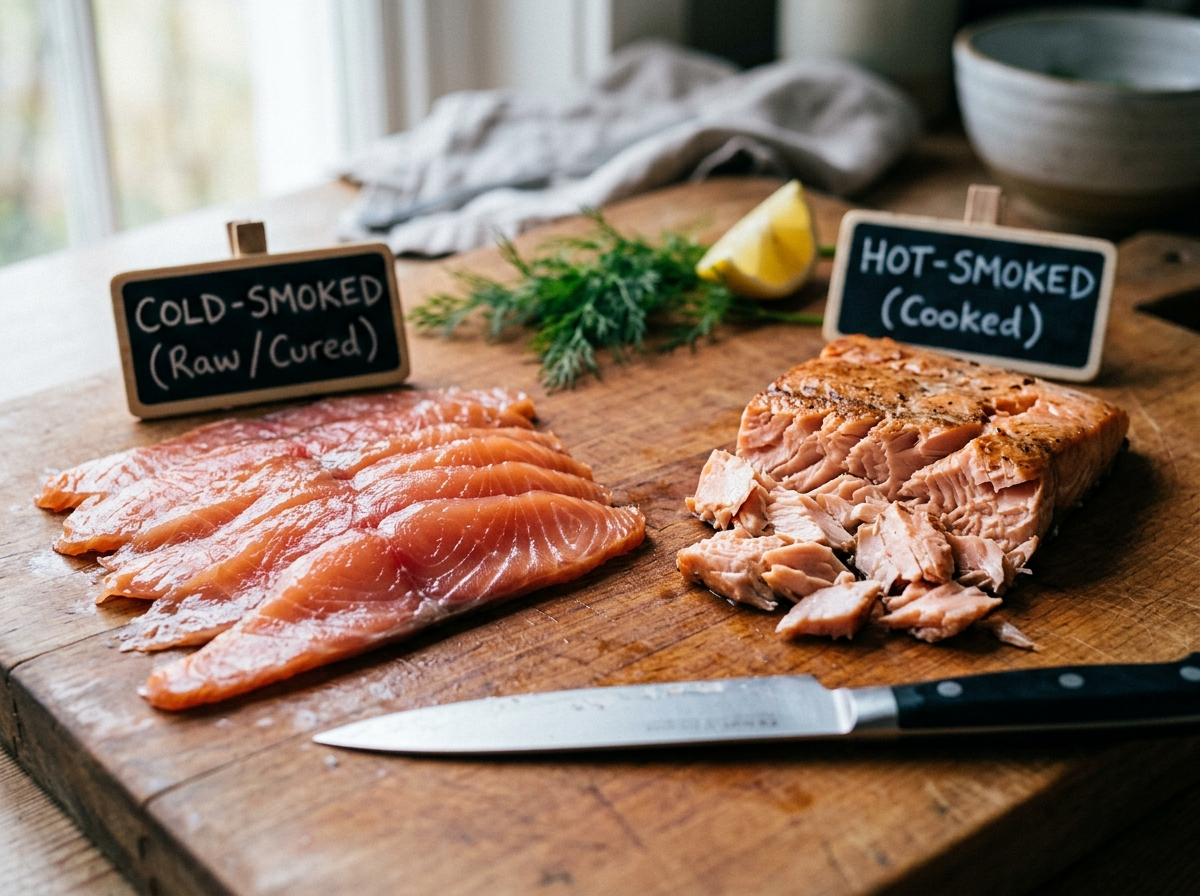
If you’ve only eaten smoked salmon on a bagel, there’s a good chance you’ve had cold-smoked salmon. It’s soft, glossy, and sliced thin like deli meat. If you’ve had smoked salmon in chunky pieces that flake apart with a fork, that was probably hot-smoked salmon.
Quick fact: Smoking and cooking are not the same thing. Low smoke adds flavor and helps preserve the fish, but it doesn’t always heat the salmon enough to count as cooked.
That’s the part many articles skip. They answer with a flat yes or no, and that leaves you more confused than before.
Why the answer depends on the type of smoked salmon
Cold-smoked salmon: smoked, cured, but not fully cooked
Cold-smoked salmon is the kind most people picture first. It’s usually cured with salt, then smoked at a low temperature, often below about 90°F (32°C). That low heat gives it that smooth, buttery texture and gentle smoky taste.
Because the fish never reaches a true cooking temperature, cold-smoked salmon is not fully cooked. It may be ready to eat if it was made by a commercial producer and kept cold the whole time, but it still sits closer to raw or raw-like fish than fully cooked fish.
Think of it like this: cold smoking is about flavor and preservation, not cooking. It perfumes the salmon with smoke the way incense scents a room. It changes the fish, but it doesn’t fully transform it into a cooked piece.
That’s why cold-smoked salmon looks shiny and almost translucent. It doesn’t look like the opaque pink you see in baked salmon.
You’ll often find cold-smoked salmon labeled as:
- cold-smoked salmon
- nova or nova-style salmon
- smoked salmon slices
- traditional smoked salmon
Not every “nova-style” label means the exact same process, but in grocery stores it usually points you toward that thin-sliced cold-smoked deli style.
Hot-smoked salmon: fully cooked fish with smoke flavor
Hot-smoked salmon is a different story. Producers smoke it at a higher temperature, often somewhere in the 120°F to 180°F range, and the fish reaches a cooked state. In the U.S., USDA says fish is cooked at 145°F (63°C).
That higher heat firms up the flesh. Instead of silky ribbons, you get thicker pieces that are opaque, flaky, and drier than cold-smoked salmon.
Hot-smoked salmon feels a lot like regular cooked salmon, just with extra smoke. You can eat it cold from the fridge, break it into a salad, stir it into pasta, or warm it gently in a pan.
If cold-smoked salmon is the “bagel fish,” hot-smoked salmon is the “salad and rice bowl fish.”
Where lox and gravlax fit in
This is where people get tangled up.
Lox is traditionally salt-cured salmon belly. It’s not cooked. It also isn’t always smoked. In everyday deli talk, people often call any silky salmon “lox,” even when it’s actually cold-smoked salmon. That casual use adds a lot of confusion.
Gravlax is salmon cured with salt, sugar, and often dill. It’s also not cooked, and it usually isn’t smoked at all.
So if you’re trying to answer “is smoked salmon cooked or raw,” don’t lump lox, gravlax, cold-smoked salmon, and hot-smoked salmon into one pile. They look similar in some settings, but they aren’t the same thing.
Did you know? The term “sushi-grade” doesn’t have a formal government grading meaning in the U.S. It’s a store term, not a safety guarantee.
Can you eat smoked salmon without cooking it?
For most healthy adults, often yes
A lot of smoked salmon sold in stores is meant to be eaten as-is. That’s especially true for vacuum-packed products labeled ready to eat. Many people eat cold-smoked salmon straight from the package on bagels, toast, crackers, eggs, or cucumber slices.
So yes, many healthy adults can eat commercially prepared smoked salmon without cooking it.
Still, “ready to eat” doesn’t mean “zero risk.” Cold-smoked salmon is still a refrigerated seafood product. Like deli meats and other chilled ready-to-eat foods, it can carry bacteria if it wasn’t handled well or if it sat too warm for too long.
That’s one reason the source matters. A sealed pack from a trusted brand is not the same thing as home-cured fish or a tray that’s been sitting out at a buffet.
A common mix-up is thinking smoke kills every danger. It doesn’t. Smoke helps with flavor and shelf life, but it’s not a magic shield.
If you’re pregnant, older, or immunocompromised, be more careful
This is the part many readers really need.
Current FDA and CDC advice treats refrigerated smoked seafood as a bigger concern for people at higher risk from Listeria monocytogenes. That includes:
- pregnant people
- adults over 65
- people with weakened immune systems
For those groups, refrigerated smoked salmon is not the safest choice unless it’s cooked in a dish until hot. Shelf-stable canned or pouched smoked seafood is a different category, but the chilled packs in the deli case deserve more caution.
So if you’re pregnant and craving smoked salmon, a cold slice on a bagel isn’t the best bet. A fully heated smoked salmon quiche, pasta, or casserole is the safer move.
Warning: If you’re pregnant, have cancer, have had a transplant, or take immune-suppressing medicine, use your doctor’s advice first. This article gives general food-safety info, not personal medical advice.
Store-bought and homemade are not equal
Here’s another detail worth knowing: home-smoked salmon is riskier than many people think.
Commercial producers use tested curing methods, strict refrigeration, packaging controls, and food safety systems. A backyard smoker may make delicious fish, but it doesn’t give you the same safety margin.
That matters a lot with cold smoking. If the fish never gets hot enough to cook, you can’t treat a home batch like a store-bought ready-to-eat product unless you really know what you’re doing and follow a tested process.
If you’d rather start with fresh salmon and cook it fully yourself, these guides can help:
- Learn how to know when salmon is done
- Try this easy method for baking salmon at 400
- For outdoor cooking, use the best temp to grill salmon
How to tell if smoked salmon is cooked or raw
Read the label words first
Your best clue is the package itself.
Look for words like cold-smoked, hot-smoked, fully cooked, ready to eat, nova, lox, or gravlax. Those terms tell you much more than the front photo does.
Here’s the quick read:
- If it says cold-smoked, treat it as not fully cooked.
- If it says hot-smoked or fully cooked, it’s cooked.
- If it says lox or gravlax, it’s cured, not cooked.
Some brands don’t make this super clear, which is frustrating. In that case, move to the next clue: texture.
Look at the texture and color
You can often tell the type with your eyes.
Cold-smoked salmon is usually sliced thin. It looks soft, shiny, and a bit see-through. You can fold it over a bagel and it drapes like silk.
Hot-smoked salmon comes in thicker pieces or chunks. It looks more solid and opaque. If you poke it with a fork, it tends to flake.
A simple memory trick helps here: silky means likely cold-smoked; flaky means likely hot-smoked.
Know the temperature rule
If you want the plain food safety answer, this is it:
- Cold smoking uses low heat and does not fully cook the salmon.
- Hot smoking uses higher heat and does cook the salmon.
For fully cooked fish, the USDA target is 145°F internal temperature.
So if you’re stuck choosing between package words and internet guesses, trust the package first. If the label is vague, trust the texture next. If you still aren’t sure, play it safe and heat it before eating.
Pro tip: If you’re shopping for someone pregnant or elderly, don’t guess. Choose a package clearly labeled fully cooked or buy fresh salmon and cook it yourself.
How should you eat smoked salmon?
Best ways to eat cold-smoked salmon
Cold-smoked salmon shines when you treat it gently. It’s delicate. You don’t need to do much to it.
Good everyday options include a bagel with cream cheese, capers, and red onion, or a slice tucked into scrambled eggs right at the end. You can also layer it over toast, cucumber rounds, or a rice bowl.
It even works in sushi-style bowls with crunchy toppings. If you like that kind of texture, you might enjoy learning what tobiko is, since it’s another seafood topping people often pair with salmon.
The big thing is temperature control. Keep cold-smoked salmon chilled until serving, and don’t let it sit out on a brunch board all morning. Like other seafood, it should stay out for no more than 2 hours, or 1 hour if the room is very hot.
Can you cook cold-smoked salmon?
Yes, absolutely.
You can fold cold-smoked salmon into pasta, omelets, frittatas, quiche, chowder, or a creamy dip. Once you heat it, the texture changes. It loses that silky deli feel and becomes firmer.
That’s not a bad thing. It’s just different.
Cooking cold-smoked salmon makes sense if:
- you prefer fully heated fish
- you’re serving someone in a higher-risk group
- you want it in a hot dish anyway
A smoked salmon quiche is a great example. You still get the smoky flavor, but the fish is part of a cooked meal instead of a chilled topping.
Hot-smoked salmon is more flexible
Hot-smoked salmon is already cooked, so it’s easy to use.
You can flake it into salads, grain bowls, pasta, fish cakes, or sandwiches. It works almost like rotisserie chicken in the seafood world. The hard part is usually not safety. It’s just keeping the fish from drying out if you reheat it too much.
A little gentle heat goes a long way.
If you start with frozen salmon before smoking or baking at home, these rules for thawed salmon in the fridge will help you stay on track.
Storage, shelf life, and signs it has gone bad
How long does smoked salmon last?
Start with the package date. That’s your main guide, especially for unopened vacuum-sealed smoked salmon.
Once you open it, don’t stretch it too far. A safe, simple rule is to eat opened refrigerated smoked salmon within about 3 days, unless the brand gives a different instruction. Some packages may allow a bit longer, but the label should win.
If you cook the smoked salmon into a dish, treat the leftovers like other cooked fish. Get them into the fridge within 2 hours and use them within 3 to 4 days. If you need a refresher, these tips on cooked salmon in the fridge are useful.
Keep the fridge at 40°F (4°C) or lower. That one habit does a lot of work.
When should you throw it out?
Don’t try to “save” smoked salmon that seems off. Fish is not the place to get optimistic.
Throw it out if you notice:
- a sour, harsh, or ammonia-like smell
- a slimy film that wasn’t there before
- dull gray or brown patches
- mold
- a leaking, puffy, or damaged package
One more thing: Listeria doesn’t always announce itself with a bad smell or weird color. The salmon may look fine and still be risky for high-risk groups. That’s why pregnant people and immunocompromised people shouldn’t rely on the sniff test alone.
Can you freeze smoked salmon?
Yes, most smoked salmon can be frozen if the package hasn’t been open long. Quality may drop a bit, especially with cold-smoked slices, but it’s an option if you won’t use it soon.
Wrap it well, freeze it quickly, and thaw it in the fridge, not on the counter.
4. FAQ Section
FAQ
Is cold-smoked salmon raw or cooked?
Cold-smoked salmon is not fully cooked. It’s usually cured and smoked at a low temperature, which adds flavor and preserves it, but it doesn’t bring the fish to a true cooked state.
Can you eat smoked salmon straight from the package?
In many cases, yes. Commercial smoked salmon that is labeled ready to eat is often meant to be eaten straight from the pack. That said, cold-smoked salmon still carries more risk than fully cooked salmon, especially for pregnant people, older adults, and anyone with a weak immune system.
Is smoked salmon safe during pregnancy?
Refrigerated smoked salmon is not the safest choice during pregnancy unless it’s cooked until hot. FDA advice is cautious because of Listeria risk. If you’re pregnant, a hot cooked dish with smoked salmon is a better option than chilled slices on a bagel.
What’s the difference between lox and smoked salmon?
Lox is usually salt-cured salmon and not truly smoked. Smoked salmon may be cold-smoked or hot-smoked. Cold-smoked salmon looks a lot like lox, which is why people mix them up.
Does smoked salmon need to be cooked before eating?
Not always. Hot-smoked salmon is already cooked. Cold-smoked salmon is often sold ready to eat, but it isn’t fully cooked. If you’re in a high-risk group or you’re unsure about the product, heating it before eating is the safer choice.
5. Conclusion
So, is smoked salmon cooked or raw? The honest answer is both can exist under the same name. Cold-smoked salmon isn’t fully cooked, while hot-smoked salmon is.
Next time you’re at the store, don’t stare at the fish and guess. Check for one clear phrase on the package: cold-smoked or hot-smoked. That tiny label tells you how to eat it, who should be careful, and whether it belongs on a bagel straight from the pack or in a hot dish instead.
If the label still feels vague, play it safe and heat it. With seafood, a little caution is never wasted.