Overcooked tilapia tastes like cardboard. Undercooked tilapia can send you to the emergency room. There’s a sweet spot between those two extremes, and it all comes down to one number — 145°F (63°C). That’s the internal temperature the USDA recommends for all fin fish, tilapia included. But here’s the thing most recipes don’t tell you: hitting that number is just part of the story. How you measure it, when you pull the fish off heat, and what you do in the minutes after cooking — all of that matters just as much.
If you’ve ever cut into a piece of tilapia wondering, “Is this done or am I about to regret dinner?” — stick around. We’re going to settle this once and for all.
Why Tilapia Done Temp Actually Matters
You might be thinking, “It’s just fish. How complicated can it be?” Fair point. But tilapia is one of the most widely consumed fish in the United States — the USDA reports Americans eat over a billion pounds of it each year. And because it’s so affordable and accessible, a lot of home cooks treat it casually. That casual approach is where problems creep in.
Raw or undercooked tilapia can harbor bacteria like Salmonella and parasites that cause foodborne illness. The symptoms aren’t fun — nausea, vomiting, diarrhea, and in severe cases, hospitalization. Pregnant women, young children, older adults, and anyone with a weakened immune system face even higher risks.
On the flip side, overcooking destroys everything that makes tilapia worth eating. The delicate, mild flavor disappears. The texture goes from tender to rubbery. You end up drowning the fish in sauce just to make it edible.
The done temperature of 145°F is that perfect middle ground. At this internal temp, harmful bacteria are destroyed, but the proteins haven’t tightened up so much that the fish becomes dry. The flesh turns from translucent to opaque white, and it flakes easily with a fork.
The Magic Number: 145°F (63°C)
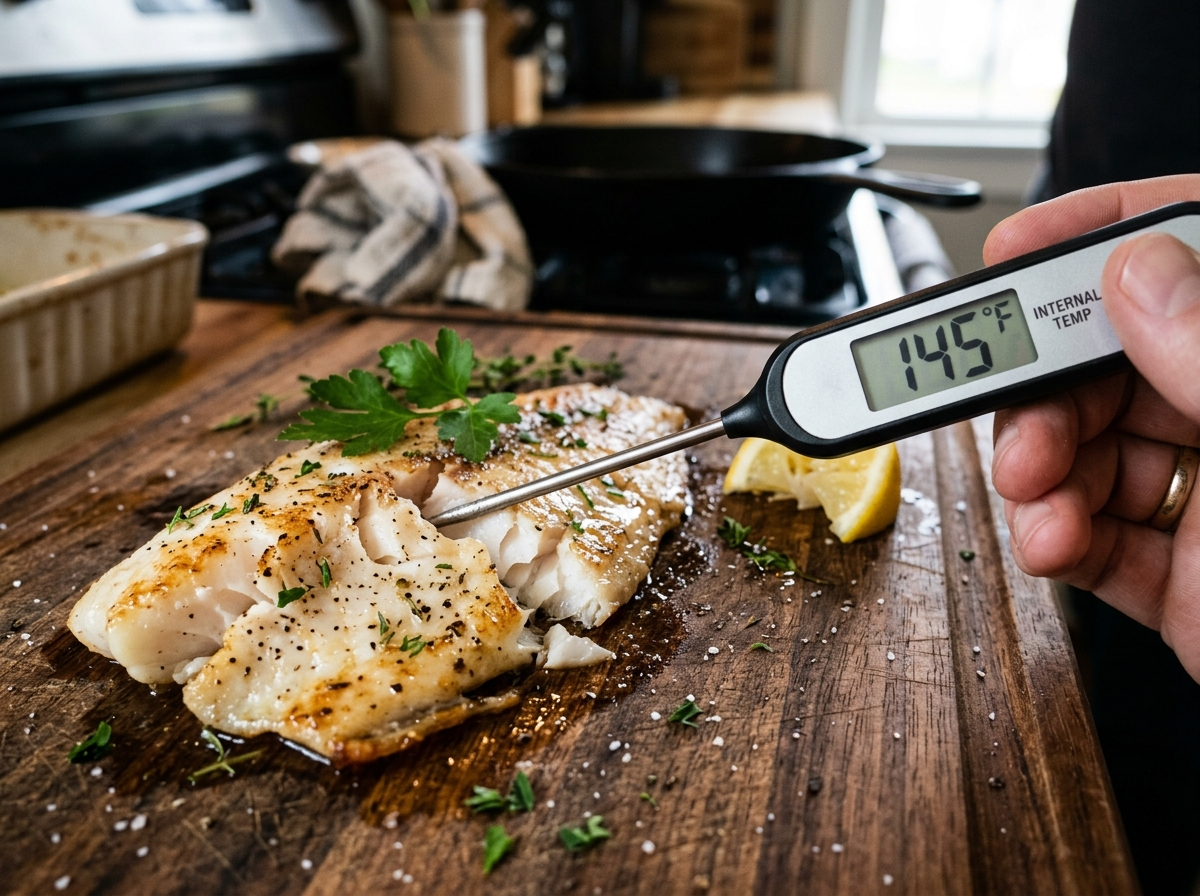
Let’s be crystal clear here. The USDA Food Safety and Inspection Service states that all fish should reach an internal temperature of 145°F (63°C) measured at the thickest part of the fillet. This isn’t a suggestion. It’s a science-backed guideline designed to eliminate pathogens.
Quick Fact: At 145°F, the proteins in tilapia have coagulated enough to turn the flesh opaque and flaky, but haven’t contracted so tightly that moisture gets squeezed out. It’s literally the temperature where safety and quality overlap.
Now, some experienced cooks prefer to pull tilapia off heat at around 140°F to 142°F and let carryover cooking bring it the rest of the way. That’s a valid technique — we’ll talk about it in a moment — but if you’re new to cooking fish or want zero guesswork, aim for 145°F on your thermometer before removing from heat.
How to Check Tilapia Internal Temperature the Right Way
Owning a meat thermometer isn’t enough. You need to use it correctly. And with a thin fillet like tilapia, the technique matters more than you might expect.
Choose the Right Thermometer
A digital instant-read thermometer is your best friend here. The probe is thin enough to insert into a tilapia fillet without tearing it apart, and you get a reading in 2 to 3 seconds. Dial thermometers with thick probes? They work great for a pork roast, not so much for a half-inch piece of fish.
If you cook fish regularly — and other proteins like salmon or shrimp — a good instant-read thermometer is one of the smartest investments you’ll make.
Where to Insert the Probe
Slide the probe horizontally into the thickest part of the fillet. You want the tip of the probe to be in the center of the flesh, not poking through the bottom and touching the pan (which gives you a false reading). With tilapia fillets, which tend to be thinner at the edges and thicker toward the center, always target that center section.
Pro Tip: If your fillet is particularly thin — less than half an inch — angle the probe at about 45 degrees and go through the side. This keeps the sensor tip surrounded by fish rather than air.
When to Check
Don’t stab your tilapia every 30 seconds. That lets juices escape and damages the delicate flesh. Start checking about 2 to 3 minutes before you think the fish should be done, based on your cooking method. One or two checks is all you need.
Carryover Cooking: The Detail Most People Miss
Here’s something that separates a decent home cook from a great one. Fish keeps cooking after you remove it from heat. The residual heat in the outer layers continues traveling inward, and the internal temperature can rise by 3°F to 5°F in the few minutes the fillet rests.
This means if you pull your tilapia off the pan or out of the oven at exactly 145°F, it might actually finish closer to 148°F or 150°F. That’s not a disaster, but it does push you slightly toward drier territory.
So what’s the move? If you’re comfortable with carryover cooking, pull the fillet at 140°F to 142°F, tent it loosely with foil, and let it rest for 2 to 3 minutes. The temperature will climb right into that safe 145°F zone, and the texture will be noticeably more moist and tender.
Warning: This technique requires a reliable thermometer and a bit of practice. If you’re feeding someone who’s immunocompromised or you’re still building confidence in the kitchen, just cook to the full 145°F. Better safe than sorry.
Tilapia Done Temp for Different Cooking Methods
Not every cooking method heats tilapia at the same rate. The target internal temp stays the same — 145°F — but how quickly you get there and what you need to watch for changes based on your approach.
Baking Tilapia in the Oven
Baking is probably the most forgiving method for beginners. Set your oven to 400°F, place seasoned fillets on a lined baking sheet, and cook for 10 to 14 minutes depending on thickness. A fillet that’s about ¾-inch thick typically hits 145°F in around 12 minutes.
The even, surrounding heat of an oven means fewer hot spots and more consistent cooking. Start checking the temp at the 10-minute mark.
If you’ve baked salmon at 400°F before, the timing is similar — tilapia might actually finish a touch faster since the fillets tend to be thinner.
Pan-Searing Tilapia
Pan-searing gives you that golden crust that baking can’t match. Heat a skillet over medium-high heat with a tablespoon of oil. Once the oil shimmers, lay the fillet in the pan (away from you, to avoid oil splatter). Cook for 3 to 4 minutes per side.
The trick with pan-searing is heat management. Too high, and the outside burns before the inside reaches 145°F. Too low, and you never get that crispy exterior. Medium-high is the sweet spot for most stovetops.
One thing to watch: tilapia fillets curl up when they hit a hot pan. The thinner edges cook faster than the thicker center. You can prevent excessive curling by making a few shallow scores on the skin side, or by pressing gently with a spatula for the first 30 seconds.
Grilling Tilapia
Grilling tilapia is doable, but it’s trickier than grilling a thick steak or even shrimp. Tilapia is delicate and can stick to grill grates or fall apart.
Set your grill to medium heat (around 400°F). Oil the grates well or use a grill basket. Cook for 3 to 4 minutes per side, and check the temp before flipping the second time. A grill basket is honestly the easiest way to handle tilapia — it prevents the fish from sticking and makes flipping painless.
Air Frying Tilapia
Air fryers have become a go-to for quick weeknight tilapia. Set it to 400°F and cook for 8 to 10 minutes, flipping halfway through. The circulating hot air crisps the outside nicely while keeping the inside moist.
Because air fryers are compact, the heat is intense and consistent. You might find tilapia reaches 145°F a minute or two faster than you expect, so start checking at the 7-minute mark.
Broiling Tilapia
Broiling is like grilling upside down — intense top-down heat. Position your oven rack about 4 to 6 inches from the broiler element and cook for 5 to 8 minutes. Thin fillets might not even need flipping.
Watch closely. Broilers run extremely hot, and tilapia can go from perfectly done to charred in under a minute. Keep the oven door slightly ajar if your oven manual recommends it for broiling.
What Does Properly Cooked Tilapia Look Like?
Your thermometer is the most reliable tool, but your eyes and a fork can back it up. Here’s what to look for when tilapia hits that 145°F sweet spot:
The flesh turns from translucent and slightly pinkish to fully opaque white. If you gently press the thickest part with a fork and twist, the fish should flake easily into clean layers. The texture should feel firm but not tough — there should be a slight resistance, like pressing the tip of your nose, not your forehead.
If the flakes look mushy, wet, or glassy in the center, it needs more time. If the fish is dry, crumbling into tiny pieces, or has edges that look papery, you’ve gone too far.
Did You Know? Tilapia is one of the leanest freshwater fish you can buy. A 4-ounce fillet has roughly 110 calories and 23 grams of protein. Because it’s so low in fat, it has very little margin for error with overcooking — there’s barely any fat to keep it moist once the proteins start squeezing out moisture.
Cooking Tilapia from Frozen: Does the Temp Change?
Nope. The target is still 145°F internal. What changes is the cooking time.
If you’re cooking tilapia straight from frozen (which is completely safe, by the way), expect to add about 50% more cooking time compared to thawed fillets. So if a thawed fillet takes 12 minutes at 400°F in the oven, a frozen one will take roughly 18 minutes.
Rinse the frozen fillet under cold water for a minute to remove any ice glaze, pat it dry, season it, and cook. The thermometer will tell you when it’s ready — trust the number, not the clock.
That said, thawing gives you better results. A frozen fillet releases more moisture as it cooks, which can prevent proper browning and dilute seasonings. If you have time, thaw tilapia in the fridge overnight. Just like with storing thawed salmon, keep it on a plate to catch any liquid and use it within a day or two.
How Long Does Cooked Tilapia Last?
You nailed the done temp, dinner was great, and now you’ve got leftovers. Good news — properly cooked tilapia keeps in the fridge for 3 to 4 days when stored in an airtight container. The same food safety rules that apply to cooked salmon and cooked shrimp apply here.
When reheating, bring the tilapia back up to 145°F to be safe. The microwave works but tends to dry fish out. A better option: reheat gently in a covered pan over low heat with a splash of water or broth. It steams the fish back to life without turning it rubbery.
You can also freeze cooked tilapia for up to 3 months, though the texture won’t be quite the same after thawing. It works best in dishes where the fish gets mixed in — fish tacos, fish cakes, or a quick stir-fry.
Seasoning Ideas That Don’t Mess with Cooking Temp
Temperature doesn’t change based on what spices you use, but thick coatings and marinades can affect how heat reaches the fish. A light dusting of garlic powder, paprika, salt, and pepper won’t cause any issues. A thick batter or heavy bread crumb coating will insulate the fish and may require a couple extra minutes of cooking.
If you’re marinating tilapia, keep it short — 15 to 30 minutes max. Acidic marinades (lemon juice, lime, vinegar) start “cooking” the surface proteins almost immediately. A long marinade can give you a mushy exterior even before the fish hits the pan.
Want some inspiration? Tilapia pairs beautifully with Asian-style sauces. A simple teriyaki glaze applied in the last minute of cooking adds flavor without interfering with the cook. Or try a gochujang-based sauce if you want some heat — just brush it on after the flip so it doesn’t burn.
Common Mistakes That Lead to Wrong Internal Temp
Let’s talk about where things usually go wrong. These are the errors I see home cooks make repeatedly, and each one can lead to either undercooked or overcooked tilapia.
Not preheating properly. Whether it’s an oven, skillet, or grill, starting with inadequate heat means the fish cooks unevenly. The outside won’t sear or crisp, and you’ll end up cooking longer to compensate — which dries out the thinner edges while the center is still catching up.
Cooking ice-cold fish. Taking a fillet straight from the fridge and throwing it onto a screaming hot pan creates a temperature shock. The exterior cooks too fast. If you’re using thawed tilapia, let it sit at room temperature for 10 to 15 minutes before cooking. Not long enough for food safety concerns, but long enough to take the chill off.
Checking temp in the wrong spot. If you measure near the edge of a tilapia fillet, you’ll get a reading that’s 10 to 15 degrees higher than the actual center. Always measure the thickest part. Always.
Ignoring carryover cooking. We covered this above, but it’s worth repeating because it’s the number one reason people end up with dry fish. The temp keeps climbing after you pull the fillet off heat.
Cooking all fillets the same amount of time. Tilapia fillets aren’t uniform. Some are thick, some are thin, some have a tapered tail section. Cook by temperature, not by time. Two fillets from the same package might be done a full minute apart.
Tilapia vs. Other Fish: How Done Temps Compare
If you cook multiple types of fish, here’s the reassuring news: the USDA recommends the same 145°F internal temperature for virtually all fin fish. Whether you’re cooking cod, halibut, salmon, or tilapia, the target is identical.
The difference lies in how each fish behaves at that temperature. Salmon, with its higher fat content, stays moist and almost buttery at 145°F. Tilapia, being much leaner, has a drier, flakier texture at the same temp. That’s why precision matters even more with tilapia — there’s less fat to forgive your mistakes.
Shellfish follows different rules. Shrimp turns pink and opaque, and internal temp isn’t usually measured the same way due to size. But the food safety principles are the same: cook to a safe temp, and don’t overdo it.
FAQ
Can I eat tilapia at 140°F instead of 145°F?
The USDA’s recommendation is 145°F for safety reasons. At 140°F, the fish may be very close to safe, but there’s a margin of risk — especially for vulnerable populations like pregnant women, young children, and older adults. Some experienced cooks pull fish at 140°F and rely on carryover cooking to reach 145°F, but if you’re serving anyone at higher risk, stick to the full 145°F reading on the thermometer before removing from heat.
How do I know tilapia is done without a thermometer?
Look for visual cues. The flesh should be opaque white all the way through — no translucent or glassy spots in the center. Press a fork into the thickest part and twist gently. If the fish flakes into clean layers without resistance, it’s done. If it feels mushy or looks wet and shiny inside, give it another minute or two. That said, a thermometer removes all guesswork, and a decent instant-read costs less than a tilapia dinner for two.
Does tilapia done temp change if I’m stuffing or topping the fillet?
The target temp stays at 145°F, but anything you pile on top of the fillet acts as insulation. Toppings like breadcrumb crusts, vegetable mixtures, or cheese slow down how quickly heat reaches the center of the fish. Budget an extra 2 to 4 minutes of cooking time, and always check the temp in the center of the fish itself, not the topping.
Is it safe to eat tilapia that’s slightly pink inside?
Tilapia should be opaque white when fully cooked. A slight pink or translucent appearance in the center usually means it hasn’t reached 145°F yet. Unlike salmon, which can have a desirable pink center depending on doneness preference, tilapia doesn’t have the fat content to make that appealing or particularly safe. When in doubt, cook it a bit longer and check with your thermometer.
How long should I rest tilapia after cooking?
A 2 to 3 minute rest is plenty. This allows carryover cooking to finish the job and lets the juices redistribute slightly. You don’t need to rest tilapia as long as a thick steak — it’s a thin, lean protein that cools quickly. Tent loosely with foil to keep it warm, but don’t wrap tightly or the trapped steam will make any crispy exterior soggy.
Your Tilapia, Done Right
Getting tilapia to its done temp isn’t complicated once you understand the basics. 145°F internal, measured at the thickest point, with a reliable instant-read thermometer. That’s the whole formula. Everything else — carryover cooking, resting, visual cues — just fine-tunes the process.
The one tool that changes everything is that thermometer. If you don’t own one yet, grab one before your next fish night. It takes the anxiety out of cooking tilapia (or any protein, really) and puts you firmly in control.
Next time you stand over a hot pan wondering if that fillet needs another minute, don’t guess. Check the temp, trust the number, and enjoy perfectly cooked tilapia that’s safe, moist, and actually worth eating.