Salmon can taste rich, buttery, and restaurant-good with the right rub. It can also turn too sweet, too salty, or too dark with one heavy shake of the wrong bottle. If you’re trying to find the best Kosmos Q rub for salmon, the short answer is Honey Killer Bee for most cooks. Still, Dirty Bird and Honey Jalapeño Killer Bee can beat it in a few real-life situations.
The short answer: which Kosmos Q rub is best for salmon?
The best Kosmos Q rub for salmon is Honey Killer Bee for most people. It gives you the balance salmon needs: a little sweet, a little savory, and just enough heat to wake up the fish without covering it up.
If you want the fast answer, here it is:
- Honey Killer Bee is the best all-around pick
- Dirty Bird is best if you want a more savory salmon
- Honey Jalapeño Killer Bee is best if you like sweet heat
That’s the simple version. The better answer depends on your salmon, your cooking method, and how sweet you want the final bite to taste.
Best overall: Honey Killer Bee
If I had to pick one bottle and send you to the kitchen, I’d pick Kosmos Q Honey Killer Bee.
Why? Salmon already has richness. It doesn’t need a heavy steak-style rub. It needs contrast. Honey Killer Bee brings that with sweet notes, light chili warmth, and a barbecue-style finish that plays well with buttery fish.
It works especially well on:
- Atlantic salmon
- king salmon
- baked salmon
- smoked salmon
- pellet grill salmon
You still need a light hand. Think of this rub like a strong cologne. A little smells great. Too much takes over the room.
A common worry is this: “Won’t a sweet rub make salmon taste like candy?” Not if you use it right. On salmon, Honey Killer Bee doesn’t read like dessert. It reads like caramelized edges, balanced salt, and a gentle sweet-savory crust.
Best savory option: Dirty Bird
Some people don’t want sweetness on fish at all. Fair enough.
If that’s you, Kosmos Q Dirty Bird is usually the better pick. It leans more savory and peppery, so the salmon tastes cleaner and more classic. You get seasoning, not a barbecue glaze vibe.
Dirty Bird works best on:
- sockeye salmon
- coho salmon
- grilled salmon over direct or medium heat
- salmon you plan to finish with lemon or herb butter
Leaner salmon, like sockeye, can get covered up faster by sweet rubs. Dirty Bird respects that stronger natural flavor.
Want more heat? Dirty Bird Hot makes more sense than piling cayenne onto regular Dirty Bird. The heat is built into the blend, so the flavor stays more balanced.
Best sweet-and-spicy option: Honey Jalapeño Killer Bee
If you like salmon tacos, salmon bites, or that sticky sweet-heat barbecue profile, Honey Jalapeño Killer Bee is a strong choice.
This one is more playful. It’s not the safest “works on everything” option, but it can be the most fun. The sweet base works with salmon’s fat, while the jalapeño note gives the bite a little lift.
It shines on:
- grilled salmon for tacos
- salmon cooked on a pellet grill
- cedar plank salmon
- salmon bowls with slaw, rice, or lime crema
For a plain weeknight fillet with mashed potatoes? Honey Killer Bee still wins. For tacos or a bolder backyard-cook flavor? Honey Jalapeño Killer Bee can steal the show.
Why salmon needs a different rub than chicken or ribs
A lot of people make one simple mistake. They season salmon like it’s chicken thighs or pork shoulder. That’s where trouble starts.
Salmon takes on flavor fast
Salmon cooks quickly. Most fillets are done in 10 to 15 minutes, sometimes less. That short cook time changes how rub behaves.
On a long smoke, a rub has time to settle, melt, and mellow out. On salmon, the spices hit your tongue almost exactly as you applied them. So if the rub is too salty, too sugary, or too hot, you’ll notice it right away.
That’s why the best Kosmos Q rub for salmon isn’t always the boldest one. It’s the one that brings balance.
Salmon is rich, but still delicate
People call salmon a “strong” fish, and compared with cod or tilapia, that’s true. But it’s still delicate next to beef or pork.
Think of salmon like a good piece of toast with butter. You can add jam, pepper, lemon, or herbs and it still tastes good. Dump on too much of any one thing, and the butter gets lost. Same deal here.
The fat in salmon carries flavor really well. That’s great news for rubs like Honey Killer Bee. It’s also why too much rub can make every bite feel loud.
Quick fact: salmon usually needs less rub per pound than chicken, pork, or beef.
Sugar and heat matter more on fish
Sweet rubs can be fantastic on salmon. They also burn faster.
That’s not the rub’s fault. Fish is thin, fast-cooking, and often cooked over direct heat. Put a sugar-heavy rub over a ripping-hot grill, and the outside can get dark before the middle is where you want it.
So yes, sweet Kosmos Q rubs can work on salmon. You just need to match them to the right heat.
Pro tip: sweet rubs love moderate heat or indirect heat. Savory rubs handle higher heat better.
A common misconception worth clearing up
Some cooks think fish should only get salt, pepper, and lemon. That’s too narrow.
Salmon can handle barbecue-style seasoning really well. The trick isn’t to avoid flavor. The trick is to stop before the rub becomes the whole meal.
That’s why Kosmos Q can work here. Their rubs tend to layer sweet, savory, and mild heat, and salmon likes that balance more than brute force.
Match the rub to your salmon and cooking method
This is where most ranking posts fall short. They tell you one rub name and send you on your way. But salmon isn’t one-size-fits-all.
A thick king salmon fillet and a thin sockeye fillet won’t behave the same way. A pellet grill and a hot gas grill won’t treat sugar the same way either.
Atlantic and king salmon: sweeter rubs usually work best
Atlantic salmon, which is what many home cooks buy most often, is rich and fatty. King salmon is even richer. Both can handle a rub with sweetness better than leaner varieties can.
That makes Honey Killer Bee the safest pick.
You get enough fat in the fish to balance the sweet edge. The result tastes full and rounded instead of sharp. Add a squeeze of lemon after cooking, and it all clicks into place.
If you’re roasting at home, 400°F is a forgiving temperature for this style. If you want more detail on timing, this guide on baking salmon at 400 pairs nicely with a Honey Killer Bee approach.
Sockeye and coho: leaner fish often like a lighter touch
Sockeye has a deeper salmon flavor, firmer texture, and less fat than Atlantic. Coho sits somewhere in the middle.
These types often taste better with Dirty Bird or a much lighter coat of Honey Killer Bee. Too much sweetness can sit on top of the fish instead of blending into it.
If you love that smoky grilled edge, a peppery savory rub helps the salmon still taste like salmon.
For a fast roast, 425°F can work well, but go easy on sugary rubs at that heat. If you cook hotter and faster, this guide on baking salmon at 425 will help you avoid overcooking.
Grilling, smoking, and baking all change the answer
Cooking method matters almost as much as the rub itself.
On a smoker or pellet grill, Honey Killer Bee gets more room to shine. Lower heat gives the sweet notes time to set without scorching. That’s why it’s such a good pick for backyard salmon.
On a hotter grill, Dirty Bird often feels safer. It browns well, stays savory, and won’t darken as quickly as a sweeter blend.
If grilling is your plan, get the heat right before you even think about rub choice. This breakdown of the best temp to grill salmon makes the rub decision easier because you’ll know whether your setup favors sweet or savory seasoning.
In the oven, Honey Killer Bee is hard to beat for everyday cooking. It’s easy, forgiving, and family-friendly.
Did you know? A lot of people blame the rub when salmon tastes off, but the real issue is often heat that’s too high for the sugar level in the seasoning.
How to use Kosmos Q rub on salmon without overpowering it
A great rub can still fail if you apply it the wrong way. Salmon doesn’t need a heavy crust. It needs a smart coating.
Bought frozen fish? Before you season anything, make sure your timing is safe. Here’s a quick check on how long thawed salmon stays in the fridge.
A simple 4-step method that works
- Pat the salmon dry
- Brush on a light coat of oil or melted butter
- Apply a light, even layer of rub
- Rest 10 to 15 minutes, then cook
That’s it. Not fancy. Just effective.
Step 1: Dry fish gets better color
Water is the enemy of good surface color. If the fillet is wet, the rub can clump and melt unevenly.
Use paper towels and pat the salmon dry, especially the flesh side. If the fish is skin-on, focus the seasoning on the flesh side. The skin already gives you a barrier and doesn’t need much help.
Step 2: Use less rub than you think
This is the biggest fix for most home cooks.
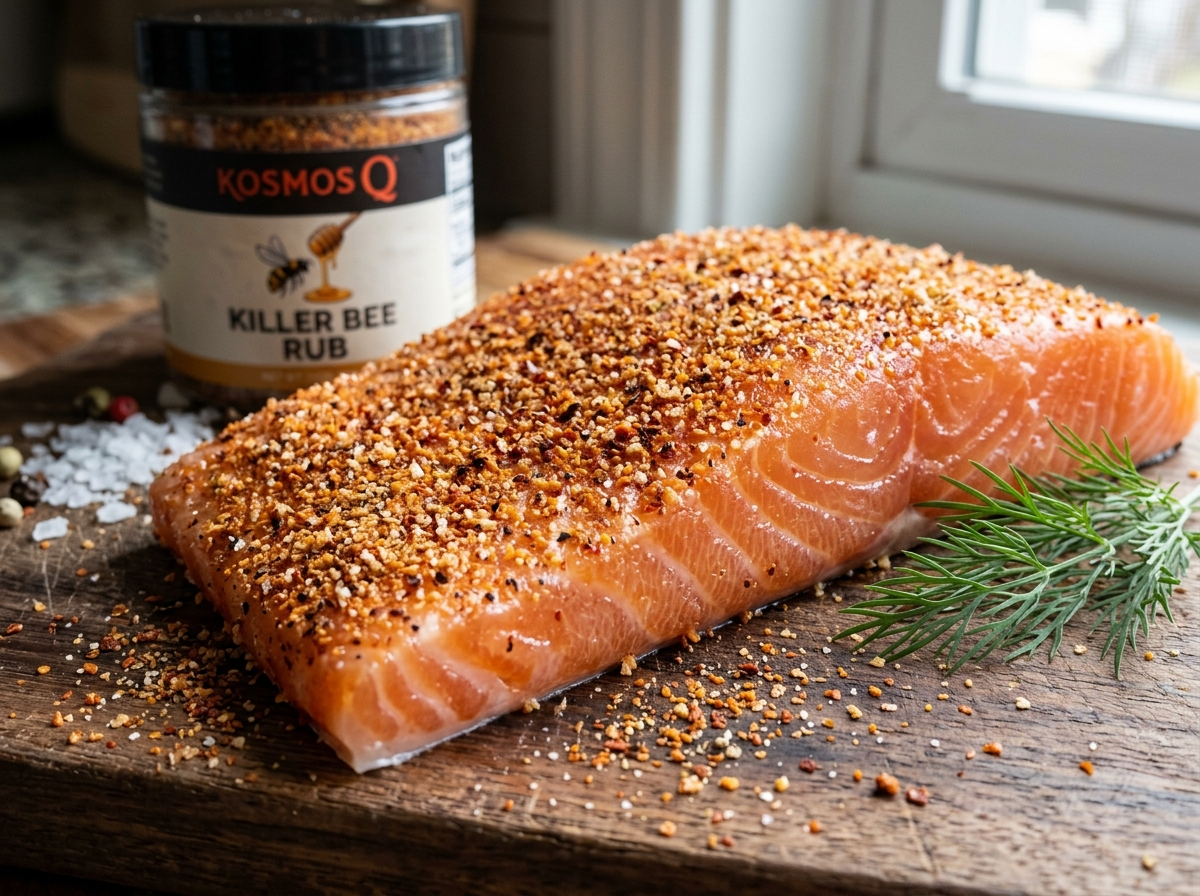
For salmon, start with about 1 teaspoon of rub per 6-ounce fillet, or roughly 1 tablespoon per pound. That’s a starting point, not a strict law. Thick king salmon can take a little more. Thin sockeye usually needs a little less.
A rub should look like a coating, not a blanket.
Here’s a real example. Say you have two center-cut Atlantic salmon fillets, about 6 ounces each. I’d use about 2 teaspoons of Honey Killer Bee total, not 2 tablespoons. That lighter layer will still give you color and flavor without turning every bite into a spice bomb.
Step 3: Let it sit briefly, not forever
You don’t need a long marinade window here.
Ten to fifteen minutes is enough for most Kosmos Q rubs on salmon. That gives the surface time to moisten and hold the seasoning. It also gives you time to preheat the grill or oven.
Leave it on for hours, and the salt can start changing the texture. The fish may feel softer, slightly cured, or wetter on the surface. That’s not always bad, but it’s usually not what people want from a simple salmon dinner.
Warning: don’t season salmon heavily and then let it sit all afternoon in the fridge. Fish isn’t brisket.
Step 4: Finish with acid, not more salt
This part makes a huge difference.
A sweet or savory rub gets better when you finish the fish with a little brightness. Lemon juice, lime juice, or even a small spoon of Dijon butter can sharpen the flavor and keep the rub from feeling heavy.
Try these easy finishes:
- lemon wedges
- melted butter with parsley
- lime juice for spicy salmon
- a thin maple-Dijon brush for sweeter styles
You don’t need all of them. Just pick one.
Taste the rub before it hits the fish
Kosmos Q blends can vary in sweetness and salt level from one style to the next. So take a tiny pinch and taste it first.
That quick taste tells you a lot. Too sweet for your liking? Use less, or switch to Dirty Bird. Tastes strong and salty? Plan a lighter coat and skip salty side sauces.
That 3-second check saves dinner.
Flavor combos that actually work with Kosmos Q rubs
This is the part most people care about after they pick a bottle. What does the finished salmon actually taste like?
Honey Killer Bee with lemon butter
This is the easy crowd-pleaser.
Use Honey Killer Bee on a thick Atlantic or king salmon fillet. Bake it or smoke it until just done. Finish with melted butter and a squeeze of lemon.
You get sweet edges, savory warmth, and a clean citrus finish. It tastes fuller than plain lemon-pepper salmon, but it still feels balanced.
If you want a safe “family dinner” version of the best Kosmos Q rub for salmon, this is it.
Dirty Bird with herb butter
This setup feels a little more classic.
Season a sockeye or coho fillet with Dirty Bird, grill it skin-side down over medium heat, and finish with soft herb butter or chopped dill. The peppery rub gives the fish backbone, and the butter rounds it off.
You’ll notice more of the salmon itself here. That’s why people who don’t love sweet fish often prefer it.
Honey Jalapeño Killer Bee for tacos or bowls
This one is fun and a little messy in the best way.
Use Honey Jalapeño Killer Bee on salmon chunks or smaller fillets. Grill, roast, or air-fry until lightly caramelized. Flake the fish into tortillas or over rice, then add slaw, lime, and a cool sauce.
The sweet-heat combo works because the toppings balance it out. On its own, it can feel bold. In tacos or bowls, it lands just right.
Pro tip: if you’re adding a sauce after cooking, go lighter on the rub. You want layers, not traffic.
Common mistakes that make Kosmos Q salmon miss the mark
You can buy the right rub and still end up with disappointing fish. Usually it comes down to one of these problems.
Using a meat-sized amount of rub
This is mistake number one.
People get used to coating ribs, wings, or pork butt pretty heavily. Then they do the same thing to salmon and wonder why it tastes too salty or too sweet.
Salmon needs restraint. Start light. You can always add a little finishing salt or citrus after cooking. You can’t pull excess rub back out once it’s on there.
Cooking sweet rubs over blasting heat
Honey-style rubs and screaming-hot grills aren’t close friends.
You might still get away with it on a thick fillet, but the odds go down fast. If your grill runs hot, move the fish to indirect heat, lower the flame, or switch to a less sweet rub like Dirty Bird.
The rub didn’t fail you. The heat was just wrong for that flavor profile.
Letting the rub sit too long
A lot of barbecue habits don’t transfer well to fish.
Long rest times help bigger meats. On salmon, they can make the surface tacky and shift the texture in a way you may not like. Fifteen minutes is usually enough.
Judging doneness by time alone
Two fillets can weigh the same and still cook differently based on thickness, fat level, and cooking method. That’s why time alone can fool you.
Check texture. Check the center. Use a thermometer if you want the cleanest result. If you want a more detailed breakdown, this guide on how to know when salmon is done helps you read the fish without guesswork.
The USDA recommends 145°F at the thickest part for fully cooked fish. Many home cooks prefer salmon in the 125°F to 135°F range for a moister center, then let carryover heat finish the job. If you’re serving pregnant guests, older adults, or anyone with a higher food-safety risk, stick with the USDA guideline.
Leftovers matter too. If you make extra, here’s how long cooked salmon lasts in the fridge so you can store it safely.
4. FAQ Section
FAQ
What is the best Kosmos Q rub for salmon?
For most people, Honey Killer Bee is the best Kosmos Q rub for salmon. It gives salmon sweet-savory balance without covering the fish up. If you want less sweetness, choose Dirty Bird. If you want more sweet heat, choose Honey Jalapeño Killer Bee.
Can you use Honey Killer Bee on salmon?
Yes, and it’s often the best choice. Honey Killer Bee works especially well on Atlantic and king salmon because those richer fillets can handle a sweeter rub. Just use a light coating and avoid extremely high heat so the sugars don’t darken too fast.
Is Dirty Bird or Honey Killer Bee better for grilled salmon?
It depends on your grill setup and taste. Dirty Bird is better for hotter grilling and for people who want a savory, peppery finish. Honey Killer Bee is better if you’re grilling at moderate heat or using indirect heat and want a sweet-savory crust.
How much Kosmos Q rub should you use on salmon?
Start with about 1 teaspoon per 6-ounce fillet or 1 tablespoon per pound. That’s much lighter than what you’d use on pork or chicken. Salmon picks up flavor quickly, so a little goes a long way.
How long should rub sit on salmon before cooking?
Ten to fifteen minutes is usually enough. That gives the rub time to stick and the fish time to lose its wet surface. Leaving salmon under rub for hours can change the texture and make the seasoning taste stronger than you want.
What internal temperature should salmon reach?
The USDA recommends 145°F for fully cooked fish. Many cooks pull salmon earlier, around 125°F to 135°F, for a softer and moister center. Your best target depends on who you’re serving and how done you like your salmon.
5. Conclusion
If you want one easy answer, go with Honey Killer Bee. It’s the best Kosmos Q rub for salmon for most home cooks because it matches the fish instead of fighting it. If sweet rubs aren’t your thing, Dirty Bird is the smart move. If you want tacos, bowls, or a sweet-spicy backyard cook flavor, Honey Jalapeño Killer Bee makes more sense.
Your next step is simple: pick one rub, season lightly, and cook one batch with lemon on the side. Salmon doesn’t need much to taste great. It just needs the right bottle and a little restraint.