Most lobster tails are done in under 10 minutes, and that’s both the good news and the scary part. You get a fast, fancy dinner, but you also get a tiny window between juicy and rubbery. If you’ve ever stood by the grill thinking, “Please don’t let me ruin this expensive seafood,” you’re in the right place. I’ll show you exactly how to grill lobster tails so they stay sweet, tender, and lightly smoky.
Why grilling lobster tails can feel tricky
Lobster tails look special, so people assume they’re hard to cook. Truth is, the method isn’t the hard part. The timing is.
Lobster meat is lean and delicate. It doesn’t have much fat to protect it on the grill, so once it goes past done, it dries out fast. That’s why so many people search the same questions: How long do you grill lobster tails? What temperature works best? Do you put them shell-side down? How do you know they’re done without cutting them open every minute?
Here’s the simple answer.
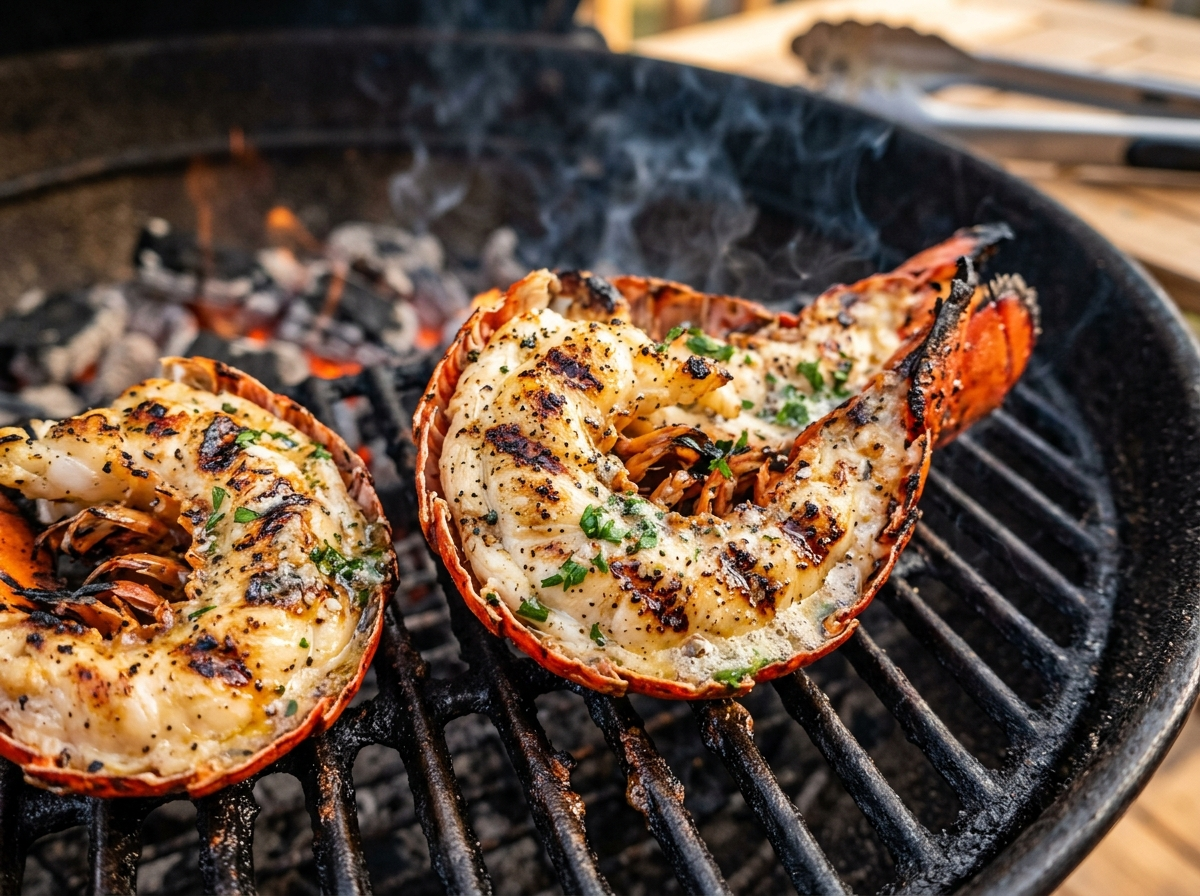
To grill lobster tails, butterfly the shell, lift the meat on top, season lightly, and cook them mostly shell-side down over medium-high heat until the flesh turns opaque and reaches about 140 to 145°F in the thickest part.
That shell matters more than you might think. It acts like a little heat shield. It protects the meat from direct flames and helps keep the juices where you want them.
Quick fact: A standard 4- to 6-ounce lobster tail usually cooks in about 5 to 7 minutes on a grill set around 400 to 450°F.
So if you’ve been treating lobster like steak and waiting for deep char on both sides, that’s usually where things go sideways.
What to buy and what you’ll need
Fresh or frozen? And which lobster tails are best?
Most home cooks buy frozen lobster tails, and that’s completely fine. In fact, it’s often the smarter move. A lot of “fresh” lobster tails at the seafood counter were frozen earlier and then thawed for display.
Look for raw lobster tails with shells that are intact and no strong fishy smell. Frozen tails should feel solid, not soft or frosty inside the bag. Too much ice can mean the seafood has thawed and refrozen.
If you have a choice between cold-water and warm-water tails, cold-water tails often taste sweeter and feel more tender. Tails from places like Maine, Canada, or Australia usually have a better reputation than generic warm-water tails from the Caribbean or Latin America, though quality can vary by seller.
Size matters too. For grilling, the easiest tails are in the 4- to 8-ounce range. They cook evenly and don’t need much guesswork. Bigger tails still work, but timing gets a little less forgiving because the thick end cooks slower than the thin end.
If you’re buying ahead, make sure you know the safe storage window. Here’s a helpful guide on storing lobster tails in the fridge so you don’t lose quality before grill day.
The small tools that make this easier
You don’t need restaurant gear. A few basics make the job smoother:
- Kitchen shears to cut the shell
- A sharp knife for small cleanup cuts
- Paper towels to dry the meat
- A pastry brush for butter or oil
- An instant-read thermometer for peace of mind
That last one is the real stress saver. You can absolutely use visual signs, and I’ll cover those. Still, a thermometer takes the drama out of expensive seafood.
How to prepare lobster tails for grilling
Thaw them fully and dry them well
If your lobster tails are frozen, thaw them before grilling. That gives you better texture and more even cooking.
The best method is simple: thaw them overnight in the refrigerator. If you’re short on time, seal them in a bag and place them in cold water for about 30 to 60 minutes, changing the water once or twice.
Don’t leave lobster at room temperature to thaw. Seafood warms up too fast on the outside while the center stays frozen.
Once thawed, pat the tails very dry with paper towels. Wet seafood steams. Dry seafood grills.
Did you know? A lot of people blame the grill when lobster doesn’t brown well. The real problem is often surface moisture.
How to butterfly a lobster tail
Butterflying sounds fancy, but it’s really just a cleaner way to expose the meat and help it cook evenly.
Place the tail shell-side down on a cutting board. Using kitchen shears, cut through the top shell down the center, starting from the open end and stopping before you hit the tail fan. Don’t cut through the bottom shell.
Next, gently spread the shell open with your fingers. Slide your thumb under the meat to loosen it from the shell, but keep it attached near the tail end. Lift the meat up and rest it on top of the shell. That’s the classic restaurant look.
Now the meat sits above the shell, which means it gets more direct heat for color, while the shell still protects the underside.
If you see a dark digestive tract, remove it the same way you would with shrimp. Not every tail has a noticeable one.
A simple seasoning that works every time
Lobster already has a sweet, rich flavor. You don’t need a heavy marinade to make it taste good. In fact, too much marinade can cover up what you paid for.
A simple mix works best: melted butter or olive oil, a little garlic, salt, black pepper, paprika, and lemon wedges on the side. Chopped parsley is nice at the end.
Use salt with a light hand. Lobster has a natural briny taste, so it doesn’t need as much as chicken or steak.
You can also use a seafood rub if you want a little more personality. If you like ready-made blends, these seafood seasoning ideas can help you pick a flavor that won’t overpower the meat.
Warning: Don’t soak lobster tails in lemon juice or other acidic marinades for a long time. About 10 to 15 minutes is plenty. More than that, and the surface can turn a little firm or mushy.
Best grill temperature for lobster tails
The sweet spot for gas and charcoal grills
The best grill temperature for lobster tails is medium-high heat, around 400 to 450°F.
That range gives you enough heat to cook the meat quickly and add light browning, but not so much that the outside burns before the inside is done.
Gas grills make this easy because the heat stays steady. Charcoal grills add great flavor, but you need a little more control. Build one side hotter and one side cooler so you can move the lobster away from flare-ups.
Pellet grills can work too as long as they hold that same medium-high zone.
A lot of recipes tell you to blast lobster over screaming heat. That sounds dramatic, but it’s not usually the best move. Lobster isn’t a thick ribeye. You’re not chasing a crust. You’re chasing tender meat with a bit of char.
Two-zone heat makes life easier
If you grill seafood often, two-zone heat is one of the best habits you can build. One side of the grill should be hotter for cooking. The other should be cooler in case something starts browning too fast.
That setup helps with lobster because butter can drip and cause small flare-ups. If the shells start scorching before the meat is ready, you can slide the tails to the cooler side and finish them gently.
The same basic heat range works well for other quick seafood cooks too. If you also grill shrimp, this guide on the best temperature to grill shrimp lines up nicely with the same idea.
Pro tip: Clean and oil the grill grates before you start, even though the shell will do most of the protecting. A clean grate gives you better control and fewer sticking issues.
How to grill lobster tails step by step
This is the part most people want: the exact method.
- Preheat your grill to 400 to 450°F. Clean the grates and oil them lightly. Set up two zones if possible.
- Prep the lobster tails. Thaw fully, pat dry, and butterfly them so the meat rests on top of the shell.
- Brush with oil or melted butter. Season the meat lightly with salt, pepper, paprika, and a little garlic if you like.
- Place the tails shell-side down on the grill. Close the lid and cook for about 4 to 6 minutes for smaller tails.
- Baste once during the last couple of minutes. Add more butter then, not too early, so the garlic doesn’t burn.
- Check for doneness. Remove the tails when the meat is opaque and just firm, or when the thickest part reaches about 140 to 145°F.
That’s the core method. Simple, fast, and reliable.
Want an even easier rule? Keep the tails shell-side down for most of the cook. That protects the meat and helps prevent overcooking.
Grill time by size
Use this as a guide, not a strict law. Grill heat, tail thickness, and whether the lid stays closed can shift the timing.
| Lobster tail size | Approx. grill time | Best method | Pull temp |
|---|---|---|---|
| 4 to 5 oz | 5 to 6 minutes | Shell-side down | 140 to 145°F |
| 6 to 8 oz | 6 to 8 minutes | Shell-side down | 140 to 145°F |
| 10 to 12 oz | 8 to 10 minutes | Shell-side down, cooler zone if needed | 140 to 145°F |
| 14 to 16 oz | 10 to 12 minutes | Start hot, finish gentler | 140 to 145°F |
These times assume the lobster tails are butterflied, thawed, and grilled over medium-high heat.
Do you ever put the meat side down?
Yes, but only briefly.
If you want grill marks, place the lobster meat side down for about 30 to 60 seconds near the end. That’s enough to add color without drying it out.
I wouldn’t start meat side down unless your grill runs very gentle and you know it well. The meat is exposed, delicate, and expensive. The shell is there to protect it, so let it do its job.
Think of it like toasting bread. A quick touch gives nice color. Leave it too long and you move from golden to burnt in no time.
How to tell when lobster tails are done
What done lobster looks and feels like
Raw lobster meat looks translucent and grayish. Cooked lobster turns opaque white, often with some pinkish or red tones near the shell.
The texture changes too. Done lobster feels firm but still has a little spring. It shouldn’t feel mushy, and it shouldn’t feel like a rubber bouncy ball either.
Another clue is how the meat sits in the shell. As it cooks, it firms up and looks fuller.
Here’s what you want:
- Opaque meat, not glassy or translucent
- Bright red shell
- Slightly firm texture with some give
- Juices still present, not dried out
The temperature check that removes doubt
If you want the cleanest answer, use an instant-read thermometer and check the thickest part of the tail meat.
Many cooks pull lobster around 140°F because carryover heat finishes the job. The USDA’s general seafood guidance is 145°F, which is a solid target if you want the most cautious food-safety benchmark.
Either way, don’t keep cooking well past that point. That’s where the texture gets tight and chewy.
And if you’re ever tempted to leave the center undercooked because you heard lobster can be eaten almost raw, read this piece on whether you can eat raw lobster first. It clears up the safety side.
What overcooked lobster looks like
Overcooked lobster gets dense, dry, and chewy. The meat can shrink hard against the shell and lose that glossy look. Instead of tasting sweet and buttery, it starts feeling like you’re chewing a firm sponge.
That’s why resting time matters too. Give it just 1 to 2 minutes after grilling. Not 10. It’s small seafood, not a roast.
Common mistakes that make lobster tails tough
Starting with a grill that’s too hot
A blazing hot grill sounds smart because seafood cooks fast. But too much direct heat can scorch the outside before the inside is ready.
Medium-high heat works better than maximum heat almost every time. You want control more than drama.
Putting garlic butter on too early
Garlic burns faster than lobster cooks. If you brush on lots of garlic butter at the start, the lobster may be fine while the garlic turns bitter.
Start with plain oil or a light butter coat. Then baste with garlic butter in the last couple of minutes.
Grilling straight from frozen
Can you do it? Yes, in a pinch. Should you if you want the best texture? Not really.
Frozen centers cook unevenly. By the time the middle is done, the outer meat may already be overcooked. Thawing gives you a much better shot at a tender result.
Chasing dark grill marks
There’s a common misconception that more grill marks always mean better flavor. With lobster, a little char is plenty.
You’re cooking sweet shellfish, not trying to blacken a steak. If the meat gets heavy grill marks, it’s often already too far gone.
Ignoring size differences
A small tail and a jumbo tail do not cook the same way. People often follow one timing number from a recipe and wonder why one batch was perfect and the next was dry.
Thicker tails need a bit more time and sometimes a cooler finish. Always adjust by size and check the thickest part.
Best sauces and what to serve with grilled lobster tails
You really don’t need much here. Grilled lobster tails already bring sweetness, smoke, and rich flavor.
The easiest finish is melted butter with lemon. If you want a little extra depth, stir in garlic, parsley, or a pinch of smoked paprika. Chili butter is great too if you like a gentle kick.
For sides, keep the same mindset: simple and fresh. Grilled asparagus, corn, baked potatoes, rice, crusty bread, or a crisp salad all work well.
If you want something green with more personality, this Korean-style bok choy makes a nice side because it’s savory, fast, and not too heavy.
And if you’re building a full seafood cookout, lobster and shrimp are a great pair. You can use this companion guide on how to grill shrimp perfectly to round out the meal without guessing your timing.
A fun real-life combo for a backyard dinner? Two grilled lobster tails, lemon butter, grilled corn, bok choy, and a cold drink. It feels special, but it doesn’t ask you to spend all night cooking.
4. FAQ Section
FAQ
How long does it take to grill lobster tails?
Most lobster tails cook in 5 to 10 minutes, depending on size. Smaller 4- to 6-ounce tails often finish in about 5 to 7 minutes over 400 to 450°F heat.
Do you grill lobster tails shell-side down or meat-side down?
For the best results, grill lobster tails shell-side down for most of the cook. The shell protects the meat from harsh heat. You can place them meat-side down for 30 to 60 seconds at the end if you want grill marks.
Can you grill frozen lobster tails without thawing them first?
You can, but it’s not ideal. The outside tends to overcook before the center fully thaws and cooks through. For better texture and more even results, thaw lobster tails in the fridge overnight or in cold water before grilling.
What temperature should lobster tails be when done?
Aim for 140 to 145°F in the thickest part of the meat. Many cooks remove lobster around 140°F and let carryover heat finish it, while 145°F lines up with conservative seafood safety guidance.
Should I cut lobster tails before grilling?
Yes, butterflying the shell makes grilling easier and helps the meat cook more evenly. It also gives you the classic presentation where the meat sits on top of the shell.
What’s the best seasoning for grilled lobster tails?
A simple mix of butter or oil, salt, pepper, garlic, paprika, and lemon works very well. Lobster has a naturally sweet flavor, so light seasoning usually tastes better than a heavy marinade or strong sauce.
5. Conclusion
Grilling lobster tails gets a lot easier once you stop thinking of them as fragile restaurant food and start treating them like quick-cooking seafood with a short timer. Keep the heat at medium-high, use the shell-side-down method, and pull them as soon as the meat turns opaque and reaches the right temp.
If you want the best first try, start with a couple of 4- to 6-ounce tails, keep the seasoning simple, and use a thermometer. One good batch is all it takes to make grilled lobster tails feel completely doable the next time.