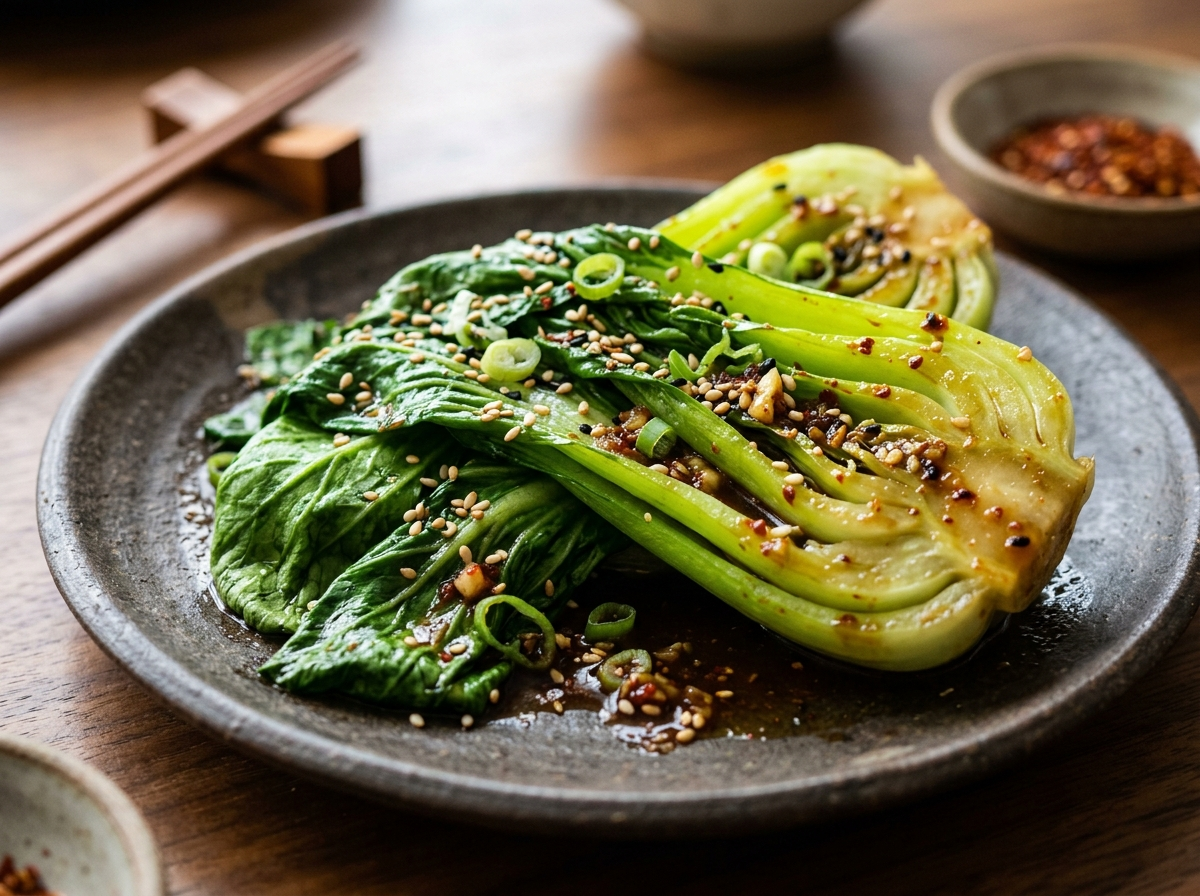
Most people walk right past bok choy at the grocery store. It sits there quietly between the napa cabbage and the broccoli, looking a little unfamiliar, and gets ignored. But here’s the thing — give bok choy about 10 minutes and a few Korean pantry staples, and it turns into one of the most addictive side dishes you’ll ever put on your table.
Korean style bok choy isn’t some complicated restaurant dish. It’s the kind of thing Korean home cooks throw together on a Tuesday night when they need a quick vegetable side, something with a punch of flavor that pairs with rice, grilled meat, or honestly, just about anything. If you’ve ever had a banchan spread at a Korean restaurant and wondered how the vegetables taste so good with so little fuss, this is your answer.
You don’t need any special skills. You don’t even need a wok. What you do need is about 15 minutes, some gochugaru or gochujang, garlic, sesame oil, and a willingness to let bold flavors do the work.
Why Bok Choy Works So Well With Korean Flavors
Bok choy has this quiet superpower — it doesn’t fight with strong seasonings. Instead, it absorbs them. The white stalks stay juicy and slightly crunchy even after cooking, while the dark green leaves wilt down into something tender and silky. That contrast in texture is exactly what makes it ideal for Korean-style preparations.
Think about what Korean cooking does best. It layers heat, sweetness, salt, and umami into practically everything. Bok choy’s mild, slightly peppery flavor acts like a blank canvas for all of that. Where something like kale or spinach might compete with bold sauces, bok choy just welcomes them in.
There’s also a practical reason Korean cooks love leafy greens like bok choy. Korean meals are built around rice and a protein, surrounded by small side dishes called banchan. These sides need to be quick to prepare, full of flavor, and easy to make in batches. Korean style bok choy checks every single box.
And nutritionally? You’re getting a solid hit of vitamins A, C, and K, plus calcium and potassium, all for barely any calories. It’s one of those rare foods where you genuinely don’t have to feel guilty about going back for seconds.
The Ingredients You’ll Need (And What They Actually Do)
Before we get into the cooking, let’s talk about what goes into this dish and why each ingredient matters. Korean cooking relies on a handful of staple ingredients that show up again and again — and once you stock them, you’ll use them for dozens of recipes.
Bok choy — Baby bok choy works best here because you can cook it in halves or quarters without needing to chop much. Regular full-sized bok choy works fine too; just cut it into bite-sized pieces so it cooks evenly.
Gochugaru (Korean red pepper flakes) — This isn’t the same as crushed red pepper you’d sprinkle on pizza. Gochugaru has a smoky, slightly sweet heat that’s more complex and less aggressive. It gives the dish that signature Korean red color without setting your mouth on fire. If you’ve ever made or enjoyed Korean kimchi dumplings (mandu), you already know what gochugaru brings to the table.
Gochujang (Korean red pepper paste) — Some recipes use gochugaru, some use gochujang, and the best ones use a touch of both. Gochujang adds a fermented, slightly sweet depth that flakes alone can’t achieve. If you’re familiar with how ssam sauce gets that thick, complex flavor, gochujang is a big part of that magic.
Garlic — Fresh garlic, minced or thinly sliced. Korean cooking doesn’t shy away from garlic — most dishes use more than you’d expect, and this one is no different. Three to four cloves for a pound of bok choy is the sweet spot.
Soy sauce — This handles the salt and adds umami. Use regular soy sauce, not low-sodium, unless you prefer to control the salt separately.
Sesame oil — Added at the end, not for cooking. Sesame oil burns at high heat, so you drizzle it on after the bok choy is done. It adds that nutty, toasty aroma that makes Korean food smell incredible.
Sesame seeds — A small thing that makes a big difference visually and texturally. Toast them lightly in a dry pan if you want to take it up a notch.
A neutral cooking oil — Vegetable oil, avocado oil, or even grapeseed oil. Something that can handle high heat without smoking.
Optional but nice: a tiny splash of rice vinegar, a pinch of sugar, or a few drops of fish sauce for extra umami.
How to Make Korean Style Bok Choy Step by Step
Here’s where things get really straightforward. This isn’t a recipe that requires precise timing or fancy techniques. It’s fast, forgiving, and hard to mess up.
Prepping the Bok Choy
Start by washing the bok choy thoroughly. And I mean thoroughly. Dirt and sand love to hide in the crevices where the stalks meet the base. The easiest method is to fill a large bowl with cold water, submerge the bok choy, swish it around, and let any grit settle to the bottom. Lift the bok choy out, drain the bowl, and repeat if the water was visibly dirty.
If you’re using baby bok choy, cut each head in half lengthwise. For larger bok choy, separate the leaves from the stalks and cut both into roughly 2-inch pieces. Here’s a useful tip — keep the stalks and leaves in separate piles. The stalks take longer to cook, so they go into the pan first.
Pat everything dry with a clean towel or paper towels. Excess water in a hot pan creates steam instead of a sear, and you want a little bit of char on those stalks.
Making the Sauce
While your bok choy dries, mix together the sauce in a small bowl. For about a pound of bok choy, combine 1 tablespoon of soy sauce, 1 teaspoon of gochujang, ½ teaspoon of gochugaru (adjust to your heat preference), ½ teaspoon of sugar, and 1 teaspoon of rice vinegar. Stir it until the gochujang dissolves. That’s it. This takes about 30 seconds.
The beauty of this sauce is that it hits every flavor note — salty, sweet, spicy, tangy, and umami. You can adjust the ratios once you’ve made it a few times to suit your own taste. Like it spicier? Add more gochugaru. Want more sweetness to balance the heat? An extra pinch of sugar does the trick.
Cooking It All Together
Heat a large skillet or pan over medium-high heat. Add about a tablespoon of neutral cooking oil and let it get hot — you should see the oil shimmer slightly.
Drop in the minced garlic first. Stir it around for about 20 to 30 seconds, just until it becomes fragrant. Don’t let it brown too much; burnt garlic tastes bitter and there’s no coming back from that.
Add the bok choy stalks. Spread them out in a single layer if you can, and let them cook undisturbed for about 2 minutes. You want them to pick up a little color on the edges. Then give them a toss and cook for another minute.
Now add the leafy green parts. They’ll wilt down quickly — usually within a minute or so. As soon as the leaves start to soften, pour in the sauce you mixed earlier. Toss everything together to coat the bok choy evenly.
Cook for about one more minute, just long enough for the sauce to reduce slightly and cling to the vegetables. Pull the pan off the heat.
Drizzle sesame oil over the top — about a teaspoon — and sprinkle with sesame seeds. Give it one final gentle toss, and you’re done.
The whole cooking process, from the moment garlic hits the pan to the moment you turn off the heat, takes roughly 5 to 7 minutes. That’s it.
Getting the Texture Right — The Part Most Recipes Skip
Here’s something most recipes don’t tell you: the biggest mistake people make with bok choy is overcooking it. Overcooked bok choy turns into a sad, watery mess that no amount of sauce can save.
You want the stalks to have a slight bite — not raw, but definitely not mushy. Think crisp-tender. The leaves should be wilted and soft but still bright green. If they’ve turned an olive-drab color, you’ve gone too far.
The key is high heat and short cooking time. A screaming hot pan sears the bok choy quickly on the outside while keeping the inside crisp. If your pan isn’t hot enough, the bok choy will release moisture, start steaming, and turn limp. So don’t rush to add the vegetables before the pan is properly heated.
Another texture tip — don’t crowd the pan. If you’re cooking a large batch, do it in two rounds. Overcrowding drops the pan temperature and, again, leads to steaming instead of searing. You want to hear a loud sizzle when the bok choy hits the pan. If it’s quiet, the pan isn’t hot enough.
What to Serve With Korean Style Bok Choy
One of the best things about this dish is how versatile it is as a side. It fits naturally into a Korean meal, but it also works alongside dishes from other cuisines.
The most obvious pairing is steamed white rice. A bowl of sticky rice, a scoop of this bok choy, and maybe some gochujang chicken or Korean fire chicken with cheese — that’s a complete dinner that feels like a lot more effort than it actually was.
If you’re doing a Korean BBQ night at home with Korean short ribs (kalbi), this bok choy makes an excellent banchan alongside kimchi and pickled radish. The freshness of the greens balances out the richness of grilled meat perfectly.
It also pairs surprisingly well with non-Korean dishes. Serve it next to a teriyaki chicken bowl or alongside pan-seared salmon. The flavors are bold enough to stand on their own but won’t overpower whatever protein you choose.
For a lighter meal, toss the cooked bok choy with some cold soba noodles, a soft-boiled egg, and a drizzle of extra sauce. It’s quick, satisfying, and perfect for warm weather.
Variations Worth Trying
Once you’ve nailed the basic recipe, there are a few easy ways to switch things up without changing the core technique.
Add protein: Thinly sliced pork belly or ground pork cooked in the pan before the bok choy turns this side dish into a main course. Cook the meat first, remove it, cook the bok choy, then add the meat back in at the end. If you enjoy dishes like Chinese char siu pork, try adding thin slices of leftover char siu — the sweet-savory glaze works beautifully with the spicy sauce.
Go nutty: Crushed roasted peanuts or toasted pine nuts sprinkled on top add a crunchy contrast that’s really satisfying.
Make it soupier: Add a splash of chicken or vegetable broth along with the sauce. Let it simmer for an extra minute to create a light, savory broth at the bottom — perfect for spooning over rice.
Use different greens: This same sauce and technique works with yu choy, gai lan (Chinese broccoli), or even regular spinach. The cooking times will vary slightly, but the flavor profile stays consistent.
Double down on garlic: If you’re a garlic lover, try adding thinly sliced garlic along with the minced garlic. The slices get slightly crispy on the edges and add another layer of texture.
Storing and Reheating Leftovers
Cooked bok choy doesn’t store as well as heartier vegetables, but you can absolutely keep leftovers. Place them in an airtight container and refrigerate. They’ll stay good for about 2 days. After that, the texture degrades noticeably — the stalks lose their crunch and the leaves get too soft.
When reheating, use a hot skillet rather than the microwave. A quick 60 to 90 seconds in a hot pan brings back some of the texture and re-awakens the flavors. The microwave will work in a pinch, but it tends to make the bok choy a bit rubbery.
Quick fact: Leftover Korean bok choy actually works really well chilled, almost like a banchan you’d find in a Korean restaurant. If you’re comfortable eating it cold, skip the reheating entirely and serve it straight from the fridge alongside rice. Many Korean side dishes are traditionally served at room temperature or cold, so this isn’t unusual at all.
If you want to know more about safely storing cooked food, the general guidelines for keeping cooked rice in the fridge apply here too — cool it down quickly, store it properly, and don’t push it past 3 to 4 days.
A Few Things That Can Go Wrong (And How to Avoid Them)
Watery bok choy — This happens when the pan isn’t hot enough or the bok choy wasn’t dried properly after washing. Both problems have the same solution: hot pan, dry vegetables.
Sauce too salty — If you accidentally overdo the soy sauce, a tiny squeeze of lemon juice or a pinch more sugar can help balance things out. You can also add a splash of water to dilute the sauce slightly.
Burnt garlic — Garlic goes from golden to burnt in about 10 seconds over high heat. If it starts turning dark brown, pull the pan off the heat immediately and add the bok choy stalks right away. The moisture from the vegetables will stop the garlic from burning further.
Bok choy falls apart — If you’re using baby bok choy halves and they’re falling apart in the pan, you’re probably stirring too aggressively. Use tongs instead of a spatula, and flip the halves gently rather than tossing them around.
FAQ
Can I make Korean style bok choy without gochujang or gochugaru?
You can, but it won’t have that characteristic Korean flavor. If you can’t find gochugaru, a mix of paprika and a small amount of cayenne pepper gets you in the right ballpark — though it won’t be exact. For gochujang, there’s really no perfect substitute because that fermented complexity is hard to replicate. Sriracha mixed with a tiny bit of miso paste is the closest workaround most people have found.
Is Korean style bok choy spicy?
It can be mild or spicy depending on how much gochugaru and gochujang you use. The recipe as described above has a moderate level of heat — enough to warm your tongue but not enough to make you reach for a glass of milk. If you’re cooking for kids or someone sensitive to spice, cut the gochugaru in half and reduce the gochujang to half a teaspoon. You’ll still get great flavor without the burn.
Can I use regular bok choy instead of baby bok choy?
Absolutely. Regular bok choy works just as well. The only difference is in how you prep it. With regular bok choy, separate the stalks from the leaves and cut both into manageable pieces. The stalks will need an extra minute or two in the pan compared to baby bok choy halves since they’re thicker.
How do I pick good bok choy at the store?
Look for firm, bright white stalks with no brown spots or sliminess. The leaves should be vibrant green and not wilted. If the base where the stalks connect looks dry or cracked, the bok choy has been sitting too long. Fresh bok choy feels heavy for its size because of its high water content — if it feels light and papery, pass on it.
Is this dish vegan?
The base recipe is vegan as long as you skip the fish sauce option. Soy sauce, gochujang (check the label — most are vegan but some contain anchovy extract), sesame oil, and garlic are all plant-based. It’s naturally a great option for plant-based meals paired with rice.
Your Next Move
Korean style bok choy is one of those dishes that quietly becomes a regular in your rotation. It’s fast, it’s affordable, the flavor is way bigger than the effort involved, and it makes you look like you know what you’re doing in the kitchen — even on a busy weeknight.
Start with the basic recipe above. Get comfortable with the technique and the sauce ratios. Then start experimenting with the variations. Add some pork belly one night. Toss in some noodles another night. Serve it cold as banchan alongside a spread of Korean dishes this weekend.
The hardest part of this whole recipe isn’t the cooking — it’s remembering to actually grab bok choy the next time you’re at the store. So maybe add it to your list right now, while you’re thinking about it. Your future self will thank you.