The bottle that decides everything
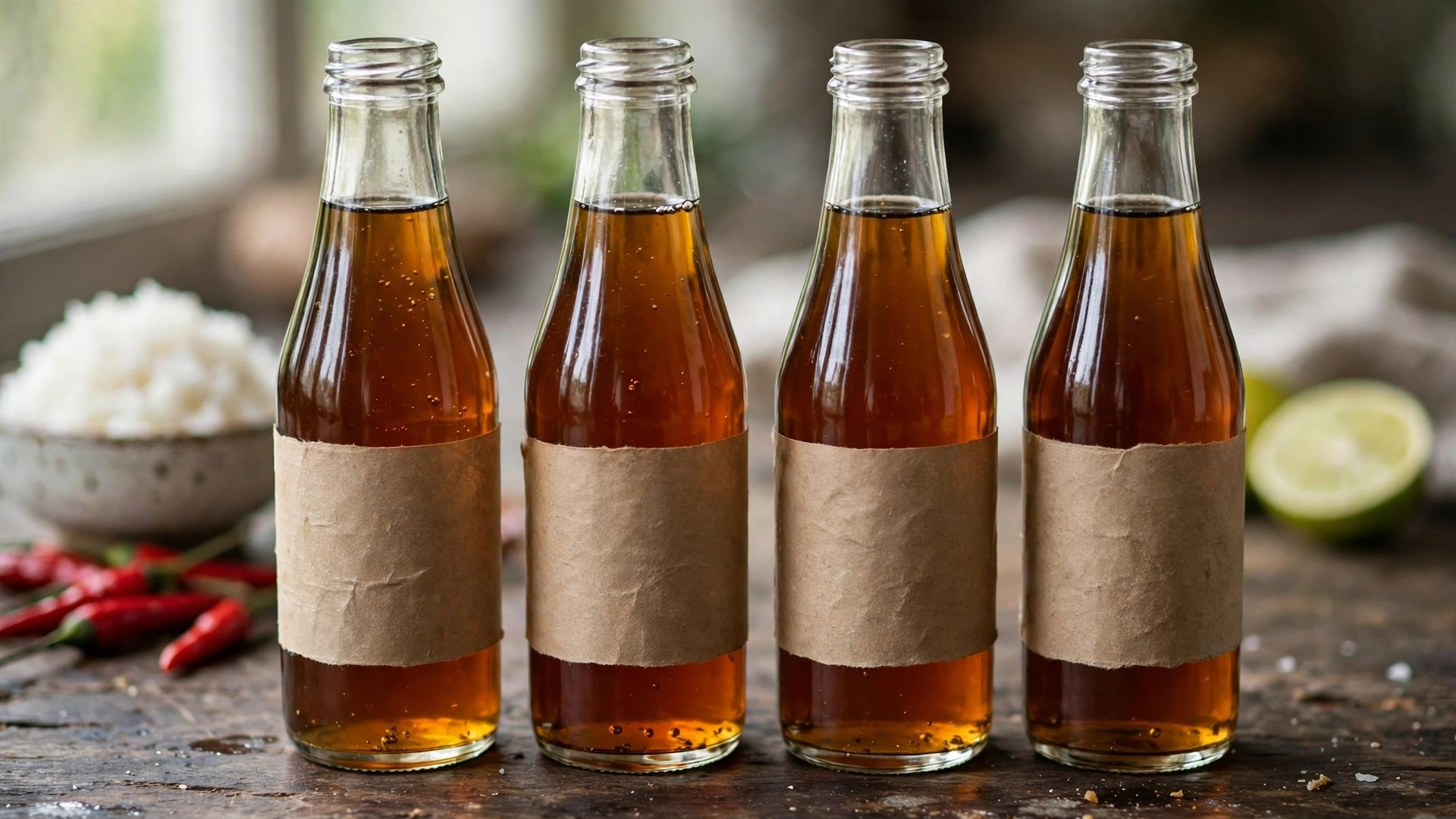
Ask a Thai cook what makes Thai food taste Thai, and the answer almost never comes down to one dish. It comes down to the bottle by the stove — nam pla, fish sauce. It is the main salting agent in a cuisine built on balance: salty, sour, sweet, heat, each one tuned against the others. A curry, a yam salad, a plate of pad thai — the flavor underneath all of them is nam pla. Change the bottle and you quietly change the dish.
Standing in front of an Asian grocery shelf, though, the choice is not obvious. The labels show squids, scales, crabs, grinning babies. Some bottles are two dollars, some are ten. The ingredients lists look nearly identical. So we did what Thai cooks have always done when words fail: we tasted. Seven Thai brands, side by side, the way you actually discover a fish sauce’s character — by putting it on rice and paying attention.
What fish sauce actually is
Fish sauce is the liquid that runs out of a long fermentation of small fish and salt. Traditionally anchovies are packed with salt in big tanks, the salt draws liquid from the fish, enzymes get to work, and after a year or two you draw off the result — the first press, the purest, most fragrant liquid of the batch. It is the extra-virgin olive oil of fish sauce, and almost nothing on a supermarket shelf is pure first press. What most makers do is add water and salt back to the same batch and draw a second press, then a third, each one more diluted than the last. The bottle you buy is the maker’s blend of these presses, plus a little sugar to round off the sharp saltiness. Cheaper bottles lean on additives — hydrolyzed protein, caramel color, acid — to fake what the fish never gave them.
This is why reading the label matters more than reading the marketing. A good Thai fish sauce has a short ingredient list: fish or anchovy extract, salt, sugar, water. Nothing else. The second thing worth checking is protein. The more diluted the sauce, the less fish protein it carries, and most bottles print grams per tablespoon on the nutrition panel. Anything at two grams or above is respectable territory. Price is a tiebreaker at best — a fancy bottle at a fancy price with a long ingredient list is still a bad bottle.
How we tasted them
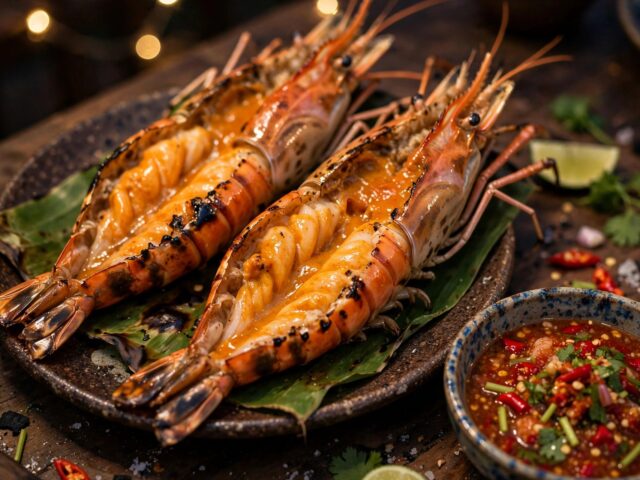
The fairest test of a fish sauce is the simplest one: steamed jasmine rice and a few glugs, nothing else to hide behind. When fish sauce is the star, its quality shows immediately — the good ones are complex and mellow, salty with a caramel-like depth and a clean oceanic perfume; the bad ones are just loud salt with a sour or metallic edge. We also tried each one in a dipping sauce, the classic prik nam pla of fish sauce and chilies with a squeeze of lime, because that is how most Thai tables actually judge a bottle — raw, at the table, where there is nowhere to hide.
The three bottles that stood out
Three brands rose clearly above the rest: Golden Boy, Tiparos, and Tra Chang (the one with the scale logo). All three are complex and mellow, salty with that caramel note, no strange aftertaste. Taken neat, you can feel the sweet, fishy perfume bloom in your mouth rather than a raw slap of salt. Golden Boy and Tra Chang taste a hair finer than Tiparos — Tra Chang is aged about a year, and it shows — but honestly, in a dipping sauce or over rice, the difference is barely there. These are all award-winning, widely used brands in Thailand, and they all pass the rice test with ease. If you can find any of them, stop shopping.
The dependable middle shelf
Squid brand and Cock brand (yes, the label really does have that much going on) landed squarely in the middle — pretty good, and honestly fine for everything if the top tier is not around. Squid is the bottle most Thai families actually reach for day to day; it is a touch saltier than the rest, which is exactly why so many Thai recipe testers calibrate their measurements to it — if a recipe works with Squid, it will not come out over-salted with anything milder. Use these in dipping sauces and salads without hesitation. For a simple prik nam pla, they do the job beautifully.
The bottles to demote to cooking-only duty
Oyster brand tasted one-dimensionally salty with a sharp, faintly metallic aftertaste — the kind of bottle I would stir into a curry or a hot wok, where the heat and other ingredients cover for it, but never choose for a yam salad or a dipping sauce. Rice mixed with it was just rice with salt.
Three Crabs finished last. The label is Vietnamese-heavy enough that you would never guess it is made in Thailand (processed in Hong Kong, which may explain the price — it was the most expensive bottle we tried). The ingredient list gives the game away: anchovy extract, water, salt, fructose, and hydrolyzed vegetable protein. It tastes salty and nothing else. Add to that a bizarrely wide bottle mouth — you pour it, you cannot shake it out in glugs — and this is a bottle to use only when nothing else exists. For what it is worth, the internet’s darling for dipping sauces is usually Three Crabs, and tasting it neat against Thai brands is an education in why the bottle matters more than the reputation.
Two things to avoid entirely: Lucky brand, which is essentially salty flavored water with color, and anything murky or brownish-grey — that is pla ra, the unfiltered Thai fermented-fish sauce, a different ingredient entirely with a much more pungent character. If you see a murky bottle, you are holding the wrong thing.
A newer name worth watching
Since the original tasting, one brand has surged in Thailand itself: Megachef, which brands itself as a premium everyday fish sauce and ferments for a claimed two years. It tastes richer and a little less jarring in its saltiness than Squid, which makes it a genuinely good tableside bottle. Watch the packaging, though — the brown-label formula is sold in Thailand and the blue-label one is for export, and they are not identical. Two grams of protein per tablespoon puts it in respectable territory.
Keeping a bottle at its best
Fish sauce will not spoil — there is far too much salt in it for bacteria to grow — but it does fade. Left open and warm, it darkens and turns more pungent over months. Thai cooks keep their bottle by the stove because they burn through it; if you are an occasional user, keep the opened bottle in the fridge, or at least in a cool dark cupboard, tightly sealed. Buy the small bottle if you cook Thai once in a while. And close the flip top properly after every pour — sauce that dries around the opening crystallizes and blocks the flow, and there is nothing sadder than a good bottle of nam pla that will not glug.
The fastest way to taste the difference yourself
Buy two bottles — say Tiparos and Squid — and make prik nam pla: three parts fish sauce, one part lime juice, chopped fresh chilies, maybe a little garlic. Spoon it over plain rice. That single condiment is the Thai table in miniature, and it is also the reason Thai meals so often come with a small tray of relishes and dips rather than everything seasoned in the kitchen. If the world of Thai chili relishes has you curious, our guide to how to eat Thai chili relishes is the natural next step — and you will notice fish sauce quietly running through all of it. That is no accident. Nam pla is not a seasoning in Thai food. It is the seasoning, and the bottle you choose is a decision you make every time you cook.