How to Eat Thai Chili Relishes: A Nam Prik Guide
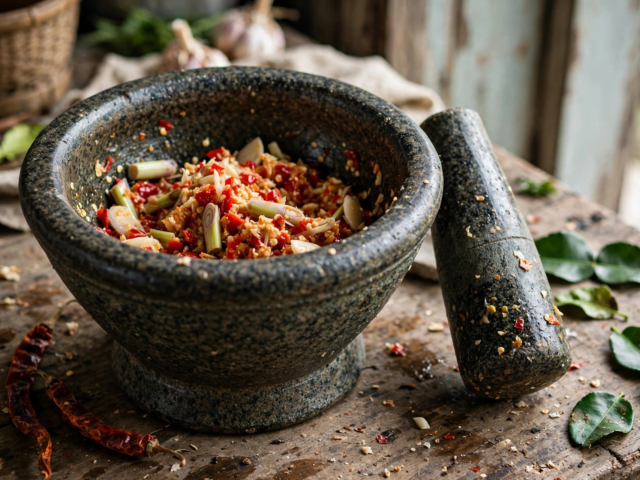
If you learned Thai food from restaurants outside Thailand, there is a good chance you have never encountered the most important category of dishes in the entire cuisine. Nam prik — the family of pounded chili relishes at the heart of the Thai table — almost never appears on menus abroad, except at the rare places cooking mainly for Thai expats. Even visitors to Thailand often miss it entirely, because relishes live in homes and local eateries rather than in the restaurants tourists are steered toward.
That is a genuine loss, because once you understand nam prik, the rest of Thai cooking starts to make more sense. Here is why these little bowls of pounded chilies matter so much, and how to actually eat them.
The oldest, biggest category you have never heard of
Relishes are among the oldest foods eaten in what is now Thailand. Long before chillies arrived from the Americas, people here were pounding seasoning pastes from local herbs, peppercorns, and fermented fish, eaten with rice and freshwater fish. The relishes of today grew directly out of those pastes. If your idea of authentic Thai food is food from before outside influences arrived, it does not get older than this.
They also form the largest category in the cuisine. The writer and statesman M.R. Kukrit Pramoj illustrated just how large with a parody of One Thousand and One Nights: in his version, a young consort saves her life not by telling the king stories but by sharing recipes, starting with nam prik. Years of nightly recipes pass. She grows old and dies — and she still has not finished the relishes, let alone moved on to the coconut-based lon that come after them.
And then there is the cultural evidence. When Apasra Hongsakula was crowned Miss Universe in 1965 — Thailand’s first winner — she was asked what she most liked to eat, and she answered that she loved chili relishes. The answer delighted the country. The luk thung singer Phongsi Woranut built a hit song on the same idea: asked what she eats to be so beautiful, the country girl in the song replies, in effect, “Rice and chili relish, obviously.” It is a joke with a real truth inside it — for generations of Thai people, rice with nam prik was simply what a meal was.
A relish is a dish, not a condiment
The first thing to unlearn is the idea that a relish is a sauce on the side, something dabbed onto a real dish. In a Thai meal, the relish is the dish. A relish set can be one course among many, or it can be the entire meal: a bowl of relish, a plate of plain rice, and the accompaniments around it. That is a complete dinner, and for many Thai households it remains the default one.
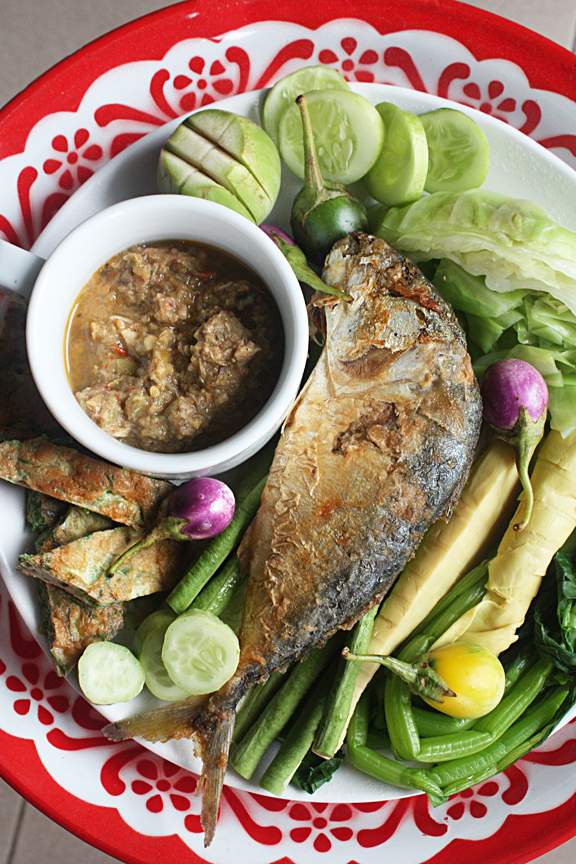
Relishes come in many forms. Some are loose and salsa-like. Some, pounded with flaked fish, are moist and almost fluffy. Others are thick pastes, and a few are dry, coarse powders. The best-known member of the family abroad is nam prik pao, the sweet, jammy roasted chili paste — also the most beginner-friendly. A classic of the home table is nam prik pla tu, made from grilled short-bodied mackerel (pla tu) pounded with grilled chillies and herbs; it is one of the milder ones. Its more famous cousin is nam prik kapi, built on shrimp paste, which forms the classic set alongside a fried mackerel and wedges of cha-om omelet — the feathery acacia-leaf omelet that seems designed to carry relish to your mouth.
How to eat it, bite by bite
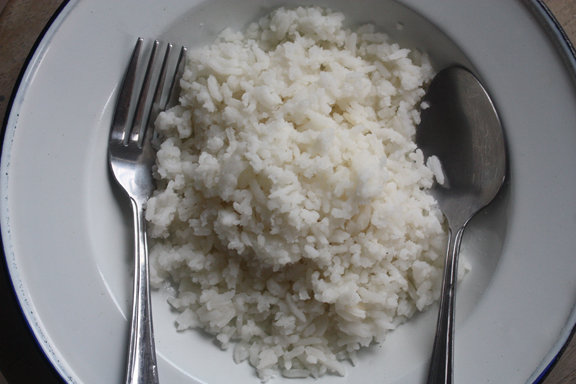
Start with the rice. A plate of plain white jasmine rice is your base — deliberately plain, because the relish brings all the seasoning. Thai cooks do not serve seasoned rice with a meal like this; the blank canvas is the point.
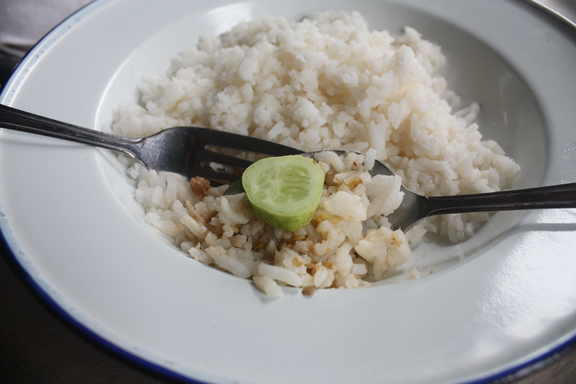
Take a small amount of relish and place it on the rice. If you are new to a particular relish, start with a dab. Experienced eaters know instinctively which relishes can be eaten by the spoonful and which are concentrated enough to demand respect; you will learn the same way, one cautious bite at a time.
Then mix — the Thai verb is khluk, to fold something thoroughly into rice. This is done with a spoon in your right hand and a fork in your left, the standard Thai way of eating rice dishes. (Chopsticks in Thailand are mostly reserved for noodle soups served in a bowl; rice on a plate means spoon and fork, and sticky rice is traditionally eaten by hand.) Mixing matters because it spreads an intensely flavored relish through a lot of mild rice, so every bite lands in balance.
Around the relish you will find a spread of vegetables — raw cucumber, Thai eggplants, long beans, cabbage, and blanched or steamed vegetables like bamboo shoots. These are not garnish. Pick them up bite by bite and pair them with the rice and relish; cucumber gives you one flavor combination, a crunchy raw eggplant another, and working your way around the plate is half the pleasure. It works the way pairing food with wine does, except the pairings happen in every mouthful.
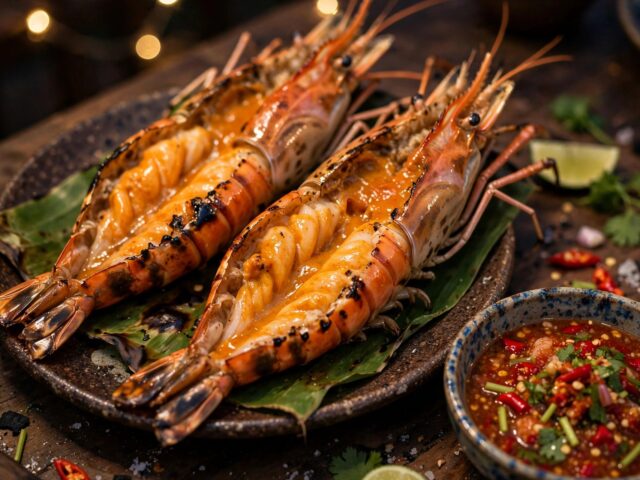
If your set includes a fried or grilled fish, use the spoon and fork to lift flakes of flesh away from the bones, then eat them together with the relish-mixed rice. The same set might include other grilled seafood — the salty char of grilled shrimp against a sharp relish is an excellent combination, and richer shellfish works too if you follow the same principle as with grilled lobster tails: keep the seasoning simple and let the relish do the talking.
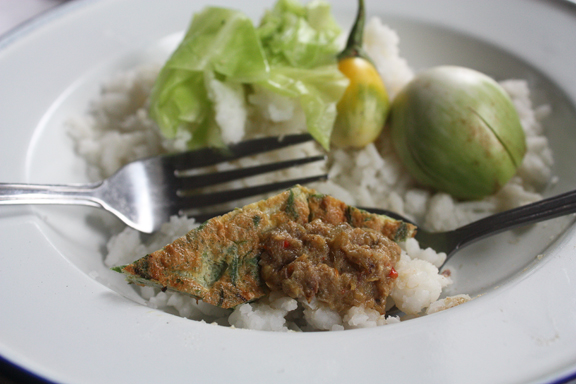
As you get comfortable, you can graduate. With a milder relish, experienced eaters stop mixing and start eating it directly — a spoonful placed on a piece of acacia omelet, eaten in one bite, the richness of the egg carrying the punch of the relish. Spicier, denser pastes stay khluk-ed into the rice, where they belong.
One last piece of etiquette
When the meal is finished, Thai diners signal it with their utensils: spoon and fork placed together neatly on the plate. It is a small thing, but servers in Thailand genuinely look for it — if your cutlery is still scattered, your plate may sit uncleared because nobody is sure you are done.
So the next time a Thai menu offers you a relish set, or a Thai friend puts a small bowl of something fierce-looking in the middle of the table, you know what to do: plain rice, a cautious dab, a thorough mix, and a slow tour of the vegetables. That little bowl is not an accessory to Thai food. In many ways, it is where Thai food began.


4 Comments