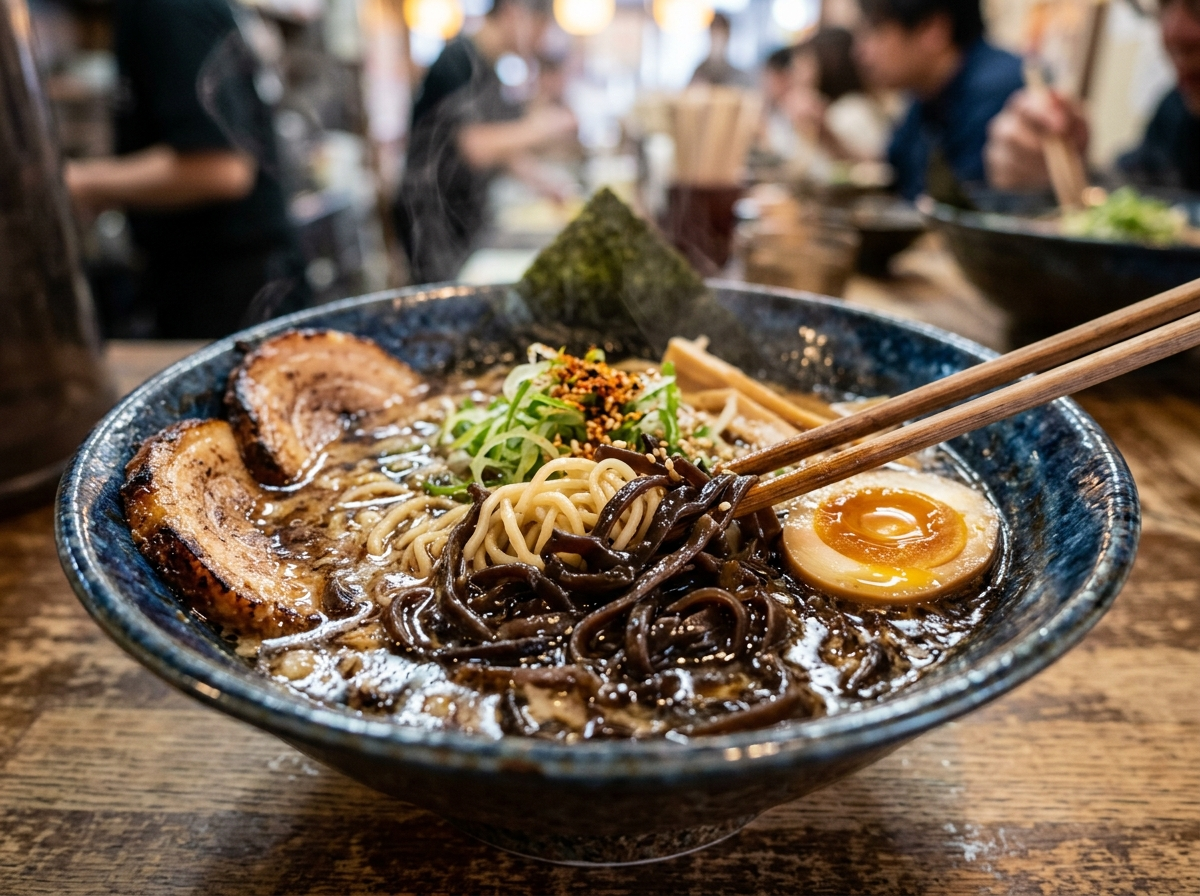
Most people obsess over the broth. Some argue it’s all about the noodles. And sure, a perfectly jammy soft-boiled egg gets its fair share of love. But there’s one ramen topping that quietly ties everything together, and most home cooks don’t even know its name — ajitsuke kikurage.
Those dark, crinkly, slightly mysterious-looking wood ear mushrooms sitting in a corner of your ramen bowl? They’re not just decoration. They bring a crunchy, slightly chewy texture that nothing else in the bowl can replicate. And once you learn how to season them properly — the “ajitsuke” part — you’ll wonder how you ever ate ramen without them.
Whether you’ve spotted them at your favorite ramen shop and thought “what IS that?” or you’re actively looking to step up your homemade ramen game, this is everything you need to know about ajitsuke kikurage — from what it actually is, to how you can make it at home in under 20 minutes.
What Exactly Is Ajitsuke Kikurage?
Let’s break the name down because it tells you exactly what you’re dealing with.
“Ajitsuke” means seasoned or marinated in Japanese. You’ve probably heard of ajitsuke tamago — that beautiful soy-marinated ramen egg. Same concept here. “Kikurage” is the Japanese word for wood ear mushroom (Auricularia auricula-judae), a type of jelly fungus that grows on trees across Asia. The name literally translates to “tree jellyfish,” which, honestly, is a pretty accurate description of how they look.
So ajitsuke kikurage = seasoned wood ear mushrooms. Simple.
These mushrooms don’t have a strong flavor on their own. They’re mild, almost neutral. What they DO have is an incredible texture — a snap and crunch that holds up even after soaking in hot broth. That’s why they’re such a popular topping in Japanese ramen, particularly in tonkotsu and shoyu styles. They add a textural contrast that soft chashu pork, silky noodles, and rich broth desperately need.
You’ll find them in ramen shops across Japan, from Hakata-style tonkotsu joints in Fukuoka to bustling ramen-ya in Tokyo’s Shinjuku district. They’re especially common in Kyushu-style ramen, where the toppings tend to be straightforward but purposeful.
Why Wood Ear Mushrooms Work So Well in Ramen
Here’s something most people don’t realize: a great bowl of ramen is really about balance. Not just flavor balance (salty, savory, sweet, acidic), but textural balance too.
Think about what’s in a typical ramen bowl. You’ve got soft noodles, tender sliced pork, a silky egg, maybe some wilted greens, all swimming in a rich broth. Almost everything in there is soft. Without something crunchy or snappy, the whole experience can start to feel one-note, no matter how amazing the broth tastes.
That’s where kikurage comes in. Each piece gives you a little “pop” when you bite through it. It’s not a hard crunch like a crouton — it’s more of a resilient, springy snap. And unlike bean sprouts, which go limp in hot broth within minutes, wood ear mushrooms hold their texture from the first bite to the last.
There’s a nutritional angle too. Wood ear mushrooms are surprisingly rich in iron and dietary fiber. A 2019 study published in the International Journal of Medicinal Mushrooms highlighted their potential benefits for cardiovascular health, largely due to their polysaccharide content. They’re low in calories, virtually fat-free, and they absorb whatever flavors you cook them with — which makes the seasoning step so important.
Dried vs. Fresh Wood Ear Mushrooms: What Should You Use?
If you walk into any Asian grocery store — H Mart, 99 Ranch, or your local Chinese/Japanese market — you’ll most likely find dried wood ear mushrooms. They come in small plastic bags and look like black, shriveled chips. Don’t let that put you off.
Dried kikurage is actually the preferred form for ramen. Here’s why:
Dried wood ear mushrooms rehydrate beautifully. You soak them in warm water for about 20 to 30 minutes and they puff up to 3-4 times their dry size. The texture after rehydrating is firmer and snappier than fresh ones, which tend to be a bit more slippery and delicate. Dried versions also have a longer shelf life — you can keep them in your pantry for months without worrying about spoilage.
Fresh wood ear mushrooms are harder to find but do show up at some specialty stores. They work fine, but you might notice a slightly softer texture. If you use fresh ones, just skip the soaking step and go straight to trimming and cooking.
Pro Tip: When rehydrating dried kikurage, use lukewarm water — not boiling. Boiling water can make the mushrooms too soft and rubbery. You want them to slowly absorb the water and come back to life with that signature crunch intact.
After soaking, you’ll want to trim off the hard, woody stem base where the mushroom was attached to the tree. It’s small, but it’s tough and chewy in a bad way. A quick snip with kitchen scissors does the trick. Then slice them into thin strips — about the width of ramen noodles works well, roughly 3 to 5 millimeters.
How to Make Ajitsuke Kikurage at Home
Here’s the good news: this is one of the easiest ramen toppings you can prepare. Compared to spending hours on a proper tonkotsu or pho-style broth, ajitsuke kikurage comes together in minutes.
What You’ll Need
For about 2-3 servings worth of topping, gather these:
- 20g dried wood ear mushrooms (or about 100g fresh)
- 2 tablespoons soy sauce
- 1 tablespoon mirin
- 1 tablespoon sake (or dry white wine in a pinch)
- 1 teaspoon sesame oil
- 1 teaspoon sugar
- 1 small clove garlic, finely minced
- Optional: a pinch of chili flakes (togarashi) or a few drops of la-yu (chili oil)
Step-by-Step Method
Start by rehydrating your mushrooms if you’re using dried. Place them in a bowl of lukewarm water and let them sit for 20-30 minutes. They’ll expand dramatically — what looks like a small handful becomes a generous pile. Once they’re plump and flexible, drain them and give them a gentle squeeze to remove excess water.
Trim and slice the mushrooms. Cut away any hard stem bits and slice them into thin strips. Think matchstick-sized or slightly wider. Uniform slices help them cook evenly and look better in the final bowl.
Heat a small pan or skillet over medium heat. Add the sesame oil and let it warm up for about 30 seconds. Toss in the garlic and stir it around for just 15-20 seconds — you want it fragrant, not browned.
Add the sliced kikurage to the pan. Stir them around for a minute or so, just to get them warm and lightly coated in the oil.
Pour in the soy sauce, mirin, sake, and sugar. Stir everything together and let it simmer gently for 3-5 minutes. The liquid will reduce and thicken slightly, coating each mushroom strip with a glossy, savory glaze. You’ll know it’s done when the mushrooms look shiny and most of the liquid has been absorbed or evaporated.
Taste and adjust. Want more salt? A splash more soy sauce. Want heat? Add those chili flakes now. Like it a bit sweeter? Another pinch of sugar.
That’s it. Let them cool down a bit before adding to your ramen, or store them in an airtight container in the fridge. They keep well for up to 5 days, and honestly, they taste even better after a day or two as the flavors continue to develop.
Did you know? In many Japanese ramen shops, ajitsuke kikurage is prepared in large batches at the start of the week and stored in the refrigerator. The mushrooms actually improve over time as they marinate, much like how a good kimchi develops deeper flavor with age.
Flavor Variations Worth Trying
The basic soy-mirin-sesame combination is classic, but you don’t have to stop there. Once you’re comfortable with the base recipe, try these twists:
Spicy Garlic Kikurage: Double the garlic and add a tablespoon of chili oil (la-yu) plus a teaspoon of gochugaru (Korean red pepper flakes). This version works beautifully with a rich tonkotsu broth and alongside toppings like Korean-style spicy elements that bring heat.
Ginger-Scallion Kikurage: Replace the garlic with a teaspoon of freshly grated ginger and add finely sliced scallion greens at the very end. Lighter and brighter — perfect for a clear shio or chintan-style ramen.
Umami Bomb Kikurage: Add a teaspoon of oyster sauce and a dash of Chinese cooking wine to the base recipe. This gives the mushrooms an extra layer of depth that pairs especially well with miso ramen.
Butter Soy Kikurage: Sounds odd, but a small knob of butter added at the end gives the mushrooms a rich, almost Western twist. This has become popular in some modern ramen shops in Sapporo that serve corn-butter miso ramen.
Where Ajitsuke Kikurage Fits in Your Ramen Bowl
Building a proper ramen bowl at home is a lot like composing a song — every element needs its place. So where does kikurage fit?
Typically, ramen toppings are arranged on top of the noodles after the broth has been poured. You don’t just dump everything in randomly (though no one’s stopping you). Traditional arrangement places toppings around the bowl like a clock face.
Your ajitsuke kikurage usually goes next to the chashu pork, often across from the egg. A small mound — about 2-3 tablespoons per bowl — is plenty. You want enough to get some in every few bites, but not so much that it overwhelms.
If you’re building a complete bowl, here’s a solid combination: noodles as the base, rich broth poured over, then top with sliced char siu-style pork, a halved ajitsuke tamago (soy egg), your seasoned kikurage, some blanched bok choy or spinach, sliced negi (green onion), a sheet of nori, and maybe a drizzle of mayu (black garlic oil) or chili oil.
That crunch from the kikurage against the tender pork and silky egg? That’s when it clicks.
Buying Guide: Where to Find Wood Ear Mushrooms
Wood ear mushrooms are more accessible than you might think. Here’s where to look:
Asian grocery stores are your best bet. Look in the dried goods aisle — they’re usually near the dried shiitake mushrooms, seaweed, and other dehydrated ingredients. Brands from China, Taiwan, and Japan are all widely available. Price-wise, a bag of dried kikurage costs between $3 and $6 and yields enough for multiple batches.
Online retailers like Amazon, Weee!, or specialty Asian food websites carry them too. Search for “dried wood ear mushrooms,” “dried black fungus,” or “kikurage.” They all refer to the same thing, though you may see slight size variations. Some packages contain smaller “cloud ear” mushrooms (also called silver ear or mo-er in Chinese), which are a close relative. These work fine as a substitute, though the texture is slightly thinner and more delicate.
Health food stores occasionally stock them in the dried mushroom section, especially if they carry a range of Chinese or macrobiotic cooking ingredients.
Warning: Don’t confuse wood ear mushrooms with dried shiitake mushrooms. They look quite different — shiitake have a defined cap-and-stem shape with tan-brown coloring, while wood ear mushrooms are dark brown-black, thin, and ear-shaped (hence the name). Using shiitake in place of kikurage won’t be terrible, but you’ll get a completely different texture. Shiitake are meaty and soft; kikurage are crunchy and snappy.
Beyond Ramen: Other Ways to Use Ajitsuke Kikurage
Once you’ve got a batch of seasoned kikurage in your fridge, you’ll find yourself adding it to more than just ramen.
Rice bowls — Scatter some over a teriyaki chicken bowl or a simple donburi for added texture. They pair really well with steamed rice and a fried egg.
Stir-fries — Wood ear mushrooms are a classic ingredient in Chinese stir-fries, particularly mu shu pork. Your pre-seasoned ajitsuke version can be tossed in at the end for extra flavor.
Cold noodle dishes — Japanese hiyashi chuka (cold ramen salad) or Korean naengmyeon both benefit from the crunch of seasoned kikurage.
Onigiri filling — Finely chop the seasoned mushrooms and mix with a little rice. Roll into onigiri for a surprisingly satisfying snack.
Bao buns and gyoza — Mince them up and add to your dumpling filling alongside pork and cabbage. They contribute texture without adding much moisture, which helps keep potsticker fillings from getting soggy.
Troubleshooting Common Issues
Even something this simple can go sideways if you’re not paying attention. Here are the most common problems and how to fix them:
“My mushrooms are rubbery, not crunchy.”
You probably over-soaked them, or used water that was too hot. Stick to lukewarm water and check them at the 20-minute mark. They should be flexible but still have a slight firmness. If they feel like a wet rubber band, you’ve gone too far. They’ll still taste fine, but that signature snap won’t be there.
“They taste bland even after seasoning.”
Make sure you’re squeezing out excess water after rehydrating. Waterlogged mushrooms dilute the seasoning. Also, let the soy sauce mixture reduce properly in the pan — if there’s still liquid pooling at the bottom, keep cooking for another minute or two.
“They’re too salty.”
Reduce the soy sauce slightly or swap in low-sodium soy sauce. You can also increase the mirin a bit to balance things out with sweetness. Remember, they’re going into a bowl of already-seasoned broth, so they shouldn’t be intensely salty on their own.
“I can’t find them anywhere.”
If your local stores don’t carry them, dried black fungus from any Chinese grocery store is the same thing under a different name. Online ordering is also reliable — dried mushrooms ship easily since there’s no spoilage risk.
How to Store Ajitsuke Kikurage Properly
Dried mushrooms (uncooked): Keep them in a sealed bag or airtight container in a cool, dry spot. Your pantry is perfect. They’ll last 6-12 months easily. Just make sure no moisture gets in, or they’ll start to go moldy.
Cooked ajitsuke kikurage: Transfer to an airtight container and refrigerate. They stay good for about 5 days. Some people freeze them, which works, though the texture softens slightly after thawing. If you do freeze, lay them flat in a freezer bag so you can break off portions as needed.
Quick Fact: Properly stored cooked ingredients in the fridge follow similar food safety guidelines. Keep your seasoned kikurage below 40°F (4°C) and consume within the week for the best quality and safety.
FAQ
What does ajitsuke kikurage taste like?
On its own, wood ear mushroom has a very mild, almost neutral flavor. The magic comes from the seasoning — soy sauce, mirin, sesame oil, and garlic give it a savory, slightly sweet, and nutty taste. The real star is the texture: a satisfying crunch and snap that holds up even in hot broth. Think of it as a flavor sponge that absorbs whatever you season it with.
Can I use a different type of mushroom instead of wood ear?
You can, but you won’t get the same result. Shiitake, enoki, and oyster mushrooms are all great ramen toppings, but none of them deliver that distinctive crunch. Cloud ear mushrooms (a smaller relative) are the closest substitute. If texture isn’t your main concern and you just want mushroom flavor in your ramen, shiitake sliced thin and sautéed in soy sauce works well as an alternative.
Is ajitsuke kikurage vegan?
The basic recipe is completely vegan and plant-based. Just double-check your mirin — some brands contain small amounts of fish-based ingredients, though most widely available mirin is vegan. The mushrooms themselves are naturally vegan, gluten-free (assuming you use tamari instead of regular soy sauce), and low in calories.
How far in advance can I prepare ajitsuke kikurage?
You can make it up to 5 days ahead and store it in the fridge. Many home cooks prefer to make it a day in advance because the flavors deepen overnight, similar to how a stew or curry tastes better the next day. It’s a great meal-prep component — make a batch on Sunday and you’ve got ramen toppings ready all week.
Do I need to cook wood ear mushrooms, or can I eat them raw?
While wood ear mushrooms aren’t toxic raw, they’re typically cooked before eating. Raw wood ear mushrooms can be tough to digest for some people and don’t have much flavor. A quick sauté or blanching makes them safer, easier to digest, and much more pleasant to eat. Always cook them, especially when preparing ajitsuke kikurage.
Your Ramen Just Got Better
A bowl of ramen is only as good as the thought you put into each component. The broth might take hours. The noodles need the right flour and hydration. The egg needs a precise timer. But ajitsuke kikurage? It takes 30 minutes, most of that hands-off soaking time, and it adds a dimension to your bowl that nothing else can replicate.
Next time you’re building a bowl at home, don’t skip this topping. Grab a bag of dried wood ear mushrooms, season them up, and give your ramen the crunch it deserves. Once you’ve had that snap between your teeth — surrounded by rich broth, tender pork, and perfectly cooked noodles — plain ramen just won’t feel complete anymore.