Most home cooks have been there. You pull a beautiful piece of salmon out of the oven, expecting a tender, flaky bite — and instead, it’s dry, chalky, and disappointing. Salmon is fancy enough for date night but fussy enough to ruin if you’re not watching the clock. One minute it’s buttery and flakey, the next it’s dry and disappointing. The fix? Nailing your oven temperature and cook time. And 375°F happens to be the sweet spot that gives you the best of both worlds.
Baking at 375°F is the best temperature for keeping the inside moist without drying out the edges. It cooks quickly enough to stay efficient on a busy weeknight, but gently enough that you won’t end up with rubbery fish. Whether you’re cooking for yourself or feeding the whole family, this guide breaks down exactly how long to bake salmon at 375, what affects your cook time, and how to tell when your fillet is truly done.
Why 375°F Is the Sweet Spot for Baking Salmon
You might wonder — why not just crank the oven to 425°F and get dinner on the table faster?
Here’s the thing. At 375°F (190°C), you’re using a moderate-to-high heat that cooks the fish relatively quickly without the high risk of burning that comes with 425°F or 450°F. That extra control makes a real difference, especially if you’re not standing by the oven with a timer.
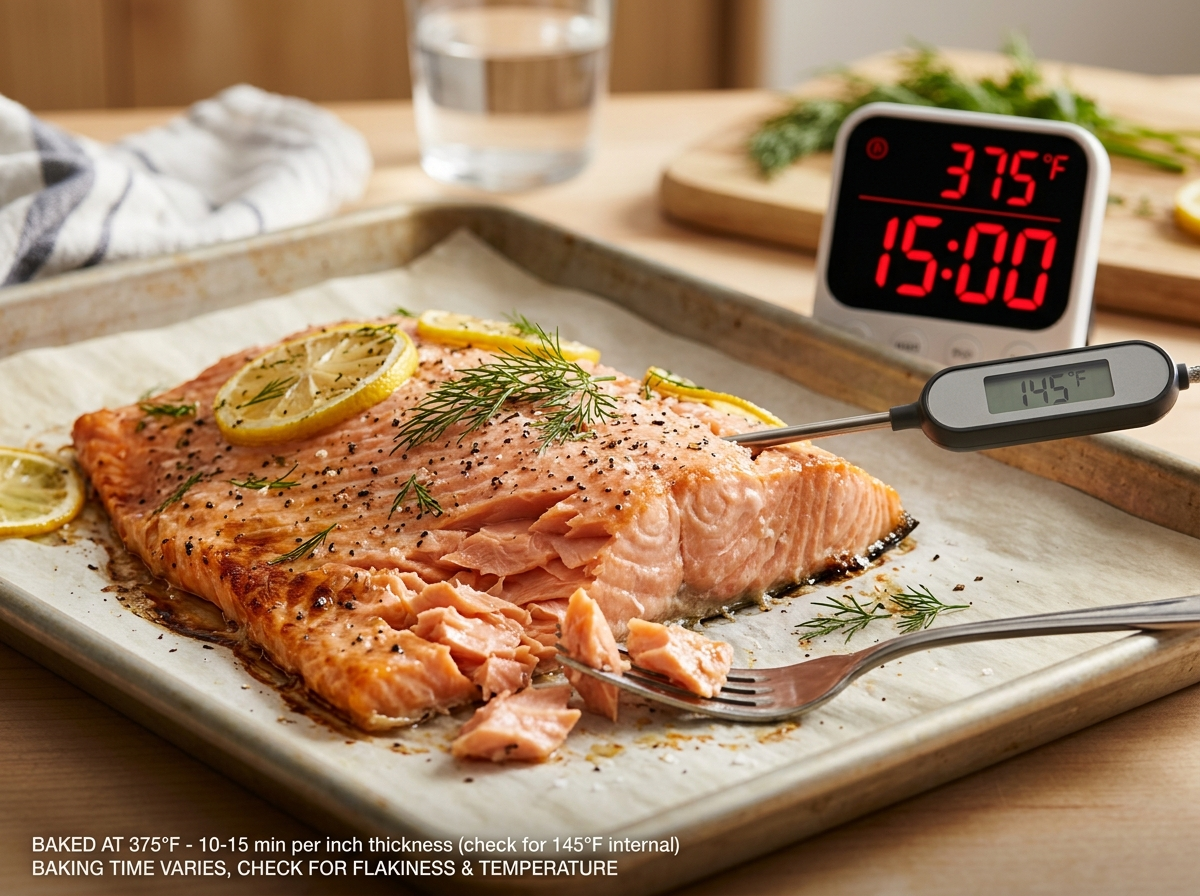
At 375°F, a 1-inch fillet takes about 12 to 15 minutes. It gives you moist, tender salmon with a lightly golden surface. Compare that to higher temperatures: at 425°F, a 1-inch fillet cooks in just 8 to 10 minutes, but leaner wild-caught salmon like sockeye can dry out quickly at this temp.
So if you want a little more breathing room and consistently juicy results, 375°F is your friend. It works with Atlantic, king, coho, or sockeye salmon, and it’s simple enough for a busy weeknight but good enough to serve to guests.
How Long to Bake Salmon at 375°F (Quick Reference)
Let’s get straight to the numbers — because that’s probably why you’re here.
A standard 1-inch thick salmon fillet will take between 10 and 15 minutes to cook at 375°F. But that range shifts based on a few factors I’ll break down below.
Here’s a handy snapshot:
- ½-inch fillet (uncovered): 8–10 minutes
- 1-inch fillet (uncovered): 12–15 minutes
- 1-inch fillet (in foil): 15–20 minutes
- 2-pound whole side (in foil): 15 to 20 minutes
- Frozen fillet (from frozen, at 375°F): 24 to 26 minutes
A simple rule to remember: about 4 to 6 minutes of bake time per half inch of thickness, measured at the thickest part of the fillet.
These times assume your oven is fully preheated before the salmon goes in. Putting fish into a cold or partially heated oven throws the timing off completely.
What Affects Your Salmon’s Cook Time?
Two salmon fillets can look almost identical in the package and still cook at very different speeds. That’s not the oven playing tricks on you — the cooking time depends on several factors, including the thickness of the fillets, the weight of the salmon, and the type of baking dish (glass, metal, etc.).
Fillet Thickness
This is the biggest variable. If you have a thin salmon fillet, start at the lower end of the cook time and add more time if needed. It’s best to check the thickest part of the salmon when you’re checking for doneness.
A ½-inch fillet can be done in under 10 minutes, while a thick center-cut piece might need 15 or more. Always measure from the thickest point — that’s your real cook time anchor.
Wild-Caught vs. Farm-Raised
This one catches a lot of people off guard. Wild-caught salmon (usually sockeye or coho based on store inventory) is typically thinner and cooks more quickly. Farm-raised salmon (often the popular Atlantic salmon) tends to be thicker and needs more time.
Wild-caught varieties are also leaner, so they’re more prone to drying out. Keep that in mind if you’re working with sockeye — pull it a minute or two early and let carryover cooking do the rest.
Foil vs. Uncovered
This changes the game more than most people realize. The best way to bake salmon is often wrapped in foil — the foil traps the moisture inside, making sure the fish stays flaky, moist, and tender without drying out.
On the flip side, baking uncovered exposes the fish directly to dry heat, promoting gentle crisping on the edges and skin while preserving moisture inside. It cooks the skin to perfection, makes it crunchier, and helps the salmon develop a nice browning on the top, which provides some additional flavor.
Pro Tip: If you want the best of both worlds, bake in foil for the first 10 minutes, then open the foil for the last 3–5 minutes. You’ll get the moisture retention plus a lightly caramelized top.
Oven Hot Spots
Not all ovens heat evenly. If you notice one side of your fillet always cooks faster than the other, rotate the pan halfway through baking. Place your oven rack in the center position for the most even heat distribution.
How to Bake Salmon at 375°F: Step-by-Step
You don’t need culinary school skills for this. The process is straightforward, and once you do it twice, it becomes second nature.
Step 1: Prep Your Salmon
Remove the salmon from the refrigerator and let it sit at room temperature for about 10 minutes. This helps it cook more evenly — a fridge-cold center takes longer to heat through, which means the edges can overcook before the middle catches up.
Pat the fillet dry with paper towels. That surface moisture? It creates steam instead of browning, and you want a clean sear even in the oven.
Step 2: Season Generously
Keep it simple or go bold — either approach works at this temperature. A drizzle of olive oil or melted butter, salt, pepper, and a squeeze of lemon is the classic combo.
Combine brown sugar, salt, paprika, garlic powder, and pepper. Place the salmon on a rimmed baking sheet, skin side down. Brush with olive oil, then rub it with the spice mixture until completely coated.
If you enjoy Asian-inspired flavors, try a teriyaki glaze or a touch of gochujang mixed with honey for a sweet-spicy crust.
Step 3: Set Up Your Baking Pan
Preheat the oven to 375°F and line a baking sheet with foil. Place the salmon skin side down onto the foil. Brush the pink flesh with your fat of choice and sprinkle seasonings evenly on top. Fold the sides of the foil up and around the fish to lock in the moisture.
If you have concerns about using foil, simply place the fish onto a piece of parchment paper instead. The sides can be folded over to trap the steam inside while baking.
Step 4: Bake
Place the pan in your preheated oven. Bake for 12 to 15 minutes (depending on thickness), or until the fish flakes easily with a fork.
If the salmon pieces have a very thin edge, fold it under before baking. This helps protect them from drying out.
Step 5: Rest Before Serving
This step gets skipped constantly, and it shouldn’t. Allow the salmon to rest for 5–10 minutes before serving. During this resting period, the juices redistribute throughout the meat and the cooking process continues slightly, resulting in a tender, juicy, and flavor-filled salmon fillet.
Cutting into salmon the second it leaves the oven pushes all those juices out. Give it a few minutes, and you’ll notice a much more moist, satisfying bite.
How to Tell When Salmon Is Done
This is where most overcooking happens. People rely only on time, forget about temperature, and end up with dry fish. You’ve got three reliable methods to check.
The Thermometer Method (Most Accurate)
The best way to check the internal temperature of salmon is with a meat thermometer. Simply insert the thermometer into the thickest part of the salmon.
Here’s where it gets interesting. The US Department of Agriculture recommends salmon and other fish products be cooked to an internal temperature of 145°F. That’s the official safe number.
But here’s what experienced cooks know: at 145 degrees, salmon can be overcooked, dry, and tough. When conducting taste tests, America’s Test Kitchen found that the ideal internal temperature for farmed Atlantic salmon is just 125 degrees, at which point its flesh turns firm yet silky.
At 145°F it’s fully cooked. Many experienced cooks personally pull theirs at 140°F because carryover cooking finishes it perfectly on the plate.
Did you know? At a temperature of 135°F, you’re more likely to see albumin — a white substance that appears when cooking salmon. It’s the most abundant protein in salmon liver. That white stuff on your fillet isn’t harmful, but it does signal that the proteins are squeezing out moisture. Less albumin usually means juicier fish.
For more guidance on checking doneness, you might want to read about how to know when salmon is done.
The Fork Test
Find the thickest part of your fillet and use a fork to see how easily it flakes. It should flake easily and reveal an opaque pink color if cooked properly.
If the flesh resists the fork or looks translucent in the center, it needs more time. If it’s falling apart on its own, you’ve gone a bit too far.
Visual Cues
One indicator is the color and texture. Cooked salmon should be opaque and easily flake with a fork. The meat should still be moist and slightly translucent in the center.
Baking Salmon at 375°F in Foil vs. Without Foil
This is one of the most common questions people have, and the answer really depends on what result you’re after.
In Foil (Steamed, Tender Result)
One of the best ways to ensure that your fish comes out fully cooked, moist, and flavorful is to bake it in a foil pouch. A favorite baked salmon approach calls for wrapping the salmon in foil along with rosemary, lemon, and garlic before putting it in the oven.
The foil traps steam, so the salmon essentially poaches in its own juices. You’ll get very tender flesh, but the surface won’t brown or crisp.
Salmon fillets that are 4 ounces each and ½-inch thick will take 15–20 minutes at 375°F in foil packets.
Without Foil (Crispy, Roasted Result)
For uncovered fillets, bake in a preheated oven at 375°F for 10–12 minutes per inch of thickness.
Because no liquid is trapped, the exterior develops subtle texture contrast — ideal for those who dislike steamed or soggy fish. You’ll get slightly firmer edges and better browning.
⚠️ Warning: Uncovered salmon dries out faster, especially thin fillets and leaner wild-caught varieties. If you go uncovered, don’t walk away from the kitchen. Set a timer and check early.
Can You Bake Frozen Salmon at 375°F?
Yes, you absolutely can — and honestly, it’s a lifesaver on those nights when you forgot to thaw anything.
Preheat the oven to 375°F, place the frozen salmon on a prepared baking tray, brush it with a thin layer of olive oil, and season with salt and pepper generously. Bake for 24 to 26 minutes.
It’s recommended that you cover your frozen fillets with foil to help keep all of the moisture in. The foil does double duty here — it creates a steamy environment that thaws and cooks the fish simultaneously.
While a thermometer is best for determining doneness, you can also rely on visual cues. Look for the center of the fish to be opaque, not translucent or icy, and it should look plump and juicy.
Want to know how long thawed salmon lasts in the fridge before cooking? That’s worth knowing if you prefer to plan ahead.
375°F vs. Other Temperatures: How They Compare
Maybe you’re flexible on temperature and wondering which one fits your situation best. Here’s how they stack up:
350°F: Salmon baked at 350°F takes longer than expected and doesn’t come out as moist. It’s a gentler heat, so you’ll need 20–25 minutes for a standard fillet. Works fine, but you lose some texture.
375°F: This is the final winner for a 2-pound side of salmon. Great balance of speed and moisture. Your go-to for most situations.
400°F: A 1-inch fillet cooks in 10 to 12 minutes. It works well, but watch it closely, because the difference between perfectly done and overdone is only a minute or two. If you’re looking for details about this temperature range, check out this guide on baking salmon at 400.
425°F: Fast and crispy, but risky for thin or lean fillets. Best for skin-on salmon where you want crackly skin. You can find more info in this bake salmon at 425 guide.
For an entirely different method, grilling salmon at the right temperature gives you smoky char marks and a totally different flavor profile.
Simple Seasoning Ideas That Work at 375°F
One of the best things about baking salmon at 375°F is that you don’t need a complicated recipe. The moderate heat lets seasonings caramelize gently without burning.
Here are a few flavor directions to try:
Classic Lemon Herb — olive oil, fresh lemon juice, minced garlic, dill or rosemary. Bright, clean, and always crowd-pleasing.
Sweet & Savory — brown sugar, smoked paprika, garlic powder, salt, black pepper. This spice mix creates a slightly caramelized crust that’s hard to resist.
Asian-Inspired Glaze — soy sauce, honey, sesame oil, ginger, and a splash of rice vinegar. If you enjoy this style, you’d probably also like Asian sticky wings with a similar glaze approach.
Garlic Butter — brush salmon with garlic butter, then sprinkle with a brown sugar spice mix for a perfectly baked, flavorful fillet.
Cajun-Style — cayenne, paprika, onion powder, oregano, thyme, and a pinch of brown sugar for balance.
The key? Don’t overcomplicate it. Salmon has a rich, buttery flavor on its own. Your seasonings should enhance it, not bury it.
Storing and Reheating Leftover Baked Salmon
Got leftovers? That’s a good problem to have.
Baked salmon doesn’t freeze super well but lasts for about 3 days in the fridge. For the full breakdown on storage life, take a look at this guide on how long cooked salmon lasts in the fridge.
To reheat, it takes just five minutes. Preheat your oven to 325°F and sprinkle a little bit of olive oil on your fillet before heating for five minutes. That low temperature prevents the fish from drying out during its second round in the oven.
Avoid the microwave if you can. It heats unevenly and can turn the edges rubbery while the center stays cold. The oven or even a covered skillet over low heat works much better.
Quick Nutritional Snapshot: Why Salmon Is Worth the Effort
Beyond tasting great, salmon is one of the most nutrient-dense foods you can put on your plate.
Salmon is especially good for you because it’s high in omega-3 fatty acids and low in mercury. That’s a big deal because your body can’t produce the amount of omega-3s you need to survive — they’re essential nutrients, meaning you need to get them from the foods you eat.
Omega-3 fatty acids are heart-friendly because they may decrease blood pressure, lower triglycerides, and reduce “bad” cholesterol. And the benefits go beyond your heart. According to a 2025 analysis of 35 previous studies, a high intake of fish is linked to a significant reduction in depression risk.
The U.S. Dietary Guidelines recommend that adults consume at least 8 ounces of fish per week, and baked salmon is one of the easiest ways to hit that target.
FAQ
How long does it take to bake salmon at 375°F?
Once the oven is preheated to 375°F, a salmon fillet will take between 15 and 20 minutes to cook, depending on its thickness. Thinner fillets (under 1 inch) can be done in as few as 10–12 minutes. Always use a thermometer or the fork test to confirm doneness rather than relying on time alone.
What internal temperature should salmon reach?
The US Department of Agriculture recommends salmon be cooked to an internal temperature of 145°F. Many chefs and experienced home cooks prefer pulling it at 125°F–140°F for a more tender, moist result, since the cooking process continues slightly after you remove it from the oven, redistributing juices and finishing gently.
Should I bake salmon in foil or without foil at 375°F?
Both methods work well at 375°F. Wrapping in foil traps moisture inside, making sure the fish stays flaky, moist, and tender without drying out. Baking uncovered gives you a crispier surface and better browning. Your choice depends on the texture you prefer.
Can I bake salmon from frozen at 375°F?
Yes! Preheat the oven to 375°F, place the frozen fillet on a prepared baking tray, and bake for 24 to 26 minutes. Cover with foil for the first half of cooking to help the fish thaw evenly while retaining moisture.
Do I need to flip salmon while baking at 375°F?
No. Flipping can cause delicate flesh to break apart and doesn’t improve even cooking in a standard oven. Place it skin-side down and let it cook undisturbed.
Your Next Salmon Dinner Starts Now
Baking salmon at 375°F is one of those “set it and (almost) forget it” methods that gives you restaurant-quality fish without the stress. Get your oven fully preheated, season the fillet how you like it, and use a thermometer to pull it at the right moment. That’s really all there is to it.
The most common mistake? Overcooking. Set your timer for the lower end of the range, check early, and remember that the fish keeps cooking after it leaves the oven. A little patience during that 5-minute rest makes all the difference between “pretty good” salmon and “I can’t believe I made this at home” salmon.
So go ahead — grab a fillet, fire up that oven, and give yourself the weeknight win you deserve.