A single bag of frozen salmon burgers probably isn’t the kind of thing you’d expect to spark heated internet debates. But here we are. Trident Seafoods Alaska Salmon Burgers — made from wild-caught Keta and pink salmon sourced from Alaskan waters — have quietly become one of the most talked-about frozen proteins at Costco. Some people swear by them. Others say they’ll never buy them again.
So who’s right? Well, the answer depends a lot on what you’re expecting from a frozen salmon patty. If you’ve been standing in the Costco freezer aisle, bag in hand, wondering if these are actually any good — stick around. You’re about to get every answer you need: price, nutrition, taste, cooking methods, and some really solid ways to serve them.
What Exactly Are Costco Salmon Burgers?
Let’s clear up the basics. The salmon burgers you see at Costco aren’t some generic store-brand item. They’re officially called Trident Seafoods Wild Caught Alaskan Salmon Burgers.
Each 3-pound resealable bag contains 12 individually portioned 4-ounce burger patties crafted from whole salmon fillets with no fillers. That’s right — no breadcrumbs, no mystery binders, no weird textural tricks. These gluten-free, sustainably certified salmon burgers are lightly seasoned with natural ingredients including onion, garlic, and a hint of smoky flavor.
You’ll find them in the freezer section, usually near other frozen fish and meats. The Costco item number is 818257, though some locations may list it differently depending on packaging variants.
The Ingredient List
One thing that genuinely surprised people — and still does — is how short the ingredient list is.
The full list includes: Pink and/or Keta and/or Sockeye Salmon, Vegetable Oil (Soybean and/or Canola), Onion, and 2% or less of: Water, Sea Salt, Potato Powder, Garlic Powder, White Pepper, Rosemary Extract, Mesquite Smoke Flavor, Lemon Juice Concentrate, Beet Juice (Color), and Annatto Extract (Color).
One of the best things about these burgers is that they don’t contain any fillers, artificial flavors, or preservatives, making them a clean option for a quick meal. For a frozen, pre-formed burger, that’s honestly impressive. Compare that to many store-bought fish patties that come loaded with breadcrumbs, soy fillers, and preservatives — and you start to see why these get so much attention.
How Much Do Costco Salmon Burgers Cost?
Price is often the first question people ask. And honestly, the value here is hard to ignore.
The current price range is $19.79 to $21.69 for the 12-count bag, depending on your region and warehouse location. That breaks down to roughly $1.83 per burger.
To put that in perspective, a restaurant salmon burger runs about $14–$18+ per serving — 7–10× the per-serving cost of Costco’s option. And other frozen brands like Vital Choice charge $24–$32 for just 8 patties, working out to $3.00–$4.00 per patty.
Even compared to buying fresh salmon fillets and making your own patties, the math gets interesting. Fresh wild salmon fillet costs $8–$14/lb, but requires prep, yields roughly 30% waste from bones and skin, and spoils in 2 days. When you factor in time, convenience, and zero waste, these frozen patties hold their own.
Quick fact: In Canada, the same bag went from $19.99 in 2020 to $29.99 Canadian in 2026 — a reminder that inflation has hit frozen seafood, too.
Costco Salmon Burgers Nutrition — The Full Breakdown
This is where things get really interesting, especially if you’re health-conscious, following a keto diet, or just trying to eat more protein without loading up on junk.
Each serving (1 burger, 113g) provides: 140 calories, 20g protein, 2g total carbohydrates, 0g dietary fiber, 1g sugars, 6g total fat, 1g saturated fat, 0g trans fat, 65mg cholesterol, 330mg sodium, and 1,410mg omega-3 fatty acids.
You also get Vitamin D at 10mcg (50% DV), Calcium 15mg (2% DV), Iron 0.4mg (2% DV), and Potassium 360mg (8% DV).
That 20g of protein from a single 140-calorie patty is a big deal. That’s much leaner than traditional beef patties like Costco Angus burgers. And that Vitamin D number? Half your daily value in one burger. For a nutrient most people are deficient in, that’s genuinely useful.
Are They Keto-Friendly?
Yes. They’re keto-friendly with only 2 grams of carbs, plus they are gluten free and a source of protein, Vitamin D, Iron and Potassium. If you’re doing keto or low-carb, these are an easy protein to keep stocked.
What About Omega-3s?
Rich in omega-3 fatty acids, they support heart and brain health while providing a lean source of protein. They make it easier to get the recommended two servings of fatty fish per week to support heart health.
With over 1,400mg of omega-3s per patty, you’re getting a meaningful dose. The American Heart Association recommends eating fatty fish at least twice a week — and two of these patties across the week can go a long way toward that goal.
One Thing to Watch: Sodium
The 330mg sodium per serving is moderate, but watch your condiments if limiting salt intake. Once you add a bun, some mayo, pickles, and cheese, that sodium count can climb fast. If you’re eating them on a salad with homemade dressing, you’ll stay well within range.
Pro Tip: If you’re on a sodium-restricted diet, pair your salmon burger with lower-sodium options like a fresh salad with homemade dressing rather than piling on salty condiments.
What Do They Actually Taste Like?
Here’s where the reviews get split, and I want to be straight with you — not everyone loves these.
On the positive side, these Costco Alaska salmon burgers taste fantastic, with a rich, savory flavor and a firm yet flaky texture — and they weren’t fishy at all. The Costco salmon burger patties from Trident have a great mild flavor.
On the flip side, some reviewers disagree. One review noted the salmon has a slightly fishy taste but is well seasoned, and the texture is fairly firm — but found the burgers a bit dry and tasting like canned salmon formed into a patty.
And one taste test from Tasting Table was even less generous, saying the seasoning was too salty and the texture far too chewy — rather than being flaky and buttery, they were tough and over-seasoned.
So what’s the real verdict? It comes down to expectations. If you expect a fresh salmon fillet experience from a frozen burger patty, you’ll probably be disappointed. But if you treat it for what it is — a convenient, affordable, protein-packed frozen option — you’ll likely be happy.
Did you know? How you cook them makes a huge difference in taste and texture. The cooking method can take these from “meh” to genuinely good. More on that below.
How to Cook Costco Salmon Burgers (4 Methods)
One of the best things about these patties? You cook them straight from frozen. Pull them straight from the freezer — no thawing required. That alone saves you a ton of time compared to working with fresh salmon.
Here’s how to cook them using four different methods:
Air Fryer (Best Overall Texture)
The air fryer method delivers the best texture — crispy outside, flaky inside. It takes 12-13 minutes at 400°F. No added oil required.
Place one or two frozen Costco salmon burgers directly into the basket and cook for 12-13 minutes, flipping them over at the 6-minute mark. They come out perfectly cooked, sizzling, and golden brown.
The air fryer is a favorite for good reason. It crisps up the exterior while keeping the inside moist — something the oven and microwave simply can’t do as well. If you own an air fryer, this is the method to use.
Stovetop / Pan-Frying (Fastest Method)
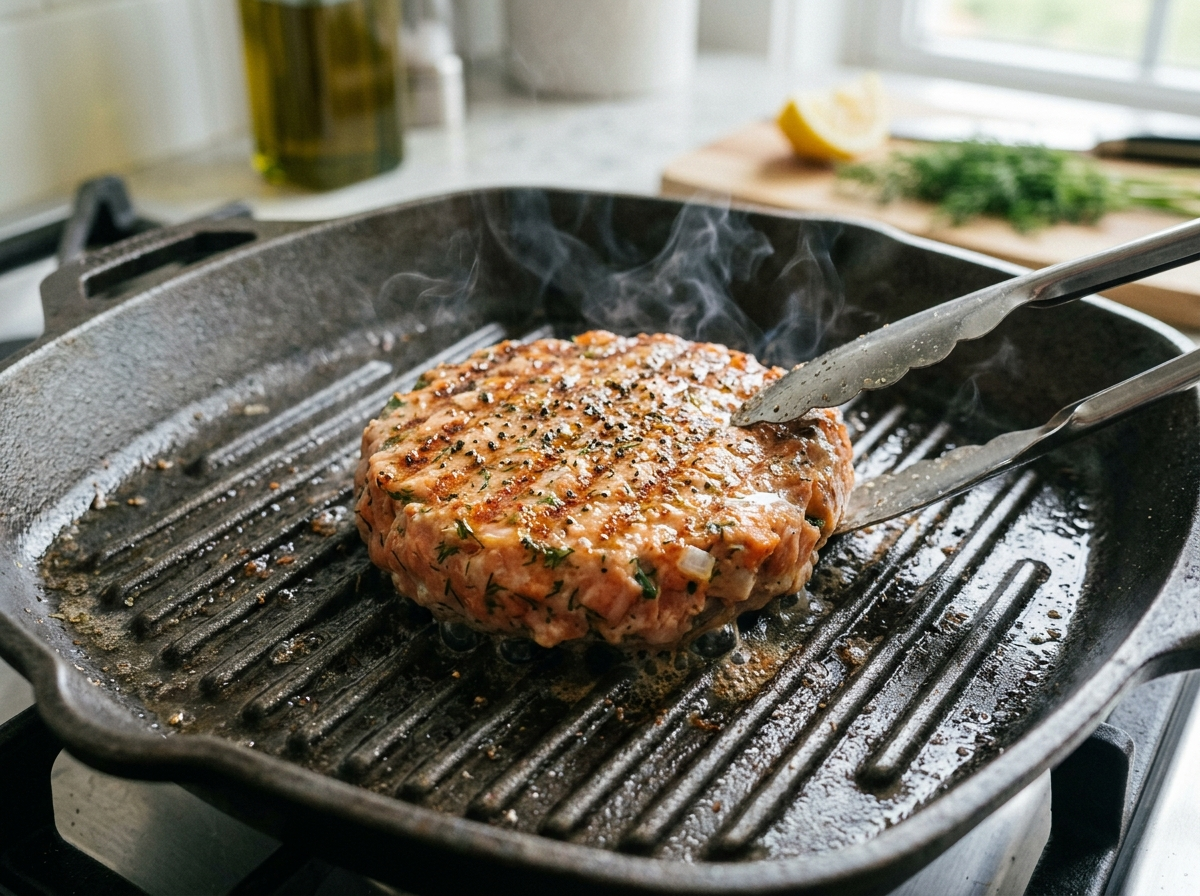
Stovetop pan-frying is faster at 7-9 minutes if you’re short on time. Heat a non-stick skillet or cast-iron pan over medium-high heat and add a small amount of oil to the pan, such as olive or avocado oil.
The char marks from the pan sauté add quite a bit more depth and flavor to the salmon patties. If you enjoy a nice golden sear on your protein, this is your method. Flip once halfway through, and you’re done.
If you love a nice sear on protein, this pairs beautifully with a teriyaki chicken bowl-style approach — build a grain bowl with rice, slaw, and a drizzle of sauce. The same bowl-building logic applies perfectly to salmon.
Oven Baking (Hands-Off Approach)
Preheat your oven to 400°F. Lightly grease a baking sheet with olive oil or cooking spray. Remove the salmon burger patties from the packaging and place them on the baking sheet. Make sure they aren’t touching each other. Bake for 18-20 minutes, flipping the patties halfway through cooking. The burgers should turn golden brown on both sides.
Use a food thermometer to confirm the burgers reach an internal temperature of 145°F. This is the USDA-recommended safe internal temperature for fish. If you’re curious about safe temps for other seafood, check out this guide on how to know when salmon is done.
Grilling (Best for Summer)
Grilling is one of the most popular methods. Start by preheating the grill to medium heat (350°F), then lightly oil the grates. Grill for about 4-5 minutes per side, or until cooked through.
Grilling adds a smoky, slightly charred flavor that pairs perfectly with summer cookout vibes. These hold up well on the grill since they don’t contain breadcrumbs or fillers that might cause them to crumble. If you’re already grilling seafood, check out tips for the best temp to grill salmon — the principles overlap.
⚠️ Warning: Don’t microwave these. The patties won’t cook evenly — you’ll get rubbery texture with potential cold spots. Stick to air fryer, skillet, oven, or grill for proper results.
Creative Ways to Serve Costco Salmon Burgers
Sure, you can slap one on a bun and call it a day. But these patties are genuinely versatile if you’re willing to get a little creative.
The Classic Burger Build
Classic options include brioche buns with tartar sauce, lettuce, tomato, and red onion. A toasted brioche bun makes everything better, and the softness of the bread complements the firmer texture of the salmon patty. Add a squeeze of lemon and you’re golden.
Bowl Style
Break the cooked patty into chunks and serve it over rice with some steamed veggies, avocado, and a drizzle of sriracha mayo. It works beautifully as a protein bowl, similar to how you’d serve baked salmon at 400°F in flaked form.
Salad Topper
Eat them in a burger, on a salad, or in any other dish for a fast and healthy protein! Slice a cooked patty into strips and lay it over mixed greens with cucumber, cherry tomatoes, and a light vinaigrette. It’s a clean, satisfying lunch.
Taco / Lettuce Wrap Style
Some fans use them in tacos, appetizers, and more. Wrap flaked salmon burger in a butter lettuce cup with mango salsa, pickled red onion, and a tiny drizzle of ssam sauce for a Korean-fusion twist.
Pair It with Asian-Inspired Sides
If you love Asian flavors, try serving your salmon burger alongside Korean-style bok choy or topped with a bit of tobiko for a pop of color and crunch. Even something as simple as a spoonful of pickled ginger on the side transforms the experience.
Are Costco Salmon Burgers Healthy?
Short answer: yes, with a couple of caveats.
These Trident Salmon Burgers are a very healthy choice. They are high-protein, low-carb, gluten-free, and packed with healthy Omega-3s.
The primary ingredient is wild-caught Alaskan salmon, which is a great source of lean protein and omega-3 fatty acids. Wild-caught salmon has more health benefits and a lower risk of contaminants and antibiotics compared to farmed salmon.
The burgers are also low in saturated fat and free of artificial preservatives.
There’s one area of debate worth mentioning. Some nutrition experts point out that soybean and/or canola oils — listed as the second ingredient — are among the most highly processed of oils. The amount per patty is small, but if you follow a strict whole-foods protocol, it’s worth being aware of.
If you’re tracking how long cooked salmon lasts in the fridge after cooking up a batch of these patties, the same 3-4 day rule applies as with any cooked salmon.
Who Should Buy These (And Who Shouldn’t)
Not every product is right for every person. Here’s a clear breakdown so you can make your own decision.
You’ll Love These If:
You’re a busy parent or professional who wants a quick, protein-rich dinner option without spending 30 minutes on prep. You’re doing keto, low-carb, or just watching calories. You want to eat more seafood but don’t always have fresh fish on hand. You want a gluten-free option that actually tastes good.
One reviewer noted that when her 7-year-old grabbed a salmon burger off the serving platter instead of a beef burger, gobbled it up, and asked for another — she knew she had a winner. That kind of kid-approval is rare with seafood.
You Might Want to Skip If:
They’re worth it if you value time savings, wild-caught sourcing, and gluten-free convenience — but not if you prioritize custom texture, low-sodium control, or minimal processing.
If you’re someone who really enjoys the tender, flaky texture of a fresh salmon fillet, you’d probably be better off buying salmon fillets instead of these salmon burgers. The texture of a formed patty will never fully replicate that fresh-fillet experience.
Storage Tips You Should Know
These come in a resealable bag, which is a nice touch. The bag itself is sturdy and resealable, which is a huge plus for keeping the frozen patties fresh.
Keep the bag sealed tight after grabbing a patty or two. Proper freezer storage means these will stay good for months. And since you don’t need to thaw them before cooking, there’s zero planning required — just pull, cook, eat.
Once cooked, treat them like any other cooked seafood. Store leftovers in an airtight container in the fridge and eat within 3-4 days. Curious about how long other seafood lasts after cooking? This guide on how long cooked shrimp lasts follows similar storage principles.
Frequently Asked Questions
Can you cook Costco salmon burgers from frozen?
Yes — and that’s actually the recommended way. Costco’s frozen salmon burgers do not need to be thawed before cooking. You can cook them directly from the freezer, though it may take a few extra minutes for them to cook through. All four methods (air fryer, stovetop, oven, grill) work straight from frozen.
What’s the best way to cook Costco salmon burgers?
The air fryer method works best for a perfect texture. Set it to 400°F and cook for 12-13 minutes, flipping halfway. Pan-frying on the stove is the fastest route if you’re in a hurry. Both give you a nice exterior crust that you won’t get from oven baking.
Are Costco salmon burgers good for weight loss?
With just 140 calories and 20g of protein per patty, they’re an excellent option for anyone watching their intake. The high protein-to-calorie ratio keeps you full longer. Just be mindful of what you’re pairing them with — a brioche bun with mayo adds up differently than a green salad.
What internal temperature should Costco salmon burgers reach?
Use a food thermometer to confirm the burgers reach an internal temperature of 145°F. That’s the USDA standard for cooked fish. If you don’t have a meat thermometer, look for the patties to be firm to the touch and opaque throughout.
Do Costco salmon burgers taste fishy?
It depends on who you ask. Some reviewers found them not fishy at all, while others noted a slightly fishy taste but found them well seasoned. The cooking method matters here — air frying and pan-searing tend to reduce any “fishy” notes because of the higher heat and crispier finish.
The Bottom Line
Costco salmon burgers aren’t trying to replace a fresh-caught Alaskan sockeye fillet on a cedar plank. That’s not what they’re for. They’re a weeknight hero — a freezer staple that lets you eat wild-caught salmon protein in under 15 minutes without dirtying more than one pan.
They deliver on taste, nutrition, convenience, and value. At under $2 per patty for wild-caught, gluten-free, high-protein salmon, the math genuinely works. And with the air fryer method, you get a result that’s surprisingly close to something you’d order at a restaurant.
If you haven’t tried them yet, grab a bag on your next Costco run. And if you already have them sitting in your freezer, dust off that air fryer and give the 400°F / 12-minute method a shot. You might be surprised at just how good a frozen salmon burger can be.