The sound of a Thai kitchen
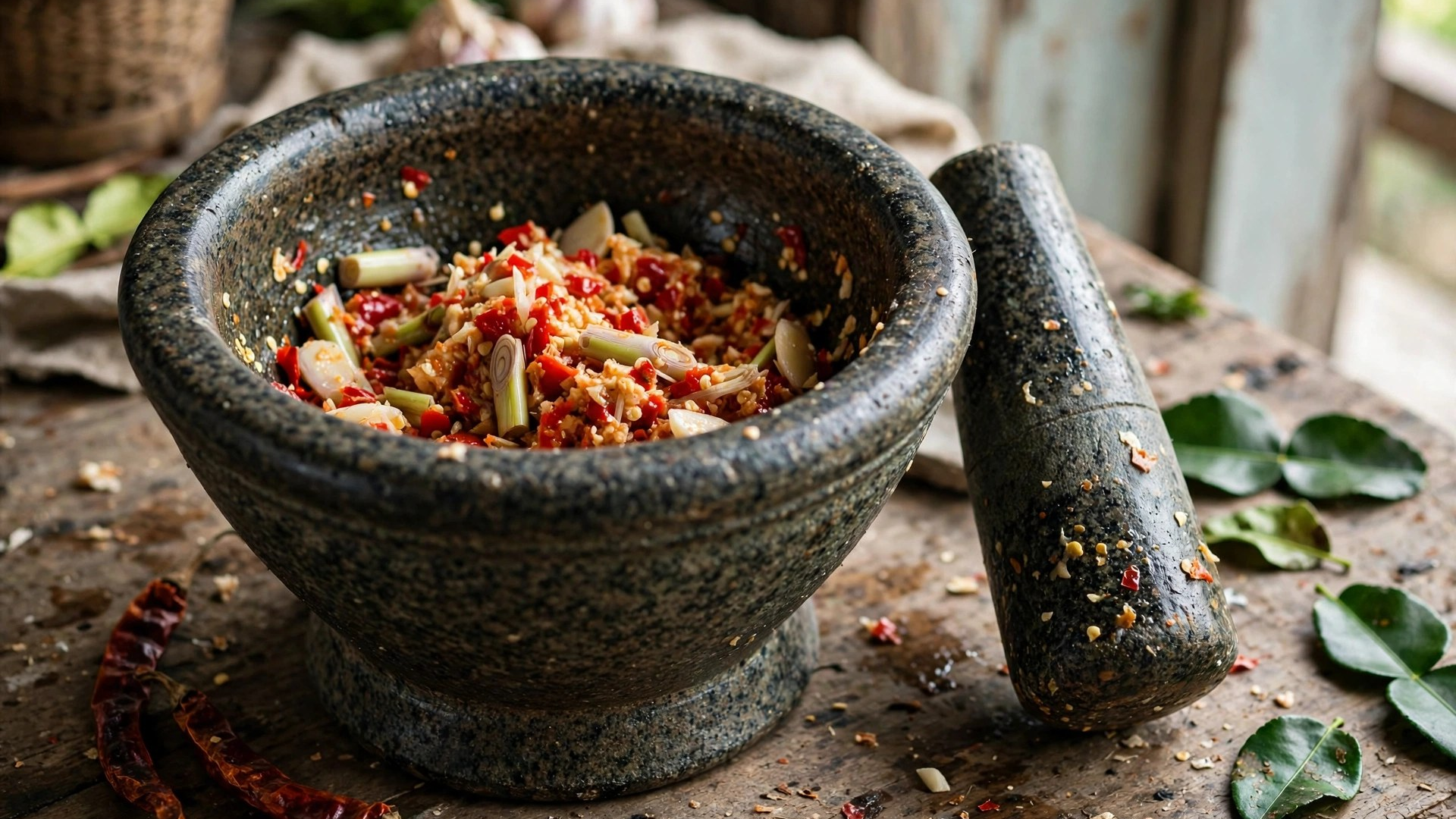
There is a sound that tells you a Thai kitchen is in business: the steady, even thump of pestle on stone. In Thai, the mortar is the khrok (ครก) and the pestle is the sak (สาก), and together they are one of the most indispensable tools in Thai cooking. Curry pastes, chili relishes, papaya salad, ground spices, even the garlic for a weeknight stir-fry — generations of Thai cooks have made all of it with two pieces of stone and their own two hands. If you are serious about cooking Thai food, this is the tool that changes what your food tastes like.
The reason is physical, not romantic. A food processor cuts with blades; a mortar crushes, rupturing the cells of herbs and spices and freeing more volatile oils than a knife ever could. Pounded chilies distribute their heat evenly instead of ambushing you in chili landmines, and pounded garlic blooms into oil in a way minced garlic never manages. Taste a curry made from a hand-pounded paste next to one from a jar, and the jar stops being an option.
Two materials, two jobs — don’t mix them up
Thai home kitchens generally keep two kinds of mortar. The first is granite, heavy and dark, and it comes with a granite pestle. This is the workhorse: curry pastes, hard spices, lemongrass, galangal — anything that needs to be pulverized into a fine, smooth paste. The stone’s weight does half the work for you, and its rough interior grips the ingredients instead of letting them slide around.
The second is glazed terracotta or clay, tall and conical, and it is always paired with a wooden pestle. This is the light-duty mortar, the som tam mortar: papaya salad wants its vegetables lightly bruised, so they drink up the dressing while staying crisp, not pulverized. The lighter wooden pestle gives you that control. The same goes for many nam prik chili relishes, which are pounded, not pureed — if you want a sense of how central the mortar is to that whole category, our guide to eating Thai chili relishes will show you what comes out of it.
The pairing rule is strict and simple: granite with granite, terracotta with wood. A granite pestle in a clay mortar will destroy it; a wooden pestle in a granite mortar is pointless. There is no such thing as a terracotta pestle. Buy them as a set and keep them matched.
The pounding rhythm that once judged a cook
In old Thailand, making curry paste from scratch was not a hobby — it was a mark of class, and the mortar was how the world measured it. Many Thai families tell of the days when a young bachelor’s mother would visit a prospective bride’s home, and while the young woman cooked out of sight, the visitor listened to the rhythm of her pounding. A steady, even beat that went on and then stopped meant a focused cook who knew her craft; a ragged, start-and-stop rhythm meant distraction — and, people believed, said something about the person outside the kitchen too. The story is probably taller than the truth, but it says something real about how seriously Thailand has always taken this tool. Your mortar is not rustic decoration. It is an instrument, and it rewards practice.
How to choose: think in bowls, not in kilograms
When you go to buy a granite mortar, ignore the overall size and the weight. Judge it by the capacity of the inner bowl. A mortar with a small bowl is miserable for curry paste — there is no room for the ingredients to move, and half of them jump out onto the counter with every strike. As a rough guide, a bowl about six inches across and deep will make roughly four to six ounces of curry paste — a generous pot of curry, eight to ten servings.
Bigger is not automatically better, because the bigger it is, the heavier it is, and a granite mortar that is a pain to lift is a mortar you will not use. A one-cup mortar is the smallest worth owning — fine for garlic, chilies, and spices, and light enough to reach for daily. A two-cup mortar is the sweet spot for most cooks: real curry pastes are on the table, and the weight is still manageable. A three-cup monster handles everything, but only if you are the kind of person who will actually heave it onto the counter. Buy for the cook you are, not the cook you imagine being. The enemy is the beautiful doorstop.
Run your hand inside the bowl before you buy. A good granite mortar is machine-smoothed but still has a slight tooth to the stone — that texture is what grips the lemongrass. If the inside feels glassy smooth, it will be slippery and slow; if it feels gritty and unfinished, it will shed rock dust into your food.
Pounding and grinding are two different motions
There are two techniques, and you will feel the difference immediately. Pounding is the straight up-and-down strike, for moist ingredients like fresh herbs and chilies. When things start riding up the sides, slide the pestle down the wall to bring them back to center — and for a long session like a curry paste, pause now and then to scrape everything down with a spoon so nothing escapes the pounding.
Grinding is the circular motion, pestle never lifted, for dry things like toasted spices and rice. Big dry pieces will just roll around under the pestle, so give them a few pounds first to break them down, then grind. In practice you will blend the two without thinking about it. One piece of curry-paste discipline: go hardest-first. Dry spices and fibrous roots like lemongrass and galangal get pounded to powder before the softer things — garlic, shallots, fresh chilies — go in, with fresh herbs last so their volatile oils survive. That order is the difference between a layered paste and one muddy note.
What it does beyond curry paste
Curry paste is the headline, but the mortar earns its counter space all week. A quick smash of garlic in the mortar and the peel slips right off; keep pounding and you have rough chop, minced, or paste in under a minute, with more flavor released than a knife could manage. Whole spices ground seconds before they hit the pan taste like a different ingredient than the pre-ground jar. Peanuts and cashews for toppings take two pounds instead of a chase around the cutting board. Toasted sesame seeds get a three-second grind — just until they crack — and suddenly they smell like sesame instead of nothing at all. This is why so many Thai cooks keep the mortar on the counter rather than in a cupboard: it is faster than the knife for small jobs, and unlike a food processor it has no minimum quantity. You can grind a single peppercorn in a big mortar. Try that in a blender.
The one thing not to buy
You will see plenty of mortar and pestle sets that look close enough — the Mexican molcajete, the pale marble sets, the tiny decorative ones. For Thai curry pastes, they are the wrong tool. A molcajete is too shallow and is designed for grinding, not pounding; the herbs and spices in a Thai paste need to be smashed downward with force, not swirled. And it is worth saying plainly: being seen making Thai curry paste in a molcajete or a marble mortar is the fastest way to lose credibility with anyone who knows Thai cooking. Granite for pastes, clay and wood for salads. That is the whole rule.
Seasoning and caring for it
A good granite mortar does not need a ceremony before its first use — no rice pounding, no oil, no “seasoning” like a cast-iron pan. It should arrive well-finished; give it a good scrub with soap and water and start cooking. If the inside feels excessively rough, you can smooth it by grinding it empty with a little water until it feels right. But here is the red flag: if rock dust keeps coming off into your food after many uses, the stone is too soft to be a mortar at all, and you should replace it rather than work around it. Tiny amounts of stone wear over years are normal — granite is not toxic — but visible dust every time is a bad product.
Day to day, care is simple: rinse with warm water after use and dry the bowl thoroughly, with extra attention for wooden pestles — wood molds when it stays damp. Skip the dishwasher; detergent chemicals wear stone faster than food ever will. Treated well, a granite khrok will outlive you and get smoother with every paste it makes.


1 Comment