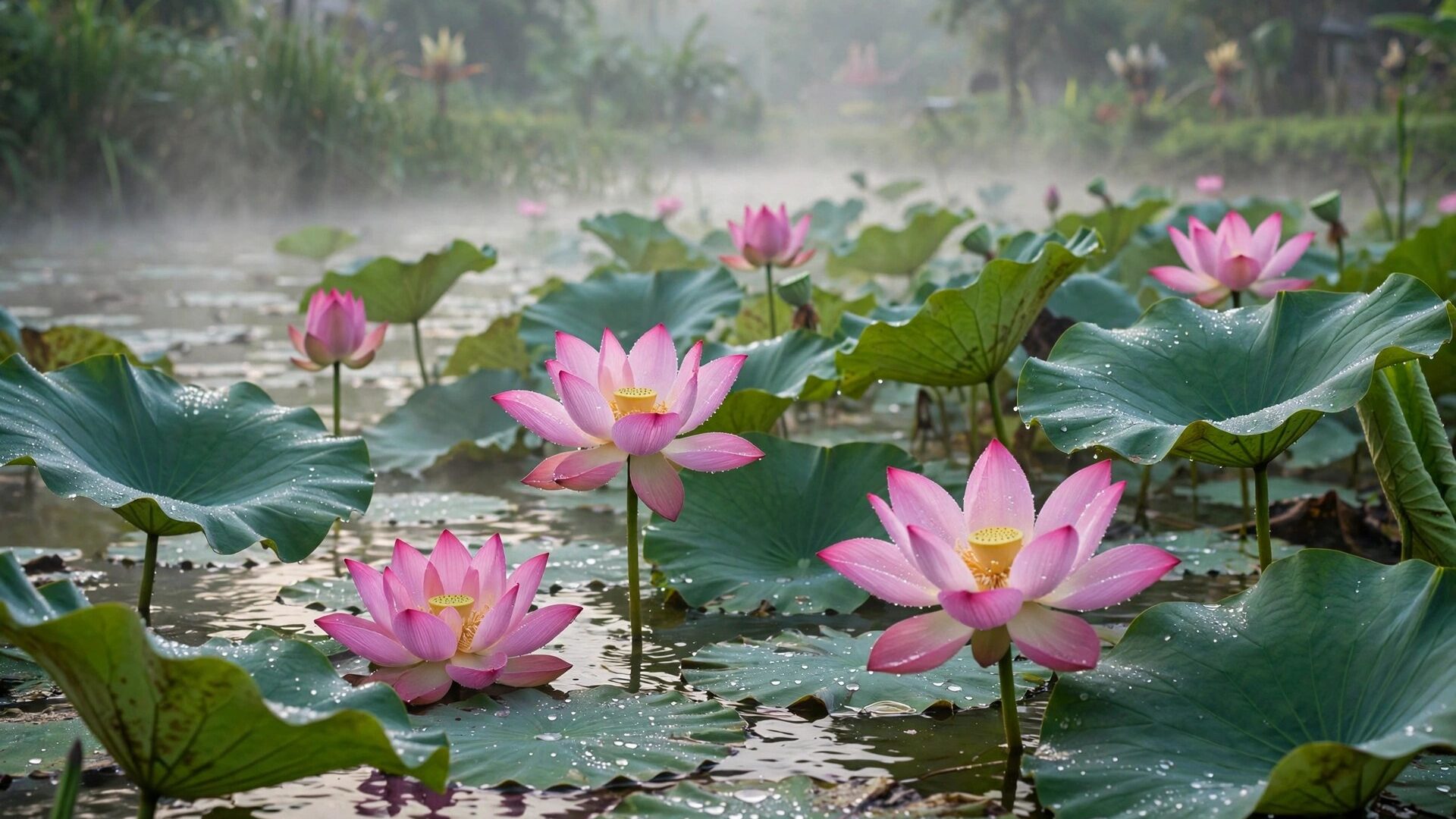
Ask a Thai cook to name a favorite vegetable and you might get an answer that stops you mid-sentence: lotus stems. Not the flower, not the seeds — the stems. It sounds like a riddle until you realize that in Thailand, the lotus isn’t one ingredient. It’s a dozen of them, hiding inside a single plant.
One Plant, a Dozen Ingredients
Almost nothing goes to waste. The mild fresh petals can stand in for lettuce cups in a miang — try one filled with a pomelo-and-shrimp mixture and you’ll understand why. Young seeds, still green in the pod, can be popped out and eaten raw like popcorn, though you must pick out the tiny green sprout inside each one: it is intensely bitter. Dried lotus petals had a humbler past — in the old days, people rolled tobacco in them as makeshift cigarette wrappers. And if you’ve ever wondered why the Thai word for a lotus pod, fak bua (ฝักบัว), is also the word for a shower head, hold a dried pod up next to one and the joke explains itself.
Stems, Shoots, and Roots: The Crunchy Parts
The part Thai cooks reach for most is the stem — but not just any stem. Markets sell sai bua (สายบัว), the tender flower stems of the white water lotus known as bua sai. These are crisp, mild, and faintly sweet, nothing like the tough, fibrous leaf stalks, which are full of resin and tannin and best left alone.
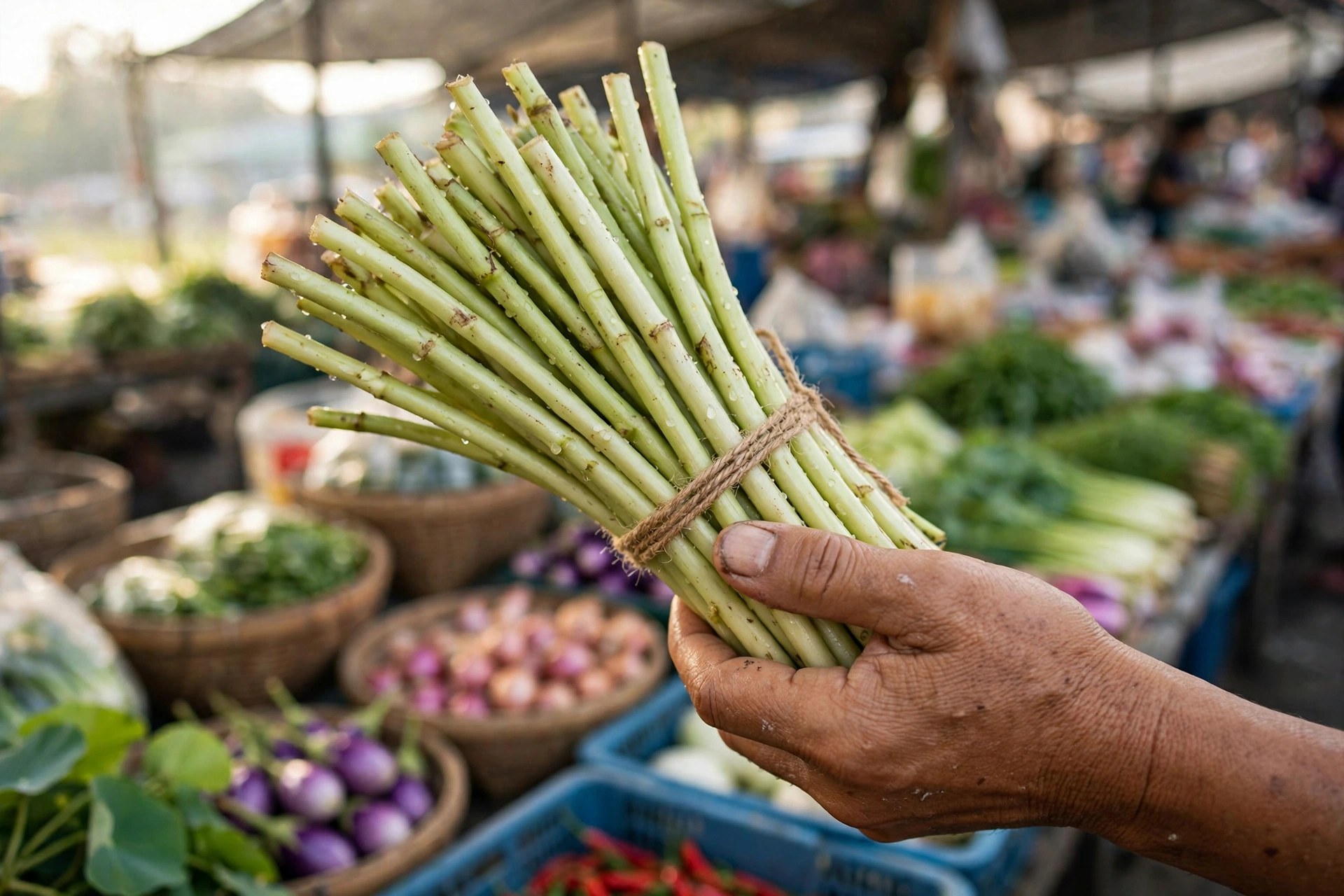
Eaten raw, sai bua is a classic side vegetable for chili relishes — its cool crunch is the perfect foil for a fiery nam prik. Cooked, it stars in two beloved dishes. Tom kati sai bua (ต้มกะทิสายบัว) simmers the stems in coconut milk with Thai mackerel (pla tu), a gentle, creamy soup that tastes like central Thailand on a quiet afternoon. Kaeng som sai bua (แกงส้มสายบัว) drops them into a hot-sour turmeric curry, where they keep their crunch against the broth’s bite.
The sacred pink lotus, bua luang (Nelumbo nucifera), offers its own prizes. Its stems are thorny and inedible, but its young underwater shoots — lai bua (ไหลบัว) — are a delicacy: blanch them for a refreshing salad, or toss them into phad cha lai bua, a ferocious stir-fry of red chilies, galangal, krachai, and holy basil with catfish or shellfish. The knobby rhizome, rak bua (รากบัว), sliced into lacy wheels, turns up braised with pork ribs, stir-fried, or stuffed with seasoned shrimp and pork — a dish that traveled to Thailand with Chinese cooks and never left.
Seeds and Petals: The Delicate Parts
Lotus seeds come in two personalities. Young and green, they’re a fresh snack eaten out of hand. Mature and dried, they become starchy, almost bean-like, and step into both savory and sweet roles: simmered into pork-bone soup, or candied into met bua cheuam (เม็ดบัวเชื่อม), lotus seeds glistening in syrup — and folded into desserts like lotus-seed sago and the golden pastries of the Mid-Autumn season.
The petals, meanwhile, are more than decoration. Beyond their work as edible cups for miang, fresh petals go into salads and are steeped as a fragrant tea. There’s even an old-fashioned dessert, kanom sai bua, made by pounding lotus stems fine and kneading them with rice flour, coconut cream, salt, and sugar, then steaming the mixture in banana leaf — a cousin of banana pudding, made from a pond plant.
Leaves, Pods, and Pollen: Nothing Wasted
Big lotus leaves are nature’s food wrap. Dried, they lend a mild, tea-like fragrance to steamed rice dishes; khao hor bai bua (ข้าวห่อใบบัว), rice wrapped and steamed in lotus leaf, unfurls at the table like a present. Fresh leaves serve as biodegradable wrappers at markets and festivals. The golden pollen is gathered for ya hom, traditional herbal medicine in which it is credited with steadying the heart and clearing the head — folk wisdom rather than pharmacy, but deeply woven into Thai home remedies. Even the spent pods, seeds popped out, get dried and kept as decoration.
The Sacred Side of the Flower
All of this everyday cooking sits beside a profound reverence. In Thailand, the lotus is first and foremost a Buddhist flower. The tight buds sold at every market aren’t destined for a vase on a dining table — they’re offerings, carried to temples, home shrines, spirit houses, and ancestral altars. The flower’s symbolism does the heavy lifting: rising unstained from muddy water, it stands for purity and the possibility of enlightenment, and it appears everywhere from temple murals to the folded-petal craft of phap phum-style lotus bud arrangements, where each petal is coaxed into pleats by patient hands.
This is why Thais rarely treat the lotus as mere garnish. To cook with it is to handle something that also belongs on an altar — a plant that feeds the body and, in the same breath, points beyond it.
Buying and Cooking Lotus at Home
A few practical notes, because lotus rewards a little know-how. Choose stems that snap cleanly and look freshly cut; peel away any fibrous outer strings, and drop cut pieces into water with a squeeze of lime so they stay white. Stems need only brief cooking — a minute or two of blanching, or a late addition to curry, keeps their signature crunch. When eating young seeds raw, don’t skip removing the green embryo; its bitterness will ambush an otherwise sweet bite. Dried seeds want a good soak before they go into soups or syrups.
Outside Thailand, look for fresh stems and roots at Southeast Asian markets (often in season rather than year-round), lotus root fresh or frozen, and dried seeds in the Chinese grocery aisle — they’re the same Nelumbo nucifera seeds, sold for soups and desserts across Asia. Start with the simplest preparation of all: raw sai bua alongside a punchy chili relish. It’s the dish that made a lotus-stem skeptic out of nobody — and a believer out of almost everyone.