Most people discover ssam sauce by accident. Maybe you ordered a Korean BBQ platter, wrapped a piece of grilled pork belly in a lettuce leaf, and noticed that small bowl of dark, slightly sweet, intensely savory paste sitting on the side. You dipped. You tasted. And suddenly, everything else on the table felt incomplete without it.
That’s what ssam sauce does — it quietly takes over your palate and refuses to leave.
But here’s the thing. Despite its growing popularity outside Korea, ssam sauce still confuses a lot of people. Is it the same as ssamjang? Can you buy it at the store, or do you need to make it from scratch? What exactly goes into it? And can you use it beyond Korean BBQ?
Let’s clear all of that up. By the time you finish reading, you’ll know exactly what ssam sauce is, how to make a version that fits your kitchen, and at least a dozen ways to use it that have nothing to do with lettuce wraps.
What Exactly Is Ssam Sauce?
The word “ssam” in Korean (쌈) simply means “wrapped.” It refers to the tradition of wrapping grilled meat, rice, garlic, and other accompaniments inside leafy greens — usually lettuce, perilla leaves, or steamed cabbage. Ssam sauce is the condiment that ties the whole wrap together.
Now, here’s where things get a little tricky. The term “ssam sauce” doesn’t refer to one single, standardized recipe. It’s more of a category. Different Korean households, restaurants, and brands each have their own version. Some lean heavily on doenjang (Korean fermented soybean paste). Others build around gochujang (Korean red pepper paste). Many combine both.
The version that most people outside Korea recognize — especially if you’ve eaten at places like Momofuku — is David Chang’s ssam sauce, which blends gochujang with other ingredients for a sweet-spicy-funky profile. But traditional Korean ssamjang (the most common type of ssam sauce) has been around for centuries, long before it showed up on trendy restaurant menus in New York.
Quick fact: Ssamjang literally translates to “sauce for wraps.” It’s commercially produced by major Korean brands like Sempio and CJ Haechandle, and you can find it in most Asian grocery stores. But homemade ssamjang? That’s a different experience entirely.
Ssam Sauce vs. Ssamjang — Are They the Same Thing?
This is the question that trips up most people, so let’s settle it.
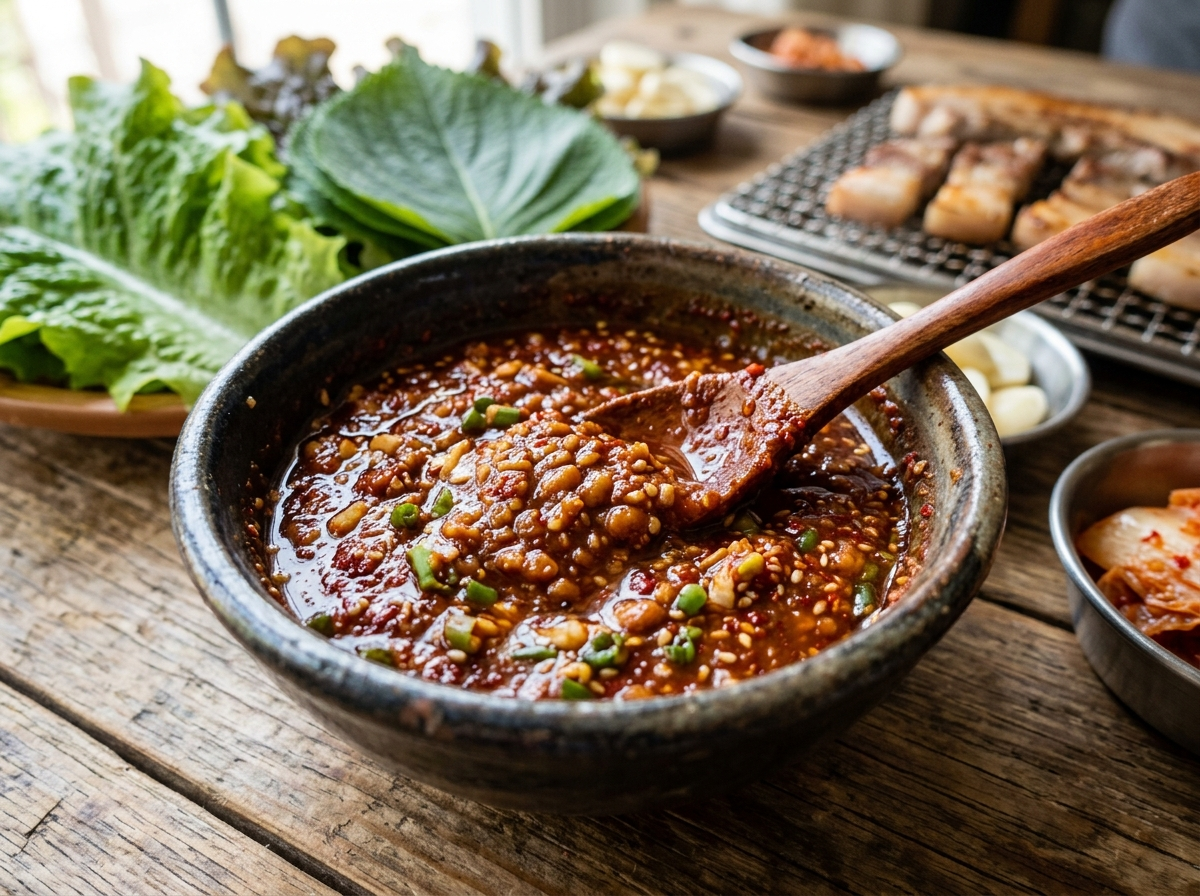
Ssamjang is a specific type of ssam sauce. It’s a thick, chunky paste made by mixing doenjang and gochujang together, then adding sesame oil, garlic, sugar, and sometimes chopped green onions or toasted sesame seeds. Think of it as the “classic” ssam sauce — the one Korean grandmothers have been making at home for generations.
Ssam sauce, on the other hand, is a broader term. It can refer to ssamjang, but it can also describe thinner, more liquid sauces designed for dipping or drizzling alongside ssam. Some versions skip the doenjang entirely and focus on a gochujang base thinned out with rice vinegar, soy sauce, or even fruit juice.
The practical difference? Ssamjang is almost always a thick paste you smear inside your wrap before adding meat. Other ssam sauces might be pourable — closer to what you’d think of as a dipping sauce.
Both serve the same purpose: adding depth, heat, and umami to your wraps. Which one you prefer really comes down to texture and how bold you want the fermented flavor to be.
The Flavor Profile — Why It Works So Well
If you’ve never tasted ssam sauce, imagine combining these flavors in one bite: salty, sweet, spicy, earthy, slightly funky, and nutty. That’s a lot happening at once, but somehow it stays balanced. The fermented pastes (doenjang and gochujang) give it that deep savory backbone — the kind of umami that makes your brain say, “I need more of this.”
The sweetness, usually from sugar or honey, rounds off the sharpness of the fermented soybean paste. Sesame oil brings that warm, toasty nuttiness. And the raw garlic? It adds a bite that wakes up the whole thing.
What makes ssam sauce particularly special is how it interacts with other foods. Fatty grilled meat — like Korean short ribs (kalbi) or pork belly — needs something bold and slightly acidic to cut through the richness. Ssam sauce does exactly that. The crisp, cool lettuce leaf acts as a neutral canvas, and the sauce becomes the bridge between the fresh greens and the charred, juicy meat.
It’s not just a condiment. It’s the glue that holds the entire ssam experience together.
How to Make Ssam Sauce at Home
You don’t need specialty kitchen equipment or a trip to three different stores. If you have access to an Asian grocery store — or even the international aisle at a well-stocked supermarket — you can put together an excellent ssam sauce in under ten minutes.
Classic Ssamjang (Traditional Thick Paste)
This is the version you’ll find in most Korean homes. It’s thick, deeply savory, and slightly chunky.
What you’ll need:
- 2 tablespoons doenjang (Korean fermented soybean paste)
- 1 tablespoon gochujang (Korean red pepper paste)
- 1 teaspoon sesame oil
- 1 teaspoon toasted sesame seeds
- 2 cloves garlic, finely minced
- 1 green onion, finely chopped
- 1 teaspoon sugar or honey
- ½ teaspoon rice vinegar (optional, for a slight tang)
Mix everything in a bowl. That’s it. No cooking required.
Pro Tip: Let it sit in the fridge for at least 30 minutes before serving. The flavors meld and the garlic mellows out just enough. It’ll keep in the fridge for about two weeks in a sealed container.
If doenjang is hard to find, you can substitute Japanese miso paste (preferably a darker variety like red miso or hatcho miso). The flavor won’t be identical — doenjang is fermented with a different process and tends to be funkier and less refined — but it’ll get you close.
Gochujang-Based Ssam Sauce (Thinner, Sweeter, Spicier)
This version is closer to what you’ll find at modern Korean BBQ restaurants and fusion spots. It’s more pourable and has a brighter, more direct heat.
What you’ll need:
- 3 tablespoons gochujang
- 1 tablespoon soy sauce
- 1 tablespoon rice vinegar
- 1 tablespoon toasted sesame oil
- 1 tablespoon honey or brown sugar
- 1 clove garlic, grated
- 1 teaspoon grated fresh ginger (optional but good)
Whisk until smooth. If it’s too thick, add a teaspoon of water at a time until you reach your preferred consistency.
This sauce works as both a dip and a drizzle. It’s particularly good when you want something that coats meat evenly rather than sitting in thick clumps.
Momofuku-Style Ssam Sauce
David Chang’s version — the one that introduced a lot of Western diners to ssam sauce — leans more into the gochujang side and adds complexity with ingredients like fermented bean paste and sometimes even a splash of mirin.
While the exact Momofuku recipe is proprietary, a close approximation would combine gochujang, a small amount of doenjang, rice vinegar, sugar, and a touch of soy sauce. The key difference from traditional ssamjang is the balance: it’s designed to complement rich, fatty cuts of meat (particularly pork shoulder) rather than the leaner grilled meats common in traditional Korean BBQ.
Best Meats and Proteins to Pair with Ssam Sauce
Ssam sauce was born to go with grilled meat. But not all proteins pair with it equally well. Here’s where it really shines.
Pork belly is the classic pairing. The fat content in pork belly needs something strong and sharp to balance it out, and ssam sauce delivers that perfectly. Grilled samgyeopsal (Korean grilled pork belly) with ssamjang, a sliver of raw garlic, and a slice of green chili, all wrapped in lettuce — that’s one of the most satisfying bites in Korean cuisine.
Grilled short ribs are another natural match. If you’ve ever made Korean kalbi, try a small dab of ssam sauce inside your lettuce wrap alongside the meat. The sweet marinade on the ribs plays beautifully against the salty, fermented sauce.
Chicken works, too, especially if it’s got some char on it. Gochujang chicken or Korean fire chicken already carries Korean flavors, so adding ssam sauce doubles down on that profile in the best way.
Pork shoulder — particularly slow-roasted or smoked — is what put ssam sauce on the map at Momofuku. The soft, pull-apart texture of pork shoulder with a smear of ssam sauce and some quick-pickled vegetables is genuinely hard to beat. If you’ve got leftover Asian pork burnt ends, this is exactly the sauce to reach for.
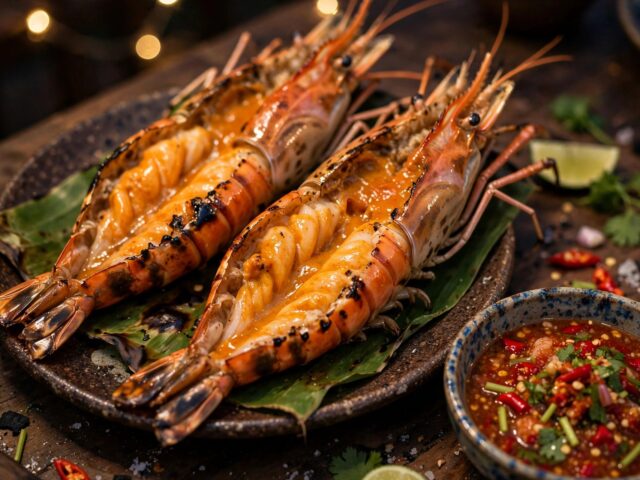
Grilled shrimp and fish aren’t traditional pairings, but they work surprisingly well, especially with the thinner gochujang-based version. If you’re grilling seafood — say you’ve already figured out the best temp to grill shrimp — try serving a small dish of ssam sauce on the side. The sauce’s sweetness and heat complement the natural sweetness of shrimp without overpowering it.
Beyond the Wrap: Unexpected Ways to Use Ssam Sauce
Here’s where things get fun. Ssam sauce doesn’t have to stay in its lane. Once you’ve got a batch in the fridge, you’ll start finding excuses to use it everywhere.
As a burger sauce. Swap out your usual ketchup-mayo combo for a thin layer of ssam sauce on your next burger. The umami and heat turn an ordinary burger into something that tastes like you put in way more effort than you actually did.
Stirred into rice bowls. A spoonful of ssamjang mixed into a warm bowl of steamed rice with a fried egg on top — that’s a meal. Add some Korean-style bok choy on the side, and you’ve got a complete dinner in fifteen minutes.
As a glaze for roasted vegetables. Thin the sauce with a little rice vinegar and honey, toss it with broccoli, sweet potatoes, or cauliflower, and roast at high heat. The sugars caramelize and you get this incredible charred-sweet-savory coating.
Mixed into dumplings’ dipping sauce. If you’re making Korean kimchi dumplings (mandu), try blending a teaspoon of ssam sauce into your dipping sauce of soy sauce and vinegar. It adds a fermented depth that plain soy sauce can’t match.
On tacos. Sounds odd, but Korean-Mexican fusion isn’t new. Ssam sauce on a pork taco with pickled onions and cilantro is genuinely one of those crossover combinations that just clicks.
As a marinade base. Thin it out with a bit of soy sauce, sesame oil, and a splash of rice wine, and you’ve got a solid marinade for chicken thighs, pork chops, or tofu.
Buying Ssam Sauce: What to Look for at the Store
Not everyone wants to make sauce from scratch, and that’s fine. Store-bought ssamjang is widely available, and some brands are genuinely good.
CJ Haechandle Ssamjang is probably the most commonly found brand internationally. It comes in a green tub, and it’s a solid everyday option. The flavor is balanced — not too salty, not too sweet — and the texture is thick enough to stay put inside a wrap.
Sempio Ssamjang is another reliable choice, with a slightly sweeter profile.
Chung Jung One offers a version that’s a bit more refined in terms of the fermented flavor — less funky than some others, which might actually be a plus if you’re new to Korean fermented pastes.
What to check on the label: Look for doenjang and gochujang listed as the first two ingredients. Some cheaper brands rely heavily on corn syrup and artificial flavors, which produce a one-dimensional sweetness. You want that fermented complexity, and that only comes from actual fermented soybean and chili paste.
Did you know? Commercially produced ssamjang often includes added ingredients like ground onion, ground anchovy, and even ground peanuts or walnuts for extra texture and flavor. These additions aren’t “inauthentic” — they’re just a different style from the simpler homemade version.
How to Store Ssam Sauce Properly
Homemade ssam sauce lasts about two weeks in the refrigerator in an airtight container. The garlic and green onions are the ingredients that shorten its shelf life. If you leave those out, a batch of just doenjang-gochujang-sesame oil-sugar can last a month or more.
Store-bought ssamjang, once opened, stays good in the fridge for several months — typically three to six months, though you should check the package for the manufacturer’s recommendation. The high salt content and fermented base act as natural preservatives.
Warning: Don’t leave ssam sauce out at room temperature for extended periods, especially homemade versions with fresh garlic. Garlic in oil-based mixtures can create conditions for botulism if stored improperly. Always refrigerate after making or opening.
You can also freeze ssam sauce in small portions (ice cube trays work well). Frozen, it’ll keep for up to three months. Thaw in the fridge overnight before using.
The Ingredients That Make Ssam Sauce Special
Two fermented pastes form the soul of ssam sauce, and understanding them helps you appreciate why this condiment tastes the way it does.
Doenjang
Doenjang is Korea’s fermented soybean paste. It’s similar to Japanese miso but fermented differently — using meju (blocks of dried, fermented soybeans) — and it has a stronger, more pungent flavor. Where miso can be delicate and smooth, doenjang is bold and earthy. It’s been a staple of Korean cooking for over a thousand years, and it brings that deep, almost mushroomy umami to ssam sauce.
Gochujang
Gochujang is a fermented red chili paste made from gochugaru (Korean red pepper flakes), glutinous rice, fermented soybeans, and salt. It’s not just hot — it’s sweet, a little smoky, and complex. The fermentation process, which traditionally takes months in large earthenware pots called onggi, gives gochujang layers of flavor that regular chili sauce simply doesn’t have.
When you combine doenjang and gochujang, something interesting happens. The earthiness of one balances the heat of the other. The sweetness in gochujang softens the sharpness of doenjang. You end up with a sauce that hits multiple flavor notes simultaneously without any single one dominating.
If you enjoy cooking with fermented pastes and Asian pantry staples, ssam sauce is a great gateway into experimenting further.
Quick Tips for Getting Your Ssam Sauce Right
Start with less garlic than you think you need. Raw garlic in ssam sauce intensifies as it sits. What tastes mellow at first can become aggressive after a few hours in the fridge. You can always add more.
Taste and adjust. The ratio of doenjang to gochujang is entirely personal. Like it saltier and more savory? Add more doenjang. Want more heat and sweetness? Go heavier on the gochujang. There’s no single “correct” ratio.
Toast your sesame seeds fresh. Pre-toasted sesame seeds from a bag are fine, but if you toast them yourself in a dry pan for two minutes, the aroma and flavor improvement is noticeable. It’s a small step that makes a real difference.
Add texture if you want it. Some Korean cooks fold in finely chopped walnuts, pine nuts, or even ground dried shrimp. These additions give the sauce more body and make every bite a little different.
FAQ
Is ssam sauce the same as gochujang?
No. Gochujang is one ingredient that goes into ssam sauce. Ssam sauce (or ssamjang) is a blended condiment that typically combines gochujang with doenjang and several other ingredients. Using straight gochujang as a ssam sauce substitute will give you heat and sweetness, but you’ll miss the deeper, fermented soybean flavor that doenjang provides.
Can I make ssam sauce without doenjang?
You can, but the flavor will be noticeably different. If doenjang isn’t available, red miso paste is your closest substitute. White miso is too mild for this application. Another option is to use a smaller amount of regular soybean paste mixed with a touch of fish sauce to approximate the funky depth of doenjang.
Is ssam sauce spicy?
It has heat, but it’s not aggressively spicy. The gochujang provides a warm, building heat rather than a sharp burn. If you’re sensitive to spice, reduce the gochujang and increase the doenjang — you’ll keep the savory depth while dialing back the chili intensity. Adding a bit more honey or sugar also helps mellow the heat.
How is ssam sauce different from regular Korean BBQ sauce?
Korean BBQ dipping sauces vary widely, but many are thinner and simpler — often just sesame oil with salt and pepper, or a soy-based sauce with vinegar. Ssam sauce is thicker, more complex, and specifically designed to be eaten inside wraps. It coats and clings rather than pooling at the bottom of a dish.
Can ssam sauce be used as a cooking sauce?
Absolutely. You can thin it out and use it as a stir-fry sauce, a glaze for grilled meats, or even a base for a quick noodle sauce. Just keep in mind that the fermented pastes will darken and intensify with heat, so use a bit less than you think you need and adjust after tasting.
Your Next Move
Ssam sauce is one of those condiments that quietly changes how you eat. Once you’ve got a jar of it in your fridge — homemade or store-bought — you’ll find yourself reaching for it almost automatically. It goes on rice bowls, it goes on grilled meat, it goes on things that have absolutely no connection to Korean food, and somehow, it still works.
If you’ve never made it before, start with the classic ssamjang recipe above. Make a small batch, taste it, tweak it to your liking. Then grill some pork belly or even just some chicken thighs, grab a head of butter lettuce, and build your first proper ssam at home.
That first bite — crisp lettuce, hot meat, cool sauce, raw garlic — will tell you everything you need to know about why this sauce has been a part of Korean tables for centuries. And why it deserves a permanent spot on yours.