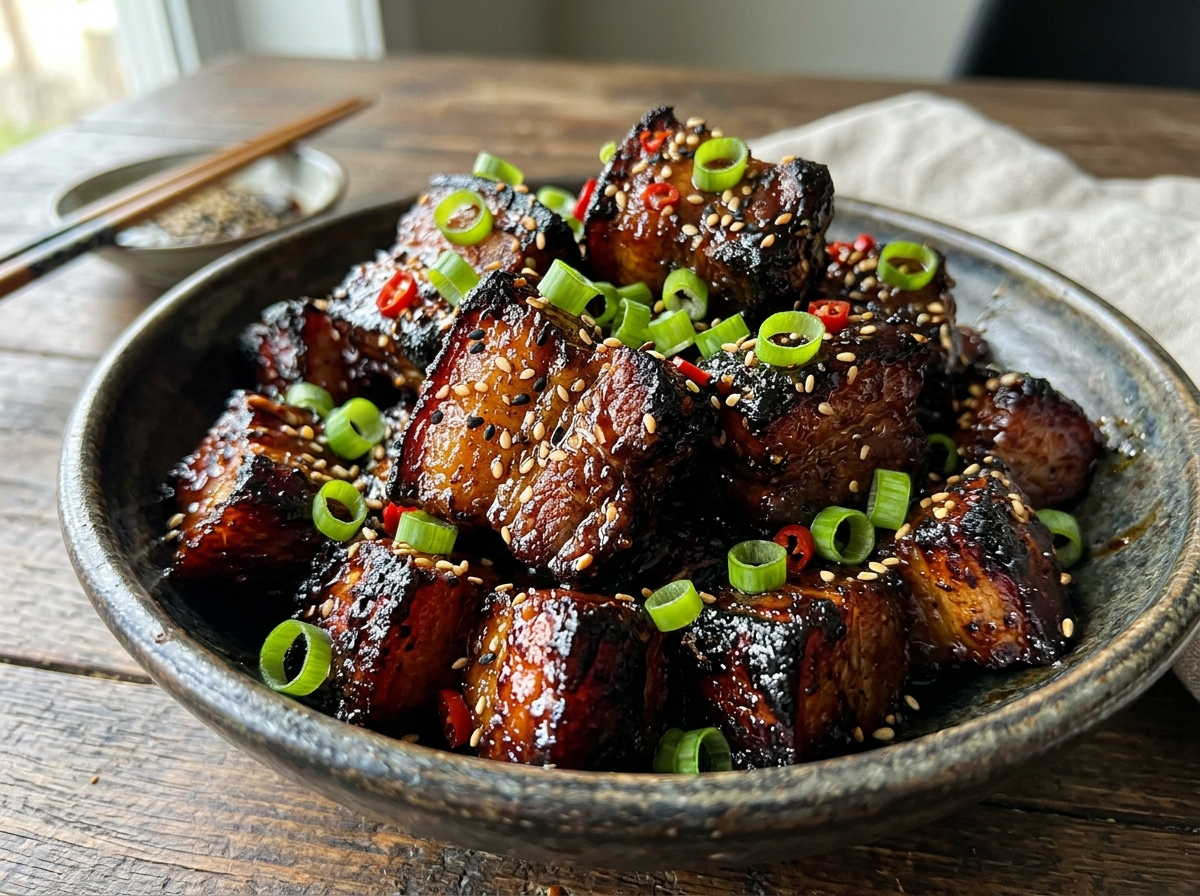
Burnt ends started as the scrappy leftovers of a Kansas City brisket cook. Pit masters would slice off the charred, fatty point meat, toss it back in the smoker, and snack on those caramelized cubes while they worked. Customers caught on, and suddenly the “throwaway” cut became the most requested item on the menu. Now imagine taking that same idea — those tender, bark-covered meat nuggets — and glazing them with a sticky, umami-packed Asian sauce built on soy, ginger, and brown sugar. That’s exactly what Asian pork burnt ends are, and once you try them, regular BBQ might feel a little one-dimensional.
You don’t need a competition-grade offset smoker or years of pit experience. A kettle grill, a pellet smoker, or even your kitchen oven can turn a pork belly into something genuinely special. This guide walks you through the entire process — choosing the right cut, building the glaze, managing your cook times, and finishing with that sticky lacquer that makes people go quiet mid-bite.
Why Pork Belly Is the Perfect Cut for This
Traditional burnt ends come from the brisket point, which is loaded with intramuscular fat. That fat renders during a long cook and keeps the meat moist despite hours of heat exposure. Pork belly works on the same principle, but honestly, it does the job even better.
A slab of pork belly is roughly 50% fat layered between bands of meat. That ratio means two things for you: the cubes stay incredibly moist throughout the entire cook, and the rendered fat carries all those glaze flavors deep into each piece. You also get a much more forgiving cook window compared to brisket. Pork belly is hard to overcook. It just gets more tender the longer it goes, which makes it perfect if you’re still learning your smoker’s temperament.
Pro Tip: Look for a pork belly slab that’s at least 1.5 inches thick with relatively even fat distribution. Thin spots will cook faster and can dry out while the thicker areas are still rendering. Most Costco and restaurant supply stores sell whole pork belly slabs that work well for this.
When you’re picking up your pork belly, you might also see “skinless” and “skin-on” options. Go skinless. The skin won’t render properly when you’re cubing the meat, and it creates a chewy, rubbery layer that fights against the tender texture you’re after.
The Asian Glaze — Building Flavor That Actually Works
Here’s where this recipe separates itself from standard BBQ burnt ends. The glaze does the heavy lifting, and getting it right means understanding how a few key ingredients work together.
Your base is soy sauce — and yes, the brand matters more than you’d think. Kikkoman is a solid, widely available choice. Cheap grocery store soy sauce can taste harshly salty without the fermented depth you need. You’re building a glaze, not a marinade, so that quality difference gets concentrated and amplified.
Brown sugar brings the sticky sweetness and drives the caramelization. Dark brown sugar works best because it contains more molasses, which adds a bittersweet complexity that pairs naturally with smoke.
Fresh ginger and garlic are non-negotiable. Powdered versions won’t give you the same brightness. Grate your ginger on a microplane — it practically melts into the sauce and distributes evenly. Mince your garlic fine or grate it the same way.
Rice vinegar provides a subtle acid that cuts through all that richness. Without it, the glaze can taste flat and one-note sweet. You only need a tablespoon or two, but it makes a real difference.
Sesame oil goes in at the end — a teaspoon or two off the heat. It adds that toasty, nutty aroma that immediately signals “this is Asian-inspired” to your brain before you even taste anything.
If you want heat, and you probably should, a spoonful of gochujang (Korean chili paste) or sambal oelek gives you a slow, warm burn that doesn’t overwhelm. Gochujang is especially good here because it’s fermented, so it adds depth alongside the spice. If you’ve worked with gochujang before in recipes like gochujang chicken, you already know how well it plays with sweet and savory elements.
Here’s the glaze formula that I keep coming back to:
For about 3 pounds of pork belly cubes, combine 1/3 cup soy sauce, 1/4 cup dark brown sugar, 2 tablespoons honey, 1 tablespoon rice vinegar, 1 tablespoon gochujang, 1 tablespoon freshly grated ginger, 3 cloves minced garlic, and 1 teaspoon sesame oil. Whisk it in a saucepan over medium heat until the sugar dissolves, then let it cool slightly. You’ll use part of this as a cooking glaze and reserve the rest for the final toss.
Prepping the Pork Belly — Size and Seasoning Matter
Cut your pork belly into cubes roughly 1.5 inches square. This size gives you the best ratio of bark to tender interior. Too small and they’ll dry out. Too large and the center won’t render properly in a reasonable cook time.
Before any sauce touches the meat, you want a dry rub on those cubes. Keep it simple — the glaze is doing most of the flavor work, so your rub just needs to build a good bark and complement the Asian profile. A mix of kosher salt, black pepper, garlic powder, a touch of five-spice powder, and a pinch of white pepper works beautifully. Five-spice is the secret handshake here — that combination of star anise, cloves, cinnamon, Sichuan pepper, and fennel seeds ties the dry rub directly to the Asian flavor lane.
Season the cubes generously and let them sit uncovered in the fridge for at least an hour, or overnight if you’re planning ahead. This does two things: the salt starts penetrating the meat for better seasoning throughout, and the surface dries out slightly, which helps the bark form faster once they hit the smoker.
Quick Fact: That dry surface you see after the fridge rest is called a pellicle. Smoke adheres to a dry surface far more efficiently than a wet one, so this simple step literally gives you better smoke flavor.
The Cook — Low, Slow, Then Saucy
This is a two-stage cook, and understanding why there are two stages helps you nail the timing.
Stage One: Building the Bark
Arrange your seasoned pork belly cubes on the smoker grate with a little space between each piece. Air circulation is what gives you an even bark, so resist the urge to crowd them.
Set your smoker to 250°F (121°C). If you’re using a charcoal grill, set it up for indirect cooking with a water pan to stabilize temperature. Wood choice matters — cherry, apple, or pecan are ideal for pork. They’re mild enough not to overpower the Asian glaze flavors. Hickory works too, but go easy; too much hickory smoke can turn bitter over a long cook.
Smoke the cubes for about 2 to 2.5 hours at this stage. You’re looking for a deep mahogany bark on the outside. The internal temperature should be somewhere around 175-185°F. Don’t stress about hitting an exact number — this is pork belly, and visual cues matter more than your thermometer at this point.
Stage Two: The Braising Finish
Transfer all the cubes into a foil pan or a deep aluminum tray. Pour about half of your Asian glaze over the meat. Add a couple tablespoons of butter (yes, butter — it enriches the glaze and helps with caramelization). Toss everything gently so each cube gets coated.
Cover the pan tightly with foil and put it back on the smoker, still at 250°F. Now you’re essentially braising the cubes in that glaze. The steam trapped under the foil breaks down the remaining connective tissue while the sauce reduces and concentrates.
This stage runs about 1.5 to 2 hours. When you peel back the foil, the cubes should feel like soft butter when you press them with tongs, and the sauce in the bottom of the pan should be thick and syrupy.
Here’s the move that separates good burnt ends from great ones: remove the foil for the last 15-20 minutes. Bump the temperature up to 275-300°F if your smoker allows it. Brush or spoon the remaining reserved glaze over the top of the cubes. This final blast of direct heat sets the glaze into a sticky, caramelized shell. You’ll hear it sizzling. That’s the sound of earned patience paying off.
Can You Make These in the Oven?
Absolutely. Not everyone has a smoker, and these are too good to gatekeep behind equipment.
Preheat your oven to 250°F. Place the seasoned cubes on a wire rack set over a sheet pan. Cook uncovered for about 2 hours. You won’t get true smoke flavor, but you’ll get gorgeous rendering and bark formation. A small hack: add 1/2 teaspoon of liquid smoke to your glaze. It’s not the same as real wood smoke, but it fills in that gap respectably.
After the initial cook, transfer to a covered pan with the glaze, just like the smoker method. Back in the oven for another 1.5-2 hours covered, then uncover and bump to 300°F for that final glaze set.
The texture will be nearly identical to the smoked version. You’ll miss some of that wood-fired depth, but the Asian glaze is so flavorful that the oven version honestly stands on its own. If you enjoy oven-based Asian cooking, you might also like making Chinese char siu pork, which uses a similar low-and-slow approach with a sticky glaze.
Serving Ideas That Actually Make Sense
Asian pork burnt ends are rich. Really rich. So what you serve with them should provide contrast — something fresh, something acidic, something with a little crunch.
Steamed white rice is the obvious and correct partner. That plain, slightly sticky rice absorbs the excess glaze and gives your palate a break between bites. If you’re curious about keeping cooked rice ready for meals like this, there’s a useful guide on storing cooked rice in the fridge that covers timing and safety.
A quick pickled vegetable slaw takes about 10 minutes and makes a massive difference on the plate. Thinly slice cucumbers, daikon radish, and carrots. Toss them with rice vinegar, a pinch of sugar, salt, and a few red pepper flakes. Let it sit while the pork finishes cooking. The acid and crunch cut right through the fatty richness.
Steamed bao buns turn these burnt ends into a handheld situation — stuff a few cubes into a warm bao, top with pickled veg and a drizzle of ssam sauce, and you’ve got something that could anchor a food truck menu.
You can also pile them over a bowl with rice, a fried egg, sliced scallions, sesame seeds, and a drizzle of sriracha mayo. Think of it as a deconstructed rice bowl — similar vibes to a teriyaki chicken bowl but with way more textural contrast from those caramelized pork cubes.
For a party or game day, just set them out in a tray with toothpicks. They don’t need anything else. People will stand around that tray and not move until it’s empty.
Common Mistakes and How to Dodge Them
Cutting the cubes too small. It’s tempting to go with 1-inch cubes to speed up the cook, but smaller pieces lose moisture faster and turn chewy instead of tender. Stick with 1.5-inch cubes minimum.
Skipping the uncovered finish. That last 15-20 minutes with the foil off is where the magic happens. If you pull them straight from the covered braise, you’ll have tender pork in a great sauce — but you won’t have burnt ends. The caramelized, slightly tacky exterior is what defines this dish.
Too much smoke. Pork belly absorbs smoke aggressively because of its fat content. If you run heavy smoke for the full cook, the result can taste acrid. Keep your smoke clean (thin, blue smoke — not white billowing clouds) and only during the first uncovered stage. Once the cubes go into the foil pan, they don’t need more smoke exposure.
Using pre-made teriyaki as a shortcut glaze. Bottled teriyaki sauce is mostly corn syrup and salt. It’ll caramelize, sure, but it tastes one-dimensional and overly sweet. The homemade glaze takes 5 minutes and the difference is night and day. If you’re comfortable working with Asian sauces and pantry ingredients, you probably already have most of what you need — Chinese cooking wine is another great addition if you want to add another layer of flavor depth to your glaze.
Tweaking the Flavor Profile
The base recipe I’ve described leans Korean-inspired, thanks to the gochujang. But you can steer these burnt ends in other directions without changing the technique at all.
For a Japanese-leaning version, swap the gochujang for miso paste (white miso works best here) and add a splash of mirin. The result is more subtle, more umami-forward, and pairs beautifully with Korean-style bok choy as a side despite the Japanese-inspired glaze.
A Southeast Asian twist could involve coconut aminos instead of soy sauce, a spoonful of Thai sweet chili sauce, and lemongrass paste. This takes the flavor closer to satay territory — reminiscent of something like Harry Soo’s Malaysian satay but in burnt end form.
For a Chinese-inspired take, lean into hoisin sauce as part of your glaze base, add star anise directly to the braising liquid, and finish with a sprinkle of toasted Sichuan peppercorns. The numbing heat from the peppercorns with the sweet hoisin glaze is genuinely addictive.
The point is, the technique stays the same. Your flavor playground is the glaze and the finishing touches. Once you nail the cooking process, you can run a different flavor profile every time you cook these.
How to Store and Reheat Leftovers (If There Are Any)
Let’s be realistic — leftovers aren’t guaranteed. But if you deliberately cook extra (smart move), here’s how to handle them.
Cool the burnt ends to room temperature, then transfer them with any remaining glaze into an airtight container. They’ll keep in the fridge for 3-4 days. The glaze solidifies when cold, which actually helps keep the pork moist during storage.
To reheat, your best option is a 300°F oven for about 15 minutes. Put them in a single layer on a sheet pan with a light brush of extra glaze or even just a splash of water to prevent drying. Microwave reheating works in a pinch, but you’ll lose that exterior texture — the edges will go soft instead of staying slightly crispy and caramelized.
You can also freeze them for up to 2 months. Thaw overnight in the fridge, then reheat using the oven method. Frozen and reheated burnt ends stirred into fried rice or ramen is an elite leftover move. Speaking of ramen additions, if you’ve ever tried ajitsuke kikurage as a ramen topping, imagine swapping that out for a few cubes of reheated Asian pork burnt ends. The richness is on another level.
FAQ
What’s the best internal temperature for pork belly burnt ends?
You’re aiming for an internal temperature of around 200-205°F (93-96°C) by the time the cook is finished. At this range, the collagen and fat have fully rendered, giving you that probe-tender texture where a toothpick slides through without resistance. Don’t pull them at 165°F like you would a pork chop — that’s safe eating temperature, but the pork belly will still be chewy and tough.
Can I use pork shoulder instead of pork belly?
You can, and some people prefer it because pork shoulder (butt) is leaner and cheaper. The technique is nearly identical, but your cook time will be longer — expect about 3-3.5 hours for the first stage and 2 hours for the braise. Pork shoulder burnt ends have a meatier bite and less richness compared to pork belly. They’re good in their own right, just a different experience. Think of shoulder as the “everyday” version and belly as the “special occasion” version.
Do I need to brine the pork belly first?
No. Pork belly has enough fat to stay moist without brining. The dry rub and glaze provide plenty of seasoning. If anything, brining adds unnecessary moisture to the surface, which slows down bark formation. Save your brining efforts for leaner cuts like pork loin or chicken breast.
What kind of smoker works best for this?
Any smoker that holds a steady 250°F will do the job. Pellet smokers (like a Traeger or RecTeq) make this recipe almost foolproof because temperature management is automatic. Offset smokers give you the deepest smoke flavor but require more attention. Kamado-style cookers (Big Green Egg, Kamado Joe) hold temperature beautifully and use very little charcoal. Even a basic Weber kettle set up for indirect cooking works — you’ll just need to manage your coals every 45 minutes or so.
How do I know when the burnt ends are done?
The “poke test” is your best friend. Press a toothpick or probe into one of the larger cubes. It should slide in with almost no resistance — like poking room-temperature butter. If you feel any toughness or resistance, cover them back up and give them another 20-30 minutes. Visual cues help too: the glaze should be dark, sticky, and slightly bubbling, and the cubes should jiggle when you shake the pan.
Your Next Cook Starts Here
Asian pork burnt ends sit right at the crossroads of American BBQ technique and Asian flavor tradition, and that’s exactly what makes them special. You get the slow-smoked tenderness that BBQ does better than any other cooking method, layered with a glaze that hits sweet, salty, spicy, and umami all at once.
Start with a good slab of pork belly, don’t rush the cook, and build your glaze from real ingredients instead of reaching for a bottle. The whole process takes about 4-5 hours, but most of that time is hands-off — you’re just letting heat and smoke do their thing while you handle the sides.
And once you pull that foil back and see those glistening, mahogany cubes bubbling in their glaze, you’ll understand why people who’ve made these once end up making them every single weekend. Pick up that pork belly on your next grocery run. Your smoker (or oven) is waiting.