What Does “Authentic” Thai Food Really Mean?
Few words get thrown around Thai restaurants as freely as “authentic.” It appears on menus, in reviews, in arguments between diners who have strong feelings about whether a tom kha should contain this or absolutely must never contain that. But the moment you press on the word, it starts to wobble. Authentic according to whom? Authentic to which place, which family, which century?
It is a question worth sitting with, because Thai food is not one thing. It is the food of palace kitchens and rice farmers, of Bangkok shophouse cooks and Isan grandmothers, of centuries of trade and migration. When people argue about which version is the real one, they usually reach for one of three arguments — and none of them holds up as well as its supporters think.
The palace argument
The first argument says that royal Thai cuisine — the refined cooking of the court and the great aristocratic households — is the true standard, and everything else is a rough approximation. On this view, preserving old palace recipes is preserving the essence of Thai food itself, and the path to cooking “real” Thai food runs through recreating them.
There is nothing wrong with admiring that cooking. Court dishes can be exquisite: labor-intensive, delicate, beautiful. But treating them as the definition of the whole cuisine is a strangely narrow move. The palace world was a tiny one. Its flavors, its ingredients, its army of specialized cooks belonged to a sliver of society, while the overwhelming majority of Thai people ate — and still eat — entirely differently.
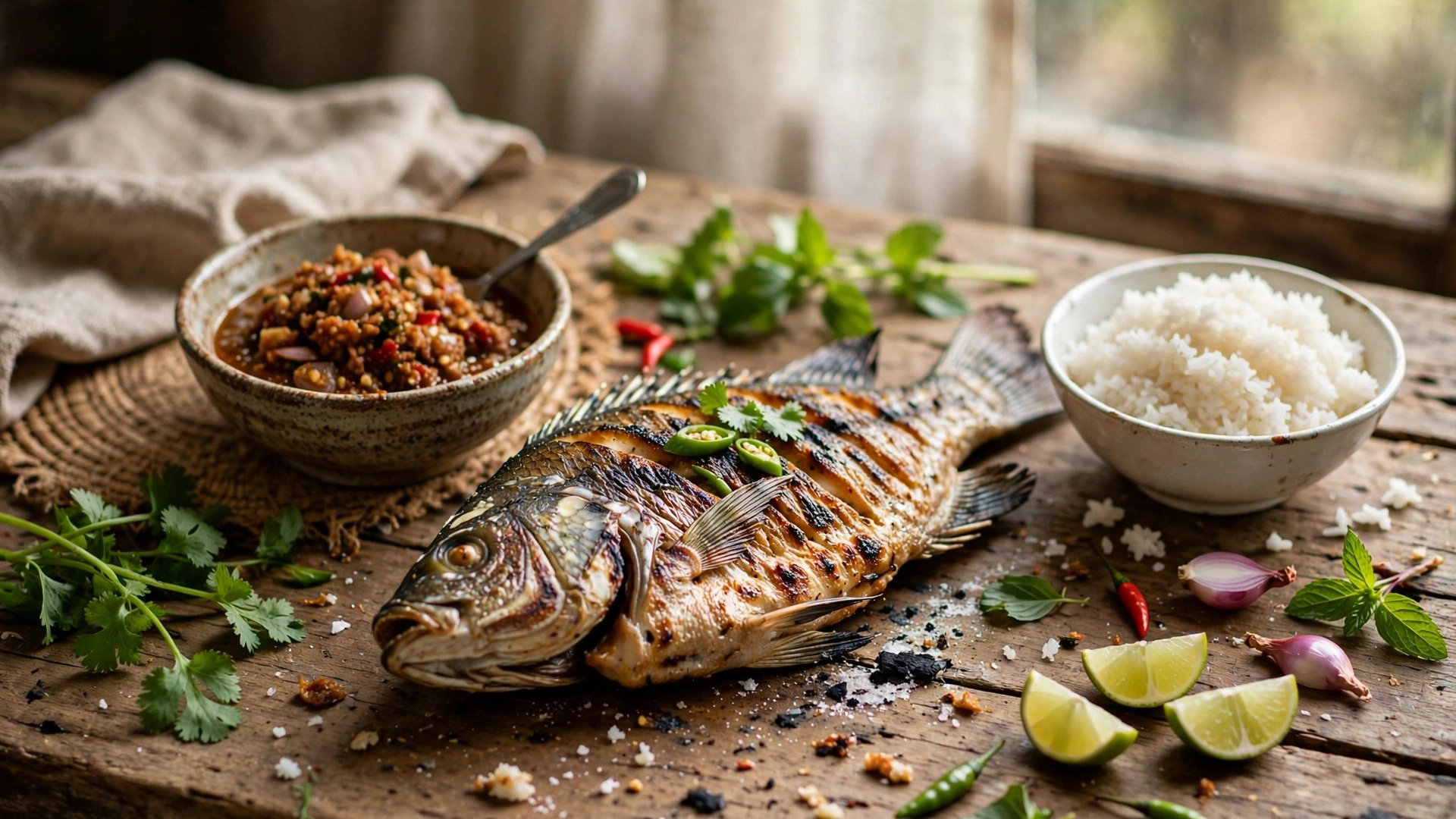
Put the two side by side. In one kitchen, a delicate fish salad arranged on lotus petals. In another, a grilled fish eaten with a fiery chili paste and rice from a clay pot in rural Ratchaburi. You might personally prefer the first. What you cannot honestly do is call the second one less Thai.
Even the category itself is shakier than it looks. M.L. Sirichalerm Svasti, the chef and food scholar known as Chef McDang, has argued that “royal Thai cuisine” may not be a separate class of cooking at all. And each great household kept its own traditions and its own recipes, often built around novel or imported ingredients. If the palaces themselves never agreed on a single canon, which family’s version is supposed to be the one true standard? There is also an uncomfortable possibility hiding in the rush to revive these dishes: perhaps they need reviving precisely because they never entered the mainstream in the first place. Food that a whole country eats every day does not need rescuing.
The written-record argument
The second argument is quieter but just as persistent: real Thai food is the food documented in old written records. Everything else — family recipes passed down by word of mouth, village dishes nobody ever wrote about — is hearsay until proven otherwise.
Historians would flinch at this. Written records are not neutral. In any era, the people who produced documents were the people with education, money, and power, and what they wrote down reflected the lives they lived. A record tells you what its author ate; it does not tell you what a nation ate.
Thai culinary history illustrates this perfectly. One of the country’s earliest and most celebrated cookbook authors was Lady Plian Pasakornwong, wife of a high official in the court of King Rama V, whose recipes were published for the elite households of Bangkok. Her work is genuinely valuable. But in her lifetime, millions of Thai families were cooking dishes that were never written down anywhere — recipes carried in memory, taught at the stove, adjusted by taste. When one of those families says a dish has been made their way for generations, dismissing it because no court publication mentions it says more about the limits of the archive than about the dish.
Oral tradition is not the absence of tradition. For most of human history, it was the only kind there was, and the cooks who had the least power to publish were always the vast majority of the people doing the cooking.
The fusion argument
The third argument is the loudest: fusion is bad. Fusion is contamination. Real Thai food is Thai food untouched by foreign influence.
The problem is that nobody can say where the untouched version lives. Thai cooking has absorbed outside ingredients and ideas for centuries, and some of its most iconic elements arrived from abroad. Chillies, tomatoes, and papayas all came from the Americas, carried across the world by European traders. Before they arrived, Thai cooks built heat with peppercorns instead. Which means red curry — about as classic as a Thai dish gets — was, at the moment of its creation, fusion food.
Food evolves the way language does: constantly, and usually without asking permission. There was a time when Thai kitchens had no carrots, simply because there were no carrots to be had. Now carrots exist and cooks use them. Is that a crime against authenticity, or is it just cooking?
The fusion argument also smuggles in a historical claim it never defends: that Thai cuisine peaked at some golden moment and has been declining ever since. When was that moment? The Sukhothai era? Mid-Ayutthaya? The brief Thonburi interlude? Early Rattanakosin, before the Second World War? Nobody picks a date, because picking one would expose how arbitrary the whole idea is. And it is worth considering that fifty years from now, the era we are busy calling corrupted may be remembered fondly as the good old days.
So what is authenticity, then?
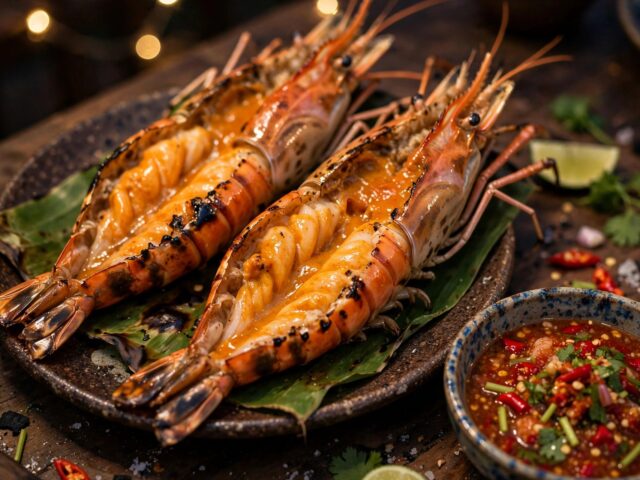
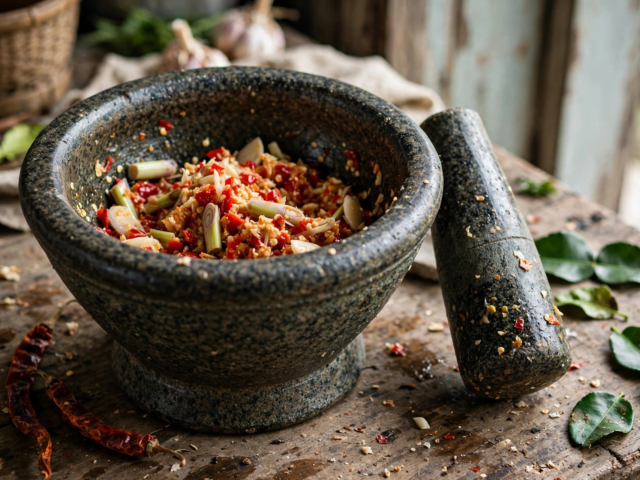
Maybe the mistake is treating authenticity as a property a dish either has or lacks — a stamp of approval granted by palaces, archives, or purists. A more useful way to think about it is in terms of lineage and logic. A dish carries Thai identity when it is cooked within the flavor grammar Thai cooks actually use: the balancing of salty, sour, sweet, and hot; the reliance on aromatics like lemongrass, galangal, and lime leaf; the instinct to season to taste rather than by formula. Dishes that grow out of Thai kitchens, Thai markets, and Thai tables — whether they are a century old or invented last year — are part of the cuisine. Dishes change as they travel, too. The grilled shrimp on a Bangkok street stall and the version adapted in a kitchen overseas are cousins, not original and forgery.
That does not mean anything goes, or that the word means nothing. Sloppy cooking exists. Shortcuts exist. A dish can drift so far from its flavor logic that the name no longer fits. But that is a conversation about whether a specific dish still works — a much more honest conversation than declaring an entire way of eating inauthentic because it was never served in a palace, never made it into a book, or dared to use an ingredient that arrived on a ship.
Thai food has never been a museum piece. It is a living cuisine, cooked daily by millions of people who season it the way their families taught them. That, more than any canon, is what keeps it real.


1 Comment