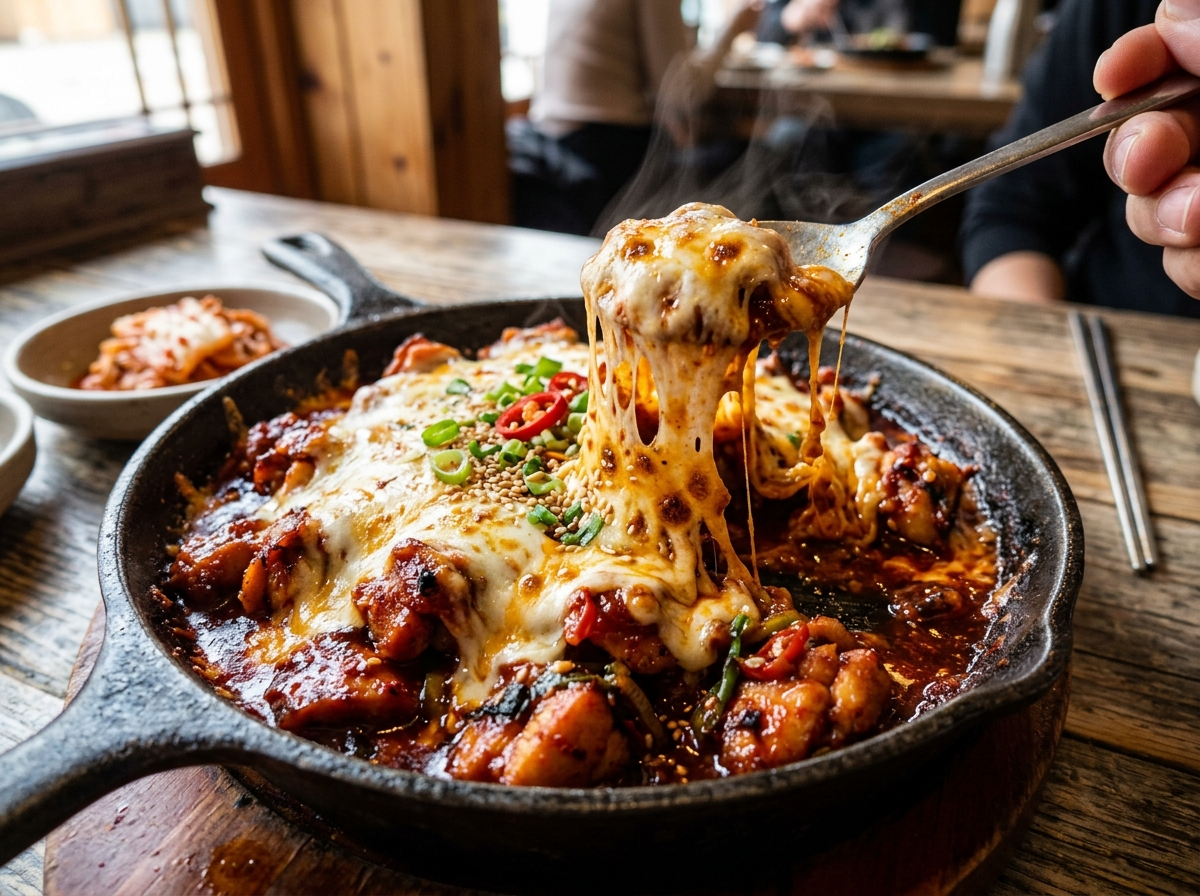
A dish so fiery it literally translates to “fire chicken” — and yet millions of people around the world can’t stop eating it. Korean fire chicken with cheese, known as cheese buldak in South Korea, became a viral street food sensation long before TikTok food videos existed. The concept is almost reckless in how simple it is: drown tender chicken pieces in a blazing gochugaru-gochujang sauce, blanket the whole thing in stretchy melted mozzarella, and let the oven do the rest.
What makes this dish so special isn’t just the heat. It’s the way the creamy, gooey cheese tames that aggressive spice, creating a push-and-pull effect your taste buds genuinely don’t know how to quit. If you’ve ever had the instant ramen version from Samyang and thought “I wish this were the real thing,” you’re about to get exactly what you’ve been looking for.
What Exactly Is Korean Fire Chicken (Buldak)?
Buldak (불닭) breaks down into two Korean words: bul meaning fire, and dak meaning chicken. The dish originated in South Korea during the late 1990s and early 2000s, when intensely spicy food started becoming more popular in Korean dining culture. Street food stalls in Seoul, especially around the Sindang-dong area, began serving this aggressively spiced chicken, and it caught on fast.
The original version didn’t include cheese at all. That came later — a genius addition that turned a pure spice challenge into something more balanced and, honestly, more shareable. Restaurants figured out that laying a thick layer of mozzarella on top of the sauced chicken did two things: it looked spectacular when pulled apart at the table, and it gave people who couldn’t handle extreme heat an actual way to enjoy the dish.
Today, cheese buldak is arguably more popular than the original. You’ll find it on menus at Korean restaurants worldwide, and it’s become one of those dishes people specifically seek out when they’re craving something that hits every note — spicy, savory, sweet, and rich — all at once.
Quick Fact: The Samyang instant noodle brand launched its buldak-flavored ramen in 2012, and it became one of the best-selling spicy instant noodles globally, introducing millions to the flavor profile before they’d ever tried the real dish.
Why This Flavor Combination Works So Well
You might wonder why cheese — something not traditionally Korean — works so perfectly here. There’s actual food science behind it.
Capsaicin, the compound in chili peppers that creates the burning sensation, is fat-soluble. That means fat literally dissolves and neutralizes some of the heat on your tongue. Mozzarella cheese is loaded with fat, so every stretchy, melty bite actively calms the fire while your taste buds are still registering the spice. It’s not just a visual gimmick. The cheese is doing real work.
There’s also the Maillard reaction happening on top. When mozzarella hits high heat in the oven or under a broiler, those golden-brown spots develop — and they carry a nutty, toasted flavor that adds another dimension you don’t get from the sauce alone.
Then there’s texture. The chicken is tender and juicy. The sauce clings to every piece like a glossy, sticky glaze. And the cheese creates a stretchy, gooey blanket that you pull apart at the table. It’s a full sensory experience, not just a meal. That’s what keeps people coming back, and that’s why this dish photographs and videos so well — it’s genuinely dramatic to eat.
Ingredients You’ll Need
Before you start cooking, let’s talk about what goes into an authentic Korean fire chicken with cheese. Most of these ingredients are available at Asian grocery stores, and increasingly at regular supermarkets too.
For the chicken:
You want boneless, skinless chicken thighs. Not breasts. Thighs have more fat, which means they stay juicy and tender even after being bathed in a spicy sauce and baked at high heat. Cut them into bite-sized pieces — roughly one-inch cubes work well.
For the buldak sauce:
This is where the magic happens. You’ll need gochugaru (Korean red pepper flakes), gochujang (Korean red pepper paste), soy sauce, rice wine or mirin, minced garlic, sugar or honey, sesame oil, and a touch of black pepper. Some recipes also add a splash of Korean corn syrup (mulyeot) for extra gloss and stickiness.
If you’ve been exploring Korean cooking, you might already have gochujang in your kitchen from making dishes like gochujang chicken. The same paste is the backbone of buldak sauce, just used more aggressively here.
For the cheese topping:
Mozzarella is the classic choice — specifically the low-moisture, part-skim kind that melts into long, stretchy strings. Some people mix in a bit of cheddar for extra flavor, but mozzarella should be the star.
Optional add-ins:
Sliced green onions, toasted sesame seeds, tteok (Korean rice cakes) for chewiness, and perilla leaves or shiso for a fresh herbal contrast.
Pro Tip: If you can find Korean rice cakes (tteok), add them to the pan with the chicken. They soak up the sauce beautifully and add a chewy texture that makes the dish feel more substantial. Boil them for a minute or two beforehand so they soften up before baking.
How to Make Korean Fire Chicken With Cheese — Step by Step
Let’s walk through the actual cooking process. Don’t worry — this isn’t complicated. If you can stir a sauce and turn on an oven, you can make buldak.
Step 1: Make the Buldak Sauce
Grab a mixing bowl and combine: 3 tablespoons gochugaru, 2 tablespoons gochujang, 2 tablespoons soy sauce, 1 tablespoon rice wine (or mirin), 1 tablespoon honey or sugar, 1 tablespoon sesame oil, 4-5 cloves of minced garlic, and a pinch of black pepper. Whisk it all together until smooth.
Taste the sauce. Yes, it’ll be intense — that’s the point. But you should get spice, sweetness, garlic depth, and a slight nuttiness from the sesame oil all at once. If you want more heat, add an extra tablespoon of gochugaru. If you want less, dial the gochugaru back and add a bit more honey.
Step 2: Marinate the Chicken
Cut about 1.5 pounds of boneless chicken thighs into bite-sized pieces. Toss them into the sauce and mix until every piece is coated. You can marinate for as little as 15 minutes if you’re short on time, but 30 minutes to 2 hours gives you noticeably better flavor penetration.
Cover the bowl and keep it in the fridge while it marinates. If you’re going beyond 2 hours, that’s fine too — overnight marination works and produces even deeper flavor.
Step 3: Cook the Chicken
You have two options here, and both work great.
Skillet method: Heat a large oven-safe skillet over medium-high heat. Add a drizzle of cooking oil and cook the marinated chicken pieces for about 5-6 minutes, stirring occasionally, until they’re mostly cooked through and the sauce starts caramelizing. You want some of that sticky, slightly charred quality on the chicken — it adds huge flavor.
Direct baking method: If you don’t want to use a skillet first, spread the marinated chicken in an even layer in a baking dish and bake at 425°F (220°C) for about 15-18 minutes. You’ll lose some of that caramelized texture, but the result is still very good.
Step 4: Add the Cheese and Bake
This is the moment everything comes together. Take your cooked chicken — either in the skillet or the baking dish — and pile on a generous layer of shredded mozzarella. Don’t be shy. You want at least 2 cups, maybe more. The cheese should cover the chicken almost completely.
Slide the pan into the oven (still at 425°F) or switch to your broiler on high. You’re looking for the cheese to melt completely, turn bubbly, and develop golden-brown spots on top. This usually takes about 5-7 minutes under the broiler, or 8-10 minutes in the oven.
Warning: If you’re using the broiler, don’t walk away. The difference between perfectly golden cheese and burnt cheese is about 60 seconds. Stay close and watch it.
Step 5: Garnish and Serve
Pull the pan out and immediately scatter sliced green onions and toasted sesame seeds over the top. The green onions add freshness and a slight bite that cuts through the richness, and the sesame seeds give a subtle crunch.
Serve the buldak straight from the pan — it’s meant to be shared, pulled apart, and eaten family-style. A bowl of steamed white rice on the side is non-negotiable. The plain rice absorbs the sauce and cheese, balancing out the heat and making every bite more manageable.
Getting the Spice Level Right
Here’s a real concern most people have: “Will this blow my head off?”
Authentic buldak is genuinely spicy. Restaurant versions in Korea are often served at levels that make even spice-loving diners sweat. But you’re making this at home, which means you have complete control.
The heat in buldak comes from two sources: gochugaru (the flakes) and gochujang (the paste). Gochugaru actually ranges from mild to hot depending on the brand, so check the label. Korean brands often label their gochugaru as “mild,” “medium,” or “hot.” For your first attempt, go with medium gochugaru and the amounts listed above. You can always add more heat next time.
If you’re cooking for someone who really can’t handle much spice, here’s a practical adjustment: cut the gochugaru in half and increase the honey or sugar slightly. The dish will still taste recognizably like buldak — it just won’t make you question your life choices.
On the other end of the spectrum, if you want restaurant-level heat, add a tablespoon of Korean cheongyang gochu (a hotter Korean chili pepper) or a few dashes of your favorite hot sauce. Some people even throw in a few sliced fresh Thai chilies on top before adding the cheese.
Did You Know? The Scoville rating of gochugaru typically falls between 1,500 and 10,000 SHU, which makes it milder than a jalapeño on paper. The intensity of buldak comes from the sheer quantity of gochugaru used and the concentrated cooking method — not from an extremely hot pepper.
Variations Worth Trying
Once you’ve mastered the basic cheese buldak, there are some popular variations that keep things interesting.
Buldak With Rice Cakes (Tteokbuldak)
Adding Korean rice cakes to the pan transforms this from a chicken dish into something closer to a complete meal. The rice cakes absorb the sauce, swell up slightly, and develop this incredible chewy texture that contrasts beautifully with the tender chicken and melted cheese. Boil the rice cakes for 1-2 minutes before adding them to the pan so they’re soft enough to eat.
If you love Korean flavors and want to explore more Korean dishes that pair well with rice, you might also enjoy making Korean kimchi dumplings (mandu) as a side or appetizer alongside your buldak.
Buldak With Ramen Noodles
This is basically the homemade version of those viral Samyang noodles, except dramatically better because you’re using real chicken and fresh cheese. Cook instant ramen noodles (just the noodles, discard the seasoning packet) and toss them into the pan with the sauced chicken before adding the cheese layer. Bake as usual. The noodles soak up the sauce and crisp up slightly around the edges — absolutely addictive.
Seafood Buldak
Swap the chicken for shrimp, squid, or a combination of both. Seafood cooks faster, so adjust your timing — the shrimp only needs about 3-4 minutes in the skillet before you add the cheese. If you’re curious about cooking shrimp properly, knowing how to tell when shrimp is cooked is a useful skill that applies here too.
Low-Carb/Keto Buldak
Skip the rice cakes and noodles, serve the cheese buldak over cauliflower rice, and use a sugar-free sweetener instead of honey in the sauce. The dish itself is already fairly keto-friendly — chicken thighs and mozzarella are both high-fat, moderate-protein foods.
What to Serve With Korean Fire Chicken
Buldak is rich, spicy, and intense. Your side dishes should balance that energy, not compete with it.
Steamed white rice is the obvious first choice. Short-grain Korean or Japanese rice works best because it’s sticky enough to pick up sauce and cheese. If you’re not sure about the best way to handle rice, this guide on storing cooked rice in the fridge can help you meal prep and avoid waste.
Pickled radish (danmuji) — those bright yellow pickled radish slices you get at Korean restaurants — is perfect here. The tangy crunch cuts through the richness of the cheese and the heat of the sauce. You can find them pre-made at any Korean grocery store.
Korean-style greens add a fresh, lighter element to the plate. A simple side of Korean style bok choy sautéed with garlic and sesame oil brings a mild, slightly bitter flavor that pairs beautifully with spicy dishes.
Ssam (lettuce wraps) — grab some butter lettuce or perilla leaves, scoop in some chicken and cheese, add a dab of ssam sauce, and wrap it up. This is how a lot of Koreans actually eat buldak at home, and it’s a completely different experience from eating it with rice.
A cold beer, specifically a Korean lager like Cass or Hite, is the traditional drink pairing. The carbonation and cold temperature soothe the burn, and the light flavor doesn’t overpower the food. Soju works too, if you’re feeling brave enough to add alcohol to the fire.
Common Mistakes People Make
I’ve seen a lot of home cooks try buldak and end up disappointed. Here are the most common pitfalls and how to avoid them.
Using chicken breast instead of thighs. Breast meat dries out fast under high heat, especially when it’s cut into small pieces. Thighs stay juicy because they have more intramuscular fat. This isn’t the place to worry about lean protein — the dish is supposed to be rich and indulgent.
Not enough cheese. If you can still see most of the chicken after adding the cheese, you haven’t added enough. The cheese layer should be thick — almost like a pizza coverage. It needs to melt into a continuous, stretchy blanket, and that requires volume.
Burning the sauce in the skillet. Gochujang has sugar in it, and sugar burns quickly over high heat. Keep the skillet at medium-high, not maximum. Stir frequently. You want caramelization, not charcoal.
Skipping the garlic. Some quick recipes call for just a clove or two. That’s not enough. Korean cooking uses garlic generously, and buldak specifically relies on that raw garlic punch in the marinade. Four to five cloves minimum for 1.5 pounds of chicken.
Serving without rice. This might sound like a personal preference, but eating buldak without rice is genuinely harder on your palate and your stomach. The starch absorbs some of the capsaicin oil, and it gives your mouth a break between bites of fire.
How to Store and Reheat Leftovers
If you somehow have leftovers (unlikely, but it happens), here’s how to handle them.
Transfer the chicken and cheese to an airtight container and refrigerate. It’ll keep for 3-4 days. The cheese will solidify in the fridge, but that’s totally normal.
To reheat, your best option is the oven or a toaster oven at 350°F for about 10-12 minutes. The cheese will re-melt and the chicken will warm through without drying out. You can also add a little extra shredded mozzarella on top before reheating for a fresh cheese pull.
The microwave works in a pinch, but the cheese texture won’t be the same — it’ll be more rubbery than stretchy. If you go the microwave route, cover the dish with a damp paper towel to help retain moisture, and heat in 30-second intervals.
Pro Tip: Leftover buldak makes an incredible filling for quesadillas or grilled cheese sandwiches the next day. The sauce and cheese are already there — just add it between two tortillas or bread slices and press it on a hot pan. Fusion at its laziest and most delicious.
Building a Korean-Inspired Meal Around Buldak
If you want to turn buldak night into a full Korean dinner spread, here’s a meal plan that works really well together.
Start with Korean kimchi dumplings (mandu) as an appetizer — pan-fried until crispy on the bottom, served with a soy-vinegar dipping sauce. The tangy, savory dumplings set the stage for the spicy main event.
For the main course, bring out the cheese buldak with a big pot of steamed rice. Alongside it, serve Korean style bok choy and a simple cucumber salad dressed with rice vinegar, sesame oil, and a sprinkle of sesame seeds.
If you want a second protein — maybe you’ve got guests with different spice tolerances — Korean short ribs (kalbi) are a perfect complement. They’re sweet, savory, and smoky, offering a completely different flavor profile from the buldak without clashing.
Finish with something cold and light. Korean shaved ice (bingsu) is traditional, but even a simple scoop of vanilla ice cream works — the cold dairy soothes any lingering spice and provides a clean, sweet ending.
FAQ
Is Korean fire chicken with cheese actually from Korea?
Yes. Buldak originated in South Korea during the late 1990s and early 2000s, primarily as street food in Seoul. The cheese-topped version gained popularity in the mid-2000s as Korean restaurants started experimenting with cheese-based dishes. It’s a genuinely Korean creation, not a Western adaptation.
How spicy is cheese buldak compared to other spicy dishes?
Authentic buldak is quite spicy — comparable to eating a dish made primarily with cayenne pepper. On a heat scale, it usually falls somewhere between a spicy buffalo wing and a Thai green curry made with heavy chili. The cheese significantly reduces the perceived heat, which is exactly why it was added in the first place. You can always adjust the gochugaru amount to match your tolerance.
Can I make Korean fire chicken without gochujang?
You can, but the flavor won’t be the same. Gochujang provides a fermented, slightly sweet depth that you can’t replicate with regular chili paste or hot sauce. If you absolutely can’t find gochujang, a combination of red miso paste, cayenne pepper, and a bit of sugar comes closest — but I’d strongly recommend ordering gochujang online rather than substituting. It’s the soul of the dish.
What type of cheese is best for buldak?
Low-moisture mozzarella is the standard choice because it melts into long, stretchy strings without releasing too much liquid. Avoid fresh mozzarella — it has too much water and will make the dish soggy. Some Korean restaurants use a blend of mozzarella and a mild cheddar for extra flavor, and that works well at home too.
Can I make this dish on the grill instead of in the oven?
Absolutely. Thread the marinated chicken onto skewers, grill over medium-high heat until charred and cooked through, then transfer everything to a cast-iron skillet or aluminum foil tray. Add the cheese on top and close the grill lid for 3-4 minutes until the cheese melts. You’ll get smoky flavor that the oven version doesn’t have, which is honestly fantastic.
Your Next Move
Korean fire chicken with cheese is one of those rare dishes that sounds extreme but actually comes together easily in a home kitchen. You don’t need special equipment. You don’t need culinary training. You need chicken thighs, a good gochujang, a pile of mozzarella, and about 45 minutes.
Start with a moderate spice level your first time, nail the cheese coverage, and don’t forget the rice. Once you’ve made it once, you’ll understand why this dish went from a Seoul street food stall to dinner tables across the world — it earns every bit of that obsession.
So pick up some gochugaru this week, clear your evening, and make something that’ll have everyone at the table reaching, pulling cheese strings, and going back for just one more bite. That’s the buldak experience. And once you’re in, you’re in for good.