You grabbed a bag of frozen mussels without shells from the store. They looked like a great deal — affordable, already cleaned, no fuss. Then you got home, stared at the bag, and thought… “Now what?” That’s the exact situation most people find themselves in. They seem like a good idea in the shop — tasty, big bag, not too expensive — but then there’s no cooking inspiration on the packet and they just sit in the freezer.
You’re not alone. Thousands of home cooks search for help with frozen shelled mussels every single day. And honestly? Cooking them is way easier than you think. You just need to know a few things — how to thaw them, what cooking methods work best, and how to avoid that dreaded rubbery texture nobody wants on their plate.
That’s exactly what we’ll cover here. No complicated chef techniques. Just real, practical stuff you can use tonight.
What Exactly Are Frozen Mussels Without Shells?
Let’s get clear on what you’re working with. Frozen mussels without shells (sometimes called “shelled mussel meat” or “frozen peeled mussels”) are exactly what they sound like — mussel meat that’s been removed from the shell, cleaned, and flash-frozen.
Most frozen mussel meat (without shells) sold in supermarkets is already pre-cooked or blanched, which makes them incredibly fast to prepare. Always check the packaging — if they are pre-cooked, you only need to heat them through.
This is a big deal, and a lot of people miss it. If your bag says “pre-cooked” or “blanched,” you’re really just reheating, not cooking from raw. That changes everything — from timing to technique.
Quick Fact: Frozen mussels are a convenient and budget-friendly option for seafood lovers. Many people are deterred from purchasing them because of the hassle of removing shells before cooking. Cooking frozen mussels without shells saves time and effort and has numerous benefits.
Why Choose Frozen Over Fresh?
This is one of the biggest questions people have, and it’s a fair one. Fresh mussels sound more appealing, right? But frozen shelled mussels actually come with some real advantages.
They’re budget-friendly. Frozen mussels are often more affordable than their fresh counterparts, making it easier to include them in your regular meal rotation without breaking the bank.
They’re pre-cleaned. Frozen mussels are pre-cleaned and ready to cook, saving you valuable time in the kitchen. No debearding. No scrubbing. No tapping shells to check if they’re alive. You open the bag, and you’re ready to go.
They’re just as nutritious. Both fresh and frozen mussels are rich in protein, omega-3 fatty acids, vitamins, and minerals. Nutritionally, they offer similar benefits. The freezing process helps preserve these nutrients. So you’re not sacrificing health benefits for the sake of convenience.
And here’s something that might surprise you — frozen mussels are as healthy as their fresh counterparts.
The Nutritional Side of Things
Mussels don’t get the attention they deserve in the health department. People talk about salmon and tuna all the time, but mussels are quietly one of the most nutrient-dense seafood options you can eat.
Frozen mussels are a nutrient-rich seafood packed with protein, promoting muscle health and tissue repair. They are also a good source of omega-3 fatty acids, which support heart health by lowering cholesterol levels and reducing inflammation.
Your skin, cartilage, muscles, immune system and metabolism all rely on protein to function. Eating 100 grams (3.5 ounces) of mussels provides about 24 grams of protein — more than a third of the recommended daily allowance.
Beyond protein, mussels deliver iron (supports red blood cell production), vitamin B12 (essential for nerve health and energy metabolism), selenium (aids in immune function and antioxidant protection), and zinc (boosts immunity and supports wound healing).
Looking at the actual numbers, a 3oz serving (85g) of frozen blue mussels contains approximately 80 calories, 2g total fat, 16g protein, 50mg cholesterol, 125mg sodium, and 20% of your daily iron needs. That’s a lot of nutrition for very few calories.
Did You Know? Mussels are rich in omega-3 fatty acids, which help reduce inflammation, lower blood pressure, and promote overall heart health. If you’re looking for a heart-healthy protein that won’t load you up with calories, mussels are hard to beat.
One thing to watch out for, though — high sodium content in some frozen mussels, particularly if they are pre-seasoned or marinated, can contribute to hypertension and increased cardiovascular risks. Always check the label if you’re watching your salt intake.
How to Thaw Frozen Mussels Without Shells
Here’s where people make their first mistake. They either skip thawing entirely or do it wrong, and then wonder why the texture is off. The most important step is thawing the frozen mussels properly. Once you defrost them correctly, the remaining steps are easy.
Refrigerator Thawing (Best Method)
You need to thaw the frozen mussel meat gradually. Refrigerating your frozen mussels overnight is highly recommended. The meat can gradually adapt to the temperature change without any shock. Simply transfer the frozen peeled mussels to a bowl and put it in your refrigerator overnight.
This is the gold standard. It’s slow, it’s gentle, and it gives you the best texture every time.
Cold Water Thawing (Faster Option)
Short on time? Place the sealed bag of mussels in a bowl of cold water. Change the water every 30 minutes. Most bags will thaw in about an hour this way. Don’t use warm or hot water — that pushes the mussels into the temperature danger zone where bacteria grow fast.
Can You Cook Them Straight From Frozen?
Yes, you can — especially if they’re pre-cooked. Typical advice for freezing mussels is to cook them and freeze the meat covered by liquid, or blanch them in boiling water. Then, you can cook them from frozen or gently thaw. But for the best results, thawing first gives you more control over the final texture.
⚠️ Warning: Bacteria grow rapidly at temperatures between 40°F and 140°F; cooked mussels should be discarded if left for more than 2 hours at room temperature. Never thaw mussels on the counter for hours. That’s a food safety risk you don’t want to take.
How to Cook Frozen Mussels Without Shells — 5 Methods
Now for the fun part. Once your mussels are thawed (or even if you’re cooking straight from frozen), you’ve got plenty of options. Let’s walk through each one.
1. Sautéing with Garlic Butter
This is probably the most popular method, and for good reason. It’s quick, flavorful, and works perfectly with shelled mussel meat.
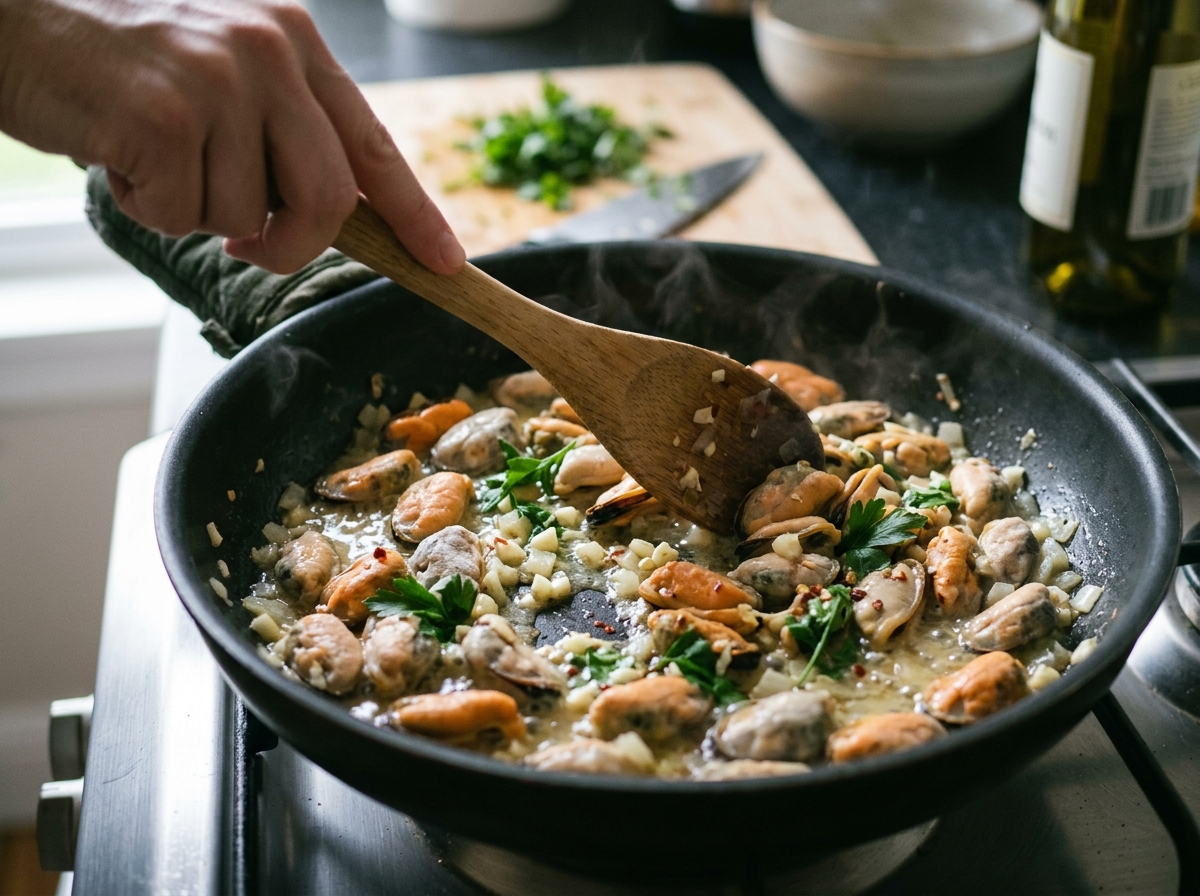
Melt a generous knob of butter in a skillet over medium heat. Add minced garlic — three or four cloves work great — and cook for about 30 seconds until fragrant. Toss in your thawed mussels and sauté for 3–4 minutes. If they’re pre-cooked, you really just need to heat them through and let them soak up that garlicky butter.
Finish with a squeeze of fresh lemon, some chopped parsley, and a pinch of red pepper flakes if you like a little heat.
Pro Tip: Don’t crowd the pan. If you dump too many mussels in at once, they’ll steam instead of sauté, and you’ll lose that nice golden color. Work in batches if needed.
2. Simmering in a Sauce
This is where frozen mussels without shells really shine. Since the meat is already exposed (no shell protecting it), it absorbs sauces like a sponge.
A simple white wine sauce works beautifully. Choose a dry, crisp white wine with good acidity. Pinot Grigio, Sauvignon Blanc, or a dry Muscadet are excellent choices. Avoid sweet wines like Moscato, as they’ll make the cream sauce too sugary.
Don’t drink wine? No problem. You can replace the wine with 250ml of chicken or vegetable stock and a squeeze of half a lemon. This provides the necessary liquid and acidity without the alcohol content.
Simmer the mussels in your chosen sauce for about 5–7 minutes. That’s it.
3. Adding to Pasta
Frozen shelled mussels are a natural fit for pasta dishes. Cook your pasta (linguine and angel hair work particularly well), and while it’s boiling, build a quick sauce in a separate pan.
Sauté shallots, add white wine or broth, stir in a splash of cream, then toss in the mussels for the last few minutes. Drain your pasta, combine everything, and you’ve got a restaurant-quality meal in about 20 minutes. If you enjoy Asian-inspired noodle dishes too, you might also like bami goreng for a different twist on stir-fried noodles.
4. Baking in the Oven
If you want something a little different, baking is a great route. Boil the mussels for three minutes in water with peppercorns. Then, lay them on a baking sheet and brush sauce over them. Sprinkle some grated cheese on top to boost the flavor. Bake the mussels marinated with the sauce for about 25 minutes at 200 degrees (Celsius/around 400°F).
This method gives you a slightly crispy, cheesy top with tender mussel meat underneath. It’s great as an appetizer when you have people over.
5. Tossing into Soups and Stews
Some recipes, such as stew and soup, call for mussels without shells. And this is where shelled frozen mussels really earn their keep.
Drop them into a seafood chowder, a spicy tomato-based stew, or even a pho-style broth during the last 5 minutes of cooking. They’ll heat through quickly and add a beautiful briny flavor to your bowl.
You can even add them to Asian-style dishes — think coconut curry soups or miso-based broths. If you love bold Asian flavors, try pairing your mussels with a side of gochujang chicken for a full-flavored meal.
The Biggest Mistake People Make: Overcooking
If there’s one thing you take away from this article, let it be this: don’t overcook your mussels.
Cooked mussels should be plump and moist. If overcooked, they can become tough and rubbery. And since most frozen shelled mussels are already pre-cooked, they need very little time on heat.
Mussels become rubbery when they are overcooked. Because frozen mussels are usually already cooked, they only need a few minutes of gentle heat.
Think of it like reheating leftover steak — you wouldn’t blast it on high heat for 15 minutes. Same principle applies here. Low-to-medium heat, just enough time to warm them through, and you’re good.
Pro Tip: Set a timer. Seriously. Three to five minutes of sautéing or simmering is all you need for pre-cooked mussels. Walk away from the stove for too long, and you’ll end up with something resembling a pencil eraser.
How to Pick Good Frozen Mussels at the Store
Not all frozen mussel meat is created equal. Here’s what to look for when you’re standing in the freezer aisle:
Always opt for high-quality mussels that have been flash-frozen at peak freshness — this ensures maximum flavor and texture when cooked.
The package should be sealed tightly with no signs of damage. Ensure the package is free of ice crystals or frost, which can suggest they have been stored for too long.
Consider the origin of the mussels. It’s best to choose sustainably sourced mussels from reputable brands or suppliers, which not only ensures ethical practices but also guarantees the best quality product.
Look for brands that list the country of origin — common sources include Chile, New Zealand, and Prince Edward Island (PEI) in Canada. These regions are known for producing high-quality, sustainably farmed mussels.
How to Store Frozen Mussels (And How Long They Last)
You bought in bulk. Smart move. But how long can you actually keep them in the freezer?
Properly stored, frozen mussels will maintain best quality for about 12 months in the freezer, although they will usually remain safe to eat after that.
Commercially frozen mussels typically carry a “Best By” or “Best Before” date, but this is not a safety date — it’s the manufacturer’s estimate of how long the frozen mussels will remain at peak quality.
Frozen mussels that have been kept constantly frozen at 0°F will keep safe indefinitely, as long as they have been stored properly and the package is not damaged.
Once you’ve opened the bag, store them in their original packaging in the freezer. After opening, place them in an airtight container or freezer bag and use within 3–4 months for optimal quality.
After thawing and cooking, cooked mussels can last up to 3 to 4 days in the refrigerator. Just make sure you store them in a sealed container and keep your fridge below 40°F.
If you’re curious about proper seafood storage in general, our guide on how long cooked shrimp lasts and keeping shrimp fresh in the fridge covers similar food safety ground.
Shell-On vs. Shell-Off: Which Is Better?
This debate comes up constantly. Cooking mussels with or without their shell has pros and cons — it depends on your preference and the recipe. The shell can protect delicate meat from drying out and overcooking, and it adds flavor while keeping the meat moist. Some people even use the shell to decorate their dishes.
On the other hand, cooking peeled mussels is easier and faster. You don’t have to waste time removing the shell. And some recipes, such as stew and soup, specifically call for mussels without shells.
So there’s no single right answer. Hosting a dinner party where presentation matters? Shells look beautiful. Making a quick weeknight pasta or tossing mussels into a curry? Shell-off is the way to go.
Flavor Pairings That Work Perfectly
Mussel meat has a naturally sweet, briny flavor that pairs well with a wide range of ingredients. Here are some combinations worth trying:
- Garlic + butter + white wine — The classic. You can’t go wrong here.
- Tomatoes + chili flakes + fresh basil — Mediterranean vibes, perfect for pasta.
- Coconut milk + lemongrass + ginger — Thai-inspired, rich and comforting.
- Soy sauce + sesame oil + scallions — Quick Asian stir-fry style.
- Cream + Dijon mustard + tarragon — French bistro flavor at home.
If you enjoy experimenting with Asian sauces and seasonings, you might want to try cooking mussels with Chinese cooking wine for a different depth of flavor. Or, pair your mussel dish with a side of Korean-style bok choy for a complete, balanced plate.
FAQ
Are frozen mussels without shells already cooked?
Most frozen mussel meat sold in supermarkets is already pre-cooked or blanched, making them incredibly fast to prepare. Always check the packaging — if they are pre-cooked, you only need to heat them through. Some brands do sell raw frozen mussel meat, so always read the label before cooking.
How long do frozen mussels last in the freezer?
The precise answer depends on storage conditions — keep mussels frozen at all times. Properly stored, frozen mussels will maintain best quality for about 12 months in the freezer, although they will usually remain safe to eat after that. Frozen mussels kept constantly frozen at 0°F will keep safe indefinitely, as long as they have been stored properly and the package is not damaged.
Can I cook frozen mussels without thawing them first?
Yes. Typical advice is to cook mussels and freeze the meat covered by liquid, or blanch them. Then, you can cook them from frozen or gently thaw. Thawing first gives you better control over texture, but cooking from frozen works fine — especially when adding them to soups, stews, or simmering sauces.
How do I know when mussels are done cooking?
Cooked mussels should be plump and moist. The flesh should be slightly opaque or white in appearance. If it’s grey, discolored, or has an unpleasant smell, it could be a sign that they are spoiled. For pre-cooked frozen mussels, 3–5 minutes of gentle heating is typically enough.
Are frozen mussels as nutritious as fresh?
Both fresh and frozen mussels are rich in protein, omega-3 fatty acids, vitamins, and minerals. Nutritionally, they offer similar benefits. The freezing process helps preserve these nutrients.
Your Next Step
Frozen mussels without shells are one of the most underrated items in the freezer aisle. They’re affordable, packed with protein and omega-3s, and take just minutes to cook. The only real trick is treating them gently — thaw them properly, don’t blast them with high heat, and pair them with flavors that let their natural sweetness come through.
Next time you spot that bag in the store, grab it with confidence. You now know exactly what to do with it. And if you’re building a full seafood night at home, check out our guides on how to tell when shrimp is cooked and the best temperature to grill shrimp to round things out.
Your freezer just became a lot more interesting.