A bowl of leftover rice can fool you. On day five, it may still look white, fluffy, and harmless. But cooked rice can make you sick faster than many people expect because some bacteria survive cooking and grow if the rice sits out too long. The short answer to how long does cooked rice last in the fridge is 3 to 4 days—if you cooled it quickly and stored it the right way.
How long does cooked rice last in the fridge?
If you want the simple answer, here it is: cooked rice lasts 3 to 4 days in the fridge.
That timing lines up with general leftover food safety advice from the USDA. The rule works best if your rice went into the fridge within 2 hours of cooking and your fridge stays at 40°F (4°C) or below.
So if you cooked rice on Monday night and chilled it properly, you should plan to eat it by Thursday or Friday at the latest. After that, it’s not worth the gamble.
Quick Facts
- Fridge life: 3 to 4 days
- Room temp limit: 2 hours
- Hot weather limit: 1 hour if it’s above 90°F (32°C)
- Best freezer quality: 1 to 2 months
A lot of people ask, “Can I eat cooked rice after 5 days?” My honest answer? I wouldn’t push it. Rice is cheap. Food poisoning isn’t.
There’s one big catch here. That 3 to 4 day window only applies if you handled the rice safely from the start. If it sat on the counter all afternoon, or you forgot it in the rice cooker overnight, the fridge doesn’t magically make it safe again.
Warning: If cooked rice has been sitting out for hours, don’t taste-test it. One bite is enough to ruin your day.
Why leftover rice can turn risky fast
What makes rice different?
Rice has a reputation for being simple and safe. It feels like the most harmless thing in the kitchen, right? But cooked rice has a well-known food safety issue tied to Bacillus cereus, a bacterium found in soil and common on grains like rice.
Here’s the part that surprises people: the spores can survive cooking.
So even if your rice was boiled, steamed, or cooked in a rice cooker, that doesn’t always kill every problem. Once the rice cools down and sits in the danger zone—between 40°F and 140°F or 4°C to 60°C—those spores can grow into bacteria and produce toxins.
That’s why leftover rice gets special attention from food safety experts and the CDC.
Did you know? Rice food poisoning often starts after cooking, not before. The trouble usually comes from how long the rice sat out, not whether it was fully cooked.
Why rice may look fine but still be unsafe
This is where people get tripped up. Spoiled milk usually smells bad. Moldy bread shows obvious spots. Rice doesn’t always give you a dramatic warning.
Cooked rice can still look normal even if it’s no longer safe to eat. That’s one reason people get sick from “perfectly fine” leftovers.
Reheating doesn’t always solve the problem either. If bacteria already made toxins while the rice sat out too long, high heat may kill some bacteria, but it may not remove all the toxins.
That’s the real reason food safety advice sounds strict with rice. It’s not because rice is fragile. It’s because the risk can hide in plain sight.
What rice food poisoning feels like
Symptoms from bad rice can include vomiting, nausea, stomach cramps, and diarrhea. Sometimes they show up fast, even within a few hours.
That said, not every stomach ache is from rice, and not every case feels the same.
Medical note: This article shares general food safety guidance, not personal medical advice. If symptoms are severe, you’re dehydrated, or a child, older adult, pregnant person, or someone with a weak immune system gets sick, contact a healthcare professional.
How to store cooked rice the right way
Safe rice storage isn’t hard. You just need to move a little faster than most people do.
Cool it fast, not all afternoon
A common kitchen habit goes like this: cook rice, eat dinner, leave the pot on the stove, and deal with it later. That’s the mistake.
Instead, do this:
- Move the rice out of the hot pot once you’re done eating.
- Divide it into shallow containers so it cools faster.
- Refrigerate within 2 hours of cooking.
- Label the date if you meal prep often.
- Only keep what you’ll eat within 3 to 4 days. Freeze the rest.
If the room is very warm, or it’s a hot summer day, cut that counter time even shorter. Food safety guidance drops the limit to 1 hour if temperatures are above 90°F (32°C).
A lot of people also ask if rice needs to cool completely before going in the fridge. It doesn’t. In fact, waiting too long is the bigger problem. Slightly warm rice in shallow containers is fine.
Best containers and fridge setup
Use an airtight container or a tightly covered shallow dish. A wide, shallow container cools faster than a deep bowl packed to the top.
Try not to leave rice in the cooking pot with the lid on. That big mass cools slowly, which gives bacteria more time to grow.
Your fridge matters too. If it runs warm, your leftovers don’t get the full 3 to 4 day safety window you’re counting on. Keep your refrigerator at 40°F (4°C) or colder. A cheap fridge thermometer can help if you’re not sure.
Here’s a simple real-life example.
You cook a big batch of jasmine rice for dinner at 7 p.m. You finish eating around 7:45. Good move? Spoon the leftovers into two shallow containers and refrigerate them by 8:30 or 9 p.m. Bad move? Leave the whole pot on the counter until midnight.
The rice may look the same the next morning. From a food safety view, it isn’t.
A small habit that saves a lot of guessing
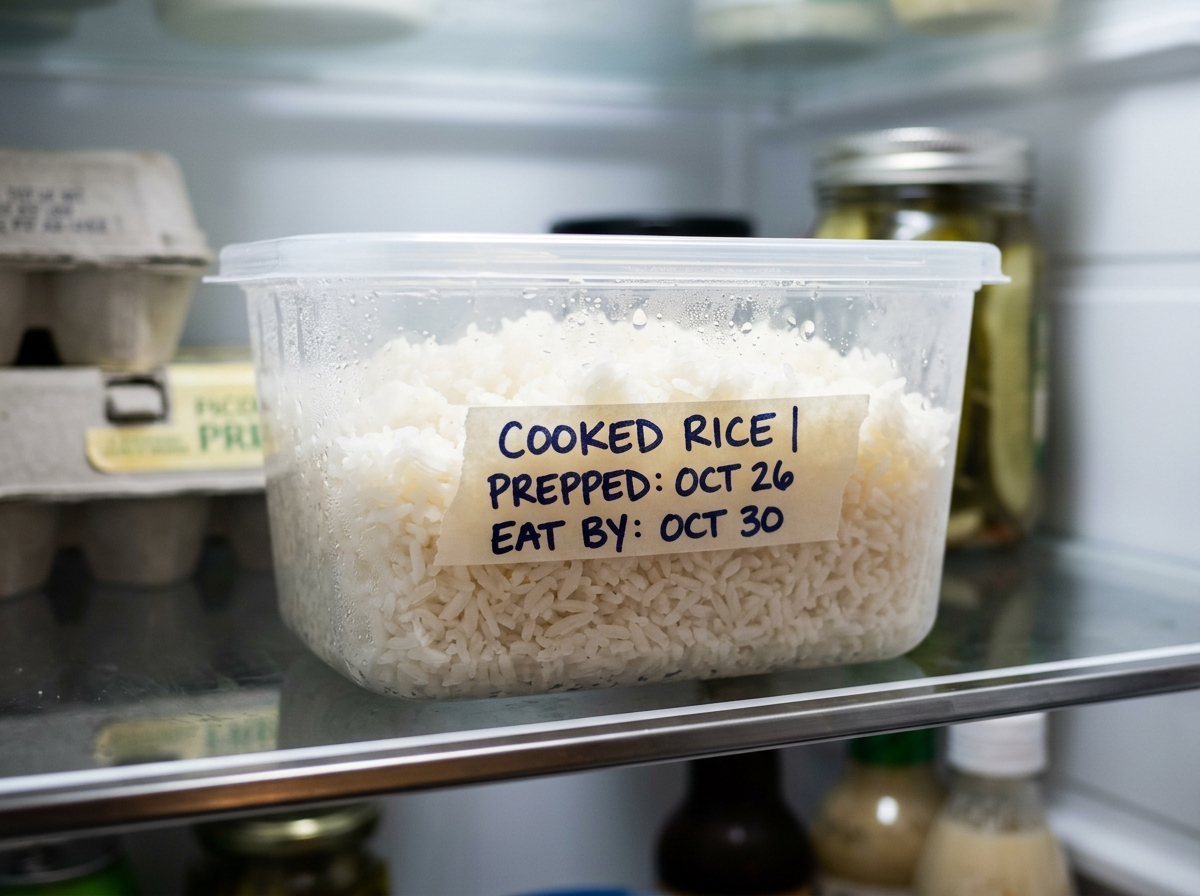
Write the date on the container. That tiny step solves the classic fridge question: “Did I make this Tuesday or Wednesday?”
If you can’t remember when you cooked it, don’t try to play detective. Toss it.
How to tell if cooked rice has gone bad
Sometimes rice clearly tells you it’s done. Other times, you need to trust the calendar more than your senses.
Here are the most common signs that cooked rice has gone bad:
- A sour, funky, or stale smell
- A slimy or sticky coating
- Discoloration or odd spots
- Mold, even a tiny patch
- The rice has been in the fridge longer than 4 days
That last one matters more than people think. Time alone can make rice unsafe, even before it gets moldy.
There’s also a small texture point worth knowing. Dry or hard rice isn’t always spoiled. Sometimes it just dried out in the fridge because the container wasn’t sealed well. That’s a quality problem. Sliminess is the bigger red flag.
Another common question is whether you can smell bad rice. Sometimes yes. Sometimes no. That’s why smell isn’t a reliable safety test by itself.
If your rice seems questionable, ask yourself three things:
- How long has it been in the fridge?
- Did I chill it within 2 hours?
- Does it feel or smell off?
If one answer makes you uneasy, skip it.
Pro Tip: Don’t taste rice “just to check.” Food safety isn’t like checking soup for salt. If the rice is bad, a small bite can still make you sick.
Can you reheat cooked rice safely?
Yes, you can reheat cooked rice safely if you stored it properly in the first place.
The goal is simple: get it steaming hot all the way through and only reheat the amount you plan to eat.
Reheating rice in the microwave
The microwave is the easiest method for most people.
Put the rice in a microwave-safe bowl, sprinkle in a little water, and cover it loosely. The added moisture helps bring back the soft texture. Heat it until it’s hot and steaming, then fluff it with a fork.
Cold clumps in the center are a bad sign, so stir once halfway through if you’re reheating a big portion.
Reheating rice on the stove or in a steamer
If you want better texture, the stovetop works really well.
Add the rice to a pan with a splash of water, cover it, and warm it over low heat until it’s steaming. A steamer also does a nice job, especially for short-grain or sticky rice.
This method feels a bit slower, but it can save rice that turned dry in the fridge.
Does reheating reset the clock?
No. That’s a big misconception.
Let’s say your rice is already 3 days old. Reheating it doesn’t make it “new” again or buy you another 3 to 4 days. The clock started on the day you cooked it.
Common misconception: “If I reheat it really well, it’s safe no matter what.”
That sounds logical, but it’s not true. If rice sat out too long before refrigeration, reheating may not fix the damage.
Can you reheat rice twice?
You can, but it’s not the best habit.
Every round of cooling and reheating gives bacteria more chances to grow if the rice spends extra time at room temperature. The safer move is to store rice in smaller portions and only heat what you’ll eat once.
Think of it like squeezing a sponge over and over. Each round doesn’t automatically ruin it, but quality drops, and risk goes up if you get sloppy with timing.
What about brown rice, fried rice, and meal-prep rice?
Not all rice looks the same in the fridge, so people often wonder if the rules change. Most of the time, the answer is pretty simple.
White rice vs brown rice
Once cooked, white rice and brown rice both follow the same fridge rule: 3 to 4 days.
People sometimes assume brown rice lasts longer because it feels “healthier,” or shorter because it has more natural oils. For cooked leftovers in the fridge, the practical safety window is basically the same.
What does change is texture. Brown rice may feel drier or firmer after chilling, so you might need a bit more water when reheating.
Fried rice and rice dishes with meat, eggs, or seafood
Fried rice also usually lasts 3 to 4 days in the fridge, but I’d be more cautious here.
Why? Because fried rice often includes eggs, chicken, shrimp, pork, or sauces. The more ingredients you add, the more chances there are for something to spoil or get mishandled.
So if you made shrimp fried rice, don’t just judge the rice. Judge the whole dish.
If your leftovers include seafood too, check the protein side as well. These guides on how long cooked salmon lasts in the fridge and how long cooked shrimp lasts can help you read the full meal, not just the rice.
And if that rice dish sat out during a party, buffet, or takeout night for hours, the safe storage window may be gone even before it reaches the fridge.
Can you freeze cooked rice?
Yes, and freezing is one of the smartest ways to avoid waste.
If you know you won’t eat the rice within 3 to 4 days, freeze it as soon as possible. Let it cool briefly, pack it into freezer-safe bags or airtight containers, and press out excess air if you can.
For best quality, try to use frozen rice within 1 to 2 months. It may stay safe longer at 0°F (-18°C), but texture slowly slips.
A nice trick is to freeze rice in single servings. That way you can grab exactly what you need for lunch, dinner, or a quick side.
Best ways to use refrigerated rice before it goes bad
Day-old rice is actually great in a lot of meals because chilled rice holds its shape better than fresh hot rice.
You can turn it into a fast teriyaki chicken bowl, serve it with Korean-style bok choy, or add a spoon of ssam sauce to wake up a plain bowl.
That’s the best leftover strategy, honestly. Don’t store rice just to store rice. Have a plan to use it.
Common mistakes that make leftover rice risky
A lot of rice problems don’t come from the fridge. They come from small habits before the fridge.
Leaving rice in the rice cooker overnight is a classic one. Same with taking it out for dinner, putting it back, then leaving it out again later for seconds.
Here are the mistakes I see most often:
- Letting rice sit on the counter too long
- Storing a huge hot batch in one deep container
- Forgetting the date
- Reheating the same batch again and again
- Trusting looks instead of the 3 to 4 day rule
Picture two people meal prepping on Sunday.
Person A spreads the rice into shallow containers, chills it within an hour, labels it, and eats it by Wednesday. Person B leaves the rice in the cooker until bedtime and scoops some out over the next few days. Both think they “stored rice in the fridge.” Only one actually did it safely.
That’s why the details matter here. Not in a scary way. Just in a practical kitchen way.
4. FAQ Section
FAQ
Can you eat cooked rice after 5 days in the fridge?
It’s best not to. Cooked rice is safest for 3 to 4 days in the fridge if you cooled it quickly and stored it properly. By day 5, the risk goes up, even if the rice still looks normal.
If you want to keep it longer, freeze it earlier instead of trying to stretch fridge time.
How can you tell if cooked rice has gone bad?
Look for a sour smell, a slimy texture, discoloration, or mold. Those are clear warning signs.
Still, the calendar matters just as much as the smell. Rice can be unsafe even before it looks obviously spoiled, so if it’s been in the fridge more than 4 days, throw it out.
Is rice left out overnight safe to eat?
No. If cooked rice sat out overnight at room temperature, toss it.
Rice can grow Bacillus cereus bacteria and toxins while sitting in the temperature danger zone. Reheating it the next day doesn’t make it reliably safe again.
Can you freeze cooked rice?
Yes. Freezing cooked rice works very well.
Cool it quickly, pack it into airtight containers or freezer bags, and freeze it in portions. For the best texture, use it within 1 to 2 months.
Does brown rice last longer than white rice in the fridge?
Not really. Once cooked, both brown rice and white rice usually last 3 to 4 days in the fridge.
Brown rice may dry out a little faster, but the food safety timeline stays about the same.
Can you reheat rice more than once?
You can, but it’s smarter not to. Reheat only the portion you plan to eat.
Every extra round of cooling and reheating adds more risk if the rice spends time at room temperature, and the texture gets worse too.
5. Conclusion
Cooked rice doesn’t give you a big safety window, but it’s easy to manage once you know the rule. Chill it fast, keep it cold, eat it within 3 to 4 days, and don’t try to rescue rice that sat out too long.
If you made rice today, do one simple thing before you close the fridge door: label the container with the date. That tiny habit removes the guesswork later—and saves you from trusting leftover rice more than you should.