A salmon fillet can go from tender to dry in just a few minutes at 400°F. That’s why so many home cooks end up opening the oven, poking the fish, and hoping for the best. If you’re wondering how long does it take to bake salmon at 400, the short answer is easy — but the real trick is knowing what changes that timing and how to spot doneness before dinner gets ruined.
How long does it take to bake salmon at 400? The quick answer
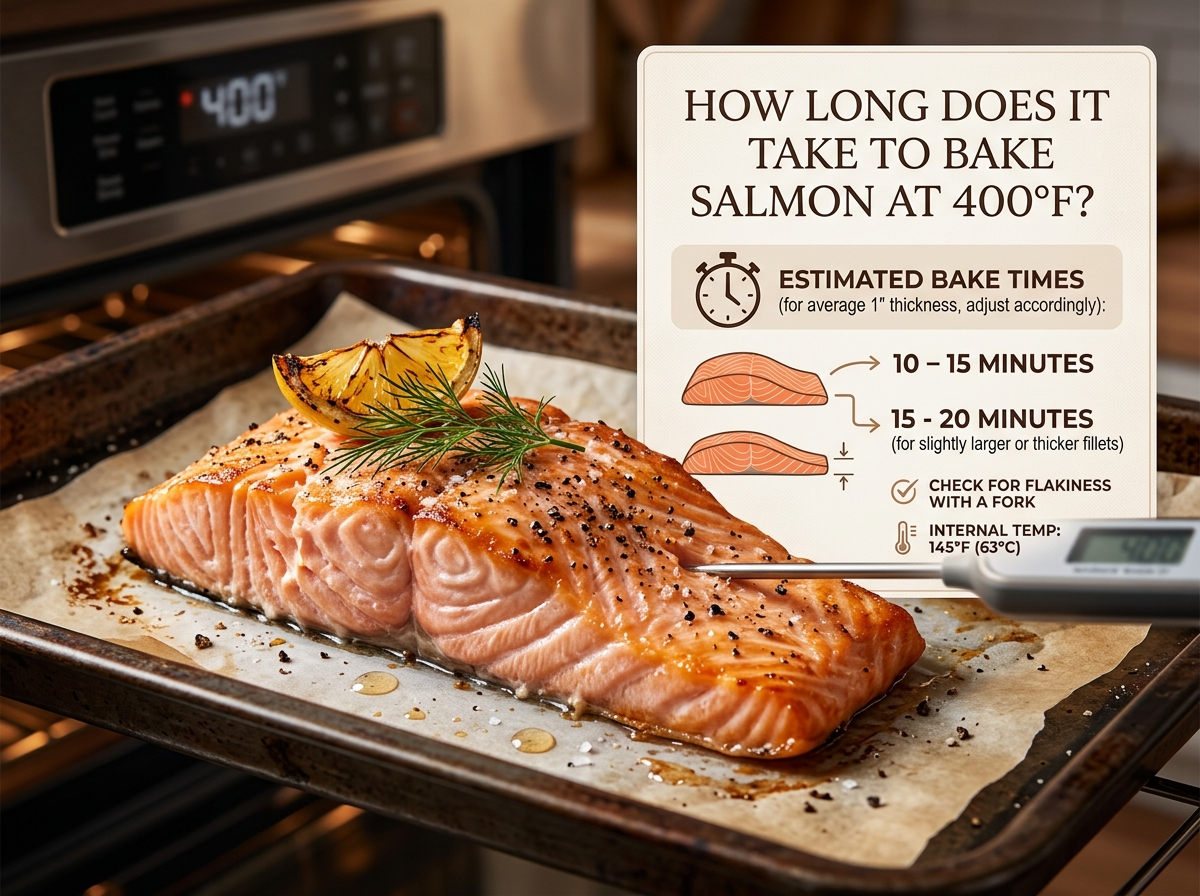
For most salmon fillets at 400°F, the sweet spot is 12 to 15 minutes.
That timing works best for a fillet that’s about 1 inch thick in the center. Thinner pieces cook faster. Thicker center-cut pieces need more time. A full side of salmon also takes longer, though not as much longer as people think.
Here’s a simple chart you can actually use:
| Salmon cut | Thickness | Bake time at 400°F | What to look for |
|---|---|---|---|
| Thin fillet | 1/2 to 3/4 inch | 8–12 minutes | Opaque, flakes lightly |
| Standard fillet | About 1 inch | 12–15 minutes | Tender, just cooked through |
| Thick fillet | 1 1/4 to 1 1/2 inches | 15–20 minutes | Center reaches safe temp |
| Whole side of salmon | Varies | 18–25 minutes | Thickest part is done |
Quick fact: thickness matters more than weight.
A flat 1-pound piece may cook faster than a chunky 8-ounce fillet.
If you want the safest food-safety marker, the USDA recommends cooking fish to 145°F in the thickest part. Many home cooks pull salmon a little earlier and let it rest for a few minutes because carryover heat keeps cooking it. That gives you softer, moister fish. If you’re cooking for pregnant guests, older adults, or anyone with a weaker immune system, stick with 145°F.
So yes, “12 to 15 minutes” is the headline answer. But if you stop there, you’re still guessing a bit. Let’s fix that.
What changes the baking time?
Thickness matters more than anything else
If your salmon is thin, it can be done before you even expect it. If it’s thick in the middle, it may need several extra minutes.
Think of it like toast versus a baked potato. Same oven. Totally different timing. Salmon works the same way. Heat has to travel to the center, and a thick fillet slows that down.
A thin tail-end piece might be ready in 9 or 10 minutes. A thick center-cut fillet may need 17 or 18 minutes. That’s a big difference, even if both pieces came from the same fish.
If you only remember one thing from this article, remember this: start with thickness, not weight.
The type of salmon changes texture and timing
Not all salmon behaves the same in the oven.
Atlantic salmon is usually fattier and more forgiving. It stays moist a little longer, so it gives you a wider window before it dries out.
Sockeye salmon is leaner and often thinner. It cooks faster and can go dry sooner if you treat it like a thick Atlantic fillet.
King salmon is rich and buttery. It handles heat well, but thick cuts still need more time in the center.
Coho salmon sits somewhere in the middle. It’s not as fatty as king or most farmed Atlantic salmon, so it benefits from careful timing.
That’s one thing a lot of quick recipe posts skip. They hand you one exact number as if every salmon fillet on earth is the same. It isn’t.
Starting temperature makes a difference too
Salmon straight from the fridge takes longer than salmon that sat on the counter for 10 to 15 minutes while the oven heated.
You don’t need to leave fish out for ages. Just don’t expect ice-cold salmon to behave the same as slightly less chilled salmon.
If you’re using previously frozen fish, make sure it’s fully thawed unless the package says it can be cooked from frozen. If you need help with storage timing before you bake it, this piece on thawed salmon in the fridge is useful.
Skin-on vs skinless changes the feel of the fish
Skin-on salmon usually stays a bit more protected on the bottom. The skin acts like a barrier, which helps the flesh stay moist.
Skinless salmon can still bake beautifully, but it benefits from a lightly oiled pan or parchment paper so it doesn’t stick or dry where it touches the tray.
Your pan and oven matter more than most people think
A dark metal pan often browns the bottom faster than a light one. Glass dishes can cook more gently but may change the timing a bit. Some ovens run hot. Some are slow even if the screen says 400.
That’s why experienced cooks don’t just trust the clock. They check early.
Did you know? A lot of “bad salmon recipes” aren’t really bad recipes. The oven was just 15 degrees off.
How to bake salmon at 400 without drying it out
You don’t need restaurant tricks here. You just need a clean, repeatable method.
A simple step-by-step method
- Preheat your oven to 400°F.
Give it time to fully heat. A rushed oven leads to uneven cooking. - Line a sheet pan or baking dish.
Use parchment paper or lightly oil the pan. Cleanup gets easier, and the salmon releases better. - Pat the salmon dry.
Paper towels help remove surface moisture, which keeps the texture nicer and helps the seasoning stick. - Season it simply.
A little oil, salt, black pepper, garlic, and lemon work great. You can also use soy sauce, ginger, or a touch of sesame oil if you want a more savory profile. - Bake skin-side down.
Put the salmon in the center of the oven. Start checking at 10 minutes for thin fillets, 12 minutes for average ones, and 15 minutes for thick cuts. - Rest it for 3 to 5 minutes.
Don’t skip this. The juices settle, carryover heat finishes the center, and the texture gets better.
That’s it. No drama. No guesswork.
The best pan setup for most home cooks
If your goal is moist salmon with a lightly roasted top, bake it uncovered on a lined sheet pan.
That setup gives you enough dry heat to cook the surface nicely without steaming the fish.
If you want extra moisture and a softer texture, you can use foil. A foil packet traps steam and works well for lemon slices, butter, and herbs. The trade-off is simple: you’ll get less browning.
A lot of people ask whether covered salmon cooks faster. In some cases, yes, because trapped steam speeds things along a bit. Still, the difference usually isn’t huge. Texture matters more than the exact minute or two.
What seasonings work best at 400°F?
Simple seasoning works best because salmon already has plenty of flavor.
Good options include:
- olive oil, salt, pepper, and lemon
- garlic butter
- Dijon mustard and herbs
- soy sauce, ginger, and a little honey
- chili crisp or sesame-based sauces after baking
If you like bold side dishes, baked salmon also goes really well with Korean-style bok choy for a quick dinner that doesn’t feel boring.
Pro tip: if your glaze contains honey, brown sugar, maple syrup, teriyaki, or miso, add it late or watch it closely. Sugar darkens fast at 400°F.
Warning: a sweet glaze can burn before the center is cooked, especially on thin fillets. If the top is getting too dark, loosely tent the fish with foil.
Real examples so you can picture it
A thin sockeye fillet from the tail section? Start checking around 8 to 9 minutes.
A standard Atlantic salmon fillet, about 1 inch thick? Usually 12 to 15 minutes does the job.
A thick center-cut king or Atlantic fillet? More like 16 to 18 minutes, sometimes a touch longer.
A big side of salmon for a family meal? Often 18 to 25 minutes, depending on thickness.
That’s why “always bake salmon for 20 minutes” leads so many people straight to dry fish.
How to tell when baked salmon is done
Time gets you close. Doneness gives you confidence.
Use temperature if you want the most reliable answer
The easiest way to check salmon is with an instant-read thermometer.
Insert it into the thickest part of the fillet. For food safety, the USDA says fish should reach 145°F. If you like salmon that’s still tender and not chalky, many home cooks pull it slightly before that point and rest it for a few minutes.
If you want a closer look at visual signs and texture clues, this guide on how to know when salmon is done goes deeper.
What does done salmon look like?
A baked salmon fillet is usually done when:
- the flesh turns mostly opaque
- it flakes with gentle pressure from a fork
- the center no longer looks raw
- the layers separate easily but still look moist
You do not want it to look chalky, dry, or squeezed-out all over.
A slightly translucent center can still be pleasant for some people, especially with fattier salmon. Still, if you need the safest choice, go by temperature and cook to 145°F.
What about the white stuff on top?
That white stuff is called albumin. It’s a protein that firms up and leaks out as salmon cooks.
It looks odd, but it’s harmless.
You’ll often see more of it when salmon cooks a little too long or at a hotter pace than needed. If you’ve ever pulled a fillet from the oven and thought, “Did I ruin this?” — not necessarily. It may still taste fine. It just got pushed a bit harder.
Quick fact: salmon keeps cooking after it leaves the oven. That’s called carryover cooking, and it’s one reason resting the fish matters.
Is 400 the best temperature for salmon?
For a lot of home kitchens, yes. 400°F is a great middle ground.
It’s hot enough to roast the outside well and fast enough for a weeknight dinner, but it’s not so hot that every fillet turns into a race against the clock.
375°F vs 400°F
At 375°F, salmon cooks more gently. That can be nice for thick fillets or large sides of salmon if you want a little more wiggle room.
The trade-off? It takes longer. If you want a side-by-side timing view, check this post on baking salmon at 375.
400°F vs 425°F
At 425°F, salmon cooks faster and gets a bit more color on top. That can work really well for thinner fillets or if you want dinner on the table quickly.
The risk is smaller timing room. A minute or two too long at 425 can show up fast, especially on lean salmon like sockeye. If you’re curious about the faster route, here’s a helpful look at baking salmon at 425.
So which should you choose?
If you want the easy answer, go with this:
- 375°F for a gentler bake
- 400°F for the best all-around balance
- 425°F for speed and more top color
For most people, most nights, 400°F wins.
Common mistakes that ruin baked salmon
A lot of bad salmon dinners come from a few very fixable mistakes.
Trusting time more than the fish
The recipe said 15 minutes, so you left it for 15 minutes. Sounds fair, right?
Not always.
If your fillet is thin, 15 minutes might be too much. If it’s thick and cold from the fridge, 15 might not be enough. Start checking early and let the fish tell you what’s going on.
Baking a thick fillet straight from the fridge and expecting even cooking
Cold, thick salmon can leave you with a weird result: dry edges and a center that still needs time.
Letting it sit out briefly while the oven heats can help it cook more evenly.
Adding sugary sauce too soon
Teriyaki-style sauces, honey glazes, brown sugar rubs, and miso-based marinades taste great on salmon. They also darken quickly at 400°F.
If the sauce starts burning, the fish probably still needs time inside. That’s frustrating because now the top looks overdone while the center isn’t ready yet.
Late glazing solves a lot of that.
Skipping the rest time
Pulling salmon from the oven and cutting into it right away seems harmless, but resting really helps.
Three to five minutes is enough. The center finishes gently. The juices settle. The texture feels more even.
It’s a small step, but it makes a noticeable difference.
Thinking dry salmon means you used the wrong recipe
Sometimes the recipe was fine. The real issue was that the fish was thinner than average, your oven ran hot, or you used lean sockeye and baked it like fatty Atlantic salmon.
That’s why practical cooking beats fixed numbers every time.
What to do after baking: serving ideas and leftovers
Fresh baked salmon is easy to build a meal around. You don’t need much beside it.
Rice, roasted potatoes, noodles, cucumber salad, or greens all work well. If you want something simple with color and crunch, that Korean-style bok choy is a nice match.
Leftovers deserve a little care too.
Cooked salmon should be cooled and refrigerated within 2 hours. In most cases, it keeps well for 3 to 4 days in the fridge. If you want the full storage breakdown, here’s a helpful post on how long cooked salmon lasts in the fridge.
Reheating works best at a low oven temperature, around 275°F to 300°F, just until warmed through. Microwave reheating can work, but it dries salmon out faster.
Cold leftover salmon is great flaked into rice bowls, salads, or wraps. Sometimes it’s better the next day that way.
4. FAQ Section
FAQ
How long do you bake salmon at 400 in foil?
Salmon baked in foil at 400°F usually takes about 12 to 17 minutes, depending on thickness. Foil traps steam, so the fish stays moist and soft. You’ll get less browning on top, but the texture is very forgiving.
Do you bake salmon covered or uncovered at 400?
Both work, but they give different results. Uncovered salmon gets a more roasted surface, while covered salmon stays softer and steams a bit. If you want that classic baked texture, go uncovered. If you want extra moisture, use foil.
Can you bake salmon at 400 from frozen?
Yes, you can, but it usually takes longer — often 20 to 25 minutes, sometimes more for thick cuts. The texture is usually better if you thaw it first. If you’re planning ahead, it helps to know how long thawed salmon can stay in the fridge before cooking.
How long does a 1-inch salmon fillet take at 400?
A 1-inch salmon fillet usually takes 12 to 15 minutes at 400°F. Start checking at the 12-minute mark, especially if it’s a lean variety like sockeye or coho.
What temperature should salmon be when it’s done?
For food safety, the USDA recommends 145°F in the thickest part. Many cooks like to pull salmon a little earlier and let it rest, but if you want the safest, clearest number, use 145°F.
Is 400 or 425 better for salmon?
If you want the easiest all-around result, 400°F is better for most fillets. It gives you a little more room before the fish dries out. 425°F is great if you want faster cooking and more color, but it needs closer watching.
5. Conclusion
If you want juicy salmon without the usual guessing game, bake it at 400°F and start with 12 to 15 minutes for a 1-inch fillet. Then check the thickest part instead of trusting the clock like it’s law. Once you learn how your oven behaves, salmon gets a whole lot easier. Next time, set the timer a little early, grab a thermometer, and you’ll be in control of dinner instead of hoping for the best.