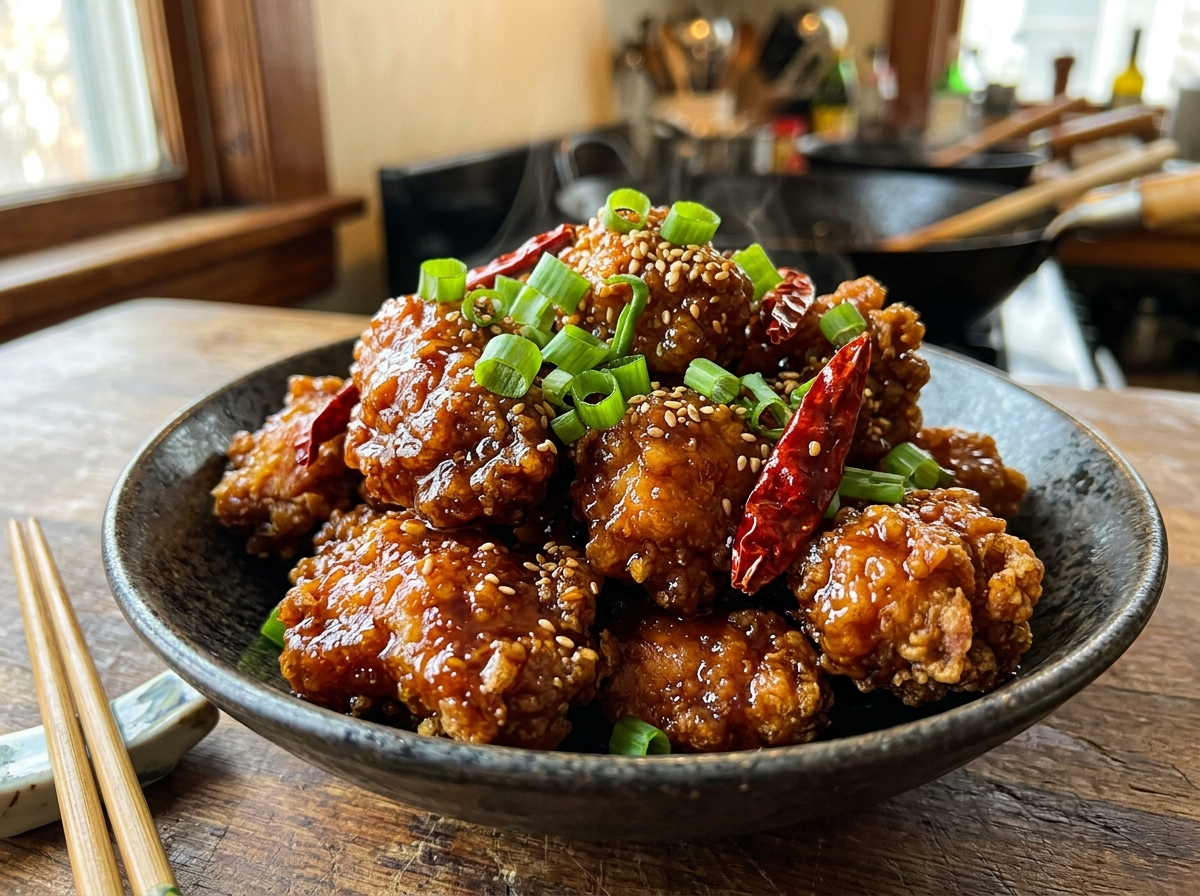
Most General Tso’s chicken you make at home ends up one of two ways — soggy and sad, or dried out like cardboard. And nine times out of ten, the problem isn’t your recipe. It’s your temperature.
That’s the thing about this dish. The flavor profile — sweet, tangy, slightly spicy — is pretty forgiving. You can tweak the sauce ratios and still land somewhere delicious. But get the oil temp wrong by 20°F, or pull the chicken off heat too early, and no amount of sauce can save it.
General Tso’s chicken has been a staple on American-Chinese restaurant menus since the 1970s, credited to chefs like Peng Chang-kuei and later popularized in New York City. Yet for all its fame, the home version rarely lives up to the takeout box. Why? Because restaurants understand something most home cooks overlook — temperature control is everything in Chinese deep-frying.
So let’s talk about exactly what temperatures you need, why they matter, and the techniques that separate a crispy, glossy plate of General Tso’s from a greasy disappointment.
Why Temperature Is the Real Secret Behind Great General Tso’s Chicken
You probably already have a solid recipe bookmarked. Chicken thighs, cornstarch, soy sauce, hoisin, rice vinegar, dried chilis, garlic, ginger — the ingredient list isn’t complicated. But the difference between restaurant-quality and “meh” almost always comes down to heat management.
Here’s what’s actually happening when you fry chicken at the right temperature. The moment that coated chicken piece hits hot oil, the surface moisture evaporates almost instantly. The starch coating starts to crisp and form a barrier. That barrier does two critical jobs — it keeps the oil out and locks the chicken’s natural juices in.
Drop your chicken into oil that’s too cool (say, 300°F), and you don’t get that instant seal. Instead, the coating absorbs oil like a sponge. Your chicken turns greasy, the coating gets soft, and the whole texture falls apart.
Go too hot (over 400°F), and the outside burns before the inside cooks through. You end up with dark, bitter pieces that are still raw at the center. Not safe, not tasty.
The sweet spot? That’s what we’re getting into next.
The Ideal Oil Temperature for Frying General Tso’s Chicken
For your first fry, aim for 325°F to 350°F (163°C to 177°C).
Yes, first fry. We’ll talk about the double-fry method shortly — it’s a technique that Chinese restaurants have used for decades, and it’s what gives their fried chicken that shatteringly crispy texture you can’t seem to replicate.
But for that initial dip in oil, 325°F to 350°F is your target. At this temperature, the chicken cooks through evenly without the coating getting too dark too fast. Bone-in pieces need the lower end of that range. Boneless thigh chunks (which most General Tso’s recipes call for) do well right around 340°F to 350°F.
⚡ Pro Tip: Use a deep-fry thermometer or a digital probe thermometer clipped to the side of your pot. Don’t guess. Oil that “looks hot” could be anywhere from 275°F to 425°F, and your eyes can’t tell the difference.
One thing that catches a lot of home cooks off guard — oil temperature drops the second you add food. If you load too many chicken pieces in at once, your 350°F oil can plummet to 280°F in seconds. That means soggy coating, greasy chicken, and a lot of frustration. Fry in small batches. Three to five pieces at a time is usually the right call, depending on your pot size.
Internal Temperature: When Is the Chicken Actually Done?
The USDA recommends cooking all poultry to an internal temperature of 165°F (74°C). That’s your non-negotiable safety number.
But here’s a practical tip most recipes don’t mention. If you’re using chicken thighs (and you should be — they stay juicier and more forgiving than breast meat), thigh meat actually tastes better and feels more tender at around 175°F to 180°F internal. The extra heat helps break down the connective tissue and fat in dark meat, giving you that melt-in-your-mouth texture.
Breast meat, on the other hand, starts drying out above 165°F. So if you’re using breast, hit 165°F and pull it out immediately. With thighs, you’ve got a wider margin for error, which is one more reason they’re the better choice for this dish.
How do you check? Use an instant-read thermometer. Pull out the largest piece from the oil, insert the probe into the thickest part, and check the reading. If you’re doing a double fry (covered below), the chicken will continue cooking during the second round, so pulling it at 155°F to 160°F after the first fry is fine — the second fry will push it past 165°F easily.
This approach to checking doneness with a thermometer applies to all proteins. If you’ve ever struggled to know when salmon is done or how to tell when shrimp is cooked, the principle is the same — don’t rely on color or time alone. Measure.
The Double-Fry Method: This Changes Everything
If you take one technique away from this entire article, let it be this: fry your chicken twice.
Chinese restaurants have been doing this forever. The concept is simple, and the results are dramatic. You fry the chicken once at a moderate temperature to cook it through, rest it briefly, then fry it again at a higher temperature to get that ultra-crispy shell.
Here’s how the process breaks down:
First fry — 325°F to 350°F for 4 to 5 minutes. The chicken cooks through. The starch coating sets but doesn’t fully crisp. The pieces will look pale and almost underwhelming at this stage. That’s normal.
Rest — 5 to 10 minutes at room temperature. During this rest, residual steam escapes from the coating. The surface dries slightly. This is what allows the second fry to get things truly crunchy.
Second fry — 375°F to 400°F for 1 to 2 minutes. This is the magic. The higher heat crisps the exterior quickly without overcooking the interior. The chicken turns golden-brown, the coating hardens into a shell, and the texture becomes something your oven could never achieve.
That 375°F to 400°F range for the second fry is critical. Go much above 400°F and you risk burning the coating. Stay below 375°F and you won’t get that satisfying crunch.
🔥 Warning: Oil at 400°F is serious business. Keep children and pets away from the cooking area. Never fill your pot more than halfway with oil — chicken displaces liquid, and overflowing hot oil is a genuine fire hazard. Have a lid nearby, never use water to put out an oil fire, and stay focused.
Choosing the Right Oil (And Why It Matters for Temperature)
Not all cooking oils handle high heat the same way. For General Tso’s chicken, you need an oil with a high smoke point and a neutral flavor. Here are your best options:
Peanut oil is the traditional choice in Chinese cooking. It has a smoke point around 450°F, handles the double-fry beautifully, and adds a subtle richness without overpowering the sauce. If nobody eating has a peanut allergy, this is the gold standard.
Vegetable oil or canola oil both work well, with smoke points around 400°F to 440°F. They’re cheaper than peanut oil and totally neutral in flavor.
Avocado oil has the highest smoke point of common cooking oils (around 520°F), but it’s expensive. Worth it if you have it, but not necessary.
Avoid olive oil, coconut oil, and butter — their smoke points are too low, and their flavors will clash with the General Tso’s sauce profile. You might think Chinese cooking wine adds all the flavor you need in the sauce, but the frying oil plays a background role you shouldn’t ignore.
How much oil do you need? You want at least 2 to 3 inches of oil in the pot. The chicken pieces should be fully submerged, floating freely. If pieces are sitting on the bottom or touching each other, you either need more oil or a bigger pot.
The Coating: Cornstarch vs. Flour and Getting It Right
The coating on General Tso’s chicken isn’t batter — it’s a dry or semi-wet starch mixture that creates that distinctively light, shatteringly crispy texture. This is different from, say, Southern fried chicken, which uses a heavier flour coating.
Cornstarch is your best friend here. Pure cornstarch gives you the crispiest results. It creates a thin, glass-like shell when fried at the right temperature. Some recipes use a mix of cornstarch and all-purpose flour (about a 2:1 ratio), which adds a tiny bit more structure and browning. Both approaches work, but all-cornstarch will give you that restaurant-style crunch.
The technique matters as much as the ingredient. After marinating your chicken pieces (soy sauce, rice wine, a touch of sesame oil, and egg are standard), toss them in cornstarch right before frying. And here’s a key detail — let the coated pieces sit for 2 to 3 minutes before they hit the oil. The cornstarch hydrates slightly from the marinade moisture, and this thin paste layer is exactly what fries up into that crispy skin.
Don’t coat the chicken 20 minutes ahead. The cornstarch will absorb too much moisture and turn gummy. Do it right before frying.
Wok vs. Dutch Oven vs. Deep Fryer: What Works Best?
Your cooking vessel affects temperature stability, and temperature stability affects crispiness. Let’s break this down honestly.
A wok is the traditional tool, and there’s a reason. Its shape means you use less oil to achieve the same depth. The wide opening makes it easy to add and remove chicken. And if you’re cooking over a high-BTU burner (like a wok burner or outdoor propane burner), a carbon steel wok recovers heat incredibly fast after you add cold food. The downside? Woks on standard home electric or gas stoves don’t get as hot as commercial restaurant woks, and the thin metal loses heat quickly. It’s still a great option, but batch size matters even more.
A Dutch oven or heavy-bottomed pot is arguably the best choice for most home kitchens. Cast iron holds heat like nothing else. When you drop chicken into a preheated Dutch oven full of 350°F oil, the temperature dip is much smaller than with a thin wok. More consistent temps mean more consistent results.
A countertop deep fryer takes the guesswork out entirely. Most models have built-in thermostats that maintain your target temperature automatically. If you fry food regularly, this is a worthwhile investment.
Whichever vessel you use, the key principle stays the same — monitor your temperature and adjust your heat source to compensate for drops.
The Sauce: Temperature, Timing, and Technique
General Tso’s sauce is a balance of sweet, savory, tangy, and spicy. The standard ingredients include soy sauce, rice vinegar, hoisin sauce, sugar (or brown sugar), chicken broth, sesame oil, and cornstarch as a thickener. Dried red chilis, garlic, and ginger provide the aromatic backbone.
Here’s where a lot of home cooks mess up the sauce — they add the fried chicken to a cold or lukewarm sauce and let it sit too long.
Your sauce needs to be hot and slightly thickened before the chicken goes in. Cook the aromatics (garlic, ginger, dried chilis) in a hot wok or skillet with a tablespoon of oil for about 30 seconds. Pour in the premixed sauce and bring it to a simmer. The cornstarch slurry in the sauce will thicken it within a minute. It should coat the back of a spoon — glossy and slightly thick, not watery.
Then — and this is crucial — toss in the crispy chicken and stir for no more than 30 seconds. You want every piece coated, but you don’t want the chicken sitting in liquid. Extended contact with sauce is the fastest way to ruin that crispy coating you worked so hard for. Toss, coat, plate, serve. That’s it.
If you’ve ever made Asian sticky wings or gochujang chicken, the sauce-tossing principle is similar — get in and get out quickly to preserve the crunch.
Common Temperature Mistakes (And How to Fix Them)
Let’s run through the problems that come up most often and exactly what causes them.
Soggy, greasy coating. Your oil was too cool. Anything below 300°F and the coating absorbs oil instead of crisping. Fix: Use a thermometer, wait until the oil reaches your target temperature before adding chicken, and fry in smaller batches so the temp doesn’t crash.
Coating that falls off in the oil. You either moved the chicken too soon after adding it, or the cornstarch didn’t have time to hydrate on the surface. When chicken first hits the oil, leave it alone for 60 to 90 seconds before touching it. The coating needs time to set. After that, you can gently turn pieces with a spider strainer or chopsticks.
Burnt outside, raw inside. Oil was too hot, or pieces were too large. Cut your chicken into uniform 1 to 1.5-inch chunks. Even sizing means even cooking. And if your oil is above 375°F on the first fry, lower the heat.
Chicken is dry and tough. You either used breast meat that overcooked past 165°F, or your pieces sat in the oil too long. Switch to thigh meat, which stays moist even at higher internal temps. Also make sure your marinade includes a touch of Chinese cooking wine, which tenderizes and adds flavor.
Sauce turns the crispy chicken mushy within minutes. You tossed the chicken into sauce too early (before it thickened) or let it sit too long. Thicken your sauce fully first, then toss chicken in at the last possible second before plating.
Serving and Storing: What You Need to Know
General Tso’s chicken is best served immediately. That’s not just a preference — it’s physics. The crispy starch coating absorbs moisture from the sauce and from the steam rising off the rice. Every minute you wait, you lose crunch.
If you’re serving with steamed rice, have the rice ready before you start frying. Same goes for any sides — steamed broccoli, bok choy (here’s a great Korean-style bok choy recipe if you want something different), or simple stir-fried vegetables.
Can you reheat General Tso’s chicken? You can, but manage your expectations. The microwave will make it soft and soggy. Instead, spread leftover pieces on a baking sheet and reheat in a 375°F oven for 8 to 10 minutes. You won’t fully restore that just-fried crunch, but you’ll get close.
How long does it last in the fridge? Stored in an airtight container, leftover General Tso’s chicken keeps for 3 to 4 days in the refrigerator. This is similar to how you’d handle cooked rice in the fridge — cool it down quickly, seal it, and refrigerate within two hours of cooking.
Taking It to the Next Level: Small Tweaks That Make a Big Difference
Once you’ve got the basic technique down — proper oil temp, double fry, quick sauce toss — there are a few extra moves that push your General Tso’s into genuinely impressive territory.
Toast your dried chilis separately. Instead of throwing dried red chilis into the sauce raw, toast them in a dry wok for 30 to 45 seconds until fragrant and slightly darkened. This wakes up their flavor and adds a smoky depth you won’t get otherwise.
Add a splash of black vinegar. Chinese black vinegar (Chinkiang vinegar) gives the sauce a deeper, more complex tang compared to regular rice vinegar. Use about a teaspoon — a little goes a long way.
Finish with toasted sesame seeds and scallions. Garnish isn’t just decoration here. The nuttiness of sesame seeds and the fresh bite of sliced scallions add layers of flavor and texture that round out the dish.
Try thigh meat on the bone. Most American versions use boneless chunks, but bone-in thigh pieces (hacked through the bone into small pieces with a cleaver, Chinese butcher-shop style) add richer flavor and a different textural experience. They take a bit longer in the first fry — about 6 to 7 minutes at 325°F — but the result is worth the extra time.
If you enjoy experimenting with bold, saucy chicken dishes, you might also love Korean fire chicken with cheese or putting together a beautiful teriyaki chicken bowl — both use similar principles of balancing big flavors with the right cooking technique.
FAQ
What temperature should the oil be for General Tso’s chicken?
For the first fry, heat your oil to 325°F to 350°F. If you’re using the double-fry method (which you absolutely should), heat the oil to 375°F to 400°F for the second fry. Always use a thermometer to verify.
How do you keep General Tso’s chicken crispy?
Three things make the difference: use cornstarch for the coating instead of flour, double-fry the chicken, and toss the fried pieces into the sauce at the very last second — no more than 30 seconds before plating. Serve immediately for the best texture.
What internal temperature should the chicken reach?
The USDA recommends 165°F for all poultry. If you’re using dark meat (thighs), cooking to 175°F to 180°F internal will actually taste better because the connective tissue breaks down further, making the meat more tender and juicy.
Can you make General Tso’s chicken in an air fryer?
You can, and many people do. Set the air fryer to 375°F and cook for about 10 to 12 minutes, flipping halfway through. The texture won’t be identical to deep-fried — it’s a bit lighter and less glossy — but it’s a solid alternative if you want to use less oil. Toss with sauce right before serving.
What’s the best oil for frying General Tso’s chicken?
Peanut oil is the traditional and preferred choice for its high smoke point (around 450°F) and subtle flavor. Vegetable oil and canola oil are both excellent neutral alternatives. Avoid olive oil, coconut oil, or butter — they can’t handle the temperatures you need.
Your Next Plate of General Tso’s Will Be Different
Temperature and technique aren’t glamorous topics. Nobody posts their thermometer reading on social media. But they’re the difference between General Tso’s chicken that makes you close your eyes and nod, and a version that’s just… okay.
Get your oil to the right temp. Fry in small batches. Double-fry for that crunch. Toss in sauce fast and serve immediately. These aren’t complicated steps — they just require a little patience and the willingness to measure instead of guess.
Your wok (or Dutch oven) is waiting. And honestly? Once you nail this at home, you might stop ordering it for takeout altogether.